
Vacuum Truck Market Set for Strong Expansion as Waste Management and Environmental Compliance Drive Global Demand
Growing investments in sanitation infrastructure, industrial waste management, and sustainable environmental practices are fueling demand for advanced vacuum truck solutions worldwide.


Introduction: Essential Equipment for a Cleaner and Safer World
As cities expand, industries grow, and environmental regulations become increasingly stringent, the need for efficient waste management solutions has never been greater. Governments, municipalities, and industrial operators around the world are searching for technologies that can safely collect, transport, and dispose of waste while minimizing environmental impact. Among the most important tools supporting these efforts are vacuum trucks.
According to Renub Research, the Global Vacuum Truck Market is expected to grow from US$ 1.93 billion in 2025 to US$ 3.41 billion by 2034, registering a compound annual growth rate (CAGR) of 6.52% between 2026 and 2034. Growing demand for industrial cleaning, wastewater treatment, municipal sanitation services, infrastructure development, and environmental compliance is creating strong momentum for the industry.
As concerns regarding public health, sustainability, and waste disposal continue to intensify, vacuum trucks are becoming indispensable assets across numerous sectors.
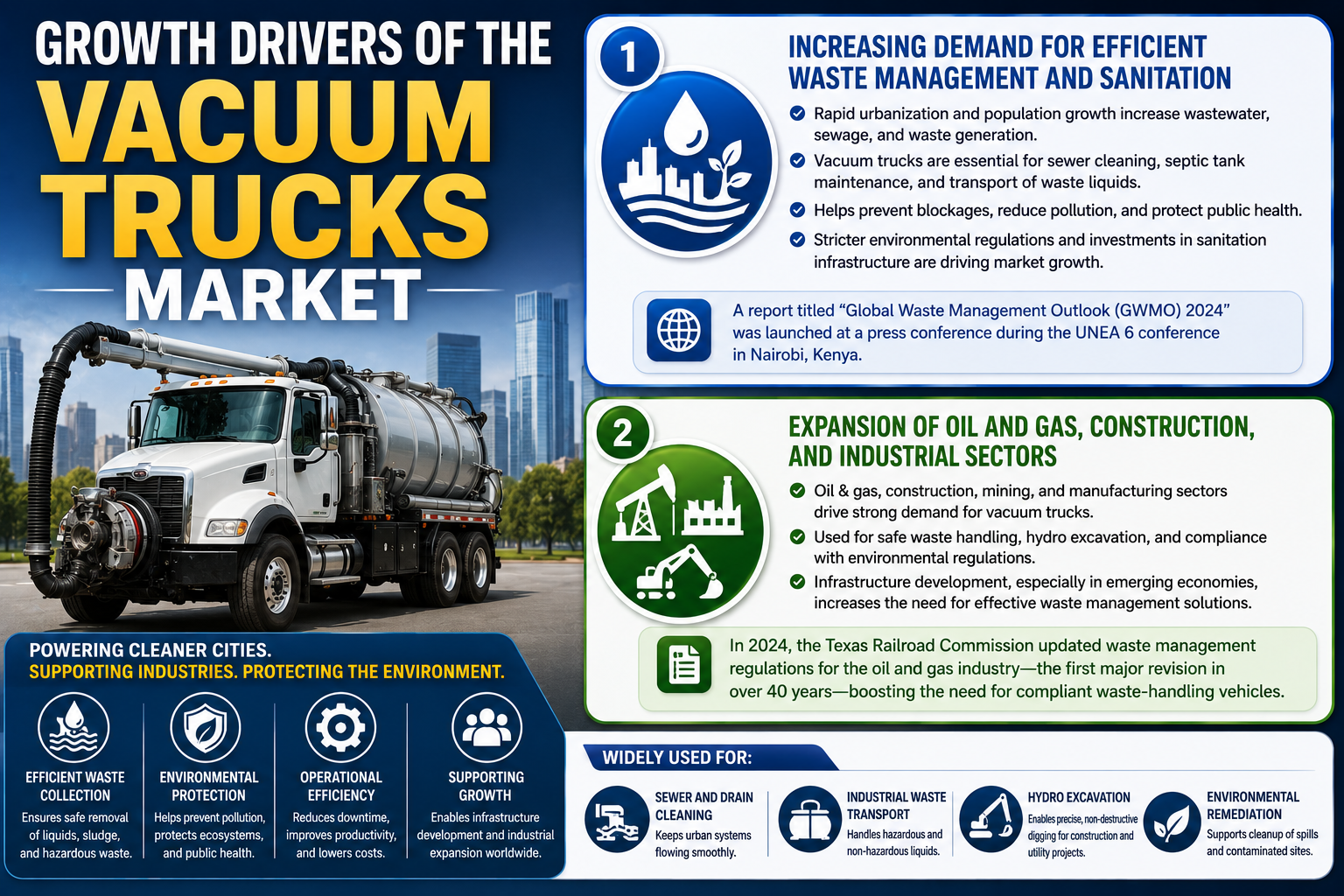
Understanding the Role of Vacuum Trucks
A vacuum truck is a specialized vehicle equipped with a powerful vacuum pump and storage tank designed to collect, transport, and dispose of various waste materials. These vehicles can handle liquids, sludge, slurry, sewage, debris, and other waste products generated by municipalities, industries, and commercial facilities.
Vacuum trucks play a critical role in maintaining sanitation systems and preventing environmental contamination. Depending on operational requirements, they may be configured as liquid vacuum trucks, dry vacuum trucks, or combination vacuum trucks capable of handling multiple waste streams.
Today, vacuum trucks are widely used in wastewater treatment facilities, sewer maintenance operations, septic services, oil and gas sites, manufacturing plants, construction projects, mining operations, and municipal sanitation departments.
Their versatility makes them one of the most important pieces of equipment in modern waste management infrastructure.
Growing Demand for Waste Management Is Driving Market Growth
One of the strongest factors fueling market expansion is the increasing global need for effective waste management solutions.
Rapid urbanization and population growth are generating larger volumes of wastewater, sewage, sludge, and industrial waste than ever before. Municipal authorities are under growing pressure to maintain sanitation systems, prevent sewer blockages, and reduce environmental pollution.
Vacuum trucks provide an efficient solution for collecting, transporting, and disposing of waste materials while helping cities maintain public health standards. These vehicles are frequently used for sewer cleaning, septic tank maintenance, wastewater removal, and emergency response operations.
The importance of waste management has become even more pronounced as governments invest in sanitation infrastructure and implement stricter regulations regarding waste collection and disposal.
As urban populations continue to expand, demand for vacuum truck services is expected to increase steadily.
Urbanization and Infrastructure Development Create New Opportunities
The ongoing expansion of urban infrastructure is generating significant opportunities for the vacuum truck market.
Rapid development of residential communities, commercial facilities, transportation networks, and public infrastructure requires extensive excavation, utility maintenance, wastewater management, and environmental protection measures. Vacuum trucks play a crucial role in supporting these activities.
Infrastructure projects often require hydro excavation, debris removal, sewer maintenance, and drainage system management. Vacuum trucks help ensure these tasks are completed safely and efficiently while minimizing disruptions to surrounding infrastructure.
Developing economies are particularly important growth markets because governments continue investing heavily in urban development projects and public sanitation systems.
As cities become larger and more complex, demand for advanced vacuum truck solutions is expected to rise substantially.
Oil and Gas Industry Continues to Support Demand
The oil and gas sector remains one of the most important end-user industries for vacuum trucks.
Operations within oil fields, refineries, and petrochemical facilities generate significant quantities of sludge, wastewater, drilling fluids, and hazardous materials that require specialized handling and disposal. Vacuum trucks provide a safe and efficient method for collecting and transporting these materials while ensuring compliance with environmental regulations.
The report notes that regulatory authorities continue strengthening waste management requirements for the energy sector. For example, changes to waste management regulations in Texas have increased the emphasis on proper waste handling and environmental protection.
As energy production continues worldwide, vacuum trucks will remain critical for maintaining operational safety and regulatory compliance across the oil and gas industry.
Environmental Regulations Are Accelerating Adoption
Environmental protection has become a major priority for governments, businesses, and communities worldwide.
Strict regulations governing wastewater management, hazardous waste disposal, pollution prevention, and environmental sustainability are encouraging organizations to invest in specialized waste handling equipment. Vacuum trucks help businesses comply with these requirements by providing controlled and efficient waste collection and transportation solutions.
Improper waste disposal can lead to environmental damage, legal penalties, reputational harm, and public health concerns. As a result, industries are increasingly adopting advanced vacuum truck technologies that reduce spills, prevent contamination, and improve operational efficiency.
The report highlights innovations such as advanced filtration systems, water recycling technologies, and real-time tracking capabilities that support sustainability objectives while improving environmental compliance.
This growing focus on sustainability is expected to remain a powerful driver of market growth throughout the forecast period.
Industrial Applications Continue Expanding
Industrial vacuum trucks represent one of the fastest-growing segments within the market.
Manufacturing facilities, chemical plants, mining operations, and industrial processing centers generate large volumes of hazardous and non-hazardous waste materials. These facilities rely on vacuum trucks to remove sludge, slurry, chemicals, debris, and contaminated materials safely and efficiently.
Industrial operators are increasingly prioritizing environmental responsibility and workplace safety. Vacuum trucks help reduce exposure risks while ensuring proper waste disposal procedures are followed.
Advancements in suction power, tank capacity, and safety systems have further improved the effectiveness of industrial vacuum trucks, making them essential tools across numerous industries.
Excavation Vacuum Trucks Are Transforming Construction Practices
The construction industry is becoming an increasingly important source of demand for vacuum truck manufacturers.
Excavation vacuum trucks utilize high-pressure water and powerful suction systems to remove soil safely without damaging underground utilities. This process, commonly known as hydro excavation, offers significant advantages compared to traditional digging methods.
Hydro excavation reduces the risk of damaging water pipes, gas lines, electrical cables, and telecommunications infrastructure. It also improves worker safety while minimizing project delays and repair costs.
As infrastructure development accelerates worldwide and construction companies prioritize safer excavation techniques, demand for excavation vacuum trucks is expected to increase significantly.
Municipal Services Depend on Vacuum Truck Operations
Municipal governments remain among the largest users of vacuum trucks globally.
Cities rely on these vehicles to maintain sewer systems, clean drainage networks, remove sludge, manage stormwater systems, and prevent flooding. Regular maintenance of sanitation infrastructure is essential for protecting public health and ensuring reliable utility services.
Vacuum trucks are also widely used during emergency response situations involving wastewater spills, blocked drainage systems, and environmental contamination incidents.
As urban populations continue growing, municipal authorities are expected to increase investments in sanitation equipment and waste management technologies, supporting long-term market growth.
Liquid Suctioning Vacuum Trucks Lead the Market
Among product categories, liquid suctioning vacuum trucks remain one of the most widely utilized solutions.
These vehicles are specifically designed to collect and transport liquid waste materials, including sewage, sludge, septic waste, and contaminated water. Their importance continues to grow as governments and industries prioritize wastewater management and environmental protection.
Liquid suctioning trucks help prevent sewer blockages, reduce pollution risks, and support public health initiatives. Their ability to handle large volumes of waste efficiently makes them essential for municipal, residential, commercial, and industrial applications.
The growing focus on sanitation infrastructure is expected to support continued expansion within this segment.
Regional Markets Present Significant Growth Opportunities
United States
The United States remains one of the largest vacuum truck markets globally due to its extensive industrial base, advanced waste management infrastructure, and strict environmental regulations. The oil and gas, construction, manufacturing, and mining sectors continue to generate strong demand for vacuum truck services.
United Kingdom
The United Kingdom is experiencing steady market growth driven by wastewater management requirements, aging infrastructure, environmental regulations, and increasing adoption of hydro excavation technologies. Continued investments in sanitation and environmental services are expected to support future demand.
India
India represents one of the fastest-growing opportunities in the market. Rapid urbanization, population growth, sanitation initiatives, and infrastructure development projects are increasing demand for efficient sewage management and waste disposal solutions. Municipal authorities and industrial operators are investing heavily in vacuum truck technologies to support these efforts.
Saudi Arabia
Saudi Arabia continues to expand its vacuum truck market through investments in urban development, sanitation infrastructure, and the oil and gas sector. Growing environmental awareness and government modernization initiatives are creating favorable conditions for market expansion.
Challenges Facing the Industry
Despite positive growth prospects, several challenges continue to affect the vacuum truck market.
One of the most significant barriers is the high initial investment required to purchase and operate vacuum trucks. These specialized vehicles incorporate advanced pumps, storage tanks, filtration systems, and safety equipment, making them considerably more expensive than standard commercial vehicles.
Maintenance costs also remain substantial due to fuel consumption, equipment servicing requirements, and compliance with safety standards.
Additionally, operators must comply with complex environmental, transportation, and hazardous waste regulations. Failure to meet regulatory requirements can result in legal penalties, operational delays, and increased costs. Employee training is also essential because improper handling of waste materials can create safety and environmental risks.
Addressing these challenges will be important for ensuring sustainable industry growth.
Leading Companies Driving Industry Development
The vacuum truck market includes several established manufacturers focused on innovation, performance, and environmental compliance.
Major companies operating within the industry include Fulongma Group Co. Ltd., Kanematsu Engineering Co. Ltd., Cappellotto S.p.A., DISAB Vacuum Technology AB, GapVax, Keith Huber Corporation, Koks Group B.V., and Sewer Equipment Co. of America. These organizations continue investing in product development, operational efficiency, and advanced waste management technologies.
As competition increases, manufacturers are expected to focus on sustainability, fuel efficiency, automation, and digital monitoring capabilities to differentiate their offerings.
Final Thoughts
The global vacuum truck market is entering a period of sustained growth driven by rising urbanization, increasing environmental regulations, expanding industrial activity, and growing investments in sanitation infrastructure.
With the market projected to increase from US$ 1.93 billion in 2025 to US$ 3.41 billion by 2034, vacuum trucks are becoming increasingly essential for municipalities, industrial operators, construction companies, and environmental service providers worldwide.
As governments and businesses place greater emphasis on sustainability, public health, and environmental protection, demand for efficient waste management solutions will continue to rise. Vacuum trucks provide a practical and proven answer to these challenges, positioning the industry for continued expansion throughout the coming decade. Their role in maintaining cleaner cities, safer industries, and more sustainable communities ensures they will remain a critical component of modern infrastructure and environmental management systems.
About the Creator
Enjoyed the story? Support the Creator.
Subscribe for free to receive all their stories in your feed.
Comments
There are no comments for this story
Be the first to respond and start the conversation.