
US Plant-Based Meat Market Size Growth Demand & Outlook 2034
The United States plant-based meat market size reached USD 4.1 Billion in 2025 to reach USD 21.5 Billion by 2034

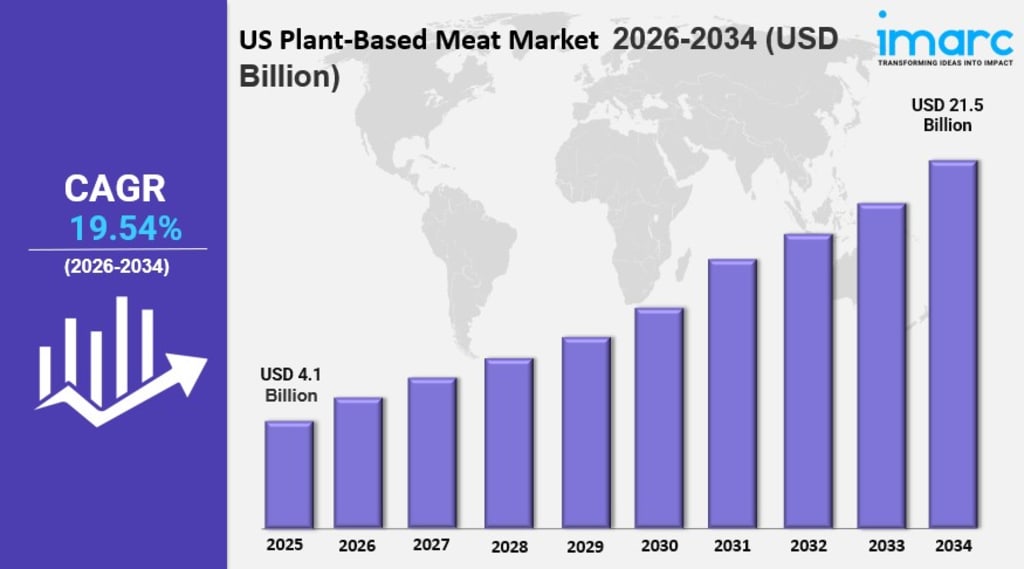
U.S. Plant-Based Meat Market Size and Forecast
The U.S. plant-based meat market is expanding rapidly as consumer food preferences continue to shift toward alternative protein products. The market reached USD 4.1 billion in 2025 and is projected to reach USD 21.5 billion by 2034, growing at a CAGR of 19.54% during 2026–2034.
Growth in the market is being supported by rising awareness about health, sustainability, and changing dietary habits. Consumers are increasingly looking for protein alternatives that align with wellness goals and environmental concerns. As a result, food manufacturers, retailers, and restaurant chains are expanding plant-based product offerings across the country.
Key Trends in the U.S. Plant-Based Meat Market
• Rising demand for clean-label products: Consumers are paying closer attention to ingredients and nutritional value in plant-based meat products.
• Growing presence in restaurants and food chains: Foodservice companies are expanding plant-based menu options such as burgers, sausages, and sandwiches.
• Increasing demand from flexitarian consumers: More consumers are reducing meat intake while still looking for familiar taste and convenience.
• Expansion beyond traditional burger products: Manufacturers are introducing plant-based seafood, chicken alternatives, and ready-to-cook meals.
• Product diversification across categories: Companies are developing wider product portfolios to reach different consumer groups.
• Improved retail availability: Supermarkets and grocery stores are increasing shelf space for alternative protein products.
• Higher mainstream consumer adoption: Wider product accessibility is helping plant-based meat products reach broader customer segments.
Growth Drivers in the U.S. Plant-Based Meat Industry
Health awareness remains one of the key growth drivers in the market. Consumers are increasingly reducing meat consumption and exploring alternative protein options as part of balanced dietary habits.
Environmental concerns are also supporting demand growth. Many consumers view plant-based products as a more sustainable alternative because they are associated with lower resource consumption and reduced environmental impact compared to conventional meat production.
Ethical considerations related to animal welfare are influencing purchasing decisions as well. This factor is contributing to higher demand among younger consumer groups and environmentally conscious buyers.
In addition, strong investment activity within the food technology sector is accelerating innovation and product development. Companies are focusing on improving flavor, texture, and nutritional profiles to increase consumer acceptance.
Consumer Demand for Plant-Based Meat in the U.S.
Consumer demand for plant-based meat products is expanding across multiple demographic groups. While early adoption was primarily driven by vegetarian and vegan consumers, the market is now seeing increased participation from flexitarian consumers who are reducing meat intake without eliminating it completely.
Convenience is becoming an important purchasing factor. Consumers are showing interest in ready-to-cook and easy-to-prepare products that fit into busy lifestyles.
Demand for high-protein and functional food products is also influencing the market. Many consumers are looking for alternatives that provide nutritional benefits while maintaining familiar taste and texture.
Younger consumers, particularly urban populations, continue to play an important role in market expansion due to stronger interest in health-focused and environmentally responsible food choices.
Technology Trends in the U.S. Plant-Based Meat Market
Technology is playing a major role in the development of the plant-based meat industry. Food manufacturers are investing in advanced processing methods to improve texture, flavor, and product consistency.
Ingredient innovation is another important trend. Companies are using pea protein, soy protein, wheat protein, and other plant-based ingredients to develop products that closely resemble traditional meat products.
Research and development activities are helping improve nutritional profiles while reducing the use of artificial additives. Companies are also exploring fermentation and protein-processing technologies to improve product quality.
Automation and digital production systems are improving manufacturing efficiency and supporting large-scale production capabilities across the industry.
Challenges in the U.S. Plant-Based Meat Industry
Despite strong growth potential, the industry faces several challenges. One of the primary concerns is product pricing. Plant-based meat products often remain more expensive than conventional meat, which may limit adoption among price-sensitive consumers.
Taste and texture expectations also continue to influence purchasing behavior. While product quality has improved significantly, some consumers still compare plant-based products directly with traditional meat products.
Supply chain and ingredient sourcing challenges can affect production costs and operational efficiency. Companies must manage raw material availability while maintaining product consistency and quality standards.
Competition within the market is increasing as established food companies and new startups continue to enter the segment. This is creating pressure on pricing, branding, and innovation strategies.
Investment Opportunities in the U.S. Plant-Based Meat Market
The U.S. plant-based meat market presents significant opportunities for investors, food manufacturers, ingredient suppliers, and retail companies. Demand growth is creating opportunities across both premium and mass-market product categories.
Food technology companies focused on ingredient innovation and protein processing are attracting strong investment interest. Businesses that can improve taste, nutrition, and cost efficiency are likely to gain a competitive advantage.
Retail expansion and foodservice partnerships also offer growth opportunities. Restaurant chains and grocery retailers are increasing plant-based product offerings to meet changing consumer preferences.
In addition, companies investing in sustainable production methods and clean-label product development are well positioned for long-term market growth.
Competitive Landscape of the U.S. Plant-Based Meat Industry
The competitive landscape includes food technology companies, traditional food manufacturers, and emerging alternative protein brands competing across retail and foodservice channels.
• Beyond Meat – Focuses on plant-based burgers, sausages, and protein alternatives with strong retail and foodservice presence.
• Impossible Foods – Known for technology-driven meat alternatives designed to replicate traditional meat flavor and texture.
• MorningStar Farms – Offers a wide range of frozen meat alternative products targeting mainstream consumers.
• Tyson Foods – Expands investment in alternative protein products alongside traditional meat operations.
• Maple Leaf Foods – Strengthens its plant-based portfolio through product innovation and brand expansion.
• Conagra Brands – Develops plant-based food offerings through established frozen and packaged food brands.
About the Creator
Kim Soo hyun
My name is Kim Soo hyun, and I am a research analyst at IMARC Group, specializing in market trends and data analysis to provide insights and support strategic decision-making.
Enjoyed the story? Support the Creator.
Subscribe for free to receive all their stories in your feed.
Comments
There are no comments for this story
Be the first to respond and start the conversation.