
US Pharmaceutical Market Size, Share & Growth Forecast to 2034
The US pharmaceutical market size reached USD 458,919.31 Million in 2025. The market is projected to reach USD 1,207,670.12 Million by 2034

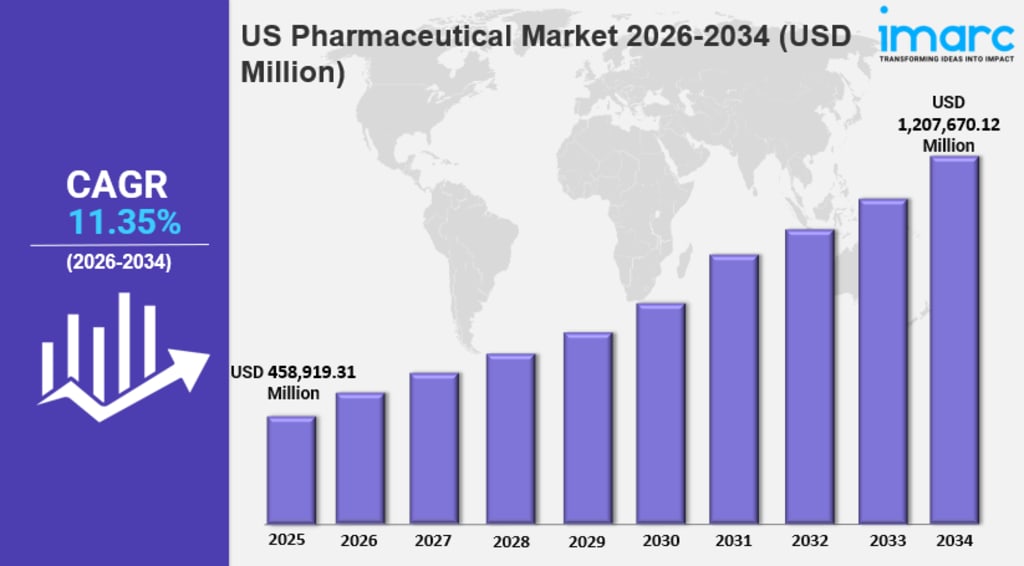
U.S. Pharmaceutical Market Size, Share, and Growth Forecast (2026–2034)
Pharmaceuticals in the United States are not just expanding—they are becoming more complex, more specialized, and more closely tied to long-term healthcare outcomes. The market reached USD 458,919.31 million in 2025 and is expected to grow to USD 1,207,670.12 million by 2034, at a CAGR of 11.35%.
For business stakeholders, this growth is less about volume and more about value. Companies are no longer competing only on product availability; they are competing on innovation, speed to market, and the ability to address specific patient needs. Digital tools are also reshaping how drugs are discovered, tested, and delivered, which is improving efficiency across the value chain.
At the same time, partnerships are becoming central to growth. Pharmaceutical companies, biotech firms, and research organizations are increasingly working together to share risk and accelerate development timelines. This collaborative approach is influencing how market share evolves in the U.S. pharmaceutical landscape.
Request a Sample Report with Latest 2026 Data & Forecasts
Demand Drivers Shaping the U.S. Pharmaceutical Market: Aging Population and Chronic Disease Burden
One of the most consistent drivers of demand in the pharmaceutical market is demographic change. The aging population in the United States is increasing the need for ongoing medical treatment, particularly for chronic conditions such as cardiovascular diseases, diabetes, and cancer.
This creates a stable demand base for pharmaceutical products, especially those designed for long-term use. Unlike short-term treatments, chronic disease management requires continuous medication, which supports recurring revenue streams for manufacturers.
For B2B stakeholders, this trend also impacts supply chains, distribution networks, and healthcare partnerships. Companies that can align their product portfolios with these long-term health needs are better positioned to maintain consistent growth.
Shift Toward Specialty Drugs and Biopharmaceuticals in the U.S. Pharma Industry
The pharmaceutical market is gradually shifting toward specialty drugs and biopharmaceuticals. These treatments often target complex or rare conditions and typically require advanced research and manufacturing capabilities.
While specialty drugs come with higher development costs, they also offer stronger margins and less direct competition. This makes them attractive for companies looking to differentiate their portfolios.
Biopharmaceuticals are also supporting the move toward more personalized treatment approaches. Instead of broad therapies, companies are focusing on targeted solutions that address specific patient groups. For businesses across the value chain, this shift requires adjustments in production, storage, and distribution processes.
R&D, Innovation, and Pipeline Trends in the U.S. Pharmaceutical Market
Research and development remain at the center of the pharmaceutical industry. Companies are investing heavily in building strong pipelines, focusing on areas such as oncology, immunology, and rare diseases.
Innovation is not limited to new drug discovery. It also includes improving existing treatments, developing combination therapies, and using digital tools to enhance clinical trials. These efforts help reduce development risks and improve the likelihood of successful outcomes.
For B2B players, including contract research organizations and manufacturing partners, increased R&D activity translates into steady demand for specialized services. Companies that can support faster and more efficient development processes are becoming valuable partners in the ecosystem.
Regulatory Landscape, Drug Pricing, and Market Access Challenges in the U.S.
The regulatory environment in the United States plays a significant role in shaping the pharmaceutical market. Approval processes are rigorous, ensuring safety and efficacy, but they also require time and investment.
Pricing is another area of ongoing pressure. Stakeholders across the healthcare system are focused on balancing innovation with affordability. This creates challenges for companies, particularly when launching high-cost specialty drugs.
Market access is closely linked to both regulation and pricing. Pharmaceutical companies must work with insurers, healthcare providers, and policymakers to ensure that their products reach patients. For B2B stakeholders, understanding these dynamics is critical when planning product launches or investment strategies.
Investment Opportunities in the U.S. Pharmaceutical Market for Manufacturers and Investors
Despite regulatory and pricing challenges, the U.S. pharmaceutical market continues to offer strong investment opportunities. High-growth segments such as biologics, specialty drugs, and advanced therapies are attracting significant interest due to their long-term potential.
Technology is also opening new investment avenues. Digital tools that support drug discovery, data analysis, and patient engagement are becoming essential components of the pharmaceutical ecosystem.
Another area of opportunity lies in outsourcing. Pharmaceutical companies are increasingly relying on external partners for research, manufacturing, and logistics. This creates space for service providers to expand their capabilities and capture additional value.
For investors, the key is to focus on segments that combine innovation with scalability, rather than relying solely on traditional product categories.
Competitive Landscape and Key Players in the U.S. Pharmaceutical Industry
The U.S. pharmaceutical industry is highly competitive, with a mix of large global companies and specialized biotech firms. Established players such as Pfizer Inc., Johnson & Johnson, Merck & Co., Inc., AbbVie Inc., and Bristol-Myers Squibb continue to lead through strong research pipelines and global reach.
At the same time, smaller biotech companies are contributing to innovation by focusing on niche therapies and emerging treatment areas. Partnerships, acquisitions, and licensing agreements are common strategies used to strengthen product portfolios and expand capabilities.
For B2B stakeholders, success in this market depends on collaboration, adaptability, and the ability to respond quickly to changing industry demands. Companies that can combine innovation with operational efficiency are more likely to maintain a strong position in the evolving pharmaceutical landscape.
About the Creator
Kim Soo hyun
My name is Kim Soo hyun, and I am a research analyst at IMARC Group, specializing in market trends and data analysis to provide insights and support strategic decision-making.
Enjoyed the story? Support the Creator.
Subscribe for free to receive all their stories in your feed.
Comments
There are no comments for this story
Be the first to respond and start the conversation.