
US Pharmaceutical Market Size Growth, Share Demand & Forecast to 2034
The US pharmaceutical market size reached USD 458,919.31 Million in 2025. The market is projected to reach USD 1,207,670.12 Million by 2034,

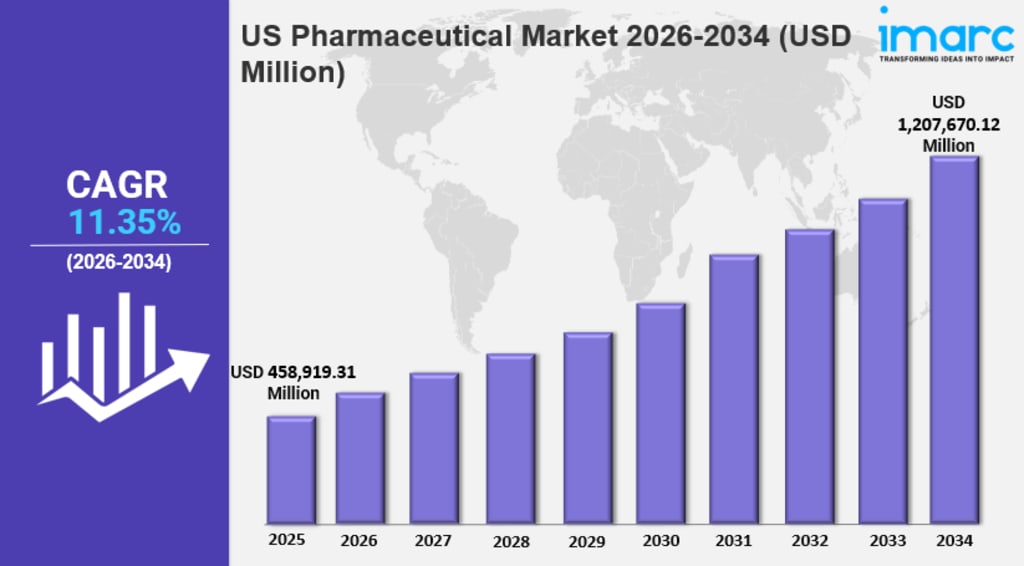
U.S. Pharmaceutical Market Size, Share, and Growth Forecast (2026–2034)
The U.S. pharmaceutical market is moving through a phase where scale and speed both matters. In 2025, the market stood at USD 458,919.31 million and is expected to reach USD 1,207,670.12 million by 2034, growing at a CAGR of 11.35%. These numbers point to more than expansion—they reflect how deeply pharmaceuticals are tied to the country’s healthcare system and economic structure.
For businesses operating in this space, growth is not just about higher demand but about how efficiently companies can respond to it. An aging population is increasing the need for long-term treatments, while digital tools are shortening research timelines and improving outcomes. At the same time, partnerships between pharmaceutical firms, biotech companies, and research institutions are becoming more common, allowing faster innovation without carrying the full cost internally. This combination is shaping the overall U.S. pharmaceutical market share and creating a more competitive environment.
Request a Sample Report with Latest 2026 Data & Forecasts:
Key Trends Transforming the U.S. Pharmaceutical Market
One clear shift in the market is the way technology is being used across the value chain. From drug discovery to distribution, companies are relying more on data and automation. This is not just about efficiency—it is about reducing uncertainty in development and improving decision-making.
Another noticeable trend is the move toward more targeted treatments. Instead of broad therapies, companies are focusing on specific patient groups, especially in areas like oncology and rare diseases. This approach requires deeper research but often leads to better outcomes and stronger pricing power.
There is also a growing emphasis on collaboration. Large pharmaceutical companies are increasingly working with smaller biotech firms to access specialized knowledge. For B2B stakeholders, this creates opportunities not only in drug development but also in contract manufacturing, research support, and supply chain services.
Major Growth Drivers in the U.S. Pharmaceutical Industry
Demand in the pharmaceutical industry is closely tied to long-term healthcare needs. Chronic conditions such as diabetes, cardiovascular diseases, and cancer continue to rise, which directly increases the need for ongoing medication and treatment solutions.
Another important driver is demographic change. As the population ages, the demand for healthcare services and pharmaceutical products grows steadily. This creates a consistent revenue base for companies operating in the market.
Investment in research and development is also playing a major role. Companies are not only developing new drugs but also improving existing ones to extend their lifecycle and market reach. For B2B players, this means steady demand for services such as clinical trials, regulatory consulting, and manufacturing support.
Rising Demand for Specialty and Biopharmaceutical Drugs in the U.S.
Specialty drugs and biopharmaceuticals are becoming a larger part of the market. These treatments are often used for complex or long-term conditions and require advanced production processes. While they come with higher costs, they also offer higher value in terms of outcomes.
This shift is changing how companies operate. Manufacturing facilities need to meet stricter standards, and logistics providers must handle temperature-sensitive products with care. For businesses involved in the supply chain, this creates both challenges and opportunities.
Biopharmaceuticals are also closely linked to the rise of personalized medicine. As treatments become more tailored, companies that can adapt quickly to smaller, more specialized production runs will have a clear advantage.
Regulatory Landscape and Pricing Challenges in the U.S. Pharmaceutical Market
Operating in the U.S. pharmaceutical market means navigating a complex regulatory environment. Approval processes are detailed and time-consuming, which can delay product launches but also ensures safety and quality.
Pricing remains a sensitive issue. There is increasing pressure from regulators, insurers, and the public to keep drug costs under control. This is especially true for high-cost therapies, where affordability becomes a major concern.
To manage these challenges, companies are focusing on efficiency and value. Some are adopting pricing models that link cost to treatment outcomes, while others are working to reduce production expenses. For B2B stakeholders, understanding these pressures is essential when planning investments or partnerships.
Investment Opportunities in the U.S. Pharmaceutical Market
Despite the challenges, the market continues to offer strong investment potential. Areas such as biologics, biosimilars, and specialty drugs are attracting attention due to their growth prospects and relatively higher margins.
Technology is another key area of opportunity. Companies that invest in digital tools, data analytics, and automation are better positioned to improve efficiency and scale operations. This is particularly relevant for contract manufacturers and service providers looking to expand their role in the value chain.
There is also growing demand for outsourcing. Pharmaceutical companies are increasingly relying on external partners for manufacturing, research, and logistics. This opens the door for specialized service providers to capture a larger share of the market.
Competitive Landscape and Key Players in the U.S. Pharmaceutical Industry
Competition in the U.S. pharmaceutical industry is intense, with both large multinational corporations and smaller biotech firms playing important roles. Established companies such as Pfizer Inc., Johnson & Johnson, Merck & Co., Inc., AbbVie Inc., and Bristol-Myers Squibb continue to lead through strong product portfolios and ongoing investment in research.
At the same time, smaller companies are bringing innovation into the market, often focusing on niche therapies or new treatment approaches. Partnerships and acquisitions are common, as larger firms look to strengthen their pipelines and expand into new areas.
For businesses looking to enter or expand within the market, understanding this competitive mix is important. Success depends not only on product quality but also on the ability to collaborate, adapt, and respond quickly to changing market conditions.
About the Creator
Kim Soo hyun
My name is Kim Soo hyun, and I am a research analyst at IMARC Group, specializing in market trends and data analysis to provide insights and support strategic decision-making.
Enjoyed the story? Support the Creator.
Subscribe for free to receive all their stories in your feed.
Comments
There are no comments for this story
Be the first to respond and start the conversation.