
US Pet Food Market Size Growth Share Trends Demand & Forecast 2034
The US pet food market size was valued at USD 46.89 Billion in 2025 and is projected to reach USD 62.10 Billion by 2034

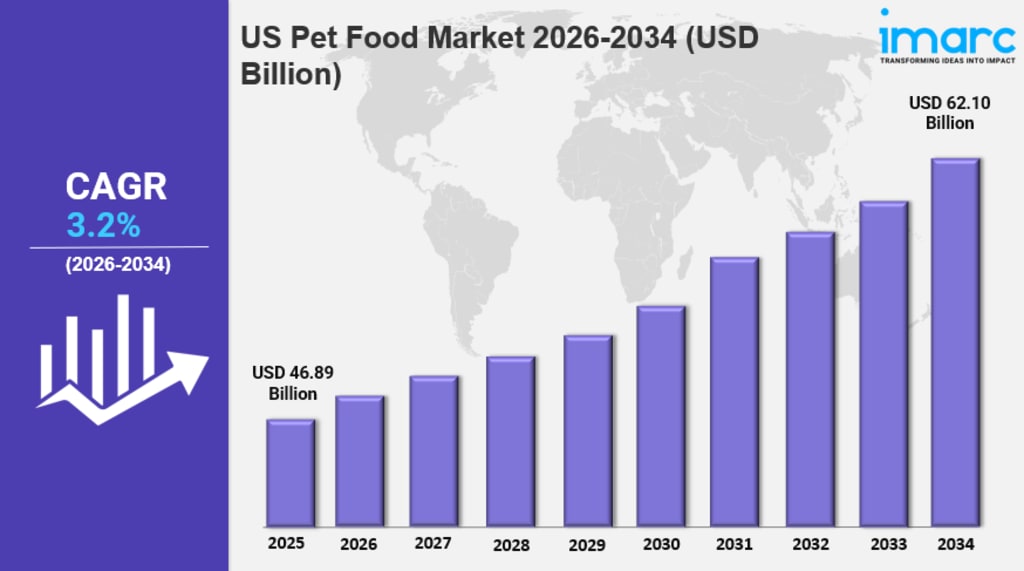
U.S. Pet Food Market Size, Share, and Growth Forecast (2026–2034)
The U.S. pet food market has become a stable, demand-driven category with consistent growth supported by long-term consumer behavior. The market was valued at USD 46.89 billion in 2025 and is expected to reach USD 62.10 billion by 2034, growing at a CAGR of 3.2% during 2026–2034.
What stands out is not just growth, but resilience. Pet ownership remains high, and spending on pet care continues even during economic uncertainty. For manufacturers and suppliers, this creates a dependable revenue base. At the same time, competition is shifting from volume to value, where product positioning, ingredient quality, and brand trust play a larger role in market share.
Request a Sample Report with Latest 2026 Data & Forecasts
Premiumization and Humanization Trends in the U.S. Pet Food Market
Pet food is increasingly positioned as an extension of human nutrition. Many consumers now expect the same level of quality, transparency, and health benefits in pet food as they do in their own diets. This has led to a clear move toward premium products.
Premiumization is not limited to pricing—it reflects better ingredients, specialized formulations, and clearer labeling. Products designed for specific life stages, breeds, or health conditions are gaining traction. For B2B players, this trend supports higher margins but also requires more investment in product development and sourcing.
Humanization is also influencing packaging, branding, and marketing strategies. Companies are focusing on trust, storytelling, and ingredient sourcing to connect with consumers who view pets as part of the family.
Consumer Demand Shifts Toward Organic, Natural, and Functional Pet Food in the U.S.
Demand is shifting toward products that offer clear health benefits. Organic and natural pet food options are becoming more visible across retail shelves, supported by growing awareness around nutrition and ingredient quality.
Functional pet food is another area gaining attention. Products that support digestion, joint health, skin care, or immunity are seeing steady uptake. This reflects a broader trend where pet owners are looking for preventive care rather than reactive solutions.
For manufacturers and ingredient suppliers, this creates opportunities to develop differentiated products. However, it also increases the need for transparency and compliance, as consumers are more informed and selective about what they purchase.
Supply Chain, Ingredient Sourcing, and Cost Pressures in the U.S. Pet Food Industry
Managing costs remains a key challenge in the pet food industry. Prices of core ingredients such as meat, grains, and specialty additives can fluctuate, affecting overall production costs. At the same time, packaging and transportation expenses continue to add pressure on margins.
Sourcing has become more strategic. Companies are focusing on reliable suppliers, traceability, and quality assurance to maintain consistency. This is especially important for premium and functional products, where ingredient quality directly impacts brand positioning.
Operational efficiency is also a priority. Businesses are optimizing production processes, reducing waste, and improving logistics to manage costs without compromising product quality. Long-term supplier relationships and local sourcing strategies are becoming more common as companies look to reduce risk.
E-commerce and Retail Distribution Strategies in the U.S. Pet Food Market
Distribution in the pet food market is evolving, with e-commerce playing a larger role alongside traditional retail channels. Online platforms are offering convenience, subscription models, and a wider product range, making them an important sales channel for both established brands and new entrants.
At the same time, physical retail remains relevant, particularly for first-time purchases and brand discovery. Pet specialty stores and supermarkets continue to attract customers who prefer to see products before buying.
For businesses, a balanced distribution strategy is essential. Combining online and offline channels allows companies to reach a broader audience while maintaining consistent sales. Data from e-commerce platforms is also helping brands understand customer preferences and adjust their offerings accordingly.
Investment Opportunities in the U.S. Pet Food Market for Manufacturers and Investors
The U.S. pet food market offers steady investment opportunities, particularly in segments that focus on quality and innovation. Premium and functional products continue to attract interest due to their higher margins and growing demand.
There is also potential in expanding production capabilities, especially for companies that can support private-label manufacturing or specialized product lines. As retailers increase their own brand offerings, partnerships with manufacturers become more important.
Technology and data-driven solutions are another area of opportunity. Companies that invest in supply chain optimization, demand forecasting, and customer analytics are better positioned to improve efficiency and scale operations.
Competitive Landscape and Key Players in the U.S. Pet Food Industry
The U.S. pet food industry is led by a mix of global corporations and specialized brands. Major players such as Mars Petcare, Nestlé Purina PetCare, and Hill's Pet Nutrition hold significant market share through strong distribution networks and established product portfolios.
At the same time, smaller and emerging brands are gaining attention by focusing on niche segments such as organic, grain-free, and functional pet food. This creates a competitive environment where both scale and specialization play a role.
For B2B stakeholders, success depends on the ability to adapt to changing consumer expectations, maintain product quality, and build strong distribution partnerships. Companies that can align these factors are more likely to sustain growth in the U.S. pet food market.
About the Creator
Kim Soo hyun
My name is Kim Soo hyun, and I am a research analyst at IMARC Group, specializing in market trends and data analysis to provide insights and support strategic decision-making.
Enjoyed the story? Support the Creator.
Subscribe for free to receive all their stories in your feed.
Comments
There are no comments for this story
Be the first to respond and start the conversation.