
US Food Service Market Size, Share | Forecast 2034
The US food service market size reached USD 1,610.1 Billion in 2025 and is projected to reach USD 2,703.6 Billion by 2034, exhibiting a CAGR of 5.93% during the forecast period 2026-2034.

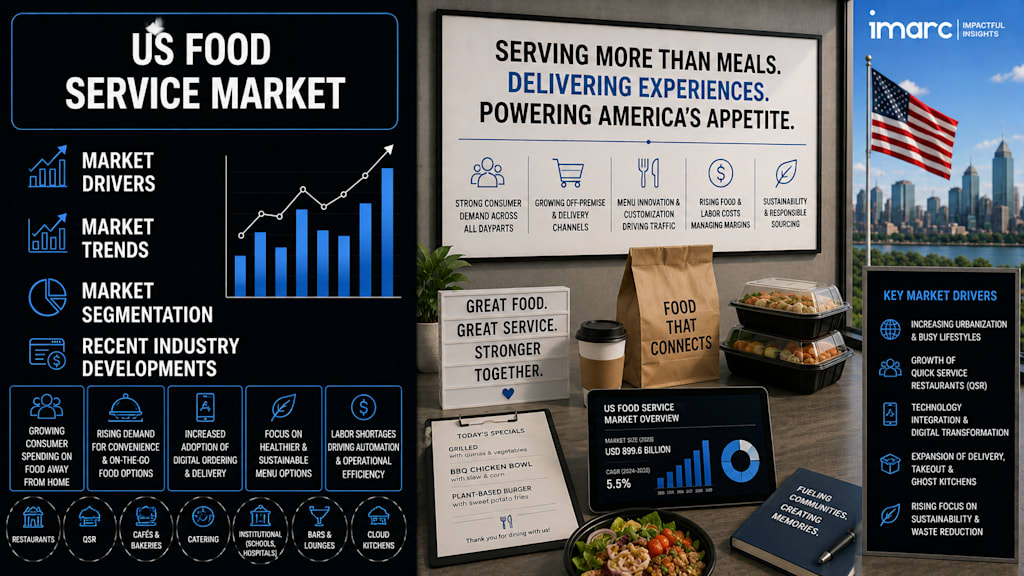
Why the US Food Service Market Is Evolving: Trends & Future Outlook (2026–2034)
The food service industry has become one of the most dynamic sectors of the modern economy. From quick-service restaurants and cafés to full-service dining establishments and food delivery platforms, the industry plays a vital role in how consumers access meals and dining experiences. As lifestyles become increasingly fast-paced and technology-driven, food service providers are adapting to meet changing expectations.
In 2026, convenience, speed, personalization, and digital accessibility continue to shape the future of dining across the United States. Consumers now expect seamless ordering experiences, flexible meal options, and faster delivery services, encouraging businesses to invest heavily in innovation and customer engagement.
The US food service market reached USD 1,610.1 Billion in 2025 and is projected to grow to USD 2,703.6 Billion by 2034, exhibiting a compound annual growth rate (CAGR) of 5.93% during 2026–2034. This growth reflects the increasing demand for convenient dining solutions and evolving consumer lifestyles.
Request a Sample Report with Latest 2026 Data & Forecasts:
Key Trends Shaping the US Food Service Market
Several major trends are influencing market development:
• Growing adoption of digital ordering platforms
• Expansion of food delivery and takeout services
• Rising demand for convenience-focused dining experiences
• Increased use of mobile applications and loyalty programs
• Growing interest in healthier and personalized menu offerings
These trends are helping businesses attract customers while improving operational efficiency.
Digital Ordering Is Transforming the Industry
Technology has fundamentally changed how consumers interact with restaurants.
Mobile apps, online ordering platforms, and self-service kiosks have become common features across the food service landscape. Customers can browse menus, customize orders, make payments, and schedule deliveries from their smartphones.
Digital ordering systems not only improve convenience but also help businesses collect valuable customer insights that support marketing and menu development strategies.
As digital adoption continues growing throughout 2026–2034, technology will remain a major driver of industry innovation.
Delivery Services Continue Expanding
One of the most significant developments in recent years has been the rapid growth of food delivery services.
Consumers increasingly expect meals to be delivered quickly and conveniently to their homes, workplaces, or other locations. Third-party delivery platforms and restaurant-operated delivery services have expanded access to a wide variety of dining options.
This shift has created new revenue opportunities for restaurants while reshaping consumer expectations regarding convenience and service.
The demand for delivery and takeout options is expected to remain strong during the forecast period.
Fast Food Remains a Major Market Segment
Fast food restaurants continue to play a dominant role within the food service industry.
In 2025, fast food establishments accounted for approximately 45% of total market revenue, reflecting their strong appeal among consumers seeking affordability, convenience, and speed.
Many operators are introducing healthier menu items, digital ordering technologies, and loyalty programs to remain competitive in an evolving marketplace.
The segment's ability to adapt to changing consumer preferences continues supporting its growth.
Commercial Food Service Leads the Market
The commercial sector remains the largest segment of the industry.
Commercial food service establishments accounted for approximately 80% of the market in 2025, driven by restaurants, cafés, quick-service chains, and hospitality venues.
These businesses continue investing in technology, customer experience enhancements, and operational efficiency improvements to strengthen their market positions.
As consumer spending on dining experiences continues growing, the commercial segment is expected to remain a key driver of industry expansion.
Regional Growth Patterns Across the United States
Regional dynamics also play an important role in market development.
The South region represented approximately 32% of total market share in 2025, making it the largest regional market. Strong population growth, vibrant tourism activity, and a well-established dining culture contribute significantly to the region's leadership position.
Other regions are also experiencing growth as urbanization and changing consumer preferences support increased food service demand.
Investment Opportunities in the Industry
The expanding food service market presents attractive opportunities for investors and businesses.
Companies are investing in:
• Digital ordering technologies
• Delivery and logistics infrastructure
• Restaurant automation solutions
• Customer loyalty platforms
• Sustainable food service practices
There is also growing interest in cloud kitchens, virtual restaurant brands, and AI-powered operational tools that improve efficiency and customer experiences.
These investments are helping shape the future of the industry.
Challenges Facing the Market
Despite strong growth prospects, the food service industry faces several challenges.
Labor shortages remain a concern for many operators, increasing pressure to adopt automation and improve workforce efficiency.
Rising food costs and supply chain disruptions can affect profitability and menu pricing strategies.
Changing consumer preferences also require businesses to continuously innovate and adapt.
Maintaining consistent service quality while managing operational costs will remain a key priority throughout the forecast period.
Future Outlook (2026–2034)
Looking ahead, the US food service market is expected to continue its steady expansion.
Between 2026 and 2034, demand for digital ordering, delivery services, personalized dining experiences, and convenient meal solutions is likely to increase significantly. Businesses that successfully combine technology, efficiency, and customer-focused innovation will be well positioned for long-term success.
Future developments may include greater automation, artificial intelligence-powered customer engagement, advanced delivery solutions, and expanded menu personalization capabilities.
These innovations are expected to further transform how consumers discover, order, and enjoy food.
Conclusion
The US food service market is undergoing significant transformation as changing lifestyles, technological advancements, and consumer preferences reshape the dining experience. Supported by digital innovation, expanding delivery services, and growing demand for convenience, the industry is expected to maintain strong growth through 2026–2034.
Although challenges such as labor shortages and rising costs remain, ongoing investment and innovation are helping businesses adapt to a rapidly evolving marketplace. As consumers continue seeking flexible and convenient dining options, the food service industry will remain an essential part of everyday life across the United States.
About the Creator
Jackson Watson
I'm a market research analyst at Imarc group company delivering data-driven insights, industry analysis, and customized research solutions. We support businesses with market sizing, competitive analysis, and strategic decision-making.
Enjoyed the story? Support the Creator.
Subscribe for free to receive all their stories in your feed.
Comments
There are no comments for this story
Be the first to respond and start the conversation.