
US Co-Working Office Space Market Size Trends & Growth Report 2034
The US co-working office space market reached USD 2,445.1 Million in 2025 and is projected to grow significantly to USD 11,045.4 Million by 2034

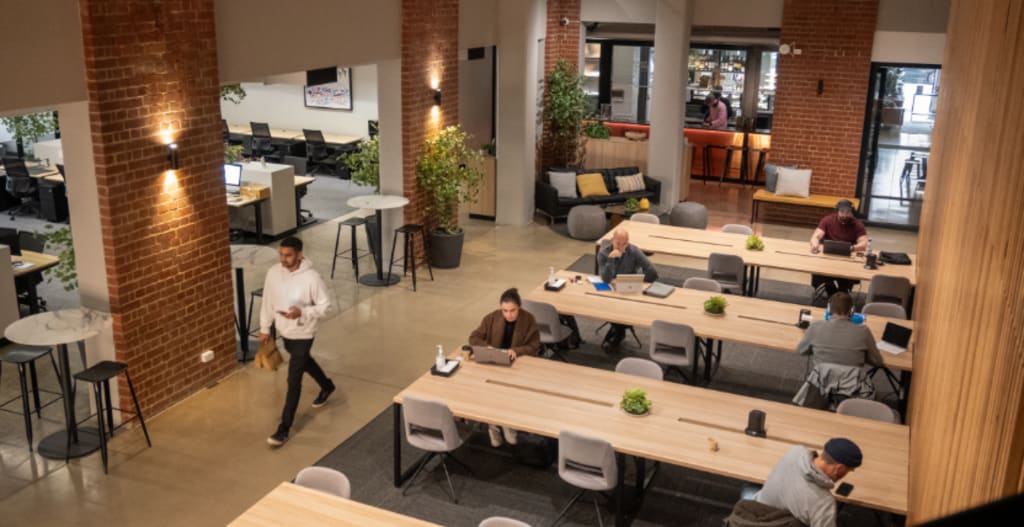
US Co-Working Office Space Market Size, Growth, and Forecast (2026–2034)
The US co-working office space market reached USD 2,445.1 Million in 2025 and is projected to grow significantly to USD 11,045.4 Million by 2034, exhibiting a strong CAGR of 17.69% during 2026–2034. This rapid expansion reflects a structural shift in workplace strategies, as businesses increasingly move away from traditional long-term leases toward flexible and scalable office solutions.
Growth is particularly strong in major metropolitan hubs such as New York, San Francisco, and Austin, where startup ecosystems and enterprise demand are highly concentrated. At the same time, suburban and secondary cities are emerging as high-potential markets due to lower costs and growing remote workforce populations. For investors and workspace operators, this creates a diverse landscape of expansion opportunities.
Request a Sample Report with Latest 2026 Data & Forecasts:
Key Trends Shaping the US Co-Working Office Space Industry
The industry is undergoing a transformation driven by evolving work culture and technological innovation. One of the most notable trends is the rise of hybrid work models, where employees split time between home and office environments. This shift has significantly increased demand for flexible office spaces that can adapt to fluctuating workforce needs.
Another key trend is the growing emphasis on experience-driven workspaces, including wellness-focused designs, collaborative zones, and premium amenities. Operators are also focusing on niche segments such as industry-specific co-working hubs and enterprise-grade managed office solutions to cater to diverse business requirements.
Major Growth Drivers in the US Flexible Workspace Market
Several factors are driving the expansion of the co-working market in the United States. The rapid growth of startups and small businesses is a major contributor, as these companies seek cost-effective and flexible office solutions. Additionally, large enterprises are increasingly adopting co-working spaces to support decentralized teams and reduce real estate costs.
The demand for short-term leases and scalable office solutions is also accelerating market growth. Businesses are prioritizing agility and operational efficiency, which makes co-working spaces an attractive alternative to traditional office setups. Furthermore, the increasing focus on employee productivity and collaboration is encouraging organizations to adopt modern workspace models.
Demand for Hybrid Workspaces and Its Impact on Market Expansion
Hybrid work has become a defining feature of the modern workplace, significantly influencing the growth of co-working spaces. Companies are leveraging co-working environments to provide employees with convenient, flexible, and collaborative work settings closer to their homes.
This shift is driving demand not only in urban centers but also in suburban and regional markets. Co-working operators are responding by expanding their networks and offering customizable workspace solutions that align with hybrid work strategies. As a result, hybrid work is expected to remain a key driver of long-term market expansion.
Investment Opportunities in the US Co-Working Office Space Market
The strong growth trajectory of the market presents significant investment opportunities for real estate developers, private equity firms, and workspace operators. Investments in tech-enabled workspaces, premium office environments, and flexible leasing models are expected to yield high returns.
There is also increasing interest in franchise models and partnerships, allowing operators to expand rapidly across multiple locations. Additionally, integrating co-working spaces within mixed-use developments, residential complexes, and commercial hubs is creating new revenue streams. Investors focusing on data-driven site selection and customer-centric offerings are likely to gain a competitive edge.
Challenges Impacting the US Co-Working Office Space Industry
Despite strong growth potential, the market faces several challenges. Economic uncertainty and fluctuating demand can impact occupancy rates and revenue stability. High operational costs, including real estate expenses and facility management, also pose challenges for operators.
Additionally, intense competition among co-working providers is putting pressure on pricing and differentiation. Maintaining high occupancy levels while delivering premium experiences requires continuous innovation and strategic planning. Addressing these challenges will be critical for sustaining long-term growth.
Technology Integration and Smart Office Solutions in Co-Working Spaces
Technology is playing a crucial role in shaping the future of co-working spaces. Operators are increasingly adopting smart office solutions, including IoT-enabled devices, automated access systems, and advanced booking platforms to enhance user experience.
Data analytics is also being used to optimize space utilization, improve operational efficiency, and personalize services for members. Furthermore, the integration of digital collaboration tools and high-speed connectivity is supporting seamless hybrid work environments. For B2B stakeholders, investing in technology-driven solutions is essential to remain competitive in the evolving co-working landscape.
About the Creator
Kim Soo hyun
My name is Kim Soo hyun, and I am a research analyst at IMARC Group, specializing in market trends and data analysis to provide insights and support strategic decision-making.
Enjoyed the story? Support the Creator.
Subscribe for free to receive all their stories in your feed.
Comments
There are no comments for this story
Be the first to respond and start the conversation.