
United States Wine Market Size Growth, Industry Trends & Outlook 2034
The U.S. wine market reached USD 79.8 billion in 2025 and is expected to grow to USD 119.6 billion by 2034, at a CAGR of 4.59%.

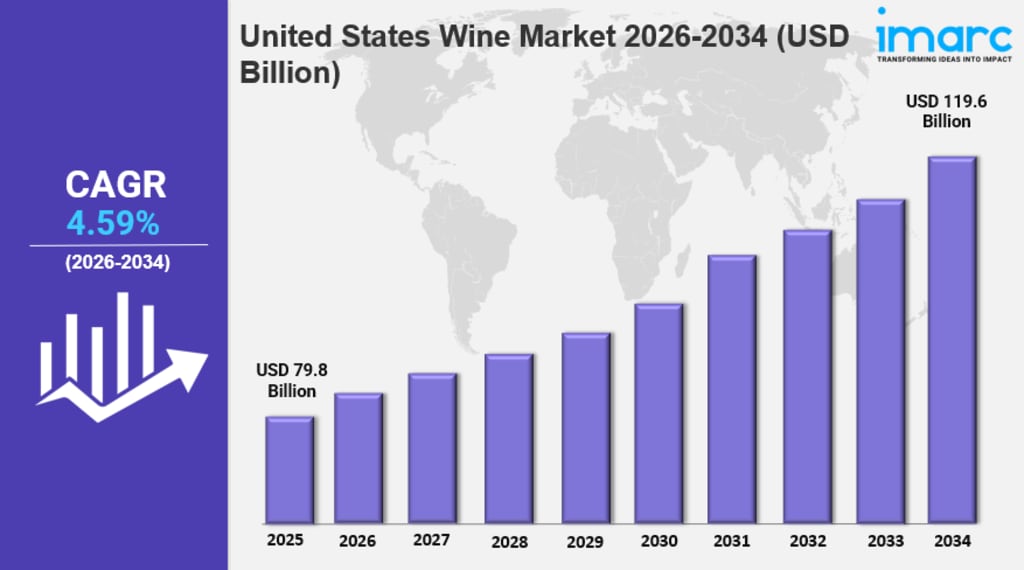
United States Wine Market Size, Share, and Growth Forecast (2026–2034)
The U.S. wine market is evolving in a way that rewards positioning as much as scale. It reached USD 79.8 billion in 2025 and is expected to grow to USD 119.6 billion by 2034, at a CAGR of 4.59%. That growth is steady, not explosive—so execution, brand strategy, and distribution matter more than simply adding volume.
For producers and distributors, demand is being shaped by two parallel forces. On one side, consumers are trading up, looking for better quality, unique varietals, and regional identity. On the other, convenience and accessibility still drive everyday purchases. Wine tourism, education, and direct engagement are also strengthening brand loyalty, which has a direct impact on repeat sales and pricing power.
Request a Sample Report with Latest 2026 Data & Forecasts:
Pricing Trends, Premiumization, and Margin Dynamics in the U.S. Wine Market
Pricing in the wine industry is closely tied to brand perception and product positioning. Premiumization continues to influence the market, with consumers willing to pay more for wines that offer a clear story—whether that’s origin, production method, or sustainability.
For businesses, this creates an opportunity to improve margins, but it also raises expectations. Higher price points require consistent quality, strong branding, and effective distribution. At the same time, cost pressures—from packaging to logistics—are forcing companies to manage margins carefully.
Producers are increasingly segmenting their portfolios, offering both entry-level and premium products to balance volume and profitability. This approach helps maintain market presence while capturing higher-value customers.
Consumer Demand Shifts: Premium, Organic, and Low-Alcohol Wines in the U.S.
Consumer preferences in the U.S. wine market are becoming more specific. There is growing interest in organic and sustainably produced wines, driven by broader awareness around health and environmental impact. This is influencing sourcing, certification, and labeling decisions across the industry.
Low-alcohol and lighter wine options are also gaining attention, particularly among younger consumers. These products are not replacing traditional wines but are expanding the category by attracting new segments.
For B2B players, these shifts require flexibility in production and marketing. Businesses that can respond quickly to changing preferences—without overextending their portfolios—are better positioned to maintain relevance.
Distribution Channels and Supply Chain Strategies in the U.S. Wine Industry
Distribution remains one of the most important factors in market success. The U.S. operates under a three-tier system, which separates producers, distributors, and retailers. Navigating this structure effectively is essential for reaching target markets.
At the same time, direct-to-consumer (DTC) channels are becoming more important. Wineries are investing in online platforms, wine clubs, and tasting experiences to build direct relationships with customers. This not only improves margins but also provides better control over brand positioning.
Supply chain efficiency is also under focus. From vineyard to shelf, managing inventory, transportation, and storage conditions is critical. Businesses are looking for ways to reduce delays and maintain product quality, especially for premium offerings.
On-Trade vs Off-Trade Sales Trends in the United States Wine Market
Sales channels in the wine market are divided between on-trade (restaurants, bars, hotels) and off-trade (retail stores, supermarkets, online). Each channel plays a different role in brand visibility and revenue generation.
Off-trade continues to account for a larger share of volume, driven by convenience and price sensitivity. However, on-trade channels are important for brand building and premium positioning. A strong presence in restaurants or hospitality venues can influence consumer perception and drive future retail sales.
For producers and distributors, balancing these channels is key. Over-reliance on one channel can limit growth, while a diversified approach allows for more stable revenue streams.
Investment Opportunities in the U.S. Wine Market for Producers and Distributors
The U.S. wine market offers practical opportunities for investment, particularly in areas that combine product quality with strong distribution. Premium and niche segments—such as organic wines and region-specific labels—are attracting attention due to their pricing potential.
Wine tourism is another area of interest. Investments in vineyard experiences, tasting rooms, and hospitality services are helping brands create additional revenue streams and strengthen customer engagement.
Technology is also playing a role. Data-driven tools for demand forecasting, inventory management, and customer insights are helping businesses operate more efficiently. Companies that integrate these tools into their operations are better positioned to scale.
Competitive Landscape and Key Wine Companies in the United States
The competitive landscape includes a mix of large producers and smaller, specialized wineries. Companies such as E. & J. Gallo Winery, Constellation Brands, and The Wine Group have built strong positions through scale, distribution networks, and diversified portfolios.
At the same time, boutique wineries are gaining recognition by focusing on quality, storytelling, and regional identity. This creates a market where both scale and specialization can succeed.
For B2B stakeholders, competition is less about volume alone and more about positioning. Companies that align product quality, pricing strategy, and distribution effectively are more likely to achieve consistent growth in the U.S. wine market.
About the Creator
Kim Soo hyun
My name is Kim Soo hyun, and I am a research analyst at IMARC Group, specializing in market trends and data analysis to provide insights and support strategic decision-making.
Enjoyed the story? Support the Creator.
Subscribe for free to receive all their stories in your feed.
Comments
There are no comments for this story
Be the first to respond and start the conversation.