
United States Wedding Services Market Expected to Surpass US$ 105 Billion by 2034 as Personalized and Experience-Driven Weddings Redefine Celebrations
Social Media Influence, Destination Weddings, and Luxury Event Trends Are Transforming the U.S. Wedding Services Industry

The United States wedding services market is undergoing a major transformation as couples increasingly prioritize personalized experiences, luxury celebrations, and social-media-worthy events. Weddings are no longer viewed simply as traditional ceremonies—they have evolved into highly curated lifestyle experiences that reflect personal identity, creativity, and emotional storytelling.
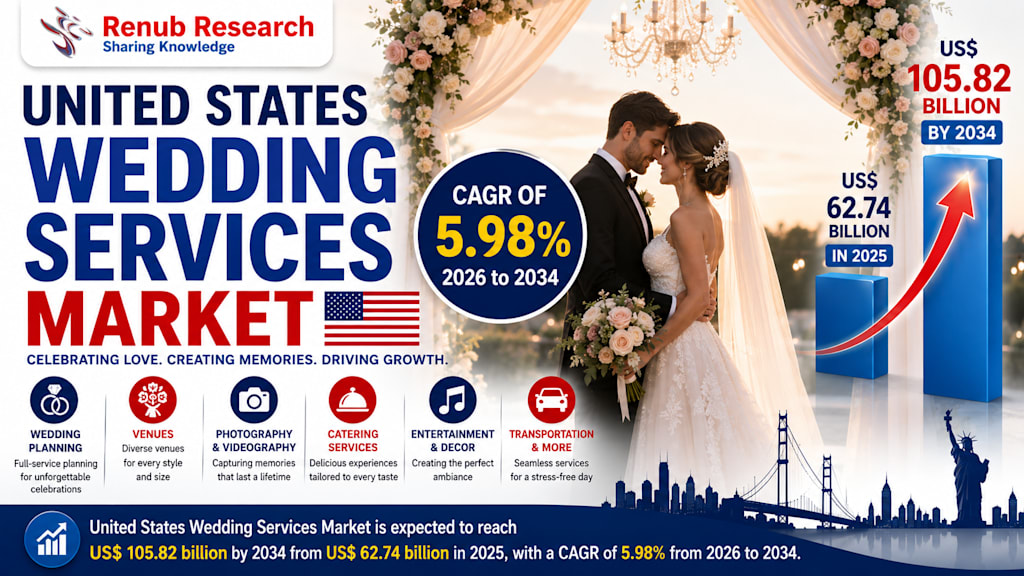
According to Renub Research, the United States wedding services market is projected to grow from US$ 62.74 billion in 2025 to US$ 105.82 billion by 2034, expanding at a CAGR of 5.98% between 2026 and 2034. Rising disposable incomes, increasing demand for customized celebrations, growth in destination weddings, and the strong influence of digital platforms are driving consistent market expansion across the country.
Wedding services encompass a wide range of professional offerings, including event planning, venue management, catering, photography, videography, floral arrangements, transportation, bridal styling, décor, entertainment, and digital wedding tools. As modern weddings become more elaborate and experience-focused, couples are increasingly relying on professional vendors to execute seamless and memorable events.
At the same time, social media culture and digital planning platforms are dramatically reshaping consumer expectations and spending patterns within the wedding industry.
Personalized Weddings Are Becoming the New Standard
One of the strongest growth drivers in the U.S. wedding services market is the rising demand for highly personalized and emotionally meaningful wedding experiences.
Modern couples increasingly want weddings that reflect their personalities, cultural backgrounds, lifestyles, and shared interests rather than traditional one-size-fits-all ceremonies.
This shift has significantly increased demand for:
- Customized décor
- Themed wedding concepts
- Personalized invitations
- Curated dining experiences
- Interactive entertainment
- Luxury floral arrangements
- Custom wedding websites
- Story-driven photography and videography
Couples are now investing more heavily in details that create immersive guest experiences and emotional connections.
Instead of hosting single-day ceremonies, many couples are organizing multi-day celebrations that include welcome dinners, cocktail parties, rehearsal events, post-wedding brunches, and destination activities for guests.
Wedding planners and professional event coordinators play a critical role in managing these increasingly complex celebrations, driving strong demand across multiple service categories.
Personalization also extends into digital storytelling. Couples frequently create social-media campaigns around their weddings, sharing engagement shoots, bridal content, décor previews, and cinematic wedding films across online platforms.
As weddings become more experience-driven, spending on premium services continues rising throughout the market.
Social Media Has Completely Changed Wedding Trends
Social media platforms have become one of the most influential forces shaping the modern wedding industry in the United States.
Platforms such as Instagram, Pinterest, TikTok, and YouTube constantly expose couples to trending wedding aesthetics, luxury venues, creative décor ideas, and elaborate photography styles.
This digital exposure has dramatically raised expectations around visual presentation and event quality.
Couples increasingly prioritize “Instagrammable” wedding moments that can be shared online, creating higher demand for professional photographers, videographers, stylists, and event designers capable of producing visually stunning content.
Photography and videography have become particularly important because weddings are now documented not only for personal memories but also for social media storytelling.
The rise of drone videography, cinematic highlight reels, and luxury bridal shoots reflects this transformation.
Social media has also accelerated trend cycles within the industry. Styles that gain popularity online—such as minimalist décor, outdoor ceremonies, floral installations, or destination elopements—can rapidly influence consumer demand nationwide.
At the same time, online wedding marketplaces and planning platforms have simplified vendor discovery and booking.
Digital wedding platforms now allow couples to:
- Compare vendors
- Read customer reviews
- Schedule consultations
- Track budgets
- Manage guest lists
- Build wedding websites
- Coordinate event timelines
This increased accessibility has intensified competition among vendors while making professional wedding services easier for consumers to access.

Destination Weddings Continue Growing Rapidly
Destination weddings have become another major driver of growth across the U.S. wedding services market.
Many couples now prefer hosting weddings in scenic or culturally significant locations that provide both ceremony experiences and travel opportunities for guests.
Popular destination wedding formats include:
- Beach weddings
- Vineyard ceremonies
- Mountain resort weddings
- Ranch weddings
- Tropical celebrations
- Luxury resort events
- International wedding experiences
These weddings often extend across several days and involve larger service requirements, increasing spending across accommodation, catering, transportation, entertainment, and event management categories.
Destination weddings also create opportunities for premium experiences and luxury upgrades, contributing to higher overall market value.
Wedding planners specializing in travel coordination and multi-day event management are benefiting significantly from this trend.
As consumers increasingly prioritize experiences over material purchases, destination weddings are expected to remain a strong long-term growth segment.
Digital Platforms Are Reshaping the Industry
Technology is transforming how couples plan weddings and interact with vendors.
Virtual consultations, AI-powered planning tools, digital budgeting systems, and online booking platforms are making wedding planning more efficient and accessible.
In July 2024, The Knot Worldwide announced major platform upgrades designed to help wedding professionals improve lead quality, vendor visibility, and booking efficiency. The company also introduced AI-powered tools such as automated review summaries and intelligent photo-selection systems to help vendors market their services more effectively.
These innovations highlight how digital transformation is becoming central to the wedding services ecosystem.
Technology-driven platforms are also helping smaller vendors compete more effectively by improving discoverability and customer engagement.
Meanwhile, mobile-first planning tools are increasingly popular among younger consumers who prefer managing wedding logistics digitally.
Wedding Registries Are Evolving Beyond Traditional Gifts
Consumer expectations around wedding registries are also changing.
Modern couples increasingly prioritize experiences, travel, home upgrades, and lifestyle services rather than traditional household gift registries.
In September 2023, Zola launched the Zola Baby app after receiving strong customer demand for integrated baby registry services connected to wedding planning. The app includes curated baby products and service partnerships designed to support couples beyond the wedding itself.
This development reflects a broader industry shift where wedding platforms are expanding into lifestyle ecosystems that support customers across multiple life stages.
Technology companies within the wedding industry are increasingly focused on creating personalized, long-term customer relationships rather than one-time event transactions.
Rising Costs Are Creating Budget Pressures
Despite strong market growth, rising wedding costs remain one of the biggest challenges facing the industry.
Inflation and increasing operational expenses have significantly raised prices for venues, catering, décor, transportation, and professional services.
Luxury weddings can now involve extremely high spending levels, placing financial pressure on many couples.
As a result, some consumers are becoming more budget-conscious, leading to:
- Smaller guest lists
- Simplified ceremonies
- Delayed weddings
- Reduced spending on non-essential services
Economic uncertainty can also influence couples to postpone weddings or seek more affordable alternatives.
For vendors, balancing premium quality with affordability has become increasingly difficult.
Smaller service providers often face pressure to maintain competitive pricing despite rising labor, material, and operational costs.
This financial strain creates ongoing challenges across the market.
Intense Competition Is Reshaping Vendor Strategies
The U.S. wedding services market is highly fragmented, with thousands of independent vendors competing across photography, planning, catering, décor, and entertainment segments.
This intense competition places significant pressure on pricing and profit margins.
Consumers now have access to extensive online comparisons, reviews, and vendor portfolios, making differentiation more challenging for service providers.
To remain competitive, vendors increasingly focus on:
- Specialized wedding styles
- Luxury experiences
- Strong branding
- Social media marketing
- Influencer partnerships
- Personalized customer service
- Technology integration
Building strong online reputations has become essential for long-term success.
Smaller vendors often struggle with scaling operations while maintaining consistent quality and customer satisfaction.
However, those capable of delivering unique experiences and emotionally engaging services continue finding strong demand.
California Remains the Largest Wedding Services Market
California represents one of the strongest wedding services markets in the United States due to its large population, scenic venues, and strong consumer spending.
Luxury coastal venues, vineyards, resorts, and outdoor wedding destinations continue attracting both local and destination weddings.
The state’s entertainment and social media culture also heavily influences demand for premium wedding photography, event styling, and customized décor.
California’s multicultural population further contributes to a wide range of wedding traditions and celebration styles.
Despite higher costs, demand for upscale and highly personalized wedding experiences remains exceptionally strong throughout the state.
Texas Benefits From Affordability and Variety
Texas is experiencing rapid growth in wedding services due to its expanding population, economic growth, and relatively affordable wedding costs compared to coastal markets.
Cities such as Austin, Dallas, and Houston offer diverse venue options ranging from urban luxury spaces to countryside ranch weddings.
The state’s cultural diversity also supports a wide variety of wedding formats and traditions.
Destination-style ranch weddings and outdoor ceremonies are becoming especially popular throughout Texas.
Strong demand for catering, entertainment, and event-planning services continues supporting long-term market expansion.
New York Continues Leading the Luxury Segment
New York remains one of the most prestigious wedding markets in the country, driven by luxury venues, premium services, and high consumer spending.
New York City’s iconic hotels, rooftop venues, banquet halls, and event spaces attract both domestic and international couples seeking upscale celebrations.
High-end event planning, fashion styling, gourmet catering, and cinematic photography services are particularly strong segments within the state.
Although wedding costs in New York are among the highest nationwide, demand for exclusive and memorable experiences remains resilient.
Florida Dominates Destination Weddings
Florida continues serving as one of America’s leading destination wedding markets thanks to its beaches, resort venues, and year-round favorable climate.
Cities such as Miami, Orlando, and Tampa attract large numbers of weddings annually from both local and out-of-state couples.
Beach ceremonies and outdoor events drive strong demand for décor, coordination, entertainment, and photography services.
Florida’s tourism infrastructure and comparatively lower costs also make it attractive for couples seeking destination-style experiences within the United States.
The Future of the Wedding Services Industry
The future of the U.S. wedding services market will likely be shaped by personalization, digital transformation, and experience-driven celebrations.
Couples increasingly prioritize emotional storytelling, immersive guest experiences, and highly customized event design.
Technology, AI-powered planning tools, and social media will continue playing central roles in shaping wedding trends and consumer behavior.
At the same time, sustainability and budget-conscious planning may become increasingly important as younger consumers seek meaningful celebrations without excessive financial strain.
Vendors capable of combining creativity, personalization, strong digital presence, and seamless customer experiences are expected to lead the next phase of industry growth.
With the market projected to surpass US$ 105 billion by 2034, the wedding services industry remains one of the most dynamic and emotionally driven sectors within the broader event economy.
Final Thoughts
The United States wedding services market is rapidly evolving as modern couples prioritize unique experiences, luxury aesthetics, and digitally connected celebrations. Social media, destination weddings, and personalized storytelling are reshaping how weddings are planned, marketed, and experienced across the country.
Although rising costs and intense competition continue challenging vendors, strong consumer demand for memorable and customized celebrations is expected to sustain long-term market growth throughout the next decade.
About the Creator
Enjoyed the story? Support the Creator.
Subscribe for free to receive all their stories in your feed.
Comments
There are no comments for this story
Be the first to respond and start the conversation.