
United States Watch Market: Why Are Smartwatches and Luxury Timepieces Driving a New Era of Growth?
Rising smartwatch adoption, growing demand for luxury watches, evolving fashion trends, and continuous technological innovation are transforming the United States watch market through 2034.

For decades, watches have served as both practical tools and personal style statements. While the primary function of telling time has largely shifted to smartphones and digital devices, watches continue to hold significant cultural, fashion, and technological relevance in the United States. Today, the industry is experiencing a remarkable transformation driven by the convergence of traditional craftsmanship and modern innovation.
Smartwatches have introduced entirely new functionalities, enabling users to monitor health metrics, receive notifications, track workouts, and stay connected throughout the day. Meanwhile, luxury mechanical watches continue to attract consumers seeking prestige, exclusivity, and investment value. These parallel trends are creating exciting opportunities across the entire watch industry.
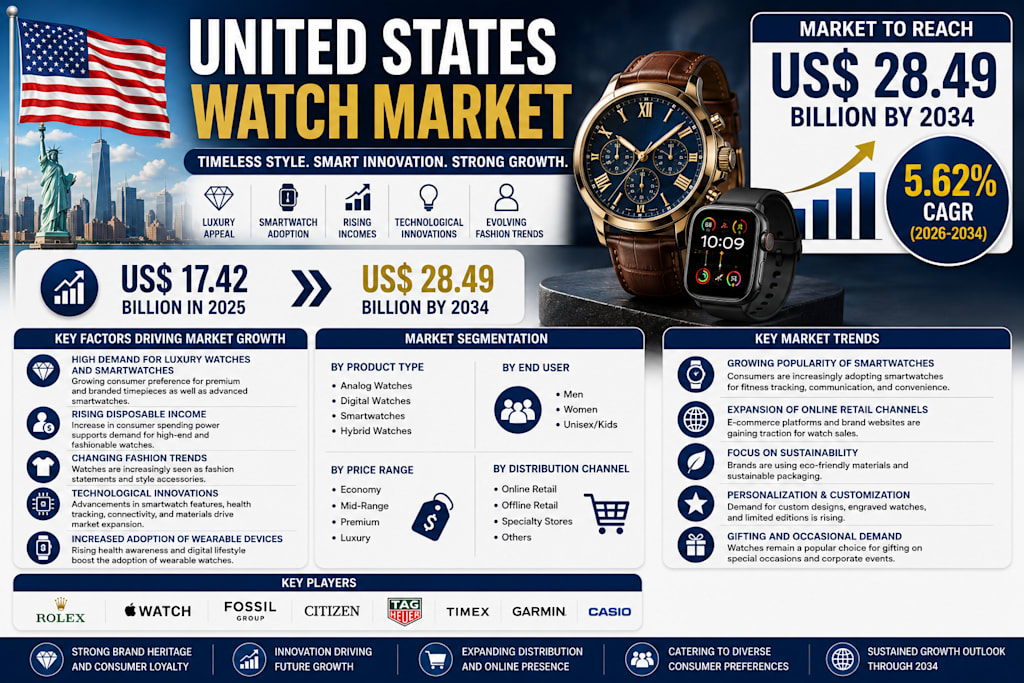
According to Renub Research, the United States Watch Market is projected to grow from US$ 17.42 billion in 2025 to US$ 28.49 billion by 2034, registering a CAGR of 5.62% between 2026 and 2034. Rising demand for luxury watches and smartwatches, increasing disposable income, changing fashion preferences, technological innovation, and growing adoption of wearable devices are expected to drive market growth throughout the forecast period.
Understanding the Modern Watch Market
A watch is a portable timekeeping device traditionally worn on the wrist. While watches initially served a purely functional purpose, today's market encompasses a wide variety of products ranging from classic mechanical timepieces to advanced smartwatches equipped with sophisticated digital technologies.
The industry can broadly be divided into three categories: quartz watches, mechanical watches, and electronic watches. Quartz watches rely on battery-powered movements and remain popular for their affordability and accuracy. Mechanical watches are admired for their craftsmanship and engineering complexity. Electronic watches, including smartwatches, combine traditional timekeeping with advanced digital capabilities.
Despite the widespread use of smartphones, watches continue to thrive because they offer convenience, style, personal expression, and increasingly, health and wellness functionality.
The evolution of wearable technology has further expanded the role of watches in everyday life, transforming them into multifunctional devices that support communication, fitness tracking, and personal productivity.
Smartwatches Are Revolutionizing the Industry
One of the strongest drivers of growth in the United States watch market is the rapid adoption of smartwatches and wearable technology.
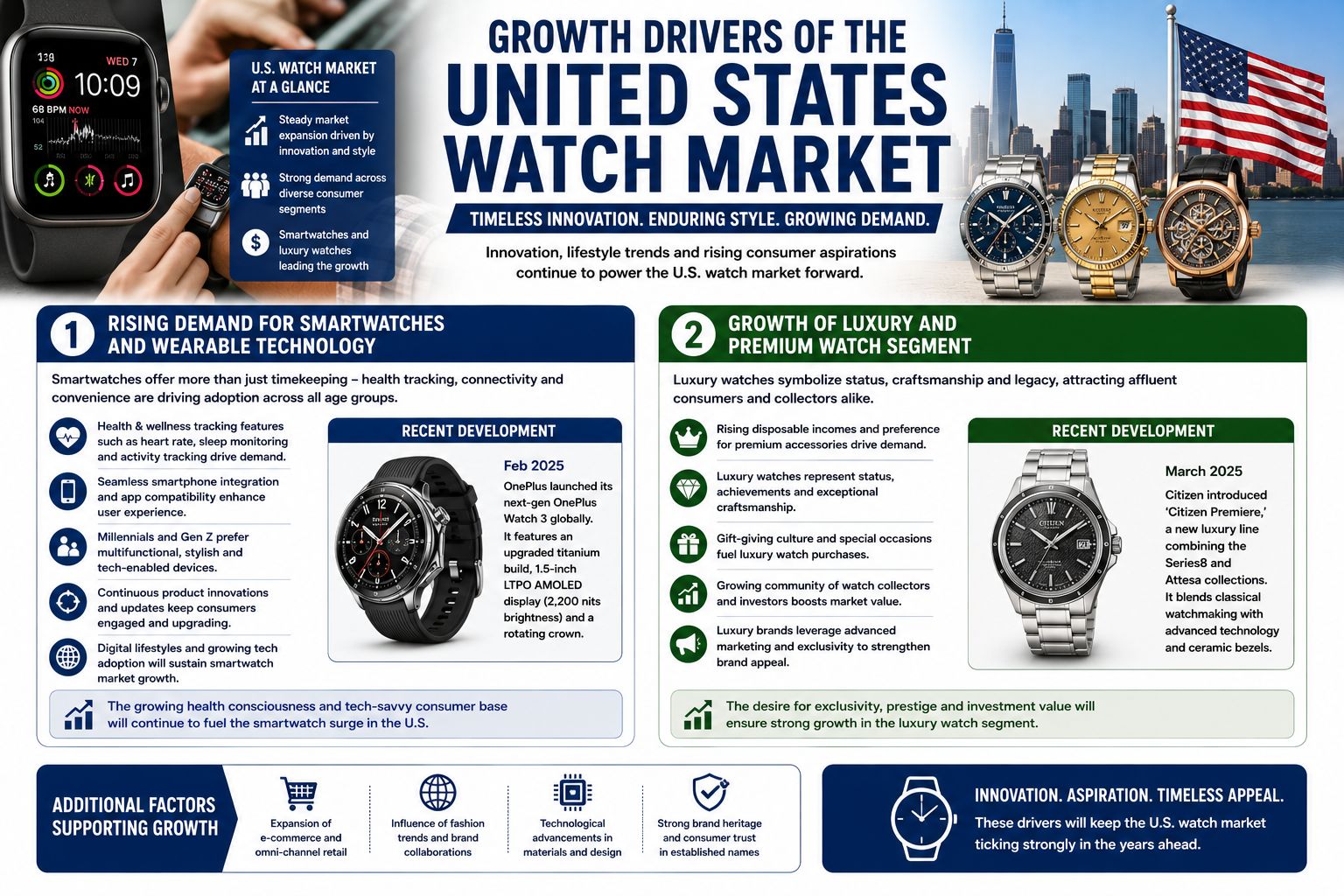
Consumers increasingly seek devices that offer more than simple timekeeping. Smartwatches provide a range of functions including heart rate monitoring, sleep tracking, fitness analysis, GPS navigation, smartphone connectivity, and health management tools.
Growing awareness regarding health and wellness has accelerated smartwatch adoption across all age groups. Consumers appreciate the ability to track physical activity, monitor health indicators, and access information instantly from their wrists.
Millennials and Generation Z consumers have emerged as particularly important customer segments because they value technology, connectivity, and convenience.
Continuous innovation also contributes to strong market momentum. Manufacturers regularly introduce upgraded devices with enhanced features, improved battery performance, and more sophisticated designs.
In February 2025, OnePlus announced the launch of its OnePlus Watch 3, featuring a titanium construction, a 1.5-inch LTPO AMOLED display capable of producing 2,200 nits of brightness, and a rotating crown for improved functionality. Such innovations continue generating excitement among consumers and supporting market expansion.
Health Monitoring Features Drive Consumer Interest
Health and fitness capabilities have become some of the most compelling features offered by modern smartwatches.
Consumers increasingly rely on wearable devices to monitor heart rates, track sleep patterns, measure physical activity, and manage wellness goals. These features have become especially important as awareness regarding preventive healthcare continues to rise.
Many smartwatches now provide advanced capabilities such as blood oxygen monitoring, ECG functionality, stress tracking, and guided fitness programs.
The integration of health-related technologies aligns closely with broader wellness trends in the United States, making smartwatches attractive to a wide range of consumers.
As healthcare and technology continue converging, health-focused smartwatch features are expected to remain major growth drivers.
Luxury Watches Continue to Thrive
While smartwatches dominate technology headlines, luxury watches remain a critical segment of the market.
Luxury timepieces are valued not only for their functionality but also for their craftsmanship, heritage, exclusivity, and symbolic significance. Many consumers view luxury watches as representations of achievement, status, and personal success.
High-income consumers continue investing in premium brands that emphasize precision engineering, fine materials, and timeless design. Limited-edition collections and heritage models are particularly appealing because of their rarity and collectible value.
Luxury watches are also increasingly viewed as investment assets. Many collectors purchase premium timepieces with the expectation that their value will appreciate over time.
In March 2025, Citizen introduced Citizen Premiere, a luxury collection combining elements of its Series8 and Attesa lines. The collection integrates traditional watchmaking expertise with modern technologies and premium materials, reflecting broader trends within the luxury segment.
Watches Remain Essential Fashion Accessories
Fashion continues to play a crucial role in sustaining watch demand throughout the United States.
Consumers increasingly view watches as accessories that complement personal style and express individuality. Whether paired with business attire, casual wear, athletic clothing, or luxury fashion, watches remain an important component of self-expression.
Manufacturers regularly introduce new designs, materials, colors, and customization options to align with evolving fashion trends. Interchangeable straps, personalized dials, and limited-edition collaborations have become increasingly popular.
Brand partnerships with fashion designers, athletes, celebrities, and influencers further enhance consumer engagement and product visibility.
The enduring relationship between watches and fashion ensures continued relevance across multiple consumer segments.
Product Innovation Continues to Drive Growth
Innovation remains one of the most important competitive factors within the watch industry.
Manufacturers are continually developing products that combine aesthetics, performance, and advanced functionality. Improvements in battery life, display technology, materials science, and connectivity continue enhancing user experiences.
Smartwatch manufacturers focus on integrating new software capabilities, while traditional watchmakers emphasize craftsmanship, durability, and premium design.
In September 2024, Apple introduced the Apple Watch Series 10, one of its thinnest watch models to date. The device featured a significantly larger and brighter OLED display along with improved viewing angles, demonstrating the industry's ongoing commitment to technological advancement.
Consumers increasingly expect watches to deliver both practical utility and emotional value, encouraging manufacturers to invest heavily in innovation.
Electronic Watches Represent the Fastest-Growing Segment
Electronic watches, including smartwatches and advanced digital watches, are among the fastest-growing categories within the U.S. watch market.
Consumers appreciate the versatility these products offer. Features such as fitness tracking, mobile notifications, GPS functionality, and health monitoring transform watches into everyday digital companions.
Frequent software updates and compatibility with smartphones help maintain consumer engagement and encourage repeat purchases.
Younger consumers, in particular, are drawn to electronic watches because they integrate seamlessly with digital lifestyles.
The continued digitization of everyday activities is expected to further strengthen demand for electronic watches over the coming decade.
Mechanical Watches Retain Strong Appeal
Despite technological disruption, mechanical watches continue to maintain a loyal following.
Many consumers appreciate the artistry, engineering precision, and heritage associated with mechanical watchmaking. These timepieces are often viewed as long-term investments and treasured personal possessions.
Mechanical watches appeal especially to collectors and enthusiasts who value craftsmanship over digital functionality.
Luxury mechanical watches frequently feature intricate movements, premium materials, and limited production runs that enhance their exclusivity.
The enduring appeal of traditional watchmaking ensures that mechanical watches will remain an important segment within the broader market.
Men’s Watches Continue to Dominate Sales
The men's watch segment represents a significant portion of overall market demand.
Consumers purchase watches for professional, fashion, and lifestyle purposes. Smartwatches have become particularly popular among men due to their health-monitoring capabilities and connectivity features.
At the same time, traditional analog and luxury watches remain highly valued for business settings, formal occasions, and personal collections.
Manufacturers continue introducing diverse product portfolios that address varying consumer preferences, price points, and usage scenarios.
Marketing campaigns often emphasize themes of performance, achievement, innovation, and sophistication to attract male consumers.
E-Commerce Reshapes Watch Retailing
Online shopping has transformed the way consumers purchase watches.
E-commerce platforms provide access to a vast selection of brands, styles, and price ranges. Consumers can compare products, read reviews, and evaluate features before making purchasing decisions.
Digital channels have become particularly important for smartwatch manufacturers and emerging brands seeking broader market reach.
Virtual product demonstrations, augmented reality tools, and personalized recommendations continue improving online shopping experiences.
As digital commerce continues expanding, online distribution is expected to play an increasingly important role within the watch industry.
Challenges Facing the U.S. Watch Market
Competition from Smartphones
One of the primary challenges facing the traditional watch industry is competition from smartphones.
Most consumers carry smartphones that provide accurate timekeeping along with numerous additional functions. As a result, many individuals no longer require traditional watches for basic time management.
While smartwatches address this challenge through expanded functionality, conventional watch manufacturers must continue emphasizing design, craftsmanship, and emotional value to remain competitive.
This shift has fundamentally changed consumer expectations and purchasing behaviors.
Market Saturation and Intense Competition
The U.S. watch market is highly competitive, featuring numerous domestic and international brands.
Consumers can choose from affordable fashion watches, mid-range products, luxury timepieces, and advanced wearable devices. This broad selection creates significant competitive pressure.
Established brands benefit from strong recognition and customer loyalty, making it challenging for new entrants to gain market share.
Frequent product launches and rapidly evolving consumer preferences require ongoing investments in product development, branding, and marketing.
Counterfeit products also continue to present challenges for legitimate manufacturers and retailers.
California Leads Market Innovation
California remains one of the most influential watch markets in the United States.
The state's strong technology ecosystem, fashion-conscious consumers, and high-income demographics create favorable conditions for both smartwatches and luxury watches.
Silicon Valley's innovation culture supports wearable technology adoption, while fitness-focused lifestyles encourage demand for health-monitoring devices.
California also exhibits growing interest in sustainable and environmentally responsible products, influencing purchasing decisions across multiple categories.
Texas Benefits from Population Growth
Texas continues to represent a major growth market for watches.
Large urban centers such as Dallas, Houston, and Austin support demand for both smartwatches and traditional timepieces. Rising disposable incomes and strong population growth contribute to expanding consumer spending.
Watches are frequently purchased as gifts and fashion accessories, supporting steady market performance throughout the state.
New York Drives Luxury Watch Demand
New York remains one of the most important luxury watch markets in the country.
The city's concentration of affluent consumers, fashion influence, and tourism activity creates strong demand for premium brands.
Luxury boutiques, department stores, and flagship retail locations contribute significantly to sales volumes.
New York's reputation as a global fashion and business center further strengthens demand for prestige-oriented watch products.
Florida Benefits from Tourism and Lifestyle Trends
Florida's vibrant tourism industry contributes substantially to watch sales.
Tourists frequently purchase watches as luxury goods, gifts, and souvenirs. Coastal communities and shopping destinations generate particularly strong demand for premium products.
The state's active lifestyle also supports growing smartwatch adoption, especially among consumers focused on fitness and outdoor activities.
Future Outlook
The future of the United States watch market remains highly promising.
Growing adoption of wearable technologies, increasing demand for luxury goods, evolving fashion trends, and continuous innovation will continue supporting market expansion through 2034.
Manufacturers that successfully combine functionality, design, personalization, and technological advancement will be best positioned for long-term success.
As consumers increasingly seek products that deliver both practical benefits and personal expression, watches are expected to maintain their relevance within modern lifestyles.
Final Thoughts
The United States watch market continues to evolve as traditional craftsmanship and advanced technology converge. Smartwatches are transforming consumer expectations through health monitoring and connectivity features, while luxury watches maintain their appeal as symbols of prestige, craftsmanship, and personal achievement.
With the market projected to grow from US$ 17.42 billion in 2025 to US$ 28.49 billion by 2034, significant opportunities exist for manufacturers, retailers, and technology companies. Businesses that embrace innovation while preserving quality, style, and brand identity will be best positioned to capitalize on the next phase of industry growth.
About the Creator
Enjoyed the story? Support the Creator.
Subscribe for free to receive all their stories in your feed.
Comments
There are no comments for this story
Be the first to respond and start the conversation.