
United States Vegetable Oil Market Size and Forecast 2025–2033: Rising Demand for Plant-Based Nutrition and Renewable Energy Fuels Long-Term Growth
Growing food processing industries, expanding biodiesel production, and increasing consumer preference for healthier cooking oils are reshaping the future of the U.S. vegetable oil industry.

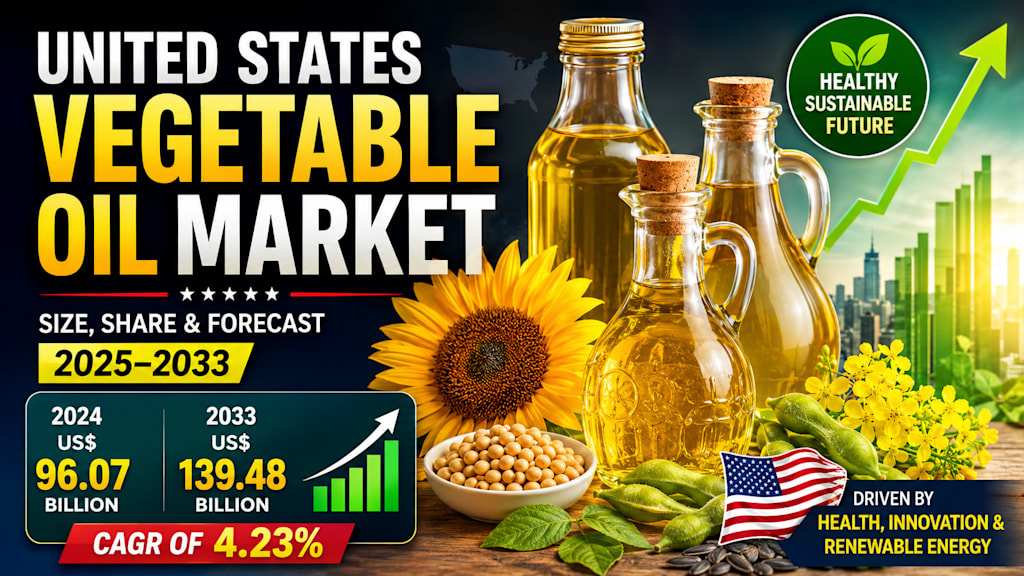
United States Vegetable Oil Market Size and Forecast 2025–2033
The United States vegetable oil market is entering a new phase of sustained expansion as consumers increasingly prioritize healthier diets, food manufacturers reformulate products, and industries seek renewable alternatives to fossil-based raw materials. Vegetable oils have become indispensable not only in households and restaurants but also in biofuel production, cosmetics, pharmaceuticals, and industrial applications.
According to Renub Research, the United States Vegetable Oil Market is projected to grow from US$ 96.07 billion in 2024 to US$ 139.48 billion by 2033, expanding at a CAGR of 4.23% during 2025–2033. This growth reflects the sector's ability to adapt to changing consumer preferences while supporting broader sustainability goals.
As demand continues to diversify across multiple industries, vegetable oils are becoming one of the most strategically important agricultural commodities in the American economy.
Growing Importance of Vegetable Oils in the U.S. Economy
Vegetable oils are extracted from a variety of crops, including soybeans, canola, sunflower seeds, corn, olives, and palm fruits. Traditionally used for cooking and food manufacturing, these oils are now finding broader applications in energy production and industrial manufacturing.
The increasing popularity of plant-based diets has encouraged consumers to replace animal fats with healthier alternatives. At the same time, food manufacturers are actively reformulating products to eliminate trans fats and improve nutritional profiles.
The versatility of vegetable oils makes them valuable ingredients across multiple sectors, including:
Food processing
Restaurant and hospitality services
Biofuel manufacturing
Cosmetics and personal care
Pharmaceutical formulations
Animal feed production
Industrial lubricants and coatings
This expanding range of applications continues to strengthen market demand throughout the United States.
Food Processing Industry Remains the Largest Growth Engine
One of the most significant drivers of the U.S. vegetable oil market is the country's massive food processing sector.
Vegetable oils are essential ingredients in countless food products, including:
Baked goods
Snack foods
Frozen meals
Salad dressings
Margarine
Sauces and condiments
Plant-based meat alternatives
As convenience foods gain popularity among busy consumers, manufacturers require consistent supplies of high-quality vegetable oils for production.
Restaurants, fast-food chains, and catering businesses also consume large volumes of vegetable oils for frying and cooking operations. The continued expansion of foodservice establishments across the country is expected to maintain robust demand throughout the forecast period.
Moreover, innovations in food formulation are creating opportunities for specialty oils that offer enhanced nutritional value and improved cooking performance.
Plant-Based Diets Are Transforming Consumer Preferences
The growing shift toward plant-based eating habits has become one of the most influential trends in the American food industry.
Consumers are increasingly choosing diets focused on:
Heart health
Weight management
Cholesterol reduction
Sustainable food consumption
Environmental responsibility
This trend has boosted demand for oils rich in unsaturated fats, including soybean, canola, sunflower, and olive oils.
Health-conscious shoppers are carefully examining ingredient labels and seeking products that contain healthier fats. As a result, food manufacturers are reformulating recipes to include vegetable oils while reducing reliance on saturated fats and animal-derived ingredients.
The rise of vegan and flexitarian lifestyles is further supporting the market, positioning vegetable oils as essential ingredients in modern dietary patterns.
Soybean Oil Continues to Dominate the Market
Soybean oil remains the most widely consumed vegetable oil in the United States.
The country maintains a strong competitive advantage due to its extensive soybean production infrastructure. American farmers have consistently improved productivity through:
Advanced seed genetics
Precision agriculture
Modern farming technologies
Enhanced crop management techniques
In 2024, soybean oil consumption reached approximately 12.51 million metric tons, significantly exceeding other edible oil categories.
The Midwest region, particularly Illinois, Iowa, and Minnesota, continues to lead soybean production, ensuring reliable supplies for domestic processors and international export markets.
Strong agricultural productivity allows the United States to maintain a stable supply chain while supporting growing demand from food and industrial sectors.
Biodiesel Industry Creates New Growth Opportunities
The growing use of vegetable oils as feedstock for biodiesel production is transforming market dynamics.
As federal and state governments pursue renewable energy targets, vegetable oils are increasingly utilized as sustainable alternatives to petroleum-based fuels.
Benefits of vegetable oil-based biodiesel include:
Lower greenhouse gas emissions
Reduced dependence on fossil fuels
Renewable sourcing
Improved environmental performance
Government incentives supporting clean energy adoption have accelerated investments in biodiesel facilities across the country.
Soybean oil, in particular, has emerged as a preferred feedstock due to its availability and well-established supply chain.
As renewable fuel mandates continue to expand, demand from the biofuel sector is expected to become an increasingly important growth driver for vegetable oil producers.
Industrial Applications Expanding Beyond Food
The U.S. vegetable oil market is no longer limited to food consumption.
Manufacturers are increasingly utilizing vegetable oil derivatives in:
Biodegradable lubricants
Industrial coatings
Eco-friendly packaging materials
Personal care products
Pharmaceutical formulations
The push toward sustainability is encouraging companies to replace petroleum-based ingredients with renewable alternatives.
Research and development initiatives are creating innovative applications that enhance the value of vegetable oils beyond traditional uses.
This diversification helps reduce dependence on food-sector demand while opening new revenue streams for producers and processors.
Strong Export Competitiveness Supports Industry Growth
The United States remains one of the world's leading suppliers of vegetable oils, particularly soybean oil.
Several factors support export competitiveness:
Advanced agricultural infrastructure
High crop productivity
Efficient transportation networks
Strategic port facilities
Strong quality control systems
Exports through Gulf Coast and West Coast ports enable American producers to serve growing demand in Asia, Europe, and Latin America.
Quality certification programs and traceability initiatives have further strengthened confidence among international buyers.
As global demand for vegetable oils continues to increase, U.S. producers are well-positioned to capitalize on export opportunities.
Challenges Facing the Market
Price Volatility and Supply Risks
Despite positive growth prospects, the industry faces several challenges.
Vegetable oil production remains highly dependent on agricultural output. Factors such as:
Extreme weather events
Drought conditions
Pest infestations
Crop diseases
Supply chain disruptions
can significantly impact production levels and pricing.
Fluctuations in global commodity markets also create uncertainty for processors, manufacturers, and consumers.
Managing these risks requires investments in resilient supply chains and diversified sourcing strategies.
Sustainability and Environmental Concerns
Environmental sustainability is becoming an increasingly important issue for the vegetable oil industry.
Large-scale cultivation of oilseed crops can raise concerns regarding:
Land use changes
Water consumption
Biodiversity loss
Carbon emissions
Consumers and regulators are placing greater emphasis on responsible sourcing practices and transparent supply chains.
To remain competitive, companies must invest in:
Sustainable farming methods
Carbon reduction initiatives
Traceability systems
Responsible sourcing certifications
Businesses that successfully address these concerns are likely to gain stronger consumer trust and long-term market advantages.
Regional Analysis: Key State Markets
California
California represents one of the largest vegetable oil markets in the country.
Its strong food manufacturing sector, health-conscious population, and emphasis on sustainable living drive demand for premium oils such as olive, avocado, and canola oils.
The state's commitment to renewable energy also supports biodiesel consumption, creating additional growth opportunities.
Texas
Texas benefits from a large population, thriving foodservice industry, and expanding renewable energy sector.
Restaurants, food processors, and biodiesel producers contribute significantly to vegetable oil demand.
The state's strong agricultural base also supports oilseed production and processing activities.
New York
New York's diverse culinary landscape and dense population make it a major consumer of vegetable oils.
The state experiences strong demand from:
Restaurants
Bakeries
Food manufacturers
Retail consumers
Growing interest in plant-based diets and premium cooking oils continues to support market expansion.
Florida
Florida's tourism and hospitality industries create substantial demand for cooking oils.
Hotels, restaurants, and catering businesses consume large volumes of vegetable oils throughout the year.
Increasing health awareness and renewable energy initiatives are also contributing to market growth across the state.
10 Recent Developments by Major Companies in the U.S. Vegetable Oil Market
1. Bunge
In April 2023, Bunge acquired a newly constructed multi-oil refinery from Fuji Oil New Orleans, LLC in Louisiana, strengthening its ability to serve food, feed, and renewable fuel markets across North America.
2. Cargill
Cargill expanded investments in sustainable oilseed sourcing programs to improve traceability and support environmentally responsible vegetable oil production.
3. Archer-Daniels-Midland (ADM)
ADM continued expanding soybean crushing capacity in the United States to meet rising demand from both food manufacturers and renewable diesel producers.
4. Wilmar International
Wilmar strengthened sustainability commitments across its global edible oil supply chain, enhancing transparency and responsible sourcing initiatives.
5. AAK
AAK expanded specialty vegetable oil solutions designed for plant-based foods, bakery applications, and nutritional products.
6. Unilever Plc
Unilever increased its focus on sustainably sourced vegetable oils within food and personal care product portfolios to support ESG objectives.
7. Sime Darby Plantation
The company advanced sustainable palm oil certification programs and digital traceability initiatives to improve supply chain accountability.
8. Associated British Foods
Associated British Foods continued investing in ingredient innovation, including vegetable oil applications for food manufacturing and consumer products.
9. Bunge and Renewable Fuel Partnerships
Bunge strengthened collaborations with renewable diesel producers to support growing demand for low-carbon fuel feedstocks.
10. Industry-Wide Investments in Biodiesel Feedstocks
Leading vegetable oil companies accelerated investments in soybean processing facilities and renewable fuel supply chains as biodiesel demand surged across the United States.
Competitive Landscape
The U.S. vegetable oil market remains highly competitive, with major multinational corporations focusing on capacity expansion, sustainable sourcing, innovation, and strategic acquisitions.
Key companies operating in the market include:
Archer-Daniels-Midland Company (ADM)
Wilmar International
AAK (Aarhuskarlshamn)
Unilever Plc
Bunge
Cargill
Sime Darby Plantation
Associated British Foods
These organizations continue to invest in advanced processing technologies, supply chain optimization, and sustainable production practices to maintain market leadership.
Final Thoughts
The United States vegetable oil market is undergoing a significant transformation driven by health-conscious consumers, expanding food processing activities, renewable energy initiatives, and growing industrial applications. With the market expected to rise from US$ 96.07 billion in 2024 to US$ 139.48 billion by 2033, the industry is positioned for steady and sustainable growth.
Soybean oil will continue to dominate due to strong domestic production capabilities, while increasing demand for biodiesel and plant-based products will create new opportunities across the value chain. Although challenges such as price volatility and environmental concerns remain, ongoing investments in sustainability, innovation, and supply chain resilience are expected to strengthen the industry's long-term outlook.
As consumer preferences evolve and renewable energy adoption accelerates, vegetable oils will remain a critical component of the U.S. food, agricultural, and industrial economy throughout the coming decade.
About the Creator
Enjoyed the story? Support the Creator.
Subscribe for free to receive all their stories in your feed.
Comments
There are no comments for this story
Be the first to respond and start the conversation.