
United States Tracking-as-a-Service Market Set for Strong Growth as Real-Time Visibility Becomes a Business Necessity
From logistics and e-commerce to healthcare and retail, Tracking-as-a-Service is reshaping how organizations monitor assets, improve efficiency, and make smarter decisions.

In a business environment where speed, transparency, and operational efficiency are becoming critical competitive advantages, companies across the United States are increasingly turning to Tracking-as-a-Service (TaaS) solutions. What was once considered a specialized technology used primarily for vehicle tracking has evolved into a comprehensive business tool capable of monitoring assets, shipments, inventory, equipment, and even workforce operations in real time.
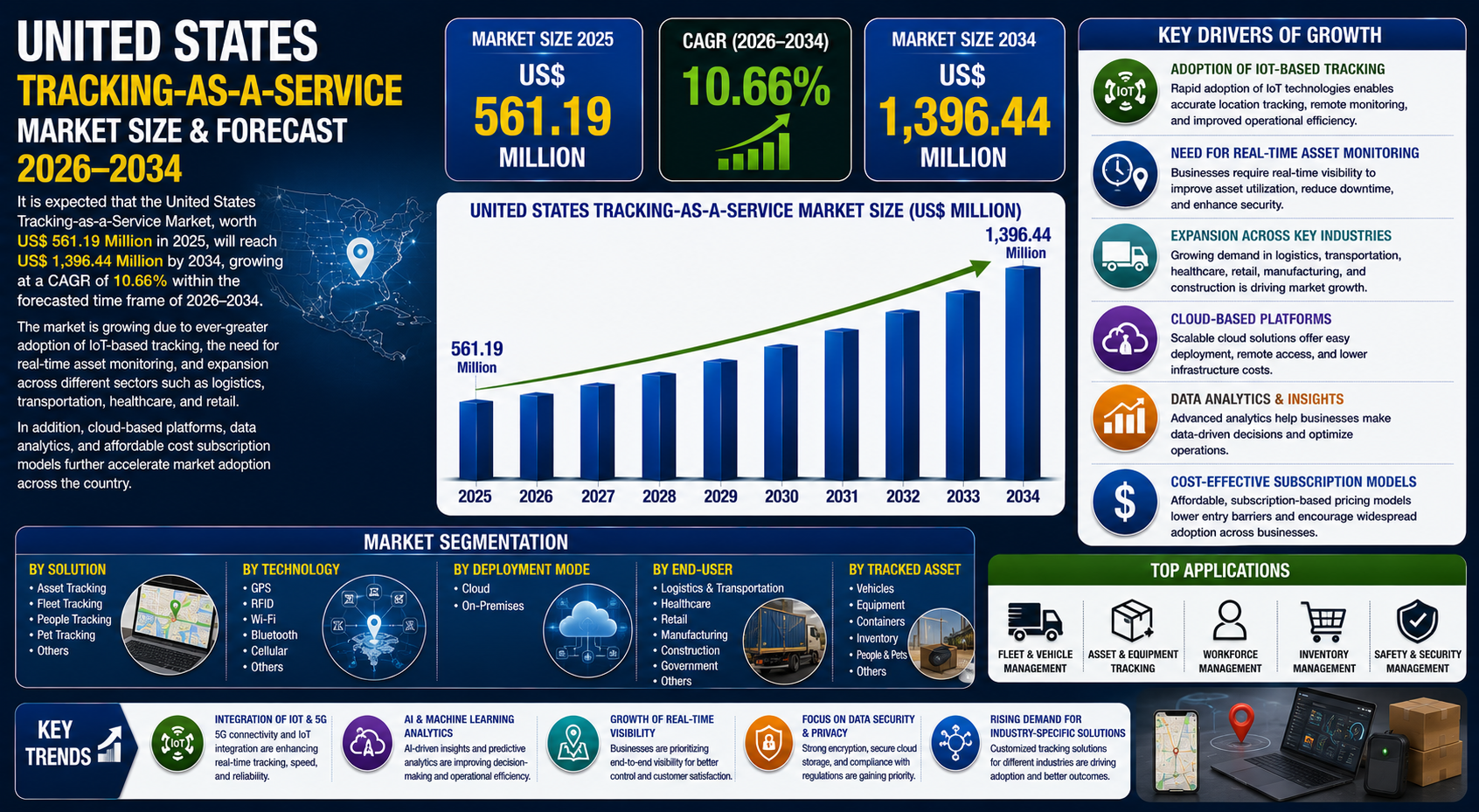
According to Renub Research, the United States Tracking-as-a-Service Market is projected to grow from US$ 561.19 million in 2025 to US$ 1,396.44 million by 2034, expanding at a compound annual growth rate (CAGR) of 10.66% during 2026–2034. This remarkable growth reflects a broader shift toward connected technologies, cloud-based services, and data-driven decision-making across industries.
As businesses seek greater visibility into their operations and supply chains, Tracking-as-a-Service is emerging as one of the most important technological solutions supporting the next phase of digital transformation.
What Is Tracking-as-a-Service?
Tracking-as-a-Service refers to cloud-enabled platforms that allow organizations to monitor and manage assets, vehicles, equipment, shipments, and other resources without investing heavily in physical infrastructure.
These platforms combine technologies such as:
- GPS tracking
- Internet of Things (IoT) sensors
- Cloud computing
- Wireless communication networks
- Artificial intelligence and analytics
Instead of purchasing and maintaining costly tracking systems, businesses subscribe to TaaS solutions that provide real-time visibility and actionable insights through centralized dashboards.
The subscription-based model makes advanced tracking technology accessible to organizations of all sizes, helping them reduce operational costs while improving efficiency and control.
Why Real-Time Visibility Matters More Than Ever
Modern businesses operate in increasingly complex environments. Global supply chains, rapidly changing customer expectations, and rising operational costs have created a strong demand for accurate, real-time information.
Whether it is a retailer tracking inventory, a healthcare provider monitoring critical equipment, or a logistics company managing thousands of deliveries, organizations need immediate access to operational data.
Real-time tracking provides several benefits:
- Improved operational efficiency
- Faster response to disruptions
- Better customer experiences
- Enhanced security and asset protection
- More accurate forecasting and planning
- Reduced losses and downtime
The ability to see what is happening across an organization at any given moment has become a significant competitive advantage.
The IoT Revolution Is Accelerating Market Growth
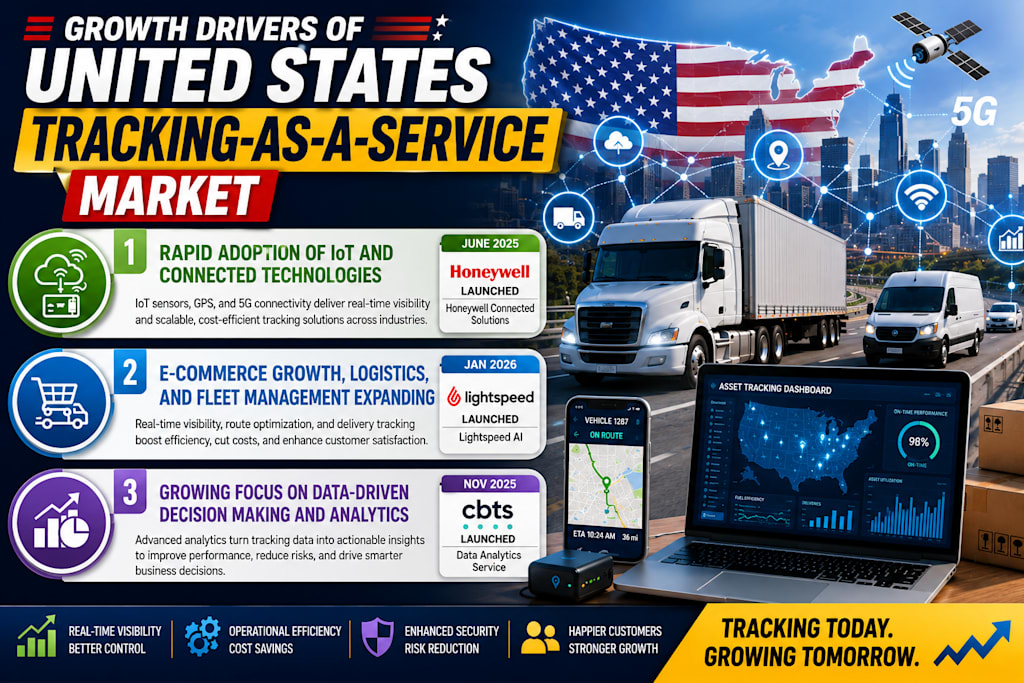
One of the biggest drivers behind the expansion of the U.S. Tracking-as-a-Service market is the widespread adoption of Internet of Things technology.
IoT devices continuously collect and transmit data from physical assets. Sensors embedded in vehicles, machinery, containers, and equipment generate valuable information about location, condition, and performance.
When combined with cloud-based tracking platforms, these connected devices create a powerful ecosystem that enables organizations to monitor operations in real time.
The rollout of advanced connectivity technologies, including 5G networks, is further enhancing the capabilities of IoT-based tracking systems. Faster data transmission, lower latency, and greater reliability are helping businesses achieve more accurate and responsive monitoring.
As connected devices become increasingly affordable and accessible, the number of organizations deploying IoT-enabled tracking solutions continues to grow.
E-Commerce and Logistics Are Fueling Demand
The explosive growth of e-commerce has transformed customer expectations.
Consumers now expect:
- Faster delivery times
- Real-time shipment updates
- Greater transparency
- Improved service reliability
To meet these expectations, logistics providers and online retailers are investing heavily in advanced tracking systems.
Tracking-as-a-Service enables organizations to monitor shipments from warehouse to final delivery. Companies can track routes, optimize fuel consumption, evaluate driver performance, and identify potential delays before they impact customers.
This level of visibility has become especially important as same-day delivery and last-mile logistics continue to expand across the United States.
In an increasingly competitive e-commerce environment, businesses that can provide accurate delivery information and consistent service often gain a meaningful advantage over their competitors.
Data Analytics Is Transforming Tracking Into Intelligence
Tracking technology today goes far beyond simple location monitoring.
Modern TaaS platforms generate vast amounts of operational data that can be analyzed to improve business performance. Advanced analytics tools transform raw tracking information into valuable business intelligence.
Organizations can use these insights to:
- Predict equipment maintenance needs
- Improve asset utilization
- Identify inefficiencies
- Reduce operational risks
- Strengthen security measures
- Optimize workforce productivity
Artificial intelligence is playing an increasingly important role in this evolution. AI-powered analytics can detect patterns, forecast trends, and provide recommendations that support faster and more informed decision-making.
As businesses place greater emphasis on data-driven strategies, demand for intelligent tracking solutions is expected to increase substantially.
Cloud-Based Platforms Are Becoming the Preferred Choice
Cloud computing has fundamentally changed how businesses deploy and manage software.
The same trend is evident within the Tracking-as-a-Service market.
Cloud-based platforms offer several advantages over traditional on-premises systems:
- Lower upfront costs
- Faster implementation
- Scalability
- Remote accessibility
- Automatic updates
- Enhanced collaboration
Organizations with multiple locations can access tracking information from anywhere, making cloud-based systems particularly valuable for logistics providers, retailers, healthcare networks, and transportation companies.
The flexibility of cloud infrastructure also allows businesses to scale their tracking capabilities as operations expand, without making major capital investments.
For many organizations, cloud-based TaaS solutions represent the ideal balance between functionality, affordability, and convenience.
Industry Applications Continue to Expand
One of the reasons the Tracking-as-a-Service market is experiencing such strong growth is its versatility.
The technology is being adopted across a wide range of industries.
Retail
Retailers use tracking systems to monitor inventory movement, reduce shrinkage, and improve stock visibility.
With omnichannel retail becoming the norm, businesses need real-time information about products moving between warehouses, stores, and fulfillment centers.
TaaS helps retailers maintain accurate inventory records while improving customer satisfaction.
Healthcare
Healthcare organizations rely on tracking solutions to manage medical equipment, monitor assets, and improve operational efficiency.
Tracking critical devices reduces losses, improves utilization rates, and supports better patient care.
Manufacturing
Manufacturers use tracking technology to monitor equipment, raw materials, and production assets.
Real-time visibility helps reduce downtime, improve productivity, and strengthen supply chain coordination.
Transportation and Logistics
This remains one of the largest application areas for TaaS.
Fleet operators use tracking systems to manage routes, improve fuel efficiency, monitor driver behavior, and ensure timely deliveries.
E-Commerce
Online retailers depend heavily on shipment visibility and delivery tracking.
As customer expectations continue to rise, tracking platforms are becoming indispensable components of modern e-commerce operations.
Growing Importance of IT and Electronics Asset Tracking
The rise of remote work and digital business operations has increased the value of technology assets.
Organizations now manage large inventories of:
- Laptops
- Servers
- Networking equipment
- Mobile devices
- IoT hardware
Tracking-as-a-Service solutions help businesses monitor these assets throughout their lifecycle.
The ability to locate equipment, prevent losses, support audits, and maintain compliance has become increasingly important, particularly for organizations with distributed workforces.
As cybersecurity and operational accountability remain priorities, IT asset tracking is expected to remain a significant market segment.
Large Enterprises Lead Adoption
Large enterprises currently represent a major share of the U.S. Tracking-as-a-Service market.
These organizations typically manage:
- Extensive supply chains
- Multiple facilities
- Large vehicle fleets
- Thousands of assets
The complexity of their operations creates a strong need for comprehensive visibility and control.
Advanced TaaS solutions provide large organizations with sophisticated analytics, automation features, and integration capabilities that support enterprise-scale operations.
At the same time, subscription pricing models make it easier for companies to forecast costs and scale services as needed.
Regional Growth Across Key States
Several states are emerging as important hubs for Tracking-as-a-Service adoption.
California
California's technology ecosystem, innovation culture, and large concentration of digital businesses make it a leading market for tracking software solutions.
Industries including healthcare, transportation, e-commerce, and consumer technology are driving demand.
New York
The state's diverse economy and dense urban environment create strong demand for asset visibility, inventory control, and logistics management.
Retailers, financial institutions, and healthcare providers are among the major adopters.
Washington
Washington's technology-driven economy and strategic role in international trade make advanced tracking systems increasingly valuable.
Businesses are integrating tracking solutions with cloud infrastructure and artificial intelligence to improve operational performance.
Georgia
As a major logistics and transportation hub, Georgia has seen rising adoption of tracking technologies among freight operators, distribution centers, and third-party logistics providers.
The state's growing e-commerce activity is also contributing to market expansion.
Challenges That Could Impact Growth
Despite its strong outlook, the Tracking-as-a-Service market faces several challenges.
Cybersecurity Concerns
Tracking systems collect large volumes of sensitive operational and location data.
This information can become a target for cybercriminals, making cybersecurity a critical priority.
Service providers must invest continuously in data protection, encryption, and compliance measures to maintain customer trust.
Integration Complexity
Many organizations still rely on legacy systems.
Integrating modern tracking platforms with existing software environments can be time-consuming and technically challenging.
Successful deployment often requires specialized expertise and ongoing support.
Dependence on Connectivity
Tracking systems rely heavily on network availability and device reliability.
Service interruptions, connectivity issues, or hardware failures can affect operational visibility and performance.
Ensuring consistent system reliability remains an important challenge for providers.
Looking Ahead
The future of Tracking-as-a-Service in the United States appears exceptionally promising.
As businesses continue embracing digital transformation, the demand for real-time visibility, predictive analytics, and connected operations is expected to rise significantly.
Advances in artificial intelligence, cloud computing, IoT technology, and wireless connectivity will likely expand the capabilities of tracking platforms even further. Organizations will increasingly view tracking not merely as a monitoring tool but as a strategic resource that supports smarter decisions, improved efficiency, and stronger customer experiences.
With the market projected to nearly triple in value by 2034, Tracking-as-a-Service is positioning itself as a foundational technology for the modern digital economy.
Final Thoughts
The rise of Tracking-as-a-Service reflects a larger business trend: organizations want more visibility, better data, and greater control over increasingly complex operations. Whether managing deliveries, monitoring equipment, tracking inventory, or optimizing fleets, businesses are recognizing that real-time information can directly influence profitability and performance.
As industries continue their digital transformation journeys, Tracking-as-a-Service will likely become a standard operational tool rather than a competitive differentiator. Companies that adopt these technologies early and effectively may be better positioned to navigate disruptions, improve customer satisfaction, and unlock new opportunities in an increasingly connected world.
About the Creator
Enjoyed the story? Support the Creator.
Subscribe for free to receive all their stories in your feed.
Comments
There are no comments for this story
Be the first to respond and start the conversation.