
United States Senior Living Market to Reach US$ 154.55 Billion by 2033 as Aging Population Reshapes Housing and Healthcare
Growing demand for assisted care, wellness-focused communities, memory care services, and technology-enabled senior housing is driving strong expansion across the U.S. senior living industry through 2033.

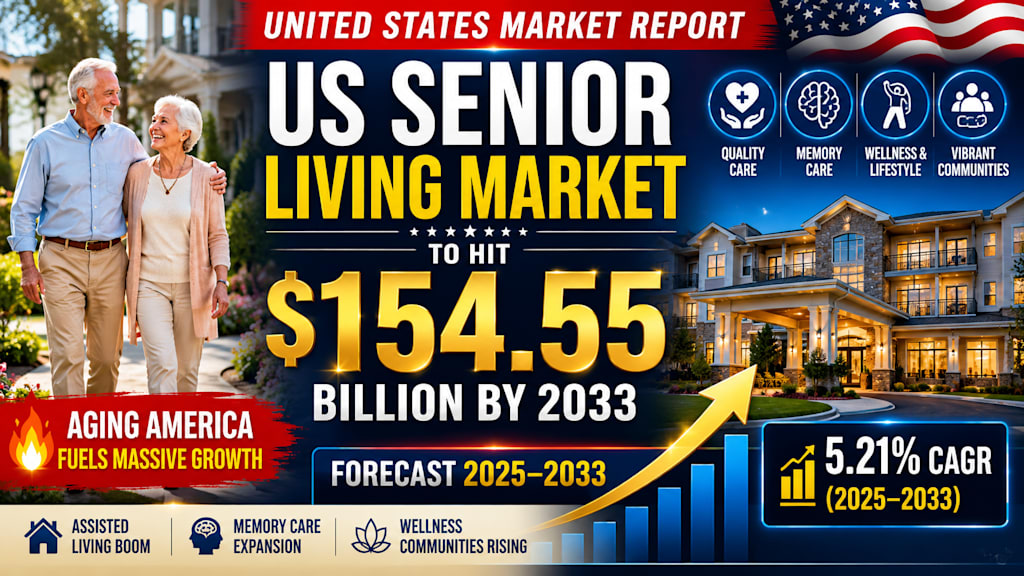
The United States Senior Living Market is undergoing a remarkable transformation as demographic shifts, healthcare advancements, and changing lifestyle preferences redefine how older Americans choose to live during retirement. According to Renub Research, the United States Senior Living Market is projected to grow from US$ 97.85 billion in 2024 to US$ 154.55 billion by 2033, expanding at a CAGR of 5.21% during the forecast period from 2025 to 2033.
The market's growth is being fueled by a rapidly aging population, increasing life expectancy, rising prevalence of chronic illnesses, and growing demand for personalized, community-oriented living environments. Unlike previous generations, today's seniors are seeking more than just care facilities. They are looking for vibrant communities that support wellness, independence, social engagement, and high-quality healthcare services under one roof.
Demographic Shifts Continue to Drive Demand
One of the most influential factors behind the expansion of the U.S. senior living market is the country's aging demographic profile. Every day, more than 10,000 Americans celebrate their 65th birthday, creating a consistent pipeline of potential residents for senior living communities.
The baby boomer generation is entering retirement in unprecedented numbers. This demographic trend is expected to continue for decades, creating sustained demand across all segments of senior housing. Moreover, the population aged 80 and above is projected to rise significantly over the next decade, increasing the need for specialized healthcare and support services.
As individuals live longer, many require varying levels of assistance with daily activities, medication management, mobility support, and healthcare monitoring. Senior living communities offer solutions that combine safety, convenience, and access to professional care while preserving independence whenever possible.
This long-term demographic reality provides one of the strongest foundations for market growth and investor confidence in the senior housing sector.
Evolution of Senior Living Beyond Traditional Care
The concept of senior living has evolved considerably over the last decade. Today's retirement communities are increasingly designed around lifestyle enhancement rather than merely providing housing and medical care.
Modern senior living facilities feature fitness centers, wellness programs, recreational activities, educational workshops, social clubs, fine dining experiences, and community events. Operators are focusing on creating environments where residents can maintain active and fulfilling lives while benefiting from professional support when needed.
The emphasis on holistic wellness has become a defining characteristic of the industry. Physical health, mental well-being, emotional support, and social engagement are all integrated into contemporary senior living models.
This shift has significantly improved the perception of senior housing among retirees and their families, transforming communities from care-focused facilities into desirable lifestyle destinations.
Technology is Reshaping Senior Living Experiences
Technology adoption has become a major competitive differentiator within the senior living market. Providers are investing heavily in digital solutions that enhance safety, healthcare delivery, communication, and operational efficiency.
Telemedicine services now allow residents to consult healthcare professionals without leaving their communities. Smart home technologies improve convenience and safety through automated lighting, emergency response systems, fall detection devices, and health monitoring tools.
Digital engagement platforms help residents stay connected with family members and participate in virtual activities and educational programs. These innovations not only improve quality of life but also enable providers to deliver more efficient and personalized care.
Technology is expected to play an increasingly important role as future generations of seniors enter retirement with greater digital familiarity and higher expectations for connected living environments.
Rising Chronic Diseases Increase Need for Specialized Care
As life expectancy increases, chronic illnesses and cognitive disorders are becoming more prevalent among older adults. Conditions such as diabetes, cardiovascular disease, arthritis, Parkinson's disease, and dementia require ongoing medical supervision and support.
Senior living communities are responding by expanding specialized care services, particularly in memory care and skilled nursing segments. Dedicated memory care units offer structured environments designed specifically for residents living with Alzheimer's disease and other forms of dementia.
Families increasingly seek communities capable of providing multiple levels of care within a single campus. This continuum-of-care model enables residents to transition from independent living to assisted living or nursing care as their healthcare needs evolve.
The ability to age in place has become a highly valued feature, driving demand for continuing care retirement communities (CCRCs) and integrated senior living campuses.
Investment Activity Strengthens Industry Growth
The U.S. senior living sector continues to attract substantial investment from institutional investors, private equity firms, healthcare organizations, and real estate investment trusts (REITs).
Investors are drawn to the industry's relatively stable demand fundamentals and long-term growth potential. As demographic trends support rising occupancy rates, many organizations are increasing their exposure to senior housing assets.
Large-scale expansion projects illustrate growing confidence in the market. In January 2024, Erickson Senior Living announced a nationwide expansion initiative valued at approximately US$ 4 billion. The project includes new developments across several states and reflects strong expectations for future demand.
Development activity remains concentrated in regions experiencing significant retiree migration and population growth, particularly in the Sun Belt states.
Workforce Challenges Remain a Significant Concern
Despite strong growth prospects, the industry faces substantial operational challenges. Among the most pressing issues is the shortage of qualified healthcare and caregiving professionals.
Senior living operators compete aggressively for nurses, certified nursing assistants, therapists, and support staff. High turnover rates, demanding workloads, and workforce shortages continue to create staffing pressures across the sector.
Labor costs have risen considerably as providers increase wages, offer retention bonuses, and expand training programs to attract and retain employees.
Without adequate staffing, communities may struggle to maintain service quality, meet regulatory requirements, and accommodate growing resident demand. As a result, workforce development remains a strategic priority for many organizations.
Rising Costs Pressure Profitability
Operational expenses continue to rise across the senior living landscape. Labor costs represent the largest expenditure category, but providers also face increasing expenses related to utilities, food services, insurance, regulatory compliance, and healthcare supplies.
Real estate costs present an additional challenge. Acquiring land, constructing new facilities, and renovating existing properties have become increasingly expensive, particularly in high-demand metropolitan areas.
These cost pressures can affect affordability for middle-income seniors, a demographic segment that often falls between eligibility for public assistance and the financial capacity to afford premium communities.
Finding sustainable models that balance affordability, quality care, and profitability will be essential for future market success.
California Leads Major State Markets
California remains one of the largest senior living markets in the United States. The state's substantial aging population, advanced healthcare infrastructure, and strong demand for premium retirement communities contribute to its market leadership.
Major metropolitan regions including Los Angeles, San Diego, and San Francisco continue to experience strong demand for independent living, assisted living, memory care, and continuing care retirement communities.
Although high real estate and labor costs create operational challenges, California's emphasis on wellness, innovation, and lifestyle-oriented services makes it a highly attractive market for senior living operators.
Texas Emerges as a High-Growth Opportunity
Texas has become one of the fastest-growing senior living markets in the country. The state's favorable business climate, relatively lower cost of living, and significant population growth continue to attract retirees from across the nation.
Cities such as Dallas, Houston, Austin, and San Antonio have seen increased development activity in senior housing. Demand is supported by strong healthcare networks, favorable tax conditions, and ongoing migration trends.
As Texas continues to experience population expansion, senior living providers are expected to increase investments in both affordable and luxury community developments.
New York Maintains Strong Demand Despite Challenges
New York represents one of the most complex yet attractive senior living markets in the United States. A large aging population, dense urban centers, and advanced healthcare infrastructure support sustained demand.
Independent living, assisted living, and memory care facilities are particularly sought after in areas such as New York City, Long Island, and Westchester County.
However, operators face challenges related to high real estate prices, elevated labor expenses, and strict regulatory requirements. Despite these obstacles, continued innovation and strong healthcare partnerships help maintain the state's position as a major senior living market.
Industry Developments Highlight Growing Momentum
Recent industry developments underscore the market's rapid evolution.
In July 2024, the Centers for Medicare & Medicaid Services announced that more than 400 participants had enrolled in the Guiding an Improved Dementia Experience (GUIDE) Model. The initiative focuses on improving dementia care while reducing caregiver burden through enhanced coordination and respite services.
Meanwhile, in May 2024, PACS Group announced the acquisition of operations for 53 senior care facilities across eight states. The transaction significantly expands the company's geographic footprint and demonstrates ongoing consolidation within the industry.
As providers seek greater scale and operational efficiencies, mergers, acquisitions, and strategic partnerships are expected to remain key growth strategies.
Market Outlook Through 2033
Looking ahead, the United States Senior Living Market is positioned for sustained expansion. Demographic trends alone provide a powerful demand engine, while advancements in healthcare, wellness programming, and technology continue to improve the attractiveness of senior living communities.
The industry's future will likely be defined by integrated care models, personalized resident experiences, smart technologies, and wellness-focused environments. Providers capable of balancing affordability, quality care, and innovation will be best positioned to capitalize on emerging opportunities.
As millions of Americans enter retirement over the coming decade, senior living communities will play an increasingly vital role in supporting healthy aging, independence, and overall quality of life. With market value projected to reach US$ 154.55 billion by 2033, the sector stands as one of the most important and dynamic segments within the broader healthcare and real estate industries.
10 Recent Developments by Major Senior Living Companies
1. Brookdale Senior Living Inc.
Brookdale expanded its resident engagement technology platforms and enhanced occupancy initiatives focused on improving operational efficiency and resident satisfaction during 2024–2025.
2. Erickson Senior Living
The company announced a US$ 4 billion national expansion strategy, including new developments in Florida, Texas, California, and Massachusetts.
3. Atria Senior Living
Atria continued investing in hospitality-focused community upgrades, wellness programming, and digital resident services to strengthen market competitiveness.
4. Sonida Senior Living
Sonida pursued portfolio optimization initiatives and occupancy growth strategies while improving operating margins across key communities.
5. Sunrise Senior Living
Sunrise expanded premium memory care offerings and invested in resident-centered care programs across multiple locations.
6. Senior Lifestyle
The company introduced enhanced wellness programs, dining innovations, and technology-driven resident care solutions.
7. Five Star Senior Living
Five Star continued modernizing facilities and expanding lifestyle-based services aimed at active senior populations.
8. Holiday Retirement
Holiday Retirement strengthened independent living offerings through community renovations and resident experience enhancements.
9. Kisco Senior Living
Kisco focused on luxury senior housing developments featuring resort-style amenities and personalized care services.
10. LCS (Life Care Services)
LCS expanded management partnerships and implemented advanced operational technologies to improve resident outcomes and efficiency.
Final Thoughts
The U.S. senior living market is entering a new era shaped by demographic expansion, healthcare innovation, and evolving consumer expectations. Seniors increasingly seek communities that offer independence, wellness, social connection, and access to quality care within a single environment.
While labor shortages and rising operating costs remain challenges, strong demand fundamentals continue to support long-term growth. As operators invest in technology, specialized care services, and modern community designs, the industry is well positioned to meet the needs of America's aging population.
With the market expected to surpass US$ 154.55 billion by 2033, senior living will remain a cornerstone of both the healthcare ecosystem and the broader real estate investment landscape for years to come.
About the Creator
Enjoyed the story? Support the Creator.
Subscribe for free to receive all their stories in your feed.
Comments
There are no comments for this story
Be the first to respond and start the conversation.