
United States Ready-To-Drink Cocktails Market Surges as Convenience, Premiumization, and Social Drinking Trends Reshape Alcohol Consumption
From canned margaritas and whiskey cocktails to low-sugar spritzes, ready-to-drink beverages are rapidly transforming the American alcohol industry.

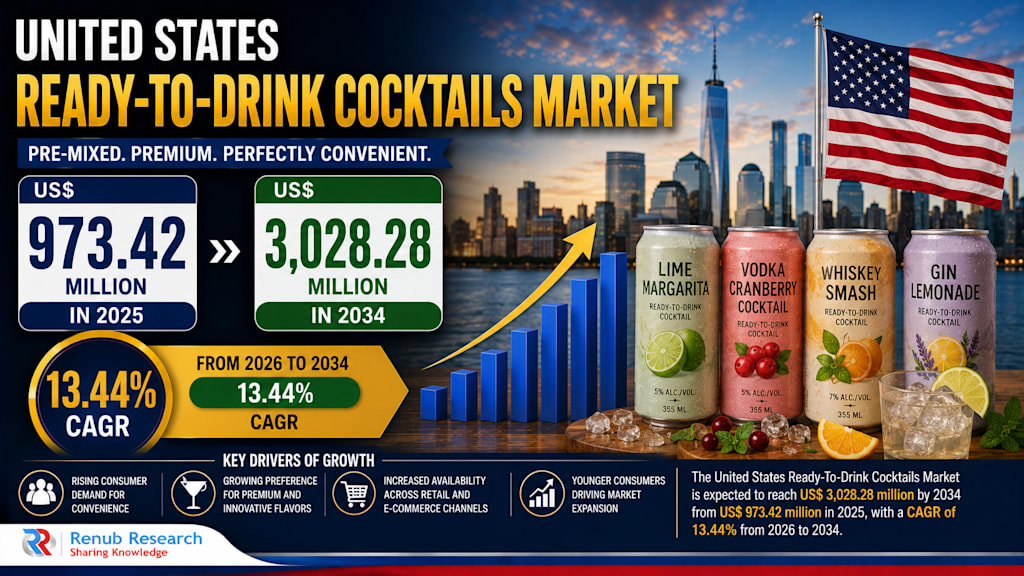
The United States ready-to-drink (RTD) cocktails market is experiencing explosive growth as consumers increasingly seek convenience, premium flavors, and bar-quality drinking experiences without the need for preparation.
What was once considered a niche category of pre-mixed alcoholic beverages has now evolved into one of the fastest-growing segments in the American beverage industry. From canned margaritas and vodka sodas to craft whiskey cocktails and low-calorie spritzes, RTD beverages are becoming staples at social gatherings, concerts, beach outings, sporting events, and home entertainment occasions across the country.
According to Renub Research, the United States RTD cocktails market is projected to grow from US$ 973.42 million in 2025 to US$ 3,028.28 million by 2034, expanding at a remarkable compound annual growth rate (CAGR) of 13.44% during 2026–2034.
The market’s rapid growth is being fueled by rising demand for portable alcoholic beverages, premium cocktail experiences, flavor innovation, lower-calorie alternatives, and changing social drinking habits among younger consumers.
At the same time, major alcohol companies and craft beverage brands are investing heavily in premium ingredients, healthier formulations, and sustainable packaging to strengthen their positions within the rapidly evolving RTD category.
As consumer lifestyles continue changing, ready-to-drink cocktails are becoming one of the most influential trends shaping the future of the U.S. alcohol industry.
RTD Cocktails Are Transforming Modern Drinking Culture
Ready-to-drink cocktails are pre-mixed alcoholic beverages packaged for immediate consumption.
Unlike traditional cocktails that require bartending equipment, mixers, and preparation time, RTDs offer instant convenience while delivering consistent flavor experiences.
These beverages typically combine:
- Spirits
- Wine
- Malt bases
- Fruit juices
- Botanical infusions
- Carbonation
- Flavor enhancers
RTDs are available in:
- Cans
- Bottles
- Single-serve formats
- Multi-pack options
Consumers increasingly prefer RTDs because they provide:
- Portability
- Convenience
- Portion control
- Consistent taste
- Easy sharing during social events
The category has evolved far beyond basic sugary alcoholic beverages.
Modern RTDs now focus heavily on premiumization, craft-quality ingredients, mixologist-inspired recipes, and health-conscious formulations.
As social drinking occasions become more casual and mobile, RTDs are becoming increasingly integrated into everyday consumer lifestyles.
Premiumization Is Fueling Strong Consumer Demand
One of the biggest drivers behind the RTD cocktails market is the growing consumer preference for premium alcoholic beverages.
Today’s consumers increasingly seek sophisticated drinking experiences that rival traditional bar-made cocktails.
Modern RTD brands now incorporate:
- Premium spirits
- Cold-pressed juices
- Botanical extracts
- Craft-style flavor profiles
- Natural ingredients
This premiumization trend has helped reshape public perception of RTD cocktails.
Consumers no longer view RTDs as cheap or overly sweet products. Instead, many brands now position themselves as high-quality craft cocktail alternatives.
Popular premium RTD styles include:
- Smoky margaritas
- Espresso martinis
- Barrel-aged old fashioneds
- Botanical spritzes
- Tequila-based cocktails
- Whiskey infusions
The influence of craft cocktail culture has played a major role in this transformation.
Consumers increasingly expect authentic flavor experiences and transparent ingredient sourcing.
Premium RTDs are particularly attractive for:
- Home entertaining
- Social gatherings
- Outdoor events
- Gifting occasions
- Travel and convenience-focused lifestyles
- As premium drinking culture continues expanding, high-quality RTD cocktails are expected to remain one of the industry’s strongest growth categories.
Convenience and Portability Continue Driving Growth
Convenience remains one of the most important factors fueling the popularity of RTD cocktails in the United States.
Modern consumers increasingly prefer beverages that fit into fast-paced lifestyles and spontaneous social occasions.
RTDs eliminate the need for:
- Cocktail preparation
- Mixers
- Glassware
- Bartending skills
- Additional ingredients
- This makes them ideal for:
- Beach outings
- Tailgating events
- Picnics
- Concerts
- Festivals
- Home parties
Canned RTD cocktails have become especially popular because they are:
- Lightweight
- Portable
- Easy to refrigerate
- Recyclable
- Suitable for outdoor consumption
Single-serve packaging also appeals to consumers seeking better portion control and responsible drinking habits.
The rise of work-from-home lifestyles and casual entertaining has further strengthened demand for convenient alcoholic beverage options.
As social drinking becomes increasingly informal and mobile, RTDs are expected to continue gaining market share.

Health-Conscious Consumers Are Reshaping Product Innovation
Health and wellness trends are significantly influencing the RTD cocktails industry.
Consumers increasingly seek beverages that balance indulgence with healthier ingredients and moderate alcohol consumption.
As a result, many RTD brands now emphasize:
- Low sugar content
- Low calories
- Gluten-free ingredients
- Organic formulations
- Clean-label recipes
- Natural flavoring systems
Sessionable cocktails with moderate alcohol levels — typically between 4% and 6% alcohol by volume (ABV) — are becoming increasingly popular among consumers seeking lighter drinking experiences.
This trend closely mirrors the success of hard seltzers and low-calorie alcoholic beverages.
Younger consumers especially are adopting more mindful drinking habits and often prefer products offering:
Better ingredient transparency
- Lower calorie counts
- Reduced sugar levels
- Balanced alcohol strength
The growing overlap between wellness culture and alcohol consumption is expected to remain a major industry trend over the next decade.
Flavor Innovation Is Expanding Consumer Interest
Flavor innovation remains one of the strongest competitive strategies within the RTD market.
Manufacturers are continuously experimenting with:
- Tropical fruits
- Botanical infusions
- Exotic spices
- Herbal ingredients
- Premium spirit combinations
to create unique and differentiated products.
Consumers increasingly seek variety and novelty in alcoholic beverages.
Popular RTD flavor trends include:
- Jalapeño margaritas
- Blood orange spritzes
- Berry vodka sodas
- Coconut rum cocktails
- Hibiscus tequila blends
- Lemon basil infusions
Seasonal and limited-edition flavors also help brands maintain consumer engagement and encourage repeat purchases.
The growing influence of social media and cocktail culture continues accelerating experimentation with creative beverage concepts.
Spirit-Based RTDs Are Gaining Strong Momentum
Among product categories, spirit-based RTDs are becoming increasingly popular in the U.S. market.
These beverages often feature recognizable premium spirits such as:
- Vodka
- Tequila
- Whiskey
- Rum
- Gin
Consumers increasingly prefer spirit-based RTDs because they are associated with:
Authentic cocktail experiences
- Higher quality
- Premium positioning
- Stronger flavor complexity
Tequila-based RTDs have become especially successful due to the growing popularity of margaritas and agave-based beverages.
Whiskey cocktails are also gaining traction among consumers seeking richer and more sophisticated flavor profiles.
Spirit-based RTDs are expected to remain one of the fastest-growing segments despite facing higher taxation and regulatory complexity compared to malt-based alternatives.
Online Retail and Convenience Stores Are Expanding Accessibility
Retail expansion has played a major role in the rapid growth of the RTD category.
Consumers can now purchase RTD cocktails through:
- Supermarkets
- Convenience stores
- Liquor stores
- E-commerce platforms
- Alcohol delivery applications
Convenience stores remain especially important because RTDs are often impulse purchases linked to travel, social gatherings, and spontaneous consumption occasions.
Online alcohol delivery platforms have also become increasingly influential.
Consumers increasingly value:
- Fast delivery
- Product variety
- Subscription services
- Digital promotions
- Easy product discovery
The rapid growth of alcohol e-commerce during recent years significantly improved consumer access to premium RTD brands.
California Leads the RTD Cocktails Market
California remains one of the largest RTD cocktail markets in the United States.
The state’s:
- Large population
- Strong craft beverage culture
- Outdoor lifestyle
- Health-conscious consumers
- Tourism industry
all contribute to exceptionally strong demand.
California consumers show particular interest in:
- Organic RTDs
- Low-sugar cocktails
- Premium spirit-based products
- Sustainable packaging solutions
The state also serves as a major innovation hub for beverage startups and craft distilleries developing new RTD concepts.
Beach culture, music festivals, and outdoor entertainment further strengthen consumption throughout California.
Florida Benefits From Tourism and Beach Culture
Florida represents another major growth market for RTD cocktails.
The state’s warm climate and tourism-driven economy create ideal conditions for portable alcoholic beverages.
Consumers in Florida strongly prefer:
- Tropical flavors
- Fruit-forward cocktails
- Refreshing low-calorie beverages
Beach resorts, bars, concerts, and hospitality venues continue driving year-round demand for canned cocktails and ready-to-serve beverages.
Florida’s nightlife and entertainment sectors further support category growth.
New York and Texas Continue Driving Innovation
New York remains one of the country’s most influential RTD markets due to its sophisticated urban consumer base and strong craft spirits culture.
Consumers increasingly seek:
- Mixologist-inspired cocktails
- Premium ingredients
- Low-calorie products
- Innovative flavor combinations
Alcohol delivery platforms are especially influential in New York City.
Meanwhile, Texas has become one of the fastest-growing RTD markets in the country.
Tailgating culture, barbecues, concerts, and outdoor lifestyles strongly support RTD consumption throughout the state.
Tequila- and whiskey-based RTDs perform especially well in Texas due to regional flavor preferences.
Major Beverage Companies Continue Expanding Investments
Global beverage corporations are aggressively investing in the RTD category due to its enormous growth potential.
In September 2024, Molson Coors partnered with Australian alcohol-free cocktail brand Naked Life to introduce premium canned non-alcoholic RTD products into the U.S. market.
The partnership reflects rising demand for sophisticated alcohol-free alternatives.
During the same month, Bacardi Limited partnered with The Coca-Cola Company to launch a ready-to-drink BACARDÍ rum and Coca-Cola cocktail.
The collaboration highlights how major beverage companies are leveraging globally recognized brands to strengthen their presence in the RTD sector.
Large alcohol companies continue investing heavily in:
- Flavor innovation
- Health-focused products
- Premium packaging
- Distribution expansion
- Marketing partnerships
to remain competitive within the rapidly growing category.
Regulatory and Cost Challenges Continue Affecting the Market
Despite strong growth forecasts, the RTD cocktails market still faces several challenges.
One major issue is regulatory complexity.
Alcohol classification laws vary significantly across U.S. states.
Whether an RTD is categorized as:
- Spirit-based
- Malt-based
- Wine-based
can affect taxation, distribution rights, and retail placement.
Spirit-based RTDs often face:
- Higher excise taxes
- Stricter distribution rules
- Greater compliance requirements
These factors can increase costs and complicate nationwide expansion.
Rising ingredient and packaging costs also create pressure.
Manufacturers face increasing expenses related to:
- Premium spirits
- Fruit concentrates
- Botanical ingredients
- Aluminum cans
- Transportation logistics
These cost pressures can affect pricing strategies and profit margins.
The Future of the U.S. RTD Cocktails Market
The future of the U.S. ready-to-drink cocktails market appears exceptionally strong.
Future growth is expected to focus on:
- Premium craft-style cocktails
- Low-calorie formulations
- Non-alcoholic RTDs
- Sustainable packaging
- Functional ingredients
- Spirit-based innovations
- Personalized flavor experiences
Consumers increasingly seek beverages that combine convenience, quality, health-consciousness, and unique social experiences.
As alcohol consumption habits continue evolving, RTDs are expected to become an even larger part of mainstream drinking culture.
Final Thoughts
The United States ready-to-drink cocktails market is rapidly transforming the country’s alcohol industry.
According to Renub Research, the market’s projected growth from US$ 973.42 million in 2025 to US$ 3,028.28 million by 2034 demonstrates the enormous momentum behind convenience-focused and premium alcoholic beverages.
From canned margaritas and whiskey cocktails to low-sugar spritzes and non-alcoholic alternatives, RTDs are becoming central to modern social drinking habits.
As flavor innovation, premiumization, health-conscious consumption, and portable lifestyles continue shaping consumer behavior, the RTD cocktails market is expected to remain one of the fastest-growing categories within the U.S. beverage industry for years to come.
About the Creator
Enjoyed the story? Support the Creator.
Subscribe for free to receive all their stories in your feed.
Comments
There are no comments for this story
Be the first to respond and start the conversation.