
United States Processed Meat Market Outlook 2026–2034: How Convenience, Innovation, and Changing Consumer Habits Are Shaping Industry Growth
Rising demand for ready-to-eat protein products, expanding foodservice consumption, and continuous product innovation are driving steady growth in the U.S. processed meat market.

The United States food industry continues to evolve as consumers increasingly prioritize convenience, affordability, and protein-rich nutrition. Among the sectors benefiting from these changing preferences, processed meat remains one of the most established and widely consumed food categories in the country.
From bacon and sausages to deli meats, hot dogs, frozen meat products, and ready-to-eat protein snacks, processed meat products have become a staple of American diets. Their popularity stems from a combination of convenience, flavor, accessibility, and versatility across both household and commercial food applications.
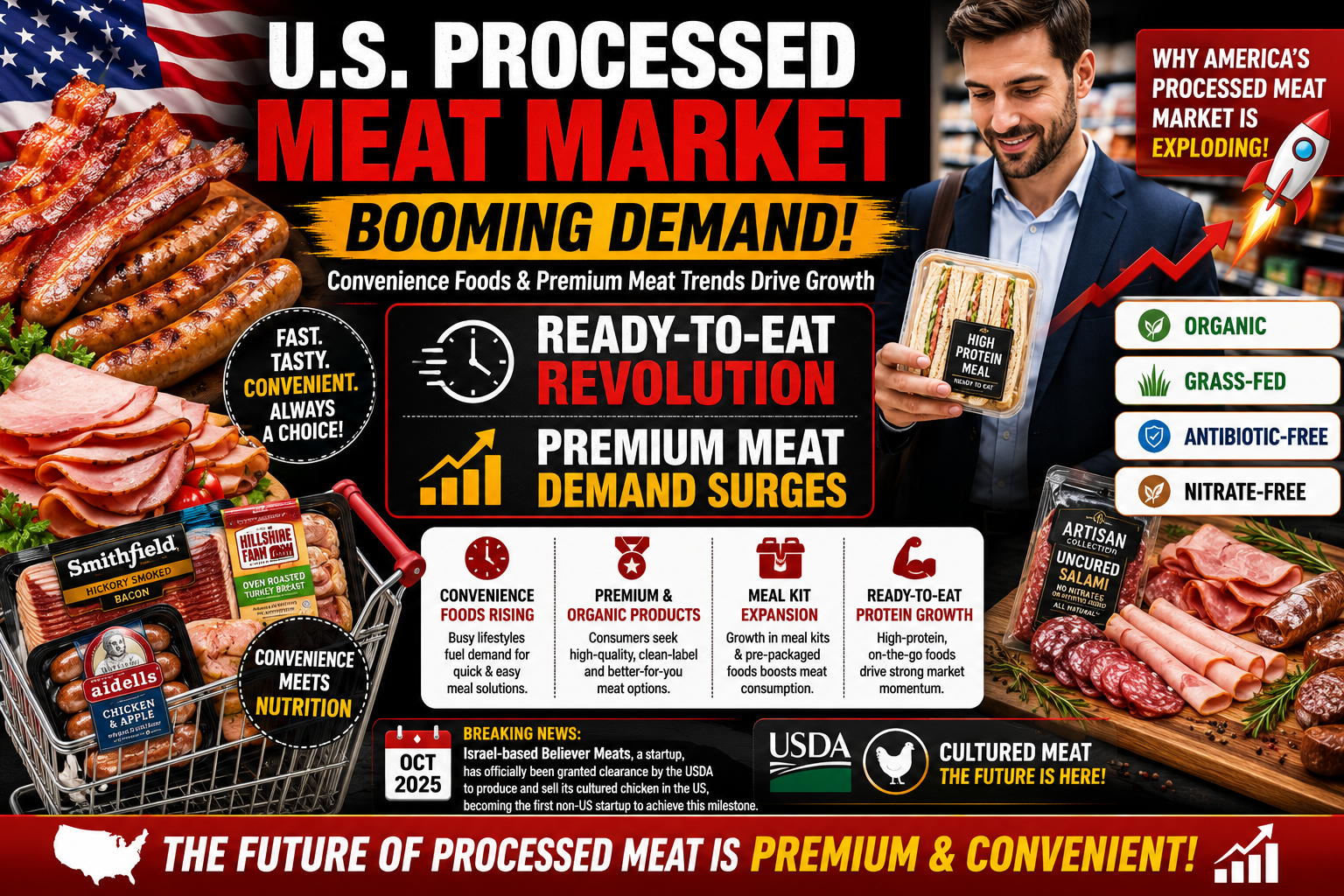
Busy lifestyles, growing demand for convenient meal solutions, and the rapid expansion of retail and foodservice channels have further strengthened market demand. At the same time, manufacturers are introducing premium, organic, nitrate-free, and clean-label options to appeal to increasingly health-conscious consumers.
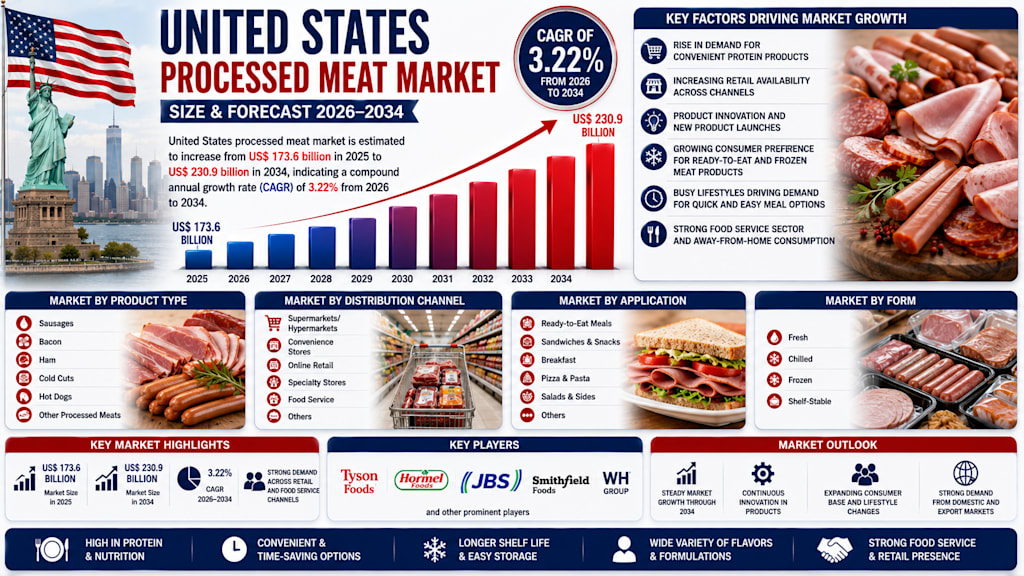
According to Renub Research, the United States Processed Meat Market is expected to grow from US$ 173.6 billion in 2025 to US$ 230.9 billion by 2034, registering a compound annual growth rate (CAGR) of 3.22% between 2026 and 2034. Rising demand for convenient protein products, growing foodservice consumption, increasing retail accessibility, and continuous product innovation are among the key factors supporting market growth.
As consumer lifestyles continue evolving and manufacturers adapt to changing dietary preferences, the processed meat industry is expected to remain an important component of the American food landscape.
Understanding the Processed Meat Industry
Processed meat refers to meat products that have undergone preservation or preparation methods such as curing, smoking, salting, fermentation, cooking, or the addition of preservatives.
These processes enhance flavor, improve convenience, extend shelf life, and facilitate transportation and storage.
Common processed meat products include bacon, sausages, hot dogs, ham, deli meats, canned meats, frozen meat products, and ready-to-eat protein snacks.
Consumers value these products because they require minimal preparation while providing a reliable source of protein.
Processed meats are used extensively in homes, restaurants, cafeterias, hotels, catering operations, convenience stores, and quick-service restaurants.
Their versatility has made them an essential ingredient in sandwiches, burgers, pizzas, breakfast meals, snacks, and prepared foods.
As convenience continues driving food purchasing decisions, processed meat remains highly relevant within modern consumer diets.
Convenience Foods Continue Driving Market Growth
One of the strongest growth drivers for the processed meat market is the increasing demand for convenient food products.
Modern consumers often face busy schedules that leave limited time for meal preparation.
Working professionals, students, dual-income households, and families increasingly seek food products that are quick to prepare while still delivering taste and nutritional value.
Processed meat products fit naturally into these consumption patterns because they offer ready-to-eat or easy-to-cook meal solutions.
Products such as deli slices, breakfast sausages, bacon, frozen meatballs, and hot dogs allow consumers to prepare meals quickly without extensive cooking.
The growing popularity of meal kits, ready-to-eat products, and convenience foods has further strengthened demand.
As convenience remains a major factor influencing food purchases, processed meat consumption is expected to continue growing.
Product Innovation Is Transforming Consumer Choices
Innovation remains one of the most important competitive forces within the processed meat industry.
Manufacturers are continually introducing new flavors, premium ingredients, healthier formulations, and specialty products designed to attract diverse consumer groups.
Demand for organic, grass-fed, antibiotic-free, nitrate-free, and clean-label processed meats has increased significantly in recent years.
Consumers increasingly seek transparency regarding sourcing, ingredients, and production methods.
Companies are responding by developing products that align with wellness trends while maintaining the flavor and convenience consumers expect.
Packaging innovation is also playing an important role, with resealable packs, portion-controlled servings, and smaller package sizes improving convenience and reducing waste.
These developments are helping companies attract new customers while retaining existing consumers in an increasingly competitive market.
Premiumization Is Creating New Revenue Opportunities
The premiumization trend has become a significant growth driver throughout the food industry, including processed meat.
Consumers are increasingly willing to pay higher prices for products perceived as healthier, more sustainable, or higher quality.
Premium processed meats often feature attributes such as organic certification, natural ingredients, specialty seasonings, animal welfare standards, and traceable sourcing practices.
Ethnic-inspired and gourmet meat products are also becoming more popular as consumers seek new culinary experiences.
These premium offerings provide manufacturers with opportunities to improve margins while addressing evolving consumer preferences.
As disposable incomes and food quality expectations continue rising, premium processed meat products are expected to gain further market share.
Foodservice Industry Remains a Major Consumer
The strength of the U.S. foodservice industry continues providing significant support for processed meat demand.
Restaurants, hotels, cafes, caterers, and quick-service restaurants rely heavily on processed meat products because they offer consistency, ease of storage, and efficient preparation.
Popular menu items such as burgers, breakfast sandwiches, pizzas, hot dogs, wraps, and deli sandwiches frequently feature processed meats.
The expansion of food delivery platforms and online ordering services has further increased consumption.
Consumers increasingly rely on prepared foods and restaurant meals, creating steady demand throughout commercial food operations.
As the foodservice industry continues expanding and adapting to changing dining habits, processed meat products are expected to remain an essential ingredient category.
Protein Snacking Is Becoming Increasingly Popular
Consumer interest in protein-rich snacks is creating additional opportunities for processed meat manufacturers.
High-protein diets have gained popularity among fitness enthusiasts, busy professionals, and health-conscious consumers.
Meat-based snacks such as jerky, meat sticks, and portable protein products provide convenient nutrition for consumers seeking alternatives to traditional snack foods.
In September 2025, meat snack manufacturer Carnal introduced new Beef Sticks and Umami Cut Beef Jerky products featuring premium ingredients and gourmet flavor profiles.
The intersection of convenience, portability, and protein nutrition continues creating attractive growth opportunities within the processed meat category.
As snacking habits evolve, meat-based protein products are expected to play an increasingly important role in market expansion.
Beef Processed Meat Maintains Strong Market Position
Beef remains one of the most important segments within the U.S. processed meat market.
Products such as beef sausages, corned beef, deli meats, hot dogs, jerky, and burger patties continue enjoying strong consumer demand.
Beef-based processed meats are particularly popular within foodservice applications, including fast-food restaurants and sandwich chains.
Premium beef products, including organic and grass-fed varieties, are also gaining traction among consumers seeking higher-quality protein options.
Despite higher prices compared to some alternative proteins, beef continues benefiting from strong cultural preferences and widespread consumer familiarity.
Manufacturers are increasingly introducing clean-label beef products to align with changing health and wellness expectations.
Poultry Processed Meat Is Experiencing Rapid Growth
The poultry processed meat segment continues growing rapidly due to perceptions of poultry as a healthier and more affordable protein source.
Chicken nuggets, turkey slices, chicken sausages, and other poultry-based products are widely consumed across all age groups.
Consumers often view poultry products as leaner alternatives to red meat while still providing high levels of protein.
Poultry's versatility across different cuisines and meal occasions further contributes to its popularity.
The strong presence of poultry products within quick-service restaurants and fast-food chains also supports market growth.
As consumers increasingly prioritize healthier eating habits, poultry processed meats are expected to remain one of the fastest-growing segments within the industry.
Frozen Processed Meat Segment Continues Expanding
Frozen processed meat products represent another important area of market growth.
Consumers increasingly appreciate the convenience, long shelf life, and flexibility offered by frozen foods.
Popular products include frozen nuggets, patties, meatballs, sausages, and ready-to-cook meal components.
Advancements in freezing technology have significantly improved product quality, texture, and nutritional retention.
Many households prefer frozen processed meats because they enable bulk purchasing while minimizing food waste.
Foodservice operators also benefit from the operational efficiency and inventory management advantages associated with frozen products.
As demand for convenient meal solutions continues rising, frozen processed meats are expected to maintain strong growth momentum.
Online Retail Is Reshaping Distribution Channels
The rapid growth of e-commerce is transforming how consumers purchase processed meat products.
Online grocery platforms provide consumers with convenience, product variety, and home delivery services.
Many consumers now purchase processed meats through digital channels, particularly when seeking specialty products, bulk purchases, or subscription services.
The COVID-19 pandemic accelerated online grocery adoption and permanently changed many shopping habits.
Retailers continue investing in cold-chain logistics and delivery infrastructure to support online food sales.
As e-commerce penetration continues increasing, online retail channels are expected to become increasingly important within the processed meat market.
Convenience Stores Continue Supporting Sales
Convenience stores remain an important distribution channel for processed meat products.
Consumers frequently purchase ready-to-eat items such as hot dogs, sandwiches, breakfast products, and meat snacks from convenience locations.
The strategic placement of convenience stores near highways, residential areas, workplaces, and transportation hubs supports strong sales performance.
Impulse purchases and growing snacking trends further contribute to category growth.
Many convenience retailers are expanding premium food offerings to attract broader customer segments.
Although competition from supermarkets and online retailers continues increasing, convenience stores remain an important outlet for processed meat products.
Health Concerns Remain a Significant Challenge
Despite strong demand, the processed meat industry faces increasing scrutiny regarding health and nutrition.
Research linking excessive processed meat consumption to cardiovascular disease, obesity, and certain cancers has influenced consumer perceptions.
Many consumers are reducing processed meat consumption or seeking healthier alternatives with reduced sodium, fewer preservatives, and cleaner ingredient lists.
Government agencies and regulators have also introduced stricter requirements regarding labeling, additives, and nutritional disclosures.
Manufacturers must continue reformulating products to address these concerns while maintaining taste, affordability, and convenience.
Successfully balancing health expectations with consumer preferences will remain critical for long-term industry growth.
Plant-Based Alternatives Are Intensifying Competition
One of the most significant challenges facing traditional processed meat producers is the rapid growth of alternative protein products.
Plant-based meat substitutes have gained popularity among consumers adopting vegetarian, vegan, or flexitarian lifestyles.
Younger generations are particularly open to exploring alternative protein options that emphasize sustainability and environmental responsibility.
Major food companies are investing heavily in plant-based innovations, increasing competitive pressure within the protein category.
Traditional meat producers are responding by expanding product portfolios, improving sustainability initiatives, and emphasizing product quality and nutritional benefits.
Competition from alternative proteins is expected to remain a major factor shaping industry strategy in the years ahead.
Regional Market Insights
California
California remains one of the most influential processed meat markets in the United States. While traditional products maintain strong demand, consumers increasingly favor organic, nitrate-free, and sustainably sourced meat products. Strict food safety regulations and strong health-conscious trends continue shaping market dynamics.
Texas
Texas benefits from a strong meat consumption culture and high demand for protein-rich foods. Smoked sausages, beef jerky, barbecue-inspired products, and premium beef-based meats remain especially popular throughout the state.
Florida
Florida's tourism industry, diverse population, and preference for convenient foods support steady processed meat demand. Ready-to-eat products and deli meats remain particularly popular among both residents and visitors.
New Jersey
New Jersey's dense population and fast-paced urban lifestyle contribute to strong demand for deli meats, breakfast products, and convenient meal solutions. The state's diverse demographics also support demand for a wide range of processed meat flavors and styles.
Washington
Washington combines traditional meat consumption patterns with growing demand for premium and sustainable products. Consumers increasingly seek healthier processed meat options while also exploring plant-based alternatives.
Competitive Landscape
The United States processed meat market remains highly competitive, with major companies focusing on innovation, sustainability, premiumization, and distribution expansion.
Leading industry participants include Hormel Foods, Tyson Foods, Conagra Brands Inc., General Mills, Kraft Heinz Company, Cargill Incorporated, and Pilgrim's Pride Corporation.
These organizations continue investing in product development, packaging innovation, supply chain efficiency, and health-focused formulations to strengthen their competitive positions.
Strategic investments in premium products and emerging protein categories are expected to remain key priorities throughout the forecast period.
Final Thoughts
The United States processed meat market continues evolving as convenience, protein demand, and changing consumer lifestyles drive industry growth. While traditional products remain highly popular, manufacturers are increasingly adapting to health trends through cleaner ingredients, premium offerings, and innovative product formats.
Strong demand from foodservice operators, retail channels, protein snack categories, and frozen food applications continues creating growth opportunities across the industry.
With the market projected to grow from US$ 173.6 billion in 2025 to US$ 230.9 billion by 2034, processed meat products are expected to remain a significant part of the American food industry. Companies that successfully balance convenience, taste, nutrition, and sustainability will be best positioned to capitalize on future market opportunities.
About the Creator
Enjoyed the story? Support the Creator.
Subscribe for free to receive all their stories in your feed.
Comments
There are no comments for this story
Be the first to respond and start the conversation.