
United States Pea Protein Market Size, Share & Opportunity Forecast 2034
The United States pea protein market size was valued at USD 285.83 Million in 2025 to reach USD 425.21 Million by 2034.

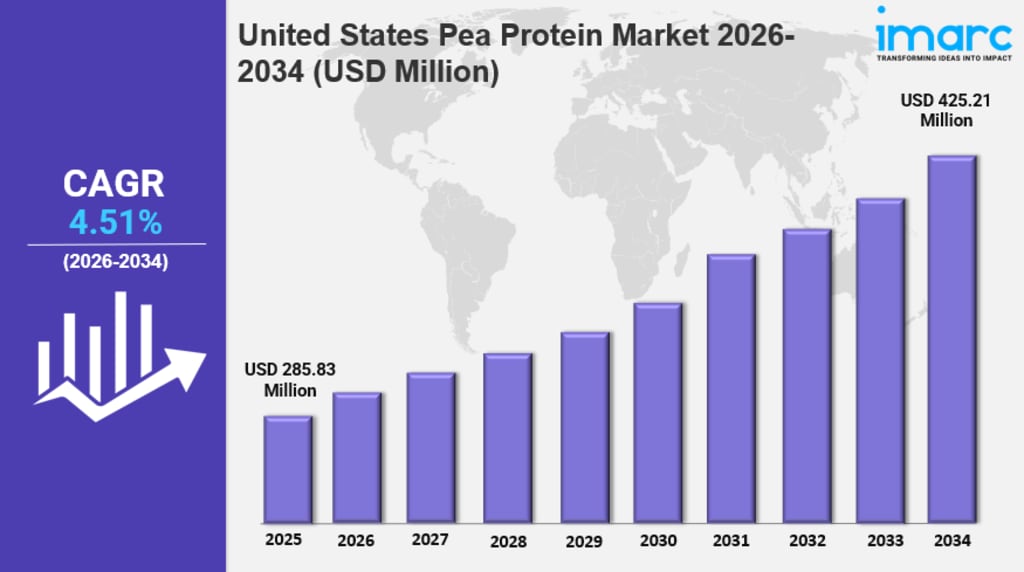
United States Pea Protein Market Size, Share, and Growth Forecast (2026–2034)
The United States pea protein market is gaining steady traction as demand for plant-based ingredients continues to expand across food, beverage, and nutrition industries. The market was valued at USD 285.83 million in 2025 and is projected to reach USD 425.21 million by 2034, growing at a CAGR of 4.51% during 2026–2034.
For B2B stakeholders, this growth reflects a structural shift in ingredient sourcing and product formulation. Manufacturers are increasingly incorporating plant-based proteins to meet evolving consumer expectations around health, sustainability, and dietary preferences. Pea protein, in particular, is gaining acceptance due to its neutral taste profile, allergen-friendly nature, and compatibility across a wide range of applications. As a result, it is becoming a strategic ingredient for companies aiming to diversify portfolios and capture value in the plant-based segment.
Request a Sample Report with Latest 2026 Data & Forecasts:
Key Growth Drivers in the U.S. Pea Protein Market: Plant-Based Demand and Clean-Label Trends
The expansion of the pea protein market is closely linked to the broader rise of plant-based consumption. Consumers are actively seeking alternatives to animal-based proteins, driven by health awareness, environmental concerns, and dietary restrictions. This shift is encouraging food manufacturers to invest in plant-based formulations.
Clean-label demand is another important factor. Buyers are prioritizing transparency in ingredient sourcing and processing, which is pushing companies to adopt simpler and recognizable ingredients. Pea protein aligns well with this trend, offering a natural and minimally processed option for product developers.
From a business perspective, these drivers are creating opportunities for ingredient suppliers and manufacturers to expand production capacity and develop differentiated offerings. Companies that can ensure consistent quality and supply are better positioned to secure long-term partnerships with food and beverage brands.
Application Trends in the U.S. Pea Protein Market: Food, Beverages, Sports Nutrition, and Animal Feed
Pea protein is being used across a growing number of applications, making it a versatile ingredient for multiple industries. In the food sector, it is widely used in plant-based meat alternatives, bakery products, and snacks, where it contributes to both texture and nutritional value.
In beverages, pea protein is gaining traction in ready-to-drink shakes and dairy alternatives. Its ability to blend well with other ingredients makes it suitable for functional beverages targeting health-conscious consumers.
The sports nutrition segment is another key area of growth. Pea protein is being incorporated into protein powders and bars, offering an alternative to traditional whey-based products. Its digestibility and amino acid profile make it appealing for fitness-focused consumers.
Additionally, the use of pea protein in animal feed is emerging as a niche but growing segment, particularly as producers look for sustainable protein sources.
Consumer Trends Shaping the U.S. Pea Protein Market: Vegan, Allergen-Free, and Functional Nutrition
Consumer preferences are playing a central role in shaping the pea protein market. The increasing adoption of vegan and flexitarian diets is driving demand for plant-based protein sources. Pea protein fits well within these dietary patterns, offering a viable alternative to soy and dairy proteins.
Allergen concerns are also influencing purchasing decisions. Pea protein is free from common allergens such as dairy, soy, and gluten, making it suitable for a broader consumer base. This advantage is particularly important for brands targeting sensitive or health-conscious consumers.
Functional nutrition is another emerging trend. Consumers are looking for products that provide specific health benefits, such as muscle recovery, weight management, and overall wellness. Pea protein is being positioned as a functional ingredient that supports these needs, creating opportunities for product innovation.
Supply Chain and Production Insights in the U.S. Pea Protein Industry
Supply chain efficiency is a key consideration in the pea protein market. The production process involves sourcing yellow peas, extracting protein, and ensuring consistent quality across batches. Any disruption in raw material supply can impact production timelines and costs.
Domestic sourcing is gaining attention as companies look to reduce dependency on imports and improve supply chain resilience. Investments in local processing facilities are helping manufacturers achieve better control over production and logistics.
For B2B buyers, reliability of supply is as important as product quality. Companies that can offer stable pricing, consistent output, and transparent sourcing practices are more likely to build long-term relationships with clients.
Pricing, Raw Materials, and Competitive Challenges in the U.S. Pea Protein Market
Pricing dynamics in the pea protein market are influenced by raw material availability, processing costs, and competitive pressures. Fluctuations in pea crop yields can impact input costs, which in turn affect pricing strategies.
Competition is intensifying as more players enter the plant-based protein space. Companies are not only competing on price but also on quality, functionality, and application support. Differentiation is becoming critical, particularly for suppliers targeting large-scale food manufacturers.
In addition, maintaining product consistency and meeting regulatory standards adds to operational complexity. Businesses must balance cost efficiency with quality assurance to remain competitive.
Investment Opportunities in the United States Pea Protein Market for Food and Ingredient Companies
The U.S. pea protein market presents clear investment opportunities for ingredient suppliers, food manufacturers, and investors. Growth in plant-based consumption is creating demand for scalable production and innovative product development.
Investments in processing technology and capacity expansion are key areas of focus. Companies that can improve extraction efficiency and reduce production costs will gain a competitive advantage. There is also potential in developing specialized formulations tailored to specific applications, such as beverages or meat alternatives.
Strategic partnerships are playing an important role in market expansion. Collaboration between ingredient suppliers and food brands is enabling faster product development and market entry. For investors, the focus is on businesses that combine technical expertise with strong distribution networks.
As the market continues to evolve, companies that align with consumer trends, ensure supply chain reliability, and invest in innovation are likely to capture long-term value in the U.S. pea protein industry.
About the Creator
Kim Soo hyun
My name is Kim Soo hyun, and I am a research analyst at IMARC Group, specializing in market trends and data analysis to provide insights and support strategic decision-making.
Enjoyed the story? Support the Creator.
Subscribe for free to receive all their stories in your feed.
Comments
There are no comments for this story
Be the first to respond and start the conversation.