
United States Pancreatic Cancer Precision Medicine Market Set to Reach US$ 694.48 Million by 2033 as Personalized Oncology Revolution Gains Momentum
Advances in genomic testing, targeted therapies, immunotherapy, and liquid biopsy technologies are transforming pancreatic cancer treatment across the United States.

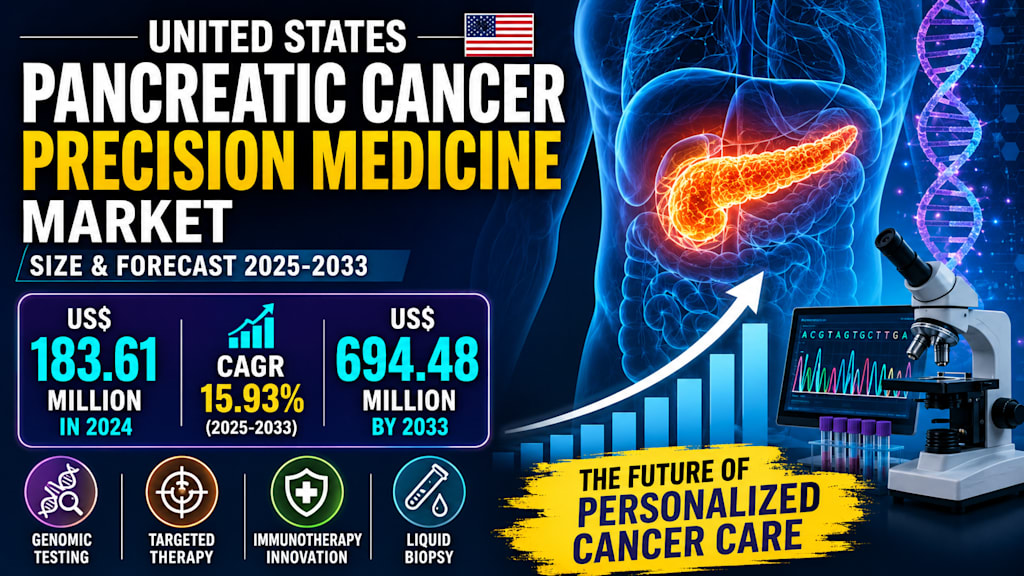
United States Pancreatic Cancer Precision Medicine Market Size & Forecast 2025–2033
The landscape of pancreatic cancer treatment in the United States is undergoing a significant transformation. Precision medicine, once considered a futuristic concept, is rapidly becoming a cornerstone of modern oncology. By tailoring treatment strategies according to the unique genetic and molecular characteristics of each patient's tumor, healthcare providers are achieving more personalized and potentially effective outcomes.
According to Renub Research, the United States Pancreatic Cancer Precision Medicine Market is projected to grow from US$ 183.61 million in 2024 to US$ 694.48 million by 2033, expanding at a robust CAGR of 15.93% between 2025 and 2033.
The market's remarkable growth is fueled by increasing pancreatic cancer incidence, technological breakthroughs in genomic sequencing, expanding clinical trials, growing investments in cancer research, and rising demand for individualized treatment approaches.
Understanding Precision Medicine in Pancreatic Cancer
Pancreatic cancer remains one of the most challenging malignancies to diagnose and treat. Most patients are diagnosed at advanced stages when treatment options are limited and survival rates remain low.
Precision medicine changes this paradigm by identifying specific genetic mutations, biomarkers, and molecular alterations within a patient's tumor. Through advanced genomic profiling, physicians can select therapies specifically designed to target these abnormalities.
Instead of applying a one-size-fits-all treatment strategy, precision medicine enables healthcare professionals to determine which patients may benefit most from targeted therapies, immunotherapies, or combination treatment approaches.
This personalized methodology improves treatment effectiveness, minimizes unnecessary side effects, and offers patients access to innovative clinical trials that may provide new therapeutic opportunities.
As scientific understanding of pancreatic cancer biology continues to advance, precision medicine is becoming an essential component of cancer care throughout the United States.
Rising Pancreatic Cancer Incidence Driving Market Growth
One of the most significant factors supporting market expansion is the growing burden of pancreatic cancer across the country.
Pancreatic cancer continues to rank among the deadliest forms of cancer, largely due to delayed diagnosis and aggressive disease progression. Risk factors such as obesity, diabetes, smoking, and aging populations contribute to increasing incidence rates.
According to the American Cancer Society's Cancer Statistics 2025 report, approximately 67,440 Americans are expected to be diagnosed with pancreatic cancer, while nearly 51,980 deaths are projected from the disease.
The five-year survival rate remains alarmingly low, highlighting the urgent need for more effective therapeutic interventions.
This growing healthcare challenge has accelerated demand for precision medicine solutions that can improve treatment outcomes and provide patients with more personalized care options.
Genomic Profiling Revolutionizing Treatment Decisions
Technological innovation is another major catalyst transforming the pancreatic cancer precision medicine market.
Advancements in next-generation sequencing (NGS), molecular diagnostics, and biomarker analysis have dramatically improved physicians' ability to understand the genetic makeup of pancreatic tumors.
Today, clinicians can identify important mutations such as:
BRCA1 mutations
BRCA2 mutations
KRAS alterations
Microsatellite instability (MSI)
Other actionable molecular biomarkers
These discoveries help oncologists determine which targeted therapies are likely to deliver the best outcomes for individual patients.
The growing accessibility and affordability of genomic testing have further accelerated adoption across hospitals, cancer centers, and specialized oncology clinics.
As testing technologies continue to evolve, precision medicine is expected to become an increasingly standard component of pancreatic cancer management.
Strong Research Infrastructure Supporting Innovation
The United States possesses one of the world's most advanced healthcare and research ecosystems, creating fertile ground for precision medicine innovation.
Leading cancer research institutions, biotechnology firms, pharmaceutical companies, and academic medical centers are investing heavily in pancreatic cancer research.
Government agencies, including the National Cancer Institute (NCI), continue to fund critical research initiatives focused on:
Biomarker discovery
Precision diagnostics
Targeted therapies
Immunotherapy development
Clinical trial expansion
Collaborative partnerships between academia and industry are accelerating the development of next-generation treatment options capable of addressing the complex biology of pancreatic cancer.
Recent investments into data science and precision oncology programs further demonstrate the country's commitment to advancing personalized cancer treatment strategies.
Challenges Limiting Market Expansion
High Treatment Costs and Accessibility Concerns
Despite substantial progress, precision medicine remains expensive for many patients.
Comprehensive genomic testing, advanced diagnostics, targeted therapies, and immunotherapies often involve significant costs that can limit accessibility.
Although insurance coverage for precision medicine has improved, disparities continue to exist among underinsured populations and patients living in rural communities.
Furthermore, many specialized cancer centers offering advanced precision medicine services are concentrated in major metropolitan regions, creating geographic barriers for patients in remote locations.
Addressing affordability and accessibility challenges will be essential for ensuring broader adoption of precision oncology across the United States.
Tumor Complexity and Therapeutic Resistance
Pancreatic cancer is notoriously complex from a biological standpoint.
Tumors often exhibit extensive genetic diversity, making it difficult to identify universally effective treatment targets.
Even when targeted therapies initially demonstrate success, many patients eventually develop resistance mechanisms that reduce long-term effectiveness.
Additionally, pancreatic tumors possess a dense stromal environment that restricts drug penetration and limits therapeutic efficacy.
Researchers continue exploring novel treatment combinations and biomarker-driven strategies aimed at overcoming these biological obstacles.
Targeted Therapy Emerging as a Market Leader
Targeted therapy has become one of the most promising segments within the pancreatic cancer precision medicine market.
Unlike traditional chemotherapy, targeted treatments focus on specific molecular abnormalities driving cancer growth.
PARP inhibitors, for example, have demonstrated significant benefits in patients carrying BRCA mutations.
Advantages of targeted therapies include:
Greater treatment precision
Reduced damage to healthy tissues
Improved patient quality of life
Enhanced progression-free survival
As genomic testing becomes increasingly integrated into clinical practice, the number of patients eligible for targeted treatment continues to expand.
Ongoing clinical trials are also uncovering new therapeutic targets, creating additional growth opportunities for this segment.
Immunotherapy Creating New Opportunities
Immunotherapy is rapidly gaining attention as a transformative treatment approach for pancreatic cancer.
These therapies work by activating the body's immune system to recognize and destroy cancer cells.
While pancreatic cancer has historically shown resistance to immunotherapy, researchers are developing innovative strategies to improve response rates.
Current investigations include:
Checkpoint inhibitors
Cancer vaccines
Immune modulators
Combination therapy regimens
Many clinical trials are evaluating immunotherapy alongside chemotherapy and targeted therapies to maximize treatment effectiveness.
As scientific breakthroughs continue, immunotherapy is expected to play an increasingly important role in precision-based pancreatic cancer care.
Precision Genomic Testing Driving Personalized Care
Precision genomic testing forms the foundation of personalized oncology.
Through comprehensive molecular analysis, physicians gain detailed insights into each patient's tumor biology.
Next-generation sequencing enables the identification of biomarkers that guide treatment decisions and improve therapeutic selection.
Benefits of genomic testing include:
Earlier identification of actionable mutations
Better treatment matching
Improved clinical outcomes
Increased eligibility for clinical trials
Declining sequencing costs and expanding insurance reimbursement policies are making genomic testing more accessible throughout the United States.
As a result, demand for precision diagnostic technologies is expected to rise significantly during the forecast period.
Liquid Biopsy Transforming Cancer Monitoring
Liquid biopsy technology represents one of the most exciting developments in pancreatic cancer precision medicine.
Rather than requiring invasive tissue sampling, liquid biopsies analyze circulating tumor DNA (ctDNA) and other cancer-related biomarkers found in blood samples.
Key advantages include:
Minimally invasive procedures
Faster results
Real-time disease monitoring
Detection of resistance mutations
Potential for earlier diagnosis
As clinical validation grows and regulatory approvals expand, liquid biopsy is expected to become an increasingly valuable tool in pancreatic cancer management.
Its ability to support both diagnosis and ongoing treatment monitoring positions it as a major growth segment within the market.
Regional Insights
California
California remains the leading hub for pancreatic cancer precision medicine innovation. The state's thriving biotechnology ecosystem, renowned research institutions, and strong venture capital environment continue to drive advancements in genomic testing, targeted therapies, and liquid biopsy technologies.
New York
New York's sophisticated healthcare infrastructure and globally recognized cancer research centers make it a critical market for precision oncology. The state's diverse patient population also supports extensive clinical research initiatives.
Texas
Texas is rapidly emerging as a major precision medicine market. Leading institutions such as the renowned cancer research centers in Houston continue advancing genomic research, immunotherapy development, and innovative treatment approaches.
Competitive Landscape
The market remains highly competitive, with leading pharmaceutical and biotechnology companies investing heavily in research, drug development, precision diagnostics, and clinical trials.
Major market participants include:
AstraZeneca
Pfizer Inc.
Novartis AG
Amgen Inc.
F. Hoffmann-La Roche Ltd
Bayer AG
Eli Lilly and Company
Merck & Co., Inc.
These organizations are pursuing strategic partnerships, acquisitions, and research collaborations to strengthen their precision oncology portfolios and expand their presence within the pancreatic cancer treatment market.
10 Recent Developments from Leading Companies
1. AstraZeneca
Continued expansion of PARP inhibitor research programs focused on BRCA-mutated pancreatic cancer patients and precision oncology applications.
2. Pfizer Inc.
Strengthened oncology pipeline investments targeting biomarker-driven therapies and next-generation precision medicine solutions.
3. Novartis AG
Advanced development of targeted oncology therapies utilizing genomic profiling to improve treatment personalization.
4. Amgen Inc.
Expanded clinical research initiatives evaluating innovative targeted treatment combinations for difficult-to-treat cancers.
5. Roche
Enhanced precision diagnostics capabilities through advanced molecular testing platforms supporting personalized treatment selection.
6. Bayer AG
Accelerated oncology research efforts aimed at developing precision-guided therapeutic approaches for solid tumors.
7. Eli Lilly and Company
Invested in cancer genomics research programs focused on identifying novel biomarkers and therapeutic targets.
8. Merck & Co.
Expanded immuno-oncology clinical trials exploring combination strategies for pancreatic cancer treatment.
9. Guardant Health
Introduced advanced molecular profiling capabilities through Guardant360 Tissue, integrating DNA, RNA, AI-driven PD-L1 analysis, and methylation data.
10. Academic-Industry Collaborations
Major cancer research institutions across the United States increased partnerships with pharmaceutical companies to accelerate biomarker discovery and precision medicine innovation.
Final Thoughts
The United States Pancreatic Cancer Precision Medicine Market is entering a transformative era characterized by rapid scientific advancement and growing clinical adoption. With market value expected to rise from US$ 183.61 million in 2024 to US$ 694.48 million by 2033, precision medicine is reshaping how one of the most challenging cancers is diagnosed and treated.
Breakthroughs in genomic testing, targeted therapy, immunotherapy, and liquid biopsy technologies are creating new possibilities for patients who previously had limited treatment options. While challenges related to cost, accessibility, and tumor complexity remain, ongoing research investments and expanding healthcare infrastructure continue to strengthen the market's long-term outlook.
As personalized oncology becomes the standard of care, precision medicine is poised to significantly improve survival outcomes, enhance quality of life, and redefine pancreatic cancer treatment across the United States throughout the coming decade.
About the Creator
Enjoyed the story? Support the Creator.
Subscribe for free to receive all their stories in your feed.
Comments
There are no comments for this story
Be the first to respond and start the conversation.