
United States Outdoor Furniture and Kitchen Market Expected to Reach US$16.92 Billion by 2033 Amid Rising Outdoor Living Trends
Growing demand for stylish backyard spaces, smart outdoor kitchens, and sustainable furniture is transforming America’s outdoor living industry

The outdoor living revolution in the United States is reshaping how homeowners design, use, and value their residential spaces. Backyards, patios, balconies, and gardens are no longer viewed as secondary areas of the home. Instead, they are becoming extensions of indoor living spaces, complete with luxury seating, outdoor kitchens, entertainment zones, and smart technology integrations.
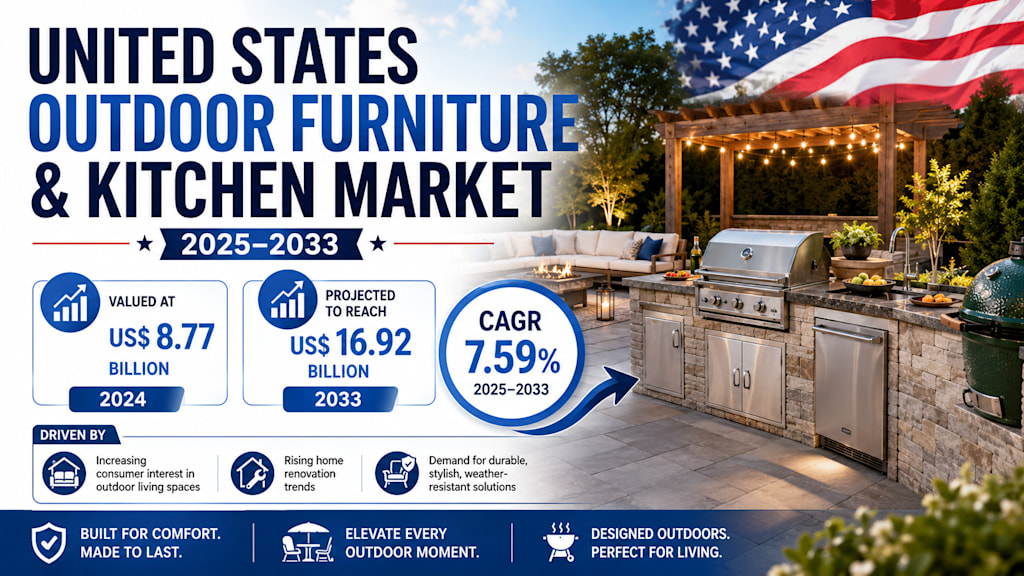
According to Renub Research, the United States outdoor furniture and kitchen market was valued at US$8.77 billion in 2024 and is projected to reach US$16.92 billion by 2033, expanding at a CAGR of 7.59% between 2025 and 2033.
The market’s strong momentum is being fueled by rising home renovation activities, increasing consumer preference for outdoor entertainment, and growing interest in comfortable yet aesthetically appealing outdoor environments. As Americans continue investing heavily in home improvement projects, outdoor furniture and kitchen products are becoming central to modern lifestyle aspirations.
Outdoor Living Has Become a Lifestyle Statement
The pandemic permanently changed the way many Americans perceive their homes. Remote work, home-centered lifestyles, and a renewed appreciation for personal spaces have encouraged homeowners to maximize the functionality of outdoor areas.
Today’s consumers are designing outdoor spaces that mirror indoor comfort and luxury. From weather-resistant sofas and modular dining sets to fully equipped outdoor kitchens and fire pit lounges, outdoor living is becoming a major component of residential design trends.
Outdoor furniture and kitchens are specifically designed to withstand environmental conditions while maintaining durability and visual appeal. Materials such as teak, aluminum, wicker, stainless steel, and synthetic rattan are increasingly popular because of their ability to endure varying climates.
Consumers are also prioritizing comfort, multifunctionality, and visual harmony when selecting products. This growing emphasis on outdoor aesthetics is pushing manufacturers to introduce innovative designs that combine luxury with practicality.
Home Improvement Boom Continues Fueling Market Growth
One of the strongest growth drivers for the market is the ongoing home improvement boom across the United States.
As homeowners spend more time at home, many are choosing to invest in backyard renovations, patio upgrades, and personalized outdoor entertainment areas. Outdoor kitchens, dining spaces, and resort-style lounge areas are increasingly viewed as value-enhancing additions to residential properties.
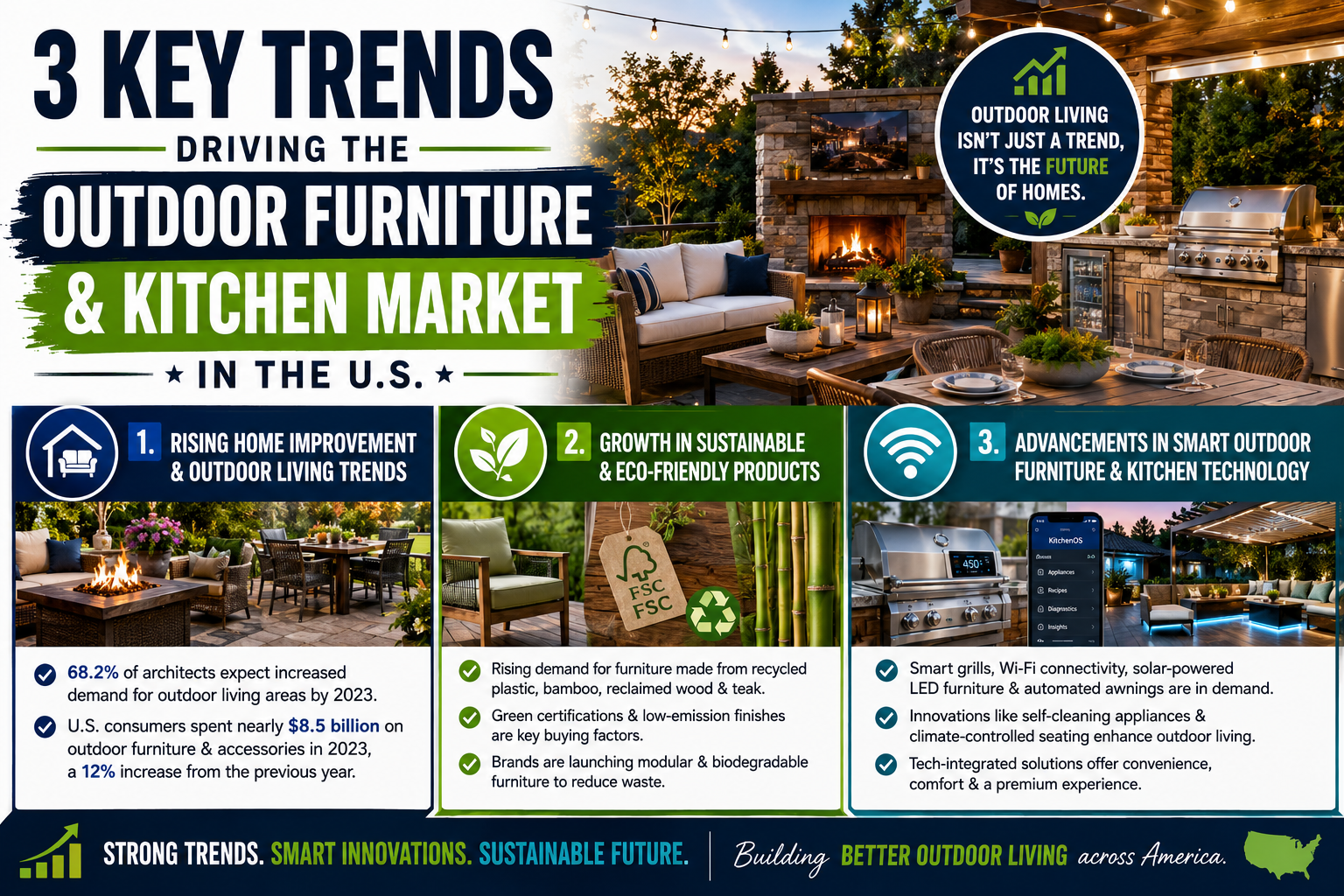
The American Institute of Architects’ Home Design Trends Survey found that 69.2% of residential architects expected increased demand for outdoor living areas by 2023. Additionally, the International Casual Furnishings Association reported that U.S. consumers spent nearly US$8.5 billion on outdoor furniture and accessories in 2023, representing a 12% increase compared to the previous year.
This surge highlights how outdoor living has evolved beyond seasonal use into a long-term lifestyle investment.
Consumers increasingly seek outdoor spaces suitable for:
- Family gatherings
- Outdoor dining and barbecues
- Remote working setups
- Relaxation and wellness activities
- Social entertainment and hosting
As these preferences continue expanding, demand for premium outdoor furniture and kitchen solutions is expected to remain strong.
Sustainability Is Influencing Consumer Buying Decisions
Environmental awareness is becoming a defining factor in the outdoor furniture and kitchen industry.
Modern consumers are paying closer attention to where products come from, how they are manufactured, and whether they align with sustainable living principles. As a result, eco-friendly materials are rapidly gaining popularity across the market.
Furniture made from recycled plastics, bamboo, reclaimed wood, and sustainably sourced teak is increasingly preferred by environmentally conscious buyers.
Manufacturers are also emphasizing:
- FSC-certified wood sourcing
- Low-emission coatings
- Recyclable materials
- Modular furniture designs
- Biodegradable product innovations
The growing importance of sustainability is pushing brands to rethink production processes and packaging methods while balancing affordability and durability.
A notable example includes the collaboration between Reese Witherspoon’s Draper James brand and POLYWOOD, which introduced environmentally friendly outdoor furniture collections focused on Southern-inspired outdoor living.
Smart Outdoor Technology Is Reshaping Consumer Expectations
Technology integration is becoming one of the most exciting trends in the outdoor furniture and kitchen market.
Consumers are increasingly seeking smart outdoor solutions that improve convenience, comfort, and entertainment experiences. This demand has opened the door for innovative products equipped with advanced technologies.
Some of the most popular smart outdoor innovations include:
- Solar-powered LED furniture
- Smart grills with Wi-Fi connectivity
- Automated awnings
- Self-cleaning outdoor appliances
- Weather-resistant Bluetooth speaker systems
- Climate-controlled seating solutions
- Automated misting systems
These innovations are helping transform outdoor spaces into fully connected entertainment environments.
The launch of KitchenOS by Fresco further demonstrates the growing role of connected appliances in modern outdoor cooking experiences.
As smart home adoption continues rising nationwide, smart outdoor kitchens and furniture are expected to become mainstream consumer preferences.
High Product Costs Remain a Major Challenge
Despite the market’s strong growth outlook, affordability remains a key challenge for many consumers.
Premium outdoor furniture and kitchen setups often involve expensive materials such as teak, stainless steel, and wrought iron. Additional features like UV-resistant fabrics, weatherproof coatings, and integrated smart technology significantly increase product costs.
Shipping bulky furniture items also adds to retail pricing, particularly for large modular outdoor kitchens and luxury patio furniture collections.
Although budget-friendly alternatives exist, many lower-cost products struggle to deliver long-term durability or weather resistance. This creates a difficult balancing act for manufacturers attempting to offer affordable solutions without sacrificing quality.
Weather Conditions Continue Impacting Consumer Demand
The outdoor furniture and kitchen market is also highly seasonal.
Demand typically peaks during spring and summer months while slowing considerably during colder seasons. Severe weather conditions such as hurricanes, snowfall, and extreme heat can discourage outdoor investments in certain regions.
Retailers and manufacturers often face inventory management challenges due to fluctuating seasonal demand patterns. To address this issue, companies are increasingly introducing all-weather furniture designs and protective accessories intended to extend product usability throughout the year.
Still, unpredictable climate conditions remain a long-term market challenge.
Loungers and Outdoor Chairs Are Seeing Strong Consumer Interest
Among furniture categories, loungers and outdoor chairs are witnessing particularly strong demand.
Consumers increasingly seek resort-style comfort experiences at home, fueling popularity for adjustable loungers, cushioned seating, and ergonomic outdoor relaxation products.
Outdoor chairs also remain a major product segment, including Adirondack chairs, rocking chairs, folding chairs, and stackable patio seating. Buyers prioritize comfort, portability, and weather resistance when making purchasing decisions.
Design flexibility is another important factor. Many consumers now prefer mix-and-match furniture arrangements that allow customization based on space and aesthetic preferences.
Wood and Metal Continue Dominating Outdoor Kitchen Designs
Material selection plays a crucial role in outdoor furniture and kitchen purchasing decisions.
Wood Furniture
Wood remains highly desirable because of its timeless appearance and natural appeal. Materials such as teak, cedar, acacia, and reclaimed wood are widely used in outdoor kitchen cabinetry, dining tables, and barbecue stations.
Consumers increasingly favor handcrafted wooden designs that create warm, welcoming outdoor environments.
Metal Furniture
Metal outdoor kitchen furniture, particularly stainless steel and powder-coated aluminum, is also growing rapidly because of its durability and modern aesthetic appeal.
Contemporary homeowners often prefer metal-based outdoor kitchens due to their low maintenance requirements and sleek industrial appearance.
E-Commerce Is Transforming the Industry
Online shopping platforms are significantly reshaping how consumers purchase outdoor furniture and kitchen products.
Digital retail channels now offer:
- Wider product selections
- Competitive pricing
- Virtual consultations
- Augmented reality previews
- Convenient home delivery
The rise of direct-to-consumer brands has further streamlined the purchasing process, allowing manufacturers to reduce costs while offering more customization options.
At the same time, physical outdoor furniture stores continue maintaining relevance by providing hands-on shopping experiences where consumers can evaluate product quality and comfort firsthand.
The future of the market will likely involve a hybrid retail model combining online convenience with immersive in-store experiences.
Regional Markets Reflect Different Lifestyle Preferences
Outdoor furniture and kitchen demand varies significantly across different U.S. regions.
Eastern United States
Consumers in states like New York and Florida prioritize weather-resistant and corrosion-resistant furniture solutions suited to diverse climate conditions. Urban areas increasingly favor compact and multifunctional outdoor products.
Western United States
The Western U.S., especially California and Arizona, demonstrates particularly strong demand due to year-round outdoor lifestyles and entertainment-focused home designs. Outdoor kitchens with grills, pizza ovens, and bar setups remain especially popular in the region.
Leading Companies Intensify Market Competition
Competition within the outdoor furniture and kitchen market continues intensifying as companies focus on innovation, sustainability, and customization.
Major companies operating in the industry include:
- Inter IKEA Holding B.V.
- Ashley Furniture Industries
- Brown Jordan
- Keter Group
- Agio International
- Lloyd Flanders
- Barbeques Galore
- Century Furniture
- Kimball International
- Restoration Hardware
Manufacturers are increasingly focusing on modular product designs, eco-friendly materials, and smart outdoor technologies to differentiate themselves in a highly competitive environment.
Final Thoughts
The United States outdoor furniture and kitchen market is experiencing a major transformation fueled by changing lifestyles, rising home improvement investments, and increasing consumer focus on outdoor comfort and entertainment.
As outdoor spaces continue evolving into luxury extensions of the home, demand for stylish, durable, sustainable, and technology-driven solutions is expected to rise steadily. Renub Research’s forecast of the market reaching US$16.92 billion by 2033 highlights the significant long-term opportunity within the sector.
However, brands must continue addressing challenges related to affordability, weather durability, and environmental sustainability. Companies capable of combining innovation with practical functionality are likely to dominate the next generation of outdoor living solutions.
In the coming years, outdoor kitchens and furniture may no longer be viewed as optional lifestyle upgrades, but as essential features of the modern American home.
About the Creator
Enjoyed the story? Support the Creator.
Subscribe for free to receive all their stories in your feed.
Comments
There are no comments for this story
Be the first to respond and start the conversation.