
United States Organic Food Market Size Growth & Trends Industry Forecast 2034
The United States organic food market reached USD 95.4 billion in 2025 and is projected to grow to USD 174.1 billion by 2034, registering a CAGR of 6.91%.

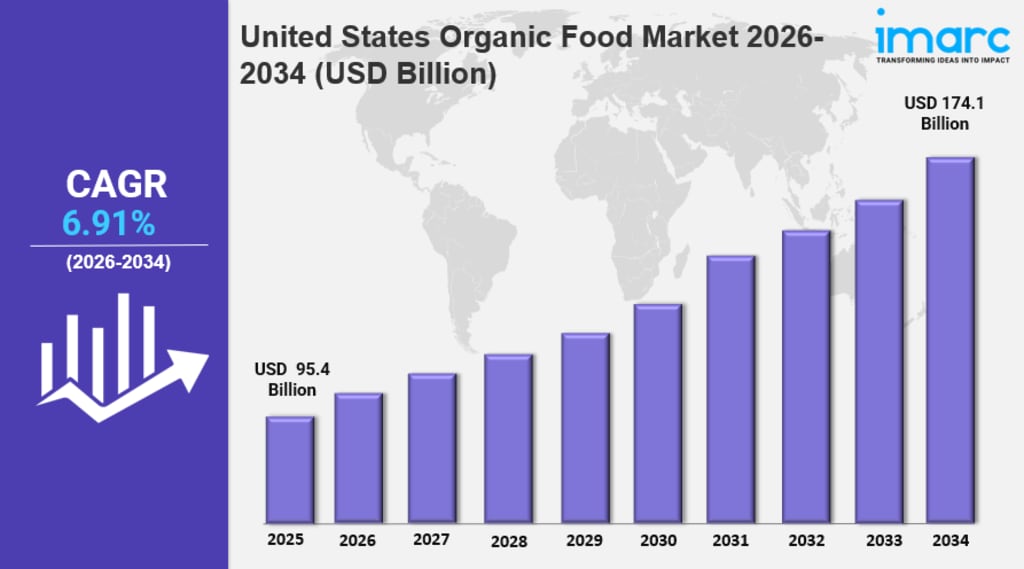
United States Organic Food Market Size, Share, and Forecast (2026–2034)
The United States organic food market continues to expand as consumers increasingly focus on health, nutrition, and sustainable food choices. The market reached USD 95.4 billion in 2025 and is projected to grow to USD 174.1 billion by 2034, registering a CAGR of 6.91% during 2026–2034.
Growth in the market is being supported by rising awareness regarding food quality, increasing preference for natural ingredients, and broader availability of organic products through supermarkets, specialty stores, and online retail platforms. Consumers are paying closer attention to ingredient sourcing, production methods, and product transparency, which is strengthening demand for certified organic products.
The market is also benefiting from product diversification across categories such as dairy products, fruits and vegetables, packaged foods, beverages, snacks, and baby food. As consumer purchasing behavior continues to evolve, companies are expanding product portfolios to address changing dietary preferences and lifestyle trends.
Key Trends Shaping the United States Organic Food Market 2026
- Growing demand for clean-label products: Consumers are preferring food products made without artificial preservatives, synthetic additives, or GMOs.
- Rising popularity of plant-based organic foods: Consumers are increasingly choosing products that support both health and environmental sustainability.
- Expansion of plant-based organic product offerings: Food manufacturers are introducing new organic dairy alternatives, snacks, and plant-based meals.
- Increasing focus on sustainable packaging: Companies are investing in recyclable and eco-friendly packaging materials.
- Strong emphasis on environmental responsibility: Businesses are aligning packaging and production strategies with sustainability goals.
- Growth of digital retail channels: Online grocery platforms and direct-to-consumer channels are improving product accessibility.
- Expansion of e-commerce in organic food sales: Digital platforms are helping organic food brands reach a wider consumer base.
- Rising demand for premium organic products: Consumers are showing stronger interest in high-quality and ethically sourced food products.
- Preference for nutritional and natural ingredients: Buyers are increasingly focusing on product quality, transparency, and nutritional value.
Growth Drivers in the U.S. Organic Food Industry
Rising health awareness remains one of the primary growth drivers in the United States organic food market. Consumers are becoming more conscious about food ingredients and nutritional value, which is encouraging higher adoption of organic products.
Environmental concerns are also supporting market growth. Many consumers prefer organic farming practices because they are associated with reduced chemical usage and environmentally responsible production methods.
The expansion of organized retail and supermarket chains has improved product availability across urban and suburban areas. Organic products that were previously limited to specialty stores are now widely accessible through mainstream retail channels.
Growth in disposable income is another factor contributing to higher spending on premium and health-focused food products. Consumers are increasingly willing to pay higher prices for products perceived as natural, safe, and sustainable.
In addition, product innovation is supporting market expansion. Companies are introducing new flavors, convenient packaging formats, and organic alternatives across multiple food categories to attract a broader consumer base.
Challenges in the United States Organic Food Industry: Pricing, Supply Chain, and Certification Standards
Despite positive market growth, the organic food industry faces several operational challenges. One major challenge is higher product pricing compared to conventional food items. Organic farming and certification processes often involve higher production and distribution costs, which can affect affordability for some consumers.
Supply chain management also remains a key concern. Maintaining product quality, sourcing certified organic ingredients, and ensuring consistent inventory levels can create operational complexity for manufacturers and retailers.
Certification standards and regulatory compliance add another layer of challenge within the market. Companies must meet strict organic certification requirements, labeling standards, and inspection processes to maintain consumer trust and market credibility.
Weather conditions and agricultural uncertainties may also affect raw material supply and pricing stability. Organic farming often depends heavily on climate conditions and sustainable cultivation practices, which can influence production volumes.
Competition within the market continues to increase as both established food companies and emerging organic brands expand their presence across multiple product categories.
Investment Opportunities in the U.S. Organic Food Market
The United States organic food market presents investment opportunities across production, processing, retail, and digital distribution channels. Organic packaged foods and beverages remain attractive segments due to rising consumer demand for convenient and healthier food options.
Plant-based organic products are also creating strong growth potential. Companies investing in dairy alternatives, organic snacks, and protein-rich food categories are expanding their presence within the health and wellness sector.
E-commerce and direct-to-consumer platforms are generating additional opportunities for businesses and investors. Digital retail channels allow organic food companies to improve customer engagement and expand market reach more efficiently.
Sustainable agriculture and organic farming technologies are attracting investment as businesses focus on improving production efficiency and long-term supply chain stability.
Brands that combine strong sourcing practices, transparent labeling, and product innovation are expected to remain competitive as consumer demand for organic food products continues to grow.
Recent Developments and Industry Updates in the United States Organic Food Market
- U.S. organic product sales reached USD 76.6 billion in 2025, growing faster than the overall food market for the third consecutive year.
- Fresh produce remained the leading category in the organic food sector, accounting for nearly 30% of total organic sales in the United States.
- Major retailers including Whole Foods Market, Costco, and Sprouts Farmers Market continued expanding organic food offerings and retail presence across the U.S. market.
- Food companies are increasing investments in regenerative agriculture and sustainable farming practices to strengthen organic supply chains and improve long-term production stability.
- The organic food industry is witnessing stronger focus on certification transparency and labeling compliance as regulators and retailers emphasize consumer trust and product authenticity.
- Digital grocery platforms and direct-to-consumer channels are supporting wider distribution of organic food products across urban and suburban markets.
- Companies are introducing more plant-based organic products and clean-label food options to address changing consumer preferences for health-focused and natural ingredients.
Competitive Landscape and Key Players in the United States Organic Food Industry
- Whole Foods Market One of the leading retailers specializing in organic and natural food products across the United States.
- The Hain Celestial Group Offers a broad portfolio of organic food and health-focused consumer brands.
- Danone Expands its organic dairy and plant-based product portfolio to meet rising consumer demand.
- General Mills Operates several organic food brands focused on natural and clean-label products.
- Amy's Kitchen Known for organic frozen meals, soups, and convenient plant-based food products.
- Nature's Path Foods Specializes in organic cereals, snacks, and breakfast food products.
- United Natural Foods A major distributor of organic and natural food products across retail channels in the United States.
About the Creator
Kim Soo hyun
My name is Kim Soo hyun, and I am a research analyst at IMARC Group, specializing in market trends and data analysis to provide insights and support strategic decision-making.
Enjoyed the story? Support the Creator.
Subscribe for free to receive all their stories in your feed.
Comments
There are no comments for this story
Be the first to respond and start the conversation.