
United States Ophthalmic Eye Dropper Market Set to Reach US$ 7.13 Billion by 2033 as Eye Care Demand Accelerates
Rising Cases of Dry Eye, Glaucoma, Allergies, and Age-Related Vision Disorders Are Fueling Growth in Advanced Ophthalmic Drug Delivery Systems Across America

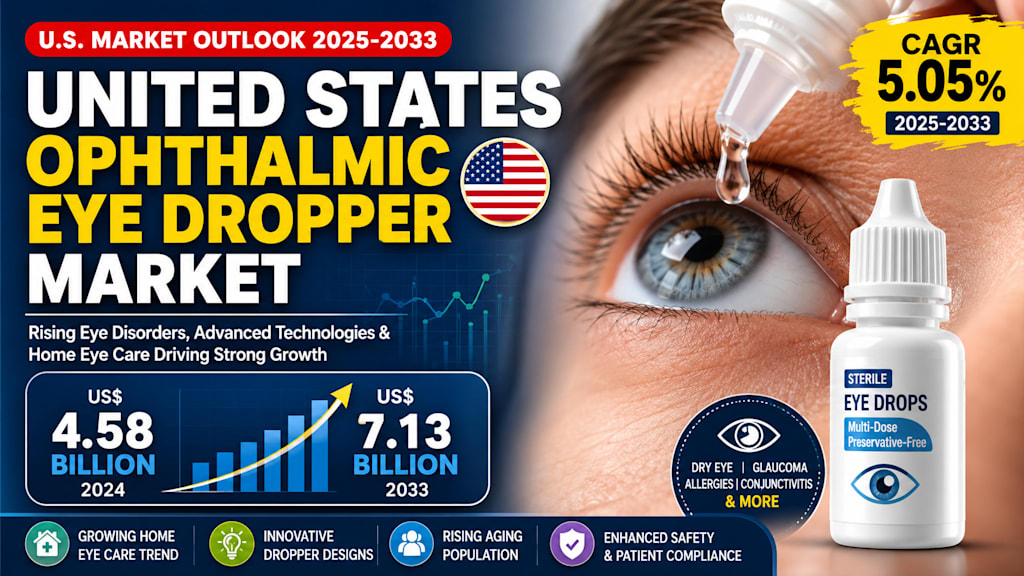
United States Ophthalmic Eye Dropper Market Size and Forecast 2025–2033
The United States ophthalmic eye dropper market is entering a period of sustained growth as eye health becomes an increasingly important public health concern. According to Renub Research, the United States Ophthalmic Eye Dropper Market was valued at US$ 4.58 billion in 2024 and is projected to reach US$ 7.13 billion by 2033, expanding at a CAGR of 5.05% between 2025 and 2033.
The market's expansion is being supported by a combination of factors, including a growing elderly population, increasing prevalence of chronic eye disorders, technological innovation in ophthalmic drug delivery systems, and rising awareness regarding preventive eye care. As millions of Americans seek treatment for dry eye syndrome, glaucoma, allergies, conjunctivitis, and age-related vision conditions, ophthalmic eye droppers continue to play a critical role in modern healthcare delivery.
Understanding the Importance of Ophthalmic Eye Droppers
Ophthalmic eye droppers are specialized dispensing devices designed to deliver liquid medications directly into the eye with accuracy and convenience. These devices are commonly manufactured using medical-grade plastic or glass and feature precision-engineered dispensing tips that ensure controlled dosage administration.
Eye droppers are used extensively in treating conditions such as glaucoma, dry eye syndrome, eye infections, allergies, conjunctivitis, and post-surgical recovery. Their ability to provide targeted treatment directly to affected areas enhances therapeutic effectiveness while minimizing systemic side effects.
Over the years, ophthalmic droppers have evolved significantly. Manufacturers are increasingly focusing on patient comfort, contamination prevention, accurate dosing, and preservative-free delivery systems. These innovations have transformed eye droppers from simple dispensing tools into advanced healthcare solutions that improve treatment outcomes and patient adherence.
Rising Eye Disorders Continue to Drive Market Growth
One of the most significant growth drivers for the U.S. ophthalmic eye dropper market is the increasing prevalence of eye-related diseases and vision impairment.
According to healthcare estimates, approximately 12 million Americans aged 40 and older experience some form of vision impairment, while nearly one million people are blind. Eye conditions such as glaucoma, cataracts, dry eye syndrome, allergic conjunctivitis, and age-related macular degeneration continue to affect millions nationwide.
The growing use of smartphones, computers, tablets, and other digital devices has created a surge in digital eye strain and dry eye symptoms among younger populations. Employees working long hours in front of screens frequently report irritation, redness, and visual fatigue, increasing demand for lubricating and therapeutic eye drops.
Meanwhile, the aging population remains a major consumer segment for ophthalmic medications. Older adults often require long-term treatment for chronic conditions such as glaucoma and cataracts. Data from the Centers for Disease Control and Prevention indicates that approximately 17.2% of Americans over the age of 40 have cataracts in one or both eyes, representing more than 20 million individuals. This number is expected to exceed 30 million by 2028.
As the burden of eye diseases continues to increase, demand for ophthalmic droppers is expected to remain strong throughout the forecast period.
Technological Innovations Are Transforming Eye Drop Delivery
Technology is playing an increasingly important role in shaping the future of ophthalmic drug delivery.
Traditional eye droppers often suffered from inconsistent dosing, contamination risks, and patient usability challenges. Modern designs are addressing these concerns through advanced engineering and smart packaging innovations.
Manufacturers are introducing ergonomic dispensing systems that allow users to administer drops more accurately and comfortably. Anti-contamination technologies, including specialized filters and one-way valve systems, are helping preserve sterility while extending product life.
Preservative-free multi-dose systems have become particularly popular among patients with sensitive eyes. These solutions eliminate the irritation often associated with chemical preservatives while maintaining product safety.
Smart packaging innovations and child-resistant features are also enhancing patient confidence and medication safety. Healthcare providers increasingly prefer advanced droppers because they improve treatment adherence and reduce medication waste.
The regulatory environment is also supporting innovation. In July 2025, LENZ Therapeutics received U.S. FDA approval for VIZZ™ (aceclidine ophthalmic solution) 1.44%, marking the first aceclidine-based eye drop approved for presbyopia treatment in adults. The approval highlights the industry's continued investment in next-generation ophthalmic therapies and delivery systems.
Growing Preference for Home-Based Eye Care
Healthcare delivery in the United States continues to shift toward home-based treatment models, creating significant opportunities for ophthalmic eye dropper manufacturers.
Patients increasingly prefer managing chronic eye conditions at home rather than relying on frequent clinic visits. Diseases such as glaucoma and dry eye syndrome often require daily treatment, making self-administration a practical and cost-effective solution.
Over-the-counter eye drops have become an essential component of preventive eye care. Consumers now routinely purchase products designed to relieve dryness, redness, irritation, and seasonal allergies without requiring prescriptions.
The growth of e-commerce platforms, retail pharmacies, and telehealth services has further improved accessibility to ophthalmic products. Consumers can easily obtain eye care products online, encouraging greater adoption of self-care practices.
In another notable development, Topcon Healthcare invested in UK-based vision testing software company OKKO Health in July 2025. The partnership reflects a growing trend toward remote vision monitoring and home-based eye health management, which complements the expanding use of ophthalmic treatment products.
Challenges Facing the Ophthalmic Eye Dropper Industry
Despite favorable market conditions, several challenges continue to affect industry growth.
Contamination Risks and Patient Non-Compliance
One of the primary concerns associated with ophthalmic eye droppers is contamination. Improper handling of multi-dose containers can introduce bacteria and fungi into medications, potentially causing serious eye infections.
Patient compliance also remains a significant issue. Many users struggle with proper administration techniques, resulting in missed doses, excessive dosing, or medication wastage. Elderly individuals and pediatric patients are particularly vulnerable to these challenges.
Manufacturers are investing heavily in educational initiatives and user-friendly designs to address these concerns. However, patient adherence remains a critical factor influencing treatment effectiveness.
Competition from Alternative Treatments
The ophthalmology sector is witnessing rapid advancements in alternative treatment methods.
Extended-release implants, injectable biologics, sustained-drug-delivery systems, and minimally invasive surgical procedures are increasingly being used to treat chronic eye conditions. These alternatives reduce the need for daily eye drop administration and improve long-term patient compliance.
Laser vision correction procedures have also reduced demand for certain ophthalmic medications. As these technologies become more accessible, eye drop manufacturers must continue innovating to maintain competitiveness within the broader ophthalmology market.
Preserved Multi-Dose Eye Droppers Lead Market Revenue
Among product categories, preserved multi-dose eye droppers continue to dominate the U.S. market.
These products provide a cost-effective and convenient solution for patients requiring ongoing treatment. The inclusion of antimicrobial preservatives helps maintain product safety throughout repeated use.
Preserved multi-dose containers are widely used for both prescription and over-the-counter medications, particularly in the treatment of glaucoma, allergies, and conjunctivitis.
Although concerns regarding preservative-related irritation have encouraged growth in preservative-free alternatives, multi-dose preserved systems remain the preferred choice due to affordability, accessibility, and physician familiarity.
Dry Eye Treatments Represent a Major Revenue Opportunity
Dry eye syndrome has emerged as one of the fastest-growing treatment segments within the ophthalmic eye dropper market.
Modern lifestyles characterized by extensive screen exposure, environmental pollutants, air conditioning, and aging have significantly increased dry eye prevalence across the United States.
Prescription eye drops designed to stimulate tear production and reduce inflammation have become essential therapies for millions of patients. Advanced formulations rely heavily on precise dropper technology to ensure consistent dosing and optimal therapeutic outcomes.
As awareness and diagnosis rates continue to rise, the dry eye treatment segment is expected to remain a major growth contributor through 2033.
Conjunctivitis Continues to Generate Consistent Demand
Conjunctivitis remains one of the most common eye disorders treated with ophthalmic eye droppers.
Both bacterial and viral conjunctivitis require effective treatment solutions, while allergic conjunctivitis drives strong seasonal demand for antihistamine and lubricating eye drops.
Because conjunctivitis is highly contagious, patients often seek immediate treatment, resulting in steady demand across pharmacies, hospitals, schools, and healthcare facilities. The condition's widespread occurrence ensures ongoing market activity throughout the year.
California Leads Regional Market Expansion
California represents one of the largest regional markets for ophthalmic eye droppers in the United States.
The state's large population, high screen-time habits, environmental challenges, and frequent wildfire-related air quality issues contribute to elevated rates of eye irritation and dry eye syndrome.
Major metropolitan areas such as Los Angeles, San Francisco, and San Diego generate significant demand for both prescription and over-the-counter ophthalmic products. California's advanced healthcare infrastructure and strong consumer purchasing power further support market growth.
New York Maintains Strong Demand for Eye Care Products
New York remains a key contributor to national ophthalmic eye dropper revenues.
The state's dense urban population, seasonal allergens, pollution exposure, and aging demographics drive sustained demand for ophthalmic therapies. Prescription treatments for glaucoma and chronic eye conditions are particularly common among older residents.
Strong healthcare insurance coverage and broad pharmacy networks help ensure widespread access to advanced ophthalmic products throughout the state.
Texas Emerges as a High-Growth Market
Texas is rapidly becoming one of the most attractive growth markets for ophthalmic eye droppers.
The state's large population base, expanding healthcare infrastructure, and climate-related eye health challenges contribute to increasing demand. Dry, dusty conditions across many regions lead to elevated rates of dry eye syndrome and ocular irritation.
Growing awareness of preventive eye care, combined with expanding access to pharmacies and digital healthcare services, is expected to support long-term market expansion across Texas.
10 Recent Developments by Leading Companies
LENZ Therapeutics received FDA approval for VIZZ™ (aceclidine ophthalmic solution) for presbyopia treatment in 2025.
AptarGroup expanded its ophthalmic drug delivery portfolio with advanced preservative-free dispensing technologies.
Alcon continued investing in digital eye care solutions and expanded its dry eye treatment offerings.
Pfizer strengthened research activities focused on ophthalmic therapies and specialty eye care medications.
Bausch + Lomb launched new preservative-free eye care products targeting chronic dry eye patients.
Novartis expanded clinical research programs involving innovative ophthalmology treatments and drug delivery systems.
AbbVie advanced ophthalmic pipeline developments through continued investments in eye disease therapeutics.
Santen Pharmaceutical accelerated global commercialization efforts for innovative eye care solutions and specialty ophthalmic treatments.
Similasan broadened its portfolio of natural and homeopathic eye care products available through U.S. retail channels.
Topcon Healthcare increased investment in remote vision monitoring technologies through its strategic partnership with OKKO Health.
Competitive Landscape
The U.S. ophthalmic eye dropper market remains highly competitive and innovation-driven. Major participants continue investing in product development, preservative-free technologies, contamination prevention systems, and patient-friendly dispensing mechanisms.
Leading companies operating in the market include AptarGroup, Inc., Alcon plc, Pfizer Inc., Bausch & Lomb Incorporated, Novartis AG, AbbVie Inc., Santen Pharmaceutical Co., Ltd., and Similasan Corporation.
Their focus on improving treatment outcomes, patient convenience, and product safety is expected to shape the future direction of the market over the next decade.
Final Thoughts
The United States ophthalmic eye dropper market is positioned for healthy and sustainable growth through 2033. Rising eye disease prevalence, increasing awareness of preventive eye care, technological innovation, and growing demand for home-based treatment solutions are creating significant opportunities across the industry.
As manufacturers continue introducing smarter, safer, and more effective delivery systems, ophthalmic eye droppers will remain indispensable tools in modern eye care. With market value expected to reach US$ 7.13 billion by 2033, the sector offers substantial growth potential for healthcare providers, pharmaceutical companies, device manufacturers, and investors alike.
About the Creator
Enjoyed the story? Support the Creator.
Subscribe for free to receive all their stories in your feed.
Comments
There are no comments for this story
Be the first to respond and start the conversation.