
United States Nebulizer Market Set to Reach US$ 730.62 Million by 2033 as Home Healthcare and Respiratory Disease Management Drive Growth
Rising asthma and COPD cases, innovative portable nebulizers, and the rapid expansion of home-based healthcare are transforming the U.S. nebulizer industry through 2033.

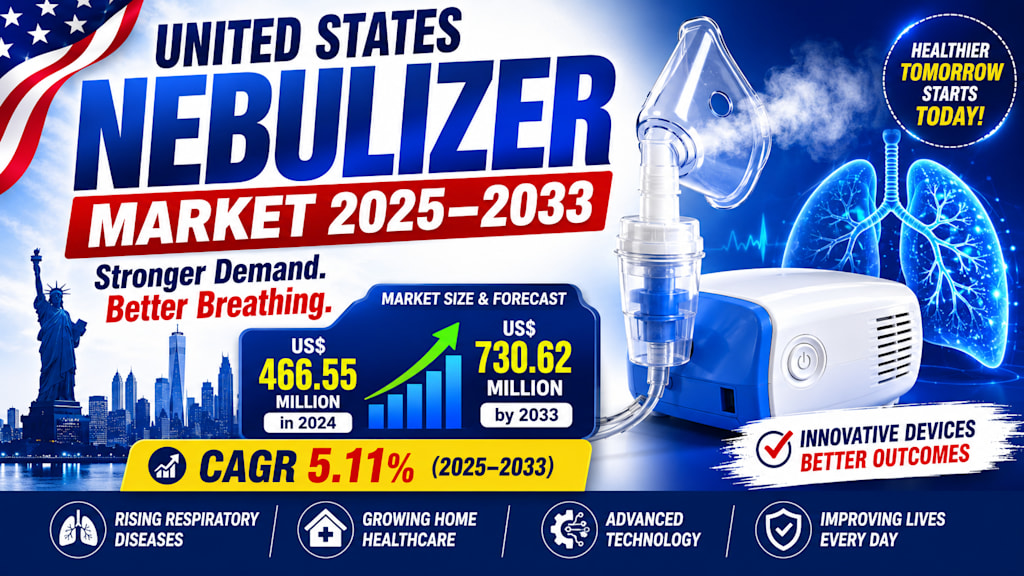
United States Nebulizer Market Size & Forecast 2025–2033
The United States nebulizer market is entering a new phase of expansion as respiratory healthcare becomes an increasingly important component of the nation's medical landscape. Growing prevalence of asthma, chronic obstructive pulmonary disease (COPD), cystic fibrosis, and other respiratory disorders is fueling demand for advanced drug-delivery technologies. Nebulizers, which convert liquid medication into a fine mist for direct inhalation into the lungs, have become indispensable tools in hospitals, emergency departments, clinics, and home healthcare settings.
According to Renub Research, the United States Nebulizer Market was valued at US$ 466.55 million in 2024 and is projected to reach US$ 730.62 million by 2033, growing at a compound annual growth rate (CAGR) of 5.11% during 2025–2033.
The market's growth trajectory reflects broader healthcare trends, including the increasing burden of chronic respiratory diseases, technological advancements in portable and mesh nebulizers, and the growing preference for home-based patient care solutions.
Respiratory Diseases Continue to Drive Market Expansion
Respiratory illnesses remain among the most common chronic health conditions affecting Americans. Asthma alone impacts approximately 25 million people across the country, while COPD affects more than 16 million individuals and remains one of the leading causes of death.
The increasing prevalence of respiratory disorders creates a sustained need for effective medication delivery systems. Nebulizers offer a significant advantage because they deliver medication directly to the lungs, providing rapid therapeutic effects and reducing systemic side effects.
Environmental factors are also contributing to the growing patient population. Air pollution, industrial emissions, wildfire smoke, occupational exposure to harmful particles, and tobacco use continue to affect respiratory health nationwide. These factors have increased demand for devices that can provide immediate symptom relief and long-term disease management.
Additionally, the aging U.S. population is more susceptible to respiratory complications, creating a larger patient base requiring routine inhalation therapy. As healthcare providers focus on reducing hospital admissions and improving chronic disease management, nebulizers are becoming increasingly essential in treatment protocols.
Technological Innovations Are Reshaping the Industry
The nebulizer market has evolved considerably over the last decade. Traditional bulky compressor-based systems are gradually being supplemented by compact, lightweight, and highly efficient devices.
Modern mesh nebulizers represent one of the most important technological advancements in the industry. These devices use vibrating mesh technology to generate consistently fine aerosol particles, improving medication delivery efficiency while reducing treatment times.
Portable nebulizers have also gained substantial popularity due to their convenience and mobility. Battery-powered designs allow patients to continue treatment while traveling, working, or attending school. This flexibility is particularly valuable for individuals managing chronic respiratory conditions.
Smart nebulizers equipped with connectivity features are another emerging trend. These devices can track medication adherence, monitor treatment sessions, and integrate with telehealth platforms. Healthcare providers can remotely monitor patient compliance and adjust treatment plans when necessary.
Manufacturers are increasingly focusing on user-friendly features such as quieter operation, simplified maintenance, lightweight construction, and shorter treatment durations. These improvements enhance patient satisfaction and encourage consistent use.
A notable example of innovation occurred in May 2024 when Medline introduced its TurboMist small-volume nebulizer, designed to deliver medication significantly faster than many traditional devices.
Home Healthcare Becomes a Major Growth Engine
One of the most influential factors driving the nebulizer market is the growing adoption of home healthcare services.
Patients and healthcare providers are increasingly embracing home-based treatment options because they reduce healthcare costs, minimize hospital visits, and improve overall patient convenience. Nebulizers are ideally suited for this transition because they enable individuals to manage respiratory conditions independently.
Older adults, who represent a large proportion of respiratory disease patients, benefit significantly from home-use nebulizers. The ability to receive treatment in a familiar environment enhances quality of life while reducing the burden on healthcare facilities.
The COVID-19 pandemic accelerated the acceptance of home healthcare models, encouraging both patients and providers to seek alternatives to hospital-based care whenever possible. As a result, portable and mesh nebulizers have become common components of long-term respiratory care programs.
Government initiatives are also supporting this trend. In 2024, the U.S. Food and Drug Administration expanded efforts focused on integrating home-based healthcare solutions into the broader healthcare ecosystem, further strengthening opportunities for nebulizer adoption.
Market Challenges Remain
Despite strong growth prospects, the nebulizer market faces several challenges that could influence adoption rates.
One major obstacle is the relatively high cost of advanced nebulizer technologies. Mesh and portable nebulizers offer superior performance and convenience, but they are often more expensive than traditional compressor models. Patients without comprehensive insurance coverage may find these devices difficult to afford.
Healthcare providers also face challenges when balancing cost considerations with clinical effectiveness. Budget constraints in certain healthcare settings can limit access to premium technologies.
Another concern is improper device use and maintenance. Nebulizers require routine cleaning and proper handling to ensure effective treatment and prevent contamination. Failure to maintain devices appropriately can result in reduced medication delivery efficiency and increased infection risk.
Elderly patients and individuals with limited health literacy may experience difficulties following maintenance instructions. Manufacturers must continue developing simplified designs and educational resources to address these challenges effectively.
Mesh Nebulizers Gain Momentum
Among product categories, mesh nebulizers are emerging as one of the fastest-growing segments in the United States.
These devices provide several advantages compared to traditional jet nebulizers. Their compact design, quiet operation, reduced medication waste, and efficient aerosol generation make them highly attractive to both patients and healthcare professionals.
Mesh nebulizers are particularly beneficial for pediatric and geriatric patients who require comfortable and efficient treatment experiences. Their portability also aligns with the increasing emphasis on patient mobility and lifestyle flexibility.
Although higher acquisition costs remain a barrier, growing awareness of their benefits is expected to support continued adoption throughout the forecast period.
Portable Nebulizers Transform Patient Convenience
Portable nebulizers are rapidly becoming a preferred choice for many patients managing chronic respiratory diseases.
Unlike conventional tabletop systems, portable devices offer freedom and flexibility. Patients can carry them while traveling, commuting, or participating in daily activities without disrupting treatment schedules.
This convenience is particularly important for children, students, and working professionals. Parents increasingly favor portable nebulizers because they allow continuous respiratory care for children regardless of location.
As battery technology improves and devices become smaller and more efficient, the portable nebulizer segment is expected to maintain strong growth throughout the forecast period.
Asthma Applications Lead Demand
Asthma remains one of the largest application areas for nebulizers in the United States.
Millions of adults and children rely on nebulized medications for both emergency symptom relief and routine disease management. Nebulizers are especially valuable for young children and elderly patients who may struggle to use inhalers correctly.
The increasing prevalence of environmental triggers such as allergens, pollution, and climate-related respiratory irritants continues to contribute to asthma incidence nationwide.
Healthcare providers frequently recommend nebulizers for patients requiring frequent medication administration or experiencing severe symptoms, further supporting market expansion.
Emergency Centers Depend on Nebulizer Technology
Emergency departments and urgent care facilities rely heavily on nebulizers to treat acute respiratory events.
Asthma attacks, COPD exacerbations, allergic reactions, and other respiratory emergencies often require immediate medication delivery. Nebulizers provide rapid administration of bronchodilators and corticosteroids, making them indispensable in emergency care environments.
Hospitals generally favor durable compressor nebulizers capable of handling frequent use and high patient volumes. As respiratory emergencies continue to place pressure on healthcare systems, demand from emergency centers is expected to remain strong.
Regional Outlook: California, Texas, and New York Lead the Market
California represents one of the largest nebulizer markets in the country. The state's large population, frequent wildfire events, and air quality concerns contribute to elevated respiratory disease rates. Advanced healthcare infrastructure and widespread adoption of digital health technologies further support market growth.
Texas also serves as a major growth hub. Rapid population expansion, urban pollution, and high COPD prevalence create significant demand for respiratory care solutions. The state's extensive healthcare network contributes to strong nebulizer utilization across hospitals and home care settings.
New York remains another important regional market. High urban density, seasonal allergens, and widespread asthma prevalence drive consistent demand. Portable nebulizers are particularly popular among residents seeking convenient treatment solutions compatible with busy lifestyles.
Competitive Landscape
The U.S. nebulizer market features a mix of established global medical device manufacturers and specialized respiratory care companies competing through innovation, product development, and strategic partnerships.
Key companies operating in the market include:
OMRON Corporation
GE Healthcare
Boston Scientific Corporation
Koninklijke Philips N.V.
Vectura Group Plc.
Aerogen
DeVilbiss Healthcare LLC
Beurer GmbH
These organizations continue investing in research and development to improve device performance, portability, patient comfort, and digital integration capabilities.
10 Recent Developments in the Nebulizer Industry
Medline launched the TurboMist nebulizer in 2024, offering significantly faster medication delivery.
Philips expanded its connected respiratory care ecosystem with enhanced digital monitoring solutions.
OMRON strengthened its portfolio of portable respiratory devices aimed at home healthcare users.
Aerogen continued expanding its hospital-focused aerosol drug delivery technologies.
GE Healthcare increased investment in respiratory care technologies integrated with patient monitoring systems.
DeVilbiss Healthcare introduced product enhancements focused on improved portability and ease of use.
Beurer expanded availability of compact nebulizer solutions designed for personal and travel use.
Several manufacturers introduced quieter mesh nebulizer models to improve patient comfort and adherence.
Telehealth integration features became increasingly common across premium nebulizer product lines.
Healthcare providers expanded adoption of home respiratory therapy programs, increasing demand for advanced nebulizer technologies.
Future Outlook
The future of the United States nebulizer market appears highly promising. Growing respiratory disease prevalence, rapid technological innovation, expanding home healthcare adoption, and increasing awareness of disease management will continue driving market growth through 2033.
Manufacturers that prioritize portability, digital connectivity, treatment efficiency, and user-friendly designs are likely to gain a competitive advantage. Meanwhile, healthcare systems will continue emphasizing patient-centered care models that support treatment outside traditional hospital environments.
As respiratory health remains a critical public health concern, nebulizers will play an increasingly important role in improving patient outcomes and enhancing quality of life across the United States.
About the Creator
Enjoyed the story? Support the Creator.
Subscribe for free to receive all their stories in your feed.
Comments
There are no comments for this story
Be the first to respond and start the conversation.