
United States Movie Market Outlook 2026–2034: How Streaming, Technology, and Changing Audiences Are Reshaping American Cinema
The U.S. movie industry is entering a new growth phase as streaming platforms, premium theater experiences, and global demand create fresh opportunities for filmmakers and entertainment companies.

For more than a century, movies have been one of America's most influential cultural exports. From the golden era of Hollywood to today's streaming-powered entertainment ecosystem, the United States has remained at the center of the global film industry. While many analysts predicted that digital platforms would permanently weaken traditional cinemas, the reality has turned out to be much more dynamic.
The movie industry is not shrinking—it is transforming.
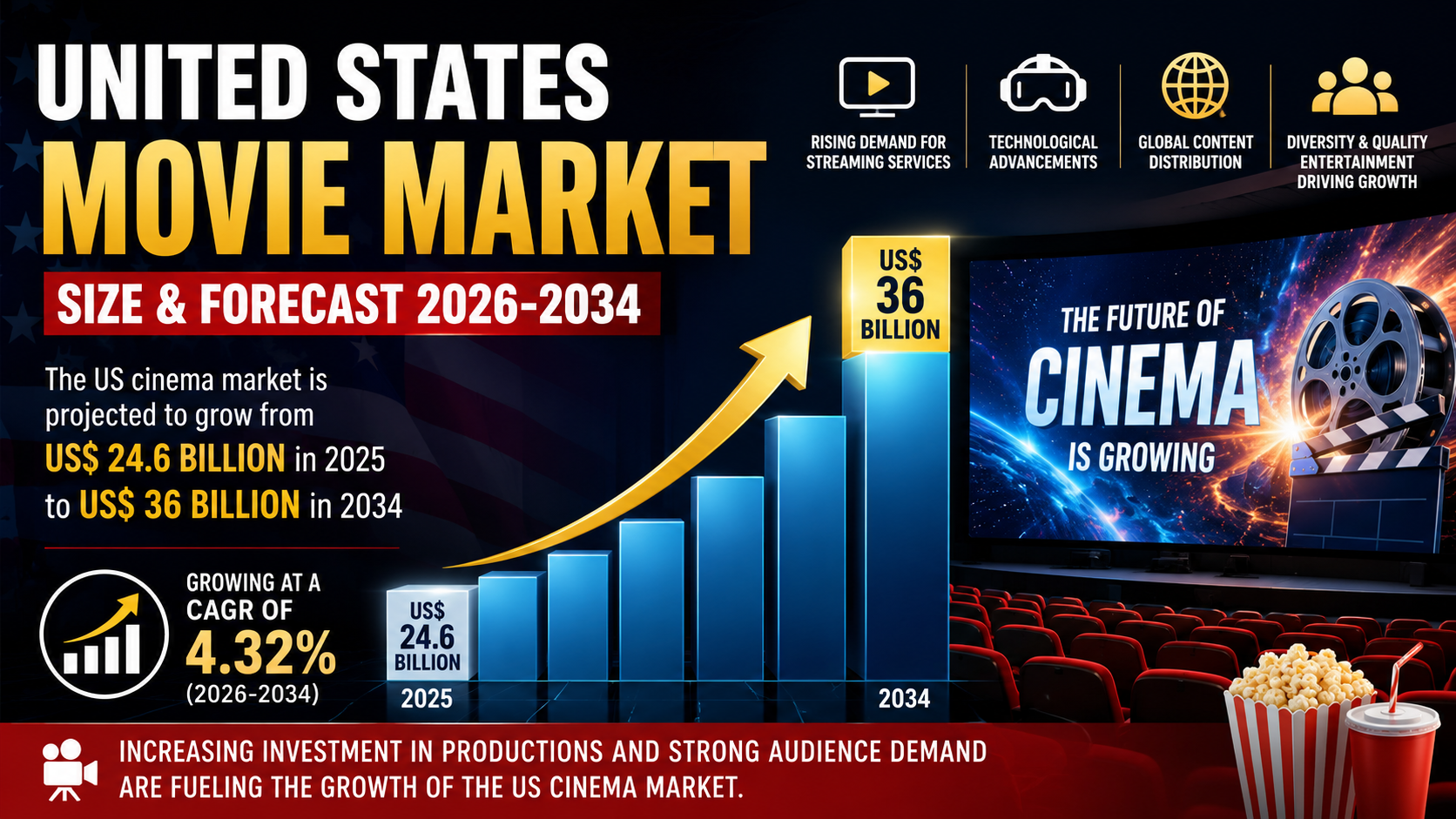
According to Renub Research, the United States movie market is projected to increase from approximately US$ 24.6 billion in 2025 to US$ 36 billion by 2034, growing at a compound annual growth rate (CAGR) of 4.32% between 2026 and 2034. This growth reflects the industry's ability to adapt to technological innovation, changing consumer preferences, and new methods of content distribution.
Today, the American movie market stands at a crossroads where theatrical releases, streaming platforms, advanced visual technologies, and international audiences all play critical roles in shaping the future.
Why Movies Continue to Matter
Movies remain one of the most popular forms of entertainment in the United States. They provide more than just amusement; they influence culture, spark conversations, educate audiences, and create shared experiences.
The United States is home to Hollywood, widely recognized as the world's leading film-production center. American films dominate global entertainment through their storytelling, production quality, and ability to connect with audiences across different cultures and regions.
Even though consumer viewing habits have evolved dramatically over the past decade, the public's appetite for movies remains strong. What has changed is how viewers access content.
Instead of relying solely on theaters, consumers now enjoy films through multiple channels, including streaming platforms, television broadcasts, digital rentals, and subscription services. This flexibility has expanded access to movies while creating new revenue streams for the industry.
The Streaming Revolution Is Driving Growth
One of the most significant developments in the movie industry has been the rapid rise of streaming services.
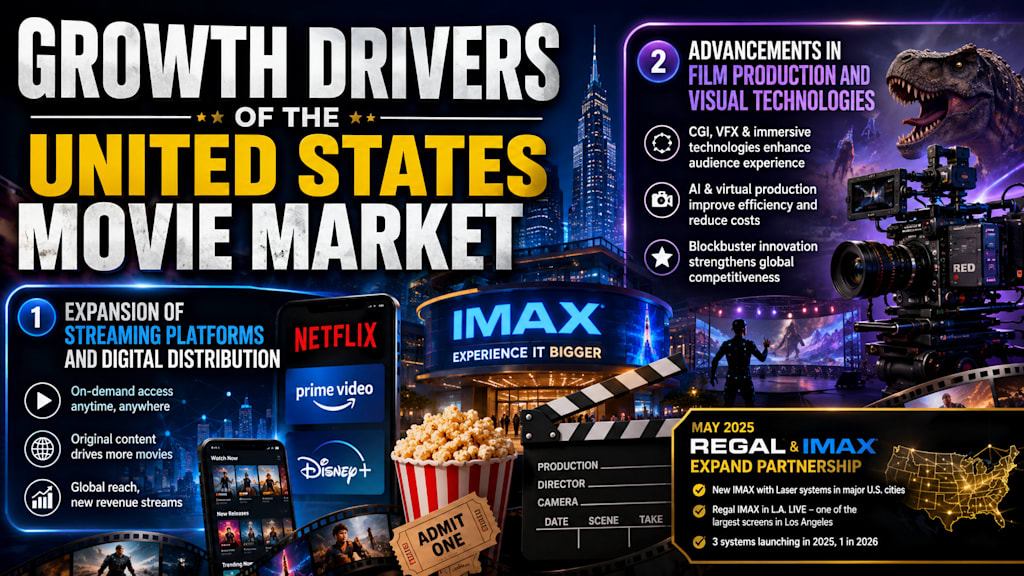
Platforms such as Netflix, Disney+, Amazon Prime Video, and others have fundamentally changed audience expectations. Consumers increasingly prefer on-demand entertainment that allows them to watch content anytime and anywhere.
The widespread adoption of smartphones, tablets, smart televisions, and high-speed internet has accelerated this trend. As a result, streaming has become a major driver of market growth.
For filmmakers and production companies, streaming services have opened doors to larger audiences and new business opportunities. Studios are investing heavily in original content to attract subscribers, leading to a significant increase in movie production.
Streaming has also enabled independent filmmakers and niche productions to reach audiences that traditional theatrical distribution might not have served effectively. Foreign-language films, documentaries, and specialized genres now enjoy broader visibility than ever before.
Rather than replacing cinema, streaming has expanded the entertainment ecosystem and helped the movie industry reach global audiences more efficiently.
Technology Is Creating Better Movie Experiences
Technological innovation continues to reshape both film production and movie consumption.
Modern audiences expect spectacular visual effects, immersive storytelling, and exceptional sound quality. To meet these expectations, filmmakers increasingly rely on advanced CGI, virtual production systems, artificial intelligence, and sophisticated post-production tools.
These technologies allow creators to produce more realistic worlds, breathtaking action sequences, and visually engaging experiences.
Movie theaters are also investing heavily in premium technologies to attract audiences. IMAX screens, Dolby Cinema, laser projection systems, luxury seating, and immersive audio technologies are becoming common features in modern cinemas.
These upgrades help theaters provide experiences that cannot easily be replicated at home.
For many consumers, going to the movies has evolved into a premium entertainment event rather than a simple viewing activity.
As technology continues to advance, both production companies and theater operators are expected to benefit from enhanced efficiency, improved storytelling capabilities, and stronger audience engagement.
Growing International Demand for American Films
American movies continue to enjoy extraordinary popularity worldwide.
High production values, globally recognized actors, compelling storylines, and strong marketing campaigns have made U.S. films attractive to international audiences across Europe, Asia, Latin America, and other regions.
International box-office revenue now represents a significant portion of overall film earnings. Many major releases generate substantial revenue from overseas markets, sometimes exceeding domestic performance.
Studios increasingly launch films simultaneously across multiple countries to maximize visibility and reduce piracy risks. Global distribution networks have transformed blockbuster releases into international cultural events.
As worldwide demand for English-language entertainment continues to grow, American filmmakers are expected to benefit from expanding revenue opportunities and broader market access.
Challenges Facing the Industry
Despite strong growth projections, the movie market faces several important challenges.
Declining Theater Attendance
One of the industry's most significant concerns is reduced cinema attendance compared to historical levels.
Many consumers now prefer the convenience of streaming services, which allow them to watch movies from the comfort of their homes. Rising ticket prices, transportation costs, and improved home entertainment systems have further contributed to this shift.
Although blockbuster films continue to attract large audiences, many smaller theatrical releases struggle to generate strong attendance.
The long-term impact of changing viewing habits remains a challenge for theater operators seeking to maintain profitability.
Rising Production Costs
Movie production has become increasingly expensive.
Studios invest heavily in talent acquisition, visual effects, marketing campaigns, intellectual property rights, and distribution strategies. While successful blockbusters can generate enormous returns, they also involve substantial financial risk.
A single underperforming film can result in significant losses.
Smaller production companies often face difficulties competing with major studios that possess larger budgets and stronger marketing resources.
The Importance of Movie Ticket Sales
Despite the growth of digital platforms, ticket sales remain a critical component of the movie industry's business model.
Theatrical releases generate direct revenue while also creating media attention, cultural relevance, and momentum for subsequent distribution channels.
Premium formats such as IMAX and Dolby Cinema have helped offset attendance declines by increasing average ticket prices. Consumers are often willing to pay more for enhanced viewing experiences that provide superior visuals, sound, and comfort.
Online booking systems, dynamic pricing models, and subscription-based ticket programs have also modernized the movie-going experience.
While attendance patterns have evolved, ticket sales continue to play an essential role in determining a film's commercial success.
Food and Beverage Sales: The Hidden Revenue Engine
Many people associate movie theaters primarily with ticket sales, but food and beverage operations represent one of the industry's most profitable business segments.
Traditional offerings such as popcorn, soft drinks, and candy remain highly popular. However, modern cinemas have significantly expanded their menus to include gourmet snacks, restaurant-quality meals, alcoholic beverages, specialty coffee, and premium desserts.
These expanded offerings improve customer satisfaction while increasing average spending per visitor.
Because concession sales often generate higher profit margins than ticket revenue, they have become increasingly important to theater profitability.
Many cinema chains are also introducing loyalty programs, bundled meal deals, and healthier menu options to attract changing consumer preferences.
The Current State of Digital 3D Movies
Digital 3D technology remains an important segment of the premium movie experience.
Although enthusiasm for 3D has become more selective than during its peak popularity, audiences still appreciate the format when it enhances storytelling and visual spectacle.
Animated films, science-fiction productions, fantasy adventures, and action blockbusters often benefit most from 3D presentation.
Studios have become more strategic in selecting which films receive 3D releases, focusing on projects that genuinely benefit from immersive visuals.
While the market has matured, digital 3D continues to contribute to premium ticket revenue and remains an important part of modern cinema offerings.
Understanding Key Audience Segments
Male Moviegoers
Male audiences remain highly influential within the movie industry.
Genres such as action, superhero films, science fiction, thrillers, and adventure movies often attract significant male viewership. These audiences frequently drive opening-weekend box-office performance and contribute heavily to social media discussions surrounding major releases.
Studios continue developing marketing campaigns specifically designed to engage this demographic segment.
The 18–24 Age Group
Young adults aged 18–24 represent one of the industry's most important audience groups.
This demographic is highly engaged with entertainment content and frequently influences broader cultural trends. They are active on social media, responsive to digital marketing campaigns, and willing to experiment with new entertainment technologies.
Although streaming services are popular among younger consumers, theatrical experiences remain attractive due to their social nature and immersive qualities.
As a result, the 18–24 age group continues to play a critical role in shaping industry growth and innovation.
Regional Markets Supporting Industry Expansion
California
California remains the center of the American movie industry.
Home to Hollywood and numerous production studios, the state serves as both a production powerhouse and a major consumer market. Large population centers, tourism activity, and widespread adoption of premium theater experiences contribute significantly to industry revenue.
California also plays a leading role in introducing new technologies and entertainment trends that later spread across the country.
New York
New York's movie market is distinguished by its cultural diversity and strong support for both mainstream and independent cinema.
Film festivals, international releases, and artistic productions thrive within the state. New York City's influence on media, distribution, and critical recognition makes it one of the most important markets in the country.
Florida
Florida benefits from a growing population, a strong tourism industry, and consistent demand for family-oriented entertainment.
Cities such as Miami, Orlando, and Tampa contribute significantly to box-office revenue, particularly during holiday periods and major release seasons.
New Jersey
New Jersey combines high population density, convenient theater access, and strong household income levels.
The state has also experienced growth in film production activities due to attractive tax incentives. Premium theater experiences and community-oriented cinema culture continue supporting stable market performance.
Competitive Landscape
The U.S. movie market includes several major industry participants that continue shaping consumer experiences and market growth.
Key companies include:
- AMC Theatres
- Regal Cinemas
- Cinemark Holdings
- Marcus Theatres
- B&B Theatres
- CGV Cinemas
- Empire Cinema
These companies continue investing in premium viewing technologies, customer experience enhancements, digital ticketing systems, loyalty programs, and food-service innovations to remain competitive in a rapidly evolving marketplace.
Looking Toward 2034
The future of the American movie industry will be defined not by competition between theaters and streaming services but by their coexistence.
Consumers increasingly expect convenience, flexibility, quality, and choice. Successful companies will be those capable of delivering compelling content across multiple platforms while maintaining exceptional customer experiences.
Streaming services will continue expanding accessibility. Theaters will focus on immersive entertainment. Technological innovation will improve production quality. International demand will generate new revenue opportunities.
Most importantly, audiences will continue seeking powerful stories that entertain, inspire, and connect people across cultures.
Final Thoughts
The United States movie market remains one of the world's most influential entertainment industries. While digital disruption has transformed traditional business models, it has also created new opportunities for growth, innovation, and audience engagement. Supported by streaming expansion, technological advancement, premium theatrical experiences, and global demand for American content, the industry is well-positioned for long-term success.
With Renub Research forecasting growth from US$ 24.6 billion in 2025 to US$ 36 billion by 2034, the future of American cinema appears bright. The industry may be evolving, but the universal appeal of great storytelling continues to ensure that movies remain a central part of modern entertainment.
About the Creator
Enjoyed the story? Support the Creator.
Subscribe for free to receive all their stories in your feed.
Comments
There are no comments for this story
Be the first to respond and start the conversation.