
United States Medical Tourism Market Size Growth & Industry Demands Report 2034
United States Medical Tourism Market Size Growth Demand & Outlook 2034

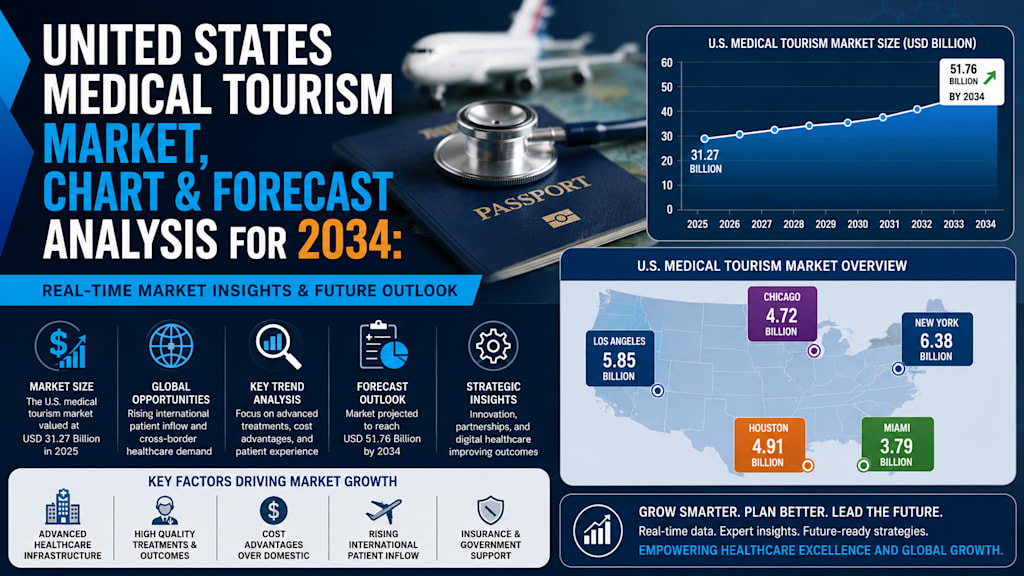
United States Medical Tourism Market Size, Share, and Forecast (2026–2034)
The United States medical tourism market continues to attract patients seeking advanced healthcare services and specialized medical treatments. The market was valued at USD 31.27 Billion in 2025 and is expected to reach USD 51.76 Billion by 2034, expanding at a CAGR of 5.76% during 2026–2034. Medical tourism refers to patients traveling across international borders to receive medical care, surgical procedures, diagnostic services, or specialized treatments.
The United States remains a preferred destination for complex medical procedures due to its extensive healthcare infrastructure, highly trained physicians, and access to advanced medical technologies. International patients often choose the country for treatments that may not be available in their home markets or for procedures requiring specialized expertise. Growing global awareness of healthcare quality, combined with improvements in patient support services, continues to support market growth.
Key Growth Drivers Shaping the United States Medical Tourism Market
Several factors are contributing to the growth of medical tourism in the United States. One of the primary drivers is the availability of specialized healthcare services across various medical disciplines. International patients often seek treatment for cardiovascular diseases, cancer, neurological disorders, orthopedic conditions, and complex surgical procedures.
The increasing prevalence of chronic diseases worldwide has also created demand for advanced treatment options. Many patients travel to the United States to access innovative therapies, clinical expertise, and comprehensive healthcare programs. In addition, improvements in international connectivity and healthcare information access have made it easier for patients to research treatment options and connect with healthcare providers.
Growing investments in healthcare facilities and medical research further strengthen the country's position as a leading destination for medical tourism. These developments help healthcare organizations expand service offerings and improve treatment outcomes.
Healthcare Services Attracting International Patients to the United States
A wide range of healthcare services attract international patients to the United States. Specialized treatments in oncology, cardiology, orthopedics, fertility care, and organ transplantation remain among the most sought-after services. Many patients seek access to experienced specialists and multidisciplinary healthcare teams capable of handling complex medical cases.
Cancer treatment programs offered by leading hospitals continue to attract patients from different regions. Advanced diagnostic tools, personalized treatment approaches, and access to innovative therapies are important factors influencing patient decisions. Similarly, orthopedic procedures such as joint replacements and spinal treatments are frequently requested due to the availability of specialized surgical expertise.
International patients also seek advanced fertility treatments and reproductive healthcare services. The presence of modern medical facilities and comprehensive patient care programs contributes to the growing demand for these services.
Trends in Specialized Treatments, Advanced Medical Technologies, and Patient Care
Technological advancement is playing an important role in the development of the medical tourism market. Healthcare providers are increasingly adopting advanced diagnostic systems, robotic-assisted surgical procedures, artificial intelligence applications, and digital health platforms to improve patient care.
Robotic surgery has gained attention for its ability to support minimally invasive procedures and reduce recovery times. Advanced imaging technologies and precision diagnostic tools are helping healthcare professionals improve treatment planning and patient outcomes. These innovations are particularly valuable in complex medical specialties where accuracy and efficiency are critical.
Another important trend is the growing emphasis on personalized patient care. Hospitals and healthcare organizations are developing customized treatment plans based on individual medical needs. Telehealth consultations before and after treatment have also become more common, enabling international patients to communicate with healthcare providers throughout their medical journey.
Patient experience programs, language support services, and dedicated international patient departments are becoming increasingly important as healthcare providers work to accommodate visitors from different countries.
Role of Hospitals, Specialty Clinics, and Healthcare Networks in Medical Tourism
Hospitals, specialty clinics, and healthcare networks play a central role in supporting medical tourism activities across the United States. Large healthcare institutions often maintain international patient centers that assist with appointment scheduling, treatment coordination, travel arrangements, and administrative support.
Specialty clinics contribute by offering focused expertise in areas such as cardiology, oncology, orthopedics, cosmetic surgery, and fertility treatments. These facilities often develop treatment programs tailored to specific patient requirements, helping improve healthcare accessibility and convenience.
Healthcare networks are also expanding partnerships with international organizations, insurers, and referral agencies. Such collaborations help create smoother pathways for patients seeking treatment abroad. The ability to coordinate medical care across multiple departments and specialties further strengthens the appeal of the United States as a healthcare destination.
Challenges Related to Treatment Costs, Insurance Coverage, and Regulatory Requirements
Despite positive growth prospects, the medical tourism market faces several challenges. One of the most significant barriers is the high cost of healthcare services in the United States. Medical procedures, hospital stays, and related treatment expenses can be substantially higher than those in many other countries.
Insurance coverage remains another challenge for international patients. In many cases, treatment costs may not be fully covered by foreign insurance providers, requiring patients to bear a significant portion of healthcare expenses. This can influence destination selection and treatment decisions.
Regulatory requirements and visa-related procedures may also create obstacles for some patients. Healthcare providers must comply with strict healthcare regulations, patient privacy requirements, and quality standards. While these measures support patient safety, they can add complexity to the overall treatment process.
Competition from other medical tourism destinations offering lower-cost healthcare services also remains an important consideration for market participants.
Investment Opportunities in the United States Medical Tourism Industry
The expanding demand for specialized healthcare services creates opportunities for investment across the medical tourism ecosystem. Healthcare organizations are investing in advanced treatment technologies, patient support infrastructure, and international outreach programs to attract a broader patient base.
Digital health solutions represent another area of opportunity. Telemedicine platforms, patient management systems, and virtual consultation services can improve communication between providers and international patients. These technologies help streamline healthcare delivery while enhancing patient convenience.
Investments in specialized treatment centers, international patient programs, and healthcare infrastructure modernization are also expected to support future market expansion. As healthcare providers continue to focus on service quality and patient experience, new business opportunities are likely to emerge throughout the industry.
Competitive Landscape and Leading Medical Tourism Service Providers in the United States
The United States medical tourism market is characterized by the presence of established hospitals, specialty healthcare providers, and integrated healthcare networks. Organizations compete by expanding treatment capabilities, investing in medical technologies, and improving patient support services.
Healthcare providers are placing greater emphasis on specialized care, international patient management, and multidisciplinary treatment approaches. Strategic collaborations, research initiatives, and infrastructure development remain common approaches for strengthening market position.
As demand for advanced healthcare services continues to grow, competition is expected to focus on treatment quality, clinical expertise, patient experience, and access to innovative medical solutions. These factors will continue to shape the evolution of the United States medical tourism industry throughout the forecast period.
About the Creator
Kim Soo hyun
My name is Kim Soo hyun, and I am a research analyst at IMARC Group, specializing in market trends and data analysis to provide insights and support strategic decision-making.
Enjoyed the story? Support the Creator.
Subscribe for free to receive all their stories in your feed.
Comments
There are no comments for this story
Be the first to respond and start the conversation.