
United States Luxury Goods Market Size & Forecast 2033
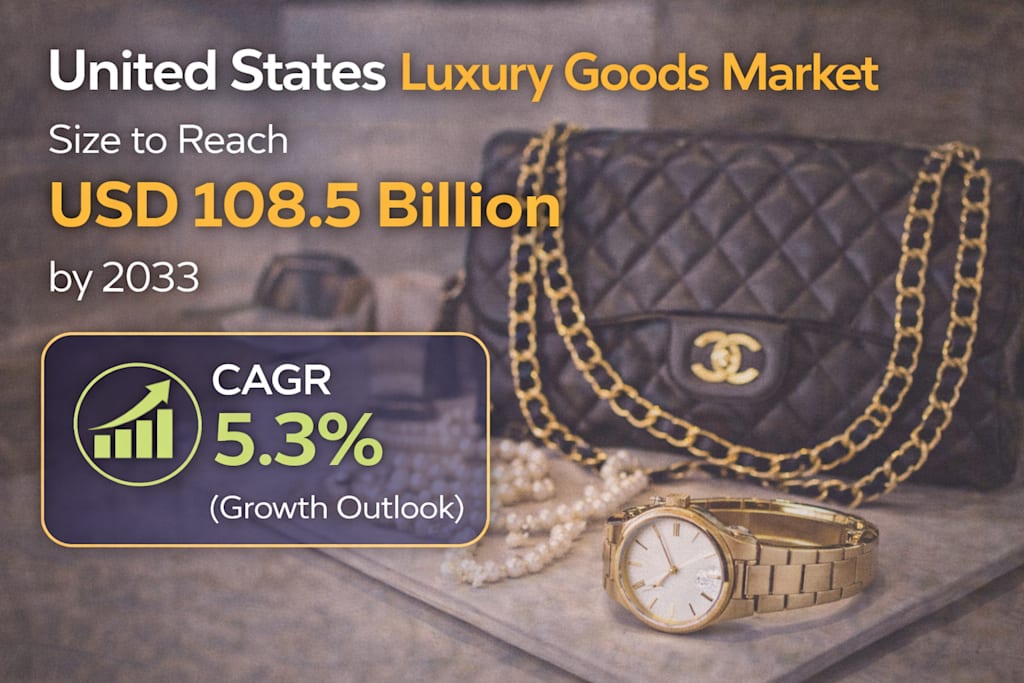
United States luxury goods market size reached USD 67.9 Billion in 2024. Looking forward, IMARC Group expects the market to reach USD 108.5 Billion by 2033, exhibiting a growth rate (CAGR) of 5.3% during 2025-2033.

United States Luxury Goods Market Overview
The United States luxury goods market continues to evolve as consumer expectations shift toward experience, exclusivity, and digital engagement. In 2026, the market reflects a blend of traditional craftsmanship and modern retail innovation.
The market reached a value of USD 67.9 billion in 2024 and is projected to grow to USD 108.5 billion by 2033, expanding at a compound annual growth rate (CAGR) of 5.3% during 2025–2033. This growth highlights the sustained demand for premium products despite changing economic and consumer dynamics.
Luxury goods include high-end products such as fashion apparel, accessories, watches, jewelry, cosmetics, and premium lifestyle items. These products are often associated with quality, brand heritage, and status.
Request a Sample Report with Latest 2026 Data & Forecasts:
Key Trends Shaping the United States Luxury Goods Market
Several important trends are influencing the development of the luxury goods industry:
• Increasing importance of digital presence and e-commerce platforms
• Rising influence of social media and online brand storytelling
• Growing demand for personalized and exclusive experiences
• Expansion of sustainable and ethically sourced luxury products
• Increasing participation of younger consumer segments
These trends reflect a shift toward more accessible yet experience-driven luxury consumption.
Major Growth Drivers in the United States Luxury Goods Industry
The growth of the market is supported by several key factors.
One of the primary drivers is the expansion of digital marketing and online retail channels. Luxury brands are increasingly using digital platforms to reach broader audiences and enhance customer engagement.
Another important factor is the growing influence of social media, which plays a key role in shaping consumer preferences and brand perception.
The rise in disposable income among certain consumer groups is also contributing to demand for premium products.
Additionally, consumers are increasingly valuing brand experience and exclusivity, leading to higher interest in luxury goods.
Role of Digital Transformation in Luxury Retail
Digital transformation is playing a central role in reshaping the luxury goods market.
E-commerce platforms are making luxury products more accessible while maintaining brand identity. Online channels allow brands to reach global audiences and provide seamless shopping experiences.
Social media platforms are enabling direct interaction between brands and consumers, strengthening brand loyalty.
Technologies such as virtual try-ons and personalized recommendations are enhancing the customer journey.
These developments are redefining how luxury products are marketed and consumed.
Investment Opportunities in the United States Luxury Goods Market
The steady growth of the market is creating various investment opportunities.
Companies are investing in digital platforms, brand development, and customer experience strategies to remain competitive. There is also growing interest in sustainable luxury and premium product innovation.
Investments in technology and data analytics are improving personalization and consumer insights.
Collaborations between brands and digital platforms are further expanding market reach.
With consistent growth expected through 2033, the market offers strong long-term potential.
Challenges Impacting the United States Luxury Goods Industry
Despite steady growth, the market faces several challenges.
One of the key issues is economic uncertainty, which can influence consumer spending on non-essential goods.
Another challenge is maintaining brand exclusivity while expanding accessibility through digital channels.
Intense competition among luxury brands can also impact market positioning.
Additionally, shifting consumer expectations require continuous innovation and adaptation.
United States Luxury Goods Market Future Outlook
Looking ahead, the United States luxury goods market is expected to continue its steady growth as consumer preferences evolve.
Between 2026 and 2033, the demand for digitally integrated, personalized, and sustainable luxury products is likely to increase. Younger consumers are expected to play a significant role in shaping future demand.
Technological advancements will further transform the market. The use of AI, data analytics, and immersive digital experiences will enhance customer engagement.
Sustainability will remain a key focus, influencing product development and brand strategies.
Overall, the market is poised for stable expansion, driven by digital innovation, evolving consumer behavior, and brand differentiation.
Conclusion
The United States luxury goods market is evolving steadily, supported by digital transformation, growing consumer engagement, and innovation in product offerings. With projected growth from 2026 to 2033, the market is expected to remain a significant segment of the global luxury industry.
While challenges such as economic fluctuations and competition persist, ongoing investment and innovation are likely to support long-term growth. As consumer expectations continue to evolve, luxury brands will need to balance exclusivity with accessibility to remain competitive.
About the Creator
Jackson Watson
I'm a market research analyst at Imarc group company delivering data-driven insights, industry analysis, and customized research solutions. We support businesses with market sizing, competitive analysis, and strategic decision-making.
Enjoyed the story? Support the Creator.
Subscribe for free to receive all their stories in your feed.
Comments
There are no comments for this story
Be the first to respond and start the conversation.