
United States Logistics Automation Market Size & Growth Forecast to 2033
The United States logistics automation market is projected to reach USD 19.0 Billion in 2025 and is expected to grow significantly, reaching USD 38.2 Billion by 2033

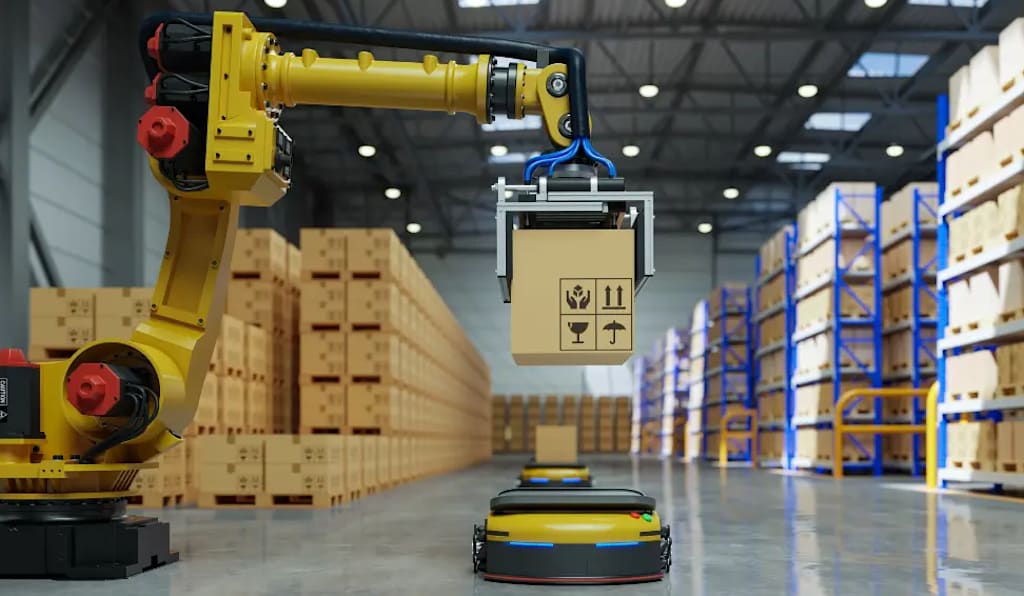
United States Logistics Automation Market Size, Share, and Growth Forecast 2034
The United States logistics automation market is projected to reach USD 19.0 Billion in 2025 and is expected to grow significantly, reaching USD 38.2 Billion by 2033 at a CAGR of 9.1%. This steady expansion reflects the increasing reliance on automation technologies to manage complex supply chains and rising order volumes.
Automation has become a core component of modern logistics operations. Businesses are investing in technologies such as automated storage and retrieval systems (AS/RS), robotics, and advanced warehouse management software to improve speed and accuracy. As order fulfillment expectations continue to rise, especially in high-volume sectors, automation is no longer optional but a strategic requirement.
Request a Sample Report with Latest 2026 Data & Forecasts:
United States Logistics Automation Market Outlook: Business Expansion and Automation Opportunities
The outlook for the logistics automation market in the United States remains strong as companies expand operations to meet evolving customer demands. The shift toward omnichannel retail and same-day delivery models is encouraging businesses to modernize their logistics infrastructure.
One of the key opportunities lies in the integration of artificial intelligence and IoT within logistics systems. These technologies enable real-time tracking, predictive maintenance, and smarter decision-making. As a result, companies can optimize routes, manage inventory more effectively, and respond quickly to disruptions.
Another growth area is the adoption of robotics in warehouse operations. Automated picking, sorting, and packaging systems are helping organizations handle higher throughput without significantly increasing labor costs. This is particularly important in a tight labor market where efficiency gains are critical.
In addition, the rise of autonomous vehicles and drone-based delivery solutions is opening new possibilities for last-mile logistics. While still evolving, these technologies are expected to play a larger role in improving delivery speed and reducing transportation costs over time.
United States Logistics Automation Market Analysis: Key Drivers, Challenges, and Competitive Landscape
Several factors are driving the growth of the logistics automation market. The most prominent is the surge in e-commerce activity, which has significantly increased the volume and complexity of logistics operations. Businesses are under pressure to deliver faster while maintaining accuracy, making automation an essential tool.
Technological advancements also play a major role. The continuous development of AI, machine learning, and sensor technologies has improved the performance and reliability of automation systems. These innovations allow companies to process large amounts of data and make informed operational decisions.
However, the market is not without challenges. High initial investment costs can be a barrier, particularly for small and mid-sized enterprises. Implementing automation systems requires significant capital expenditure as well as ongoing maintenance and upgrades.
Integration complexity is another concern. Many organizations operate on legacy systems, and aligning new automation technologies with existing infrastructure can be time-consuming. Despite these challenges, competition in the market remains strong, with companies focusing on innovation, partnerships, and customized solutions to gain a competitive advantage.
United States Logistics Automation Market Insights for Warehousing, 3PL, and Supply Chain Companies
For warehousing operators, third-party logistics (3PL) providers, and supply chain companies, automation offers clear operational benefits. Automated systems improve picking accuracy, reduce processing times, and enhance overall warehouse productivity.
3PL providers, in particular, are leveraging automation to handle diverse client requirements efficiently. With clients expecting flexible and scalable solutions, automation helps service providers manage varying order volumes without compromising performance.
Supply chain companies are also using automation to increase visibility across their networks. Real-time data tracking allows businesses to monitor inventory levels, shipment status, and potential bottlenecks. This level of transparency supports better planning and reduces the risk of disruptions.
Additionally, automation contributes to workforce optimization. By handling repetitive tasks, automated systems allow employees to focus on more strategic activities, improving overall operational effectiveness.
United States Logistics Automation Market Opportunities for Technology Providers, OEMs, and Integrators
Technology providers, original equipment manufacturers (OEMs), and system integrators are well-positioned to benefit from the growing demand for logistics automation. Businesses are increasingly seeking end-to-end solutions that combine hardware, software, and analytics capabilities.
For technology providers, there is a strong opportunity to develop scalable and flexible platforms that can adapt to different operational needs. Cloud-based solutions, in particular, are gaining traction due to their ease of deployment and cost efficiency.
OEMs are focusing on designing advanced robotics and automation equipment that offer higher efficiency and reliability. Customization is becoming a key differentiator, as clients look for solutions tailored to their specific workflows.
System integrators play a critical role in ensuring seamless implementation. Their expertise in combining different technologies into a unified system helps businesses maximize the value of their automation investments.
United States Logistics Automation Market Investment Opportunities and ROI Analysis
Investment in logistics automation is increasingly viewed as a long-term strategy rather than a short-term expense. While the initial costs can be high, the return on investment is driven by improved efficiency, reduced labor expenses, and enhanced service quality.
Companies that invest in automation often experience faster order processing, fewer errors, and lower operational costs. These benefits translate into higher customer satisfaction and stronger competitive positioning.
From an investor perspective, the market presents attractive opportunities due to its consistent growth and expanding application base. As industries continue to digitize their operations, the demand for automation solutions is expected to remain strong.
In the long run, businesses that prioritize automation are better equipped to handle market fluctuations and evolving customer expectations. This makes logistics automation a key area of focus for both operational leaders and investors aiming for sustainable growth.
About the Creator
Kim Soo hyun
My name is Kim Soo hyun, and I am a research analyst at IMARC Group, specializing in market trends and data analysis to provide insights and support strategic decision-making.
Enjoyed the story? Support the Creator.
Subscribe for free to receive all their stories in your feed.
Comments
There are no comments for this story
Be the first to respond and start the conversation.