
United States Lipid Nanoparticle Market Set to Reach US$ 519.18 Billion by 2033 as RNA Therapeutics and Precision Medicine Accelerate Growth
Innovations in mRNA vaccines, gene therapies, nanomedicine, and targeted drug delivery are transforming the U.S. lipid nanoparticle industry, creating significant opportunities for pharmaceutical and biotechnology companies through 2033.

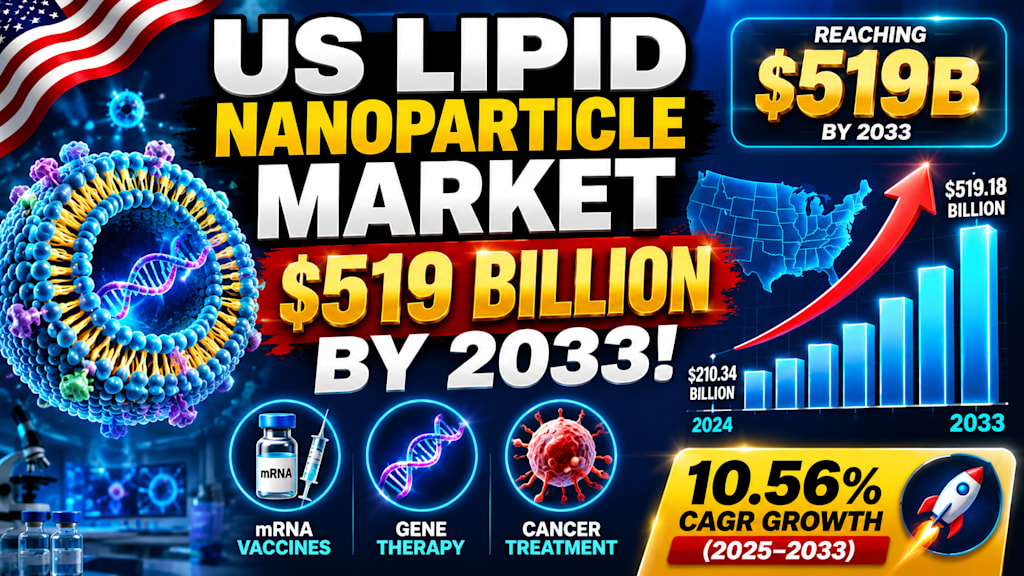
United States Lipid Nanoparticle Market Forecast 2025–2033
The United States lipid nanoparticle market is entering a transformative growth phase driven by advances in nanotechnology, RNA-based therapeutics, and precision medicine. According to Renub Research, the United States Lipid Nanoparticle Market is projected to grow from US$ 210.34 billion in 2024 to US$ 519.18 billion by 2033, expanding at a CAGR of 10.56% during 2025–2033.
Lipid nanoparticles (LNPs) have evolved from a specialized drug delivery platform into one of the most important technologies supporting modern therapeutics. Their role in mRNA vaccines demonstrated their immense potential, opening new pathways for applications in oncology, rare diseases, infectious diseases, regenerative medicine, and gene therapy.
As healthcare systems increasingly focus on personalized treatments and targeted therapies, lipid nanoparticles are becoming an essential component of next-generation pharmaceutical development.
Understanding Lipid Nanoparticles and Their Growing Importance
Lipid nanoparticles are microscopic carriers designed to encapsulate and transport therapeutic molecules such as RNA, DNA, proteins, and small drugs directly to target cells. Their ability to protect sensitive molecules from degradation while improving delivery efficiency has made them highly valuable across the healthcare ecosystem.
Traditional drug delivery methods often face challenges related to stability, bioavailability, and toxicity. Lipid nanoparticles address these issues by enabling controlled release and targeted delivery, ultimately improving treatment outcomes while reducing adverse effects.
The success of mRNA vaccine platforms highlighted the effectiveness of LNP technology on a global scale, accelerating investments from pharmaceutical companies, biotechnology firms, academic institutions, and government agencies throughout the United States.
Rising Cancer Burden Strengthening Demand
One of the strongest growth drivers for the U.S. lipid nanoparticle market is the increasing prevalence of cancer.
According to the American Cancer Society, approximately 2,001,140 new cancer cases and 611,720 cancer-related deaths were expected in the United States during 2024. These figures emphasize the urgent need for innovative therapies capable of delivering treatment with greater precision and fewer side effects.
Lipid nanoparticles are increasingly being utilized in oncology because they can selectively deliver therapeutic agents to tumor tissues while minimizing damage to healthy cells. This targeted approach is becoming increasingly attractive in cancer immunotherapy, RNA therapeutics, and personalized medicine.
As cancer incidence continues to rise, healthcare providers and pharmaceutical developers are expected to expand their investments in advanced nanoparticle-based treatment platforms.
Growing Adoption of RNA-Based Therapeutics
The rapid emergence of RNA-based therapeutics has significantly increased demand for lipid nanoparticle technologies.
Messenger RNA (mRNA), small interfering RNA (siRNA), and gene-editing technologies require reliable delivery systems capable of transporting fragile nucleic acids into cells. Lipid nanoparticles have proven to be one of the most effective solutions available today.
Researchers across the United States are actively exploring RNA-based treatments for:
Cancer
Rare genetic disorders
Cardiovascular diseases
Neurological conditions
Infectious diseases
Autoimmune disorders
Because RNA molecules are highly unstable outside cells, LNPs play a critical role in ensuring therapeutic success. Their ability to protect genetic material while facilitating cellular uptake positions them at the center of future pharmaceutical innovation.
As clinical pipelines continue to expand, demand for advanced LNP formulations is expected to increase substantially throughout the forecast period.
Nanotechnology Advancements Driving Innovation
Continuous breakthroughs in nanotechnology and formulation science are accelerating market growth.
Researchers are developing new lipid compositions with enhanced stability, greater drug-loading capacity, and improved targeting capabilities. These innovations are helping pharmaceutical companies create more effective therapies while overcoming traditional drug delivery limitations.
Recent advances include:
Enhanced lipid chemistry
Targeted delivery mechanisms
Improved pharmacokinetic profiles
Controlled-release formulations
AI-assisted nanoparticle design
Scalable manufacturing techniques
Artificial intelligence and computational modeling are also playing a growing role in nanoparticle optimization. By predicting formulation performance before laboratory testing, companies can significantly reduce development timelines and costs.
These technological advancements are expanding lipid nanoparticle applications beyond vaccines and into broader therapeutic areas such as neurology, immunology, regenerative medicine, and oncology.
Increased Investments from Pharmaceutical and Biotechnology Companies
Investment activity across the pharmaceutical and biotechnology sectors remains a major catalyst for market expansion.
The commercial success of lipid nanoparticle-enabled therapies has encouraged major pharmaceutical companies to increase their investments in research, development, and manufacturing capabilities.
Several trends are supporting this momentum:
Venture capital funding for nanoparticle startups
Government grants supporting nanomedicine research
Strategic licensing agreements
Research collaborations
Manufacturing expansion projects
Acquisition of specialized nanoparticle technology firms
Large pharmaceutical organizations are increasingly integrating lipid nanoparticle platforms into their development pipelines to enhance therapeutic effectiveness and gain competitive advantages.
Meanwhile, emerging biotechnology firms continue to introduce innovative formulations targeting unmet medical needs, contributing to a vibrant and competitive market landscape.
Challenges Limiting Market Growth
Despite strong growth prospects, the industry faces several obstacles that could impact expansion.
High Manufacturing Costs
Producing lipid nanoparticles requires sophisticated equipment, highly controlled manufacturing environments, and specialized expertise.
Commercial-scale production presents challenges related to:
Batch consistency
Process reproducibility
Raw material sourcing
Quality assurance
Manufacturing scalability
Specialized lipids used in nanoparticle formulations often remain expensive and difficult to source in large quantities, creating additional cost pressures.
Smaller biotechnology companies may struggle to compete with larger organizations that possess greater manufacturing resources and infrastructure.
Regulatory Complexity and Safety Considerations
Regulatory requirements remain another significant challenge for market participants.
Because lipid nanoparticles are relatively new within pharmaceutical applications, regulators require extensive evidence regarding:
Long-term safety
Toxicity profiles
Immunogenicity
Biodistribution
Clinical efficacy
Clinical trials involving LNP-based therapies can be lengthy and costly, particularly when addressing novel therapeutic mechanisms.
Developers must navigate complex approval pathways while ensuring compliance with evolving regulatory standards. Successfully addressing safety concerns will be essential for maintaining public trust and supporting future commercialization efforts.
Nanostructured Carriers Emerging as a Key Market Segment
Nanostructured lipid carriers have become one of the most promising segments within the broader lipid nanoparticle industry.
These advanced carriers offer multiple advantages, including:
Improved stability
Higher drug-loading capacity
Enhanced bioavailability
Controlled drug release
Reduced systemic toxicity
Nanostructured carriers are increasingly being used to transport proteins, nucleic acids, peptides, and small-molecule drugs.
Their versatility makes them suitable for applications in:
Vaccines
Oncology
Regenerative medicine
Gene therapy
Diagnostic technologies
As pharmaceutical companies continue to prioritize precision medicine approaches, nanostructured carriers are expected to capture a growing share of the overall market.
Therapeutics Segment Leads Application Demand
Among all applications, therapeutics remain the largest and fastest-growing segment.
Lipid nanoparticles have demonstrated exceptional value in delivering complex therapeutic molecules that would otherwise face stability and delivery challenges.
Their growing adoption in disease treatment is driven by:
Enhanced drug efficacy
Reduced toxicity
Improved patient compliance
Better treatment targeting
Increased therapeutic durability
Applications in cancer treatment, infectious disease management, and rare genetic disorders continue to expand as clinical evidence supporting LNP effectiveness grows.
The increasing focus on personalized medicine is further strengthening demand within this segment.
Pharmaceutical and Biotechnology Companies Dominate End-Use Demand
Pharmaceutical and biotechnology organizations represent the largest end-user category in the U.S. lipid nanoparticle market.
These companies are utilizing LNP platforms to develop:
mRNA vaccines
Gene therapies
Cell therapies
Precision oncology treatments
Targeted biologics
The success of RNA-based medicines has significantly accelerated adoption among industry leaders seeking innovative solutions to improve therapeutic performance.
Strategic partnerships between pharmaceutical giants and biotechnology startups continue to drive innovation, enabling faster development and commercialization of advanced lipid nanoparticle products.
Regional Analysis: Leading State Markets
California
California remains the leading hub for lipid nanoparticle innovation due to its robust biotechnology ecosystem, world-renowned universities, and strong venture capital presence.
The state hosts numerous biotechnology firms and research institutions actively engaged in nanomedicine, gene therapy, and RNA therapeutic development.
Its extensive clinical trial infrastructure and skilled workforce further reinforce its leadership position.
Texas
Texas is rapidly emerging as a significant center for lipid nanoparticle research and commercialization.
Cities such as Houston, Austin, and Dallas are attracting biotechnology investments and fostering collaborations among academic institutions, healthcare organizations, and pharmaceutical companies.
Lower operating costs compared to traditional biotech hubs also enhance Texas's attractiveness.
New York
New York benefits from a strong concentration of pharmaceutical companies, medical centers, and research universities.
Significant funding support and a highly developed healthcare ecosystem are helping accelerate clinical research and commercialization of nanoparticle-based therapeutics.
The state's focus on oncology and genetic medicine is particularly driving growth.
Florida
Florida is strengthening its position within the U.S. lipid nanoparticle landscape through expanding biotechnology initiatives and healthcare innovation programs.
Growing investments in research infrastructure and favorable business conditions are helping attract life sciences companies focused on nanomedicine and advanced drug delivery technologies.
Competitive Landscape
Competition within the U.S. lipid nanoparticle market is intensifying as companies seek to expand their technological capabilities and commercial portfolios.
Key market participants include:
Merck KGaA
Evonik Industries AG
Genevant Sciences Corporation
CordenPharma
Arcturus Therapeutics Holdings Inc.
Ascendia Pharmaceuticals
Acuitas Therapeutics
Croda International Plc
These companies are actively investing in R&D, strategic collaborations, manufacturing expansion, and licensing agreements to strengthen their market positions.
10 Recent Industry Developments
1. Merck KGaA Expanded mRNA Manufacturing Support
Merck strengthened its life science portfolio by expanding services supporting lipid nanoparticle formulation and mRNA production for pharmaceutical clients.
2. Evonik Increased LNP Production Capacity
Evonik announced additional investments in lipid production and nanoparticle manufacturing capabilities to meet growing global demand.
3. Genevant Advanced RNA Delivery Programs
Genevant continued expanding licensing agreements for proprietary lipid nanoparticle technologies supporting next-generation RNA therapeutics.
4. CordenPharma Enhanced GMP Manufacturing
CordenPharma expanded its GMP manufacturing infrastructure dedicated to lipid nanoparticle and mRNA therapeutics production.
5. Arcturus Advanced Self-Amplifying RNA Programs
Arcturus progressed multiple self-amplifying RNA vaccine and therapeutic programs utilizing proprietary LNP delivery systems.
6. Acuitas Expanded Strategic Partnerships
Acuitas entered additional collaborations supporting RNA therapeutic development through its advanced lipid nanoparticle platform.
7. Croda Strengthened Pharmaceutical Lipid Portfolio
Croda expanded specialty lipid manufacturing capabilities designed specifically for RNA and gene therapy applications.
8. Ascendia Accelerated Nanomedicine Development Services
Ascendia broadened formulation development services supporting pharmaceutical companies developing nanoparticle-based therapeutics.
9. Industry-Wide Expansion of Commercial Manufacturing
Multiple market participants increased investments in large-scale LNP manufacturing facilities to address rising global demand.
10. Growing AI Integration in Nanoparticle Design
Leading companies increasingly adopted artificial intelligence tools to optimize lipid nanoparticle formulation and improve development efficiency.
Final Thoughts
The United States lipid nanoparticle market is becoming one of the most strategically important segments within modern healthcare and biotechnology. Supported by the rise of RNA therapeutics, increasing cancer prevalence, advances in nanotechnology, and strong investment activity, the market is positioned for substantial expansion over the next decade.
With projected revenues reaching US$ 519.18 billion by 2033, lipid nanoparticles are expected to play a central role in shaping the future of drug delivery, precision medicine, gene therapy, and vaccine development. While manufacturing complexity and regulatory challenges remain, continuous innovation and growing commercialization efforts are likely to reinforce the United States' position as a global leader in lipid nanoparticle technologies and next-generation therapeutics.
About the Creator
Enjoyed the story? Support the Creator.
Subscribe for free to receive all their stories in your feed.
Comments
There are no comments for this story
Be the first to respond and start the conversation.