
United States Lawn Care Market Size & Forecast 2034
The United States lawn care market size was valued at USD 309.15 Billion in 2025 and is projected to reach USD 488.02 Billion by 2034, growing at a compound annual growth rate of 5.20% from 2026-2034.

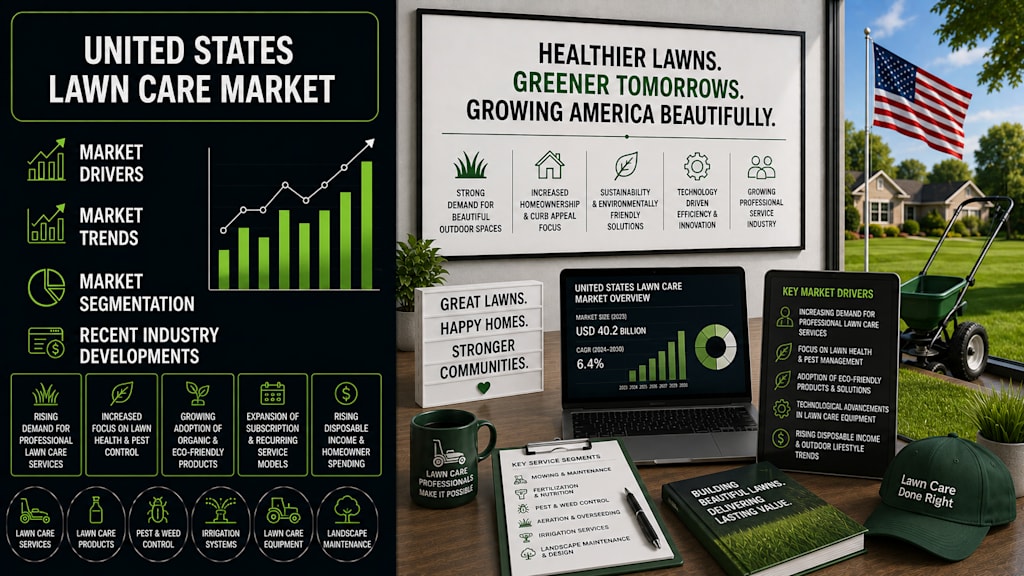
United States Lawn Care Market Size, Growth, and Forecast (2026–2034)
Outdoor spaces have become an increasingly important extension of homes, businesses, and public properties. Well-maintained lawns not only enhance curb appeal but also contribute to property value, environmental quality, and overall outdoor enjoyment. As consumer preferences evolve and landscaping technologies advance, the lawn care industry continues to experience significant transformation.
In 2026, lawn care is no longer viewed simply as routine maintenance. Property owners are increasingly focused on creating attractive, sustainable, and functional outdoor environments. From residential lawns and commercial landscapes to public green spaces, demand for professional lawn care services and innovative landscaping solutions continues to rise.
The United States lawn care market was valued at USD 309.15 Billion in 2025 and is projected to reach USD 488.02 Billion by 2034, growing at a compound annual growth rate (CAGR) of 5.20% during 2026–2034. This growth reflects increasing investment in outdoor spaces, landscaping improvements, and environmentally responsible lawn management practices.
Request a Sample Report with Latest 2026 Data & Forecasts:
Key Trends Shaping the United States Lawn Care Market
Several important trends are influencing market development:
• Growing focus on sustainable lawn maintenance
• Rising adoption of smart irrigation technologies
• Increasing demand for professional landscaping services
• Expansion of eco-friendly lawn care products
• Greater interest in outdoor living and property enhancement
These trends are helping transform traditional lawn care into a more innovative and environmentally conscious industry.
Sustainability Is Influencing Lawn Care Practices
Environmental awareness is becoming an important factor in lawn management decisions.
Consumers increasingly seek solutions that reduce water consumption, minimize chemical usage, and support healthier ecosystems. As a result, lawn care providers are adopting sustainable practices such as efficient irrigation, organic fertilizers, and environmentally friendly pest management techniques.
Native plants and drought-resistant landscaping options are also gaining popularity in many regions.
These approaches help conserve resources while maintaining attractive outdoor spaces.
Smart Technology Is Transforming Lawn Maintenance
Technology is playing an increasingly important role in modern lawn care.
Smart irrigation systems can monitor weather conditions, soil moisture levels, and water usage patterns to optimize watering schedules. These systems help property owners reduce waste while maintaining healthy landscapes.
Robotic lawn mowers and automated maintenance equipment are also becoming more common, offering convenience and efficiency for homeowners and landscaping professionals.
As smart home technologies continue expanding, lawn care is expected to become increasingly connected and data-driven.
Professional Services Continue to Expand
Many property owners prefer professional lawn care services due to convenience, expertise, and time savings.
Professional providers offer services such as mowing, fertilization, weed control, aeration, landscaping design, and seasonal maintenance. Their specialized knowledge helps ensure healthy lawns while addressing region-specific environmental conditions.
The growing demand for professional maintenance services is creating opportunities for service providers to expand offerings and adopt advanced technologies.
This trend is expected to remain a major contributor to industry growth throughout the forecast period.
Eco-Friendly Products Are Gaining Popularity
Consumers are increasingly paying attention to the products used on their lawns and landscapes.
Organic fertilizers, natural soil enhancers, and environmentally friendly pest control solutions are attracting interest among homeowners seeking safer alternatives to traditional chemical treatments.
Manufacturers are responding by developing products that balance effectiveness with environmental responsibility.
As sustainability continues influencing purchasing decisions, eco-friendly lawn care products are likely to experience growing demand.
Landscaping Enhances Property Value
Well-maintained landscapes contribute significantly to property appeal and market value.
Residential property owners often view landscaping improvements as investments that enhance both aesthetics and long-term value. Similarly, commercial properties use professional landscaping to create welcoming environments for customers and visitors.
The connection between landscape quality and property attractiveness continues to support spending on lawn care and outdoor improvement projects.
As real estate markets evolve, landscaping is expected to remain an important element of property management strategies.
Investment Opportunities in the Market
The expanding lawn care industry presents opportunities for investors and businesses.
Key areas attracting investment include:
• Smart irrigation technologies
• Sustainable lawn care products
• Landscaping and maintenance services
• Robotic lawn care equipment
• Water conservation solutions
Companies that focus on efficiency, sustainability, and customer convenience are well positioned to benefit from future growth opportunities.
Innovation in technology and environmentally responsible products is also creating new avenues for expansion.
Challenges Facing the Industry
Despite positive growth prospects, the lawn care market faces several challenges.
Climate variability and changing weather patterns can affect lawn health and maintenance requirements. Water restrictions in some regions may also influence landscaping practices.
Labor availability remains a concern for service providers, particularly during peak maintenance seasons.
In addition, businesses must continuously adapt to evolving environmental regulations and consumer expectations regarding sustainability.
Addressing these challenges will be important for supporting long-term industry growth.
Future Outlook (2026–2034)
Looking ahead, the United States lawn care market is expected to continue expanding as homeowners, businesses, and public organizations invest in outdoor spaces.
Between 2026 and 2034, demand for sustainable landscaping solutions, smart technologies, professional services, and eco-friendly products is likely to increase. Companies will continue exploring innovative ways to improve efficiency while reducing environmental impact.
Future developments may include AI-powered irrigation systems, expanded robotic maintenance solutions, advanced soil monitoring technologies, and greater adoption of sustainable landscaping practices.
These innovations are expected to reshape the future of lawn care and landscape management.
Conclusion
The United States lawn care market is evolving as changing consumer preferences, technological advancements, and sustainability initiatives influence outdoor maintenance practices. Supported by growing interest in outdoor living spaces, smart landscaping technologies, and environmentally responsible solutions, the industry is positioned for continued growth through 2026–2034.
While challenges such as climate variability and labor constraints remain, ongoing innovation and investment are creating new opportunities across the sector. As property owners increasingly prioritize attractive and sustainable landscapes, lawn care will remain an important component of residential and commercial property management.
About the Creator
Jackson Watson
I'm a market research analyst at Imarc group company delivering data-driven insights, industry analysis, and customized research solutions. We support businesses with market sizing, competitive analysis, and strategic decision-making.
Enjoyed the story? Support the Creator.
Subscribe for free to receive all their stories in your feed.
Comments
There are no comments for this story
Be the first to respond and start the conversation.