
United States Kitchen Appliance Market Expands as Smart Technology and Home Renovation Trends Transform Modern Kitchens
Rising demand for energy-efficient appliances, connected home technology, and multifunctional kitchen solutions is driving sustained growth across the U.S. kitchen appliance industry.

The modern American kitchen has evolved far beyond its traditional role as a place for meal preparation. Today, it serves as a multifunctional space where families gather, remote workers take breaks, social interactions occur, and technology seamlessly integrates into daily life. As consumer expectations continue to change, kitchen appliances are becoming smarter, more efficient, and increasingly connected to broader home ecosystems.
From intelligent refrigerators that monitor food inventory to voice-controlled ovens and energy-efficient dishwashers, innovation is reshaping the kitchen appliance landscape. Consumers are no longer purchasing appliances solely for functionality. Instead, they are seeking products that enhance convenience, reduce energy consumption, support healthier lifestyles, and complement modern home aesthetics.
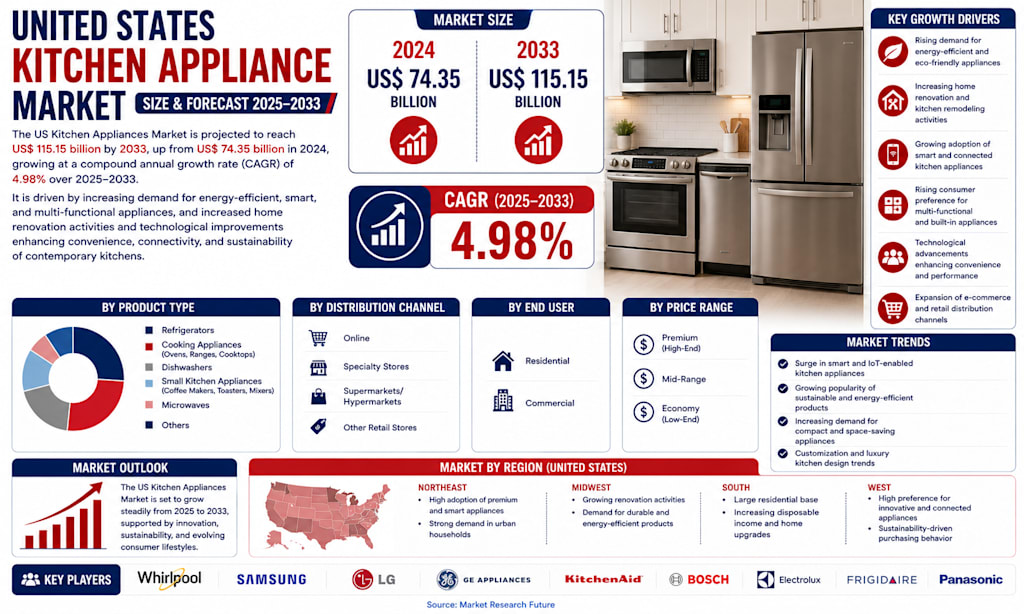
The growing popularity of smart homes, increasing home renovation activities, and rising consumer interest in sustainable living are creating favorable conditions for industry expansion. According to Renub Research, the United States Kitchen Appliance Market is projected to increase from US$ 74.35 billion in 2024 to US$ 115.15 billion by 2033, expanding at a compound annual growth rate (CAGR) of 4.98% during the forecast period from 2025 to 2033. This steady growth reflects the ongoing transformation of American kitchens into highly efficient and technologically advanced living spaces.
Kitchen Appliances Have Become Central to Modern Living
Kitchen appliances have become an essential part of everyday life in American households. Whether preparing meals, storing food, cleaning dishes, or brewing coffee, consumers rely heavily on these products to simplify daily routines and improve efficiency.
The market encompasses a wide range of products, including refrigerators, freezers, dishwashers, microwave ovens, food processors, mixers, grinders, water purifiers, and numerous countertop appliances. While major appliances continue to dominate household spending, smaller multifunctional devices are experiencing strong demand due to their convenience and versatility.
As lifestyles become increasingly fast-paced, consumers are placing greater value on appliances that save time and reduce effort. Features such as automation, remote control capabilities, and intelligent energy management have become important considerations during purchasing decisions.
The integration of technology into household appliances is transforming the consumer experience and redefining expectations across the industry.
Smart Appliances Are Driving Market Innovation
One of the most significant trends influencing the United States kitchen appliance market is the rapid adoption of smart technology.
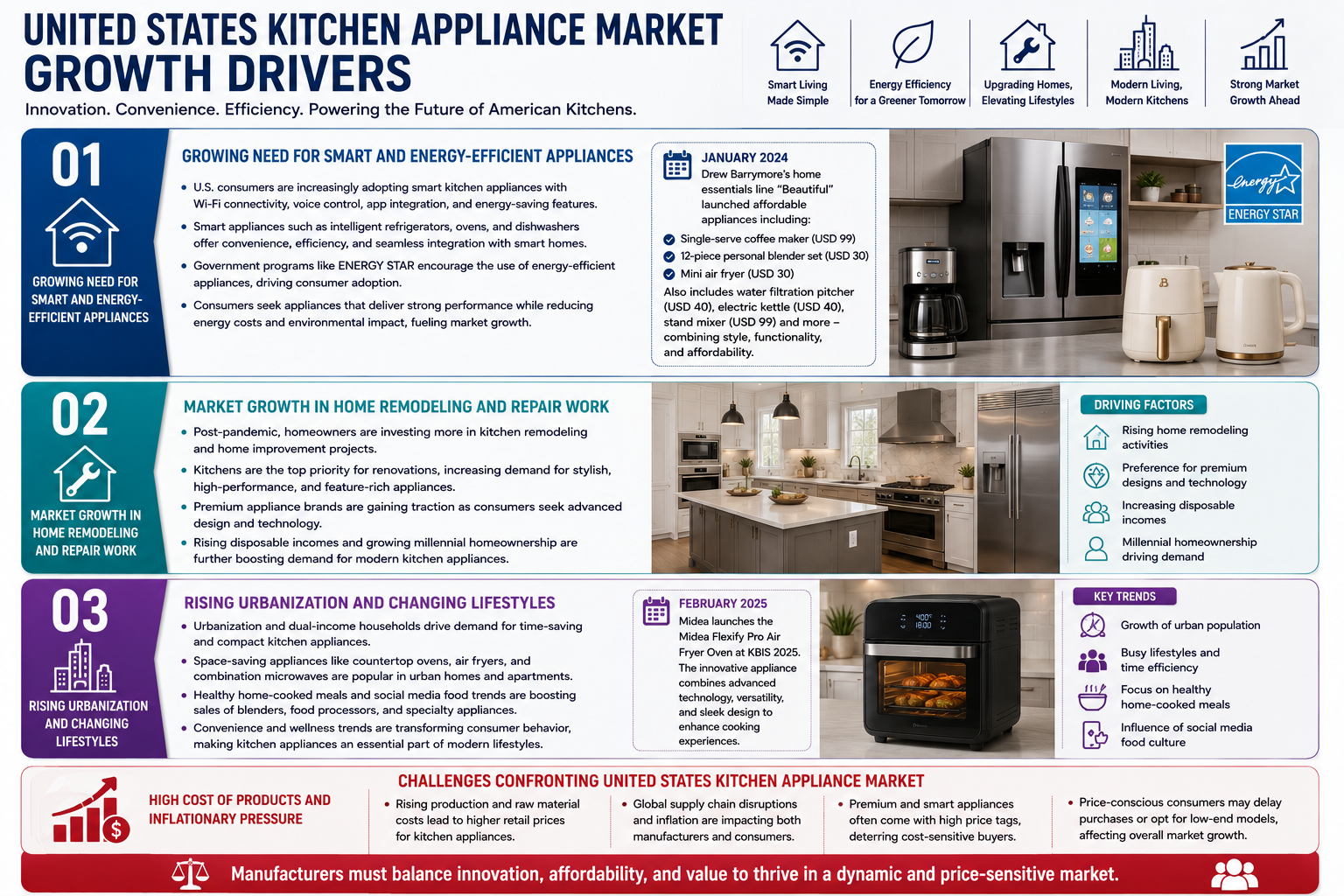
Consumers increasingly prefer appliances equipped with Wi-Fi connectivity, mobile application integration, voice control functionality, and remote monitoring capabilities. These features allow homeowners to manage kitchen operations from virtually anywhere, providing greater convenience and flexibility.
Smart refrigerators can notify users when groceries are running low, while intelligent ovens can be preheated remotely using mobile devices. Connected dishwashers offer performance monitoring and maintenance alerts, helping users optimize efficiency and reduce energy consumption.
The growing popularity of smart home ecosystems is accelerating adoption of connected appliances. Many consumers seek products that integrate seamlessly with voice assistants and other smart home platforms.
As technological innovation continues, smart kitchen appliances are expected to become increasingly sophisticated, creating new opportunities for manufacturers and retailers alike.
Energy Efficiency Remains a Major Purchasing Factor
Energy efficiency has emerged as one of the most influential drivers of consumer purchasing behavior.
American households are becoming increasingly conscious of energy costs and environmental sustainability. As a result, consumers are actively seeking appliances that reduce electricity and water consumption without compromising performance.
Government programs promoting energy-efficient products, including ENERGY STAR certification initiatives, have encouraged widespread adoption of environmentally friendly appliances. Consumers recognize that energy-efficient products not only contribute to sustainability goals but also generate long-term savings through reduced utility bills.
Manufacturers are responding by incorporating advanced technologies such as inverter compressors, precision temperature controls, efficient motors, and intelligent power management systems.
The emphasis on sustainability is expected to remain a major growth driver throughout the forecast period, encouraging continued investment in energy-efficient product development.
Home Renovation Trends Are Supporting Market Growth
The resurgence of home renovation and remodeling activities has become another significant contributor to market expansion.
In recent years, many American homeowners have prioritized upgrading their living spaces, with kitchens frequently serving as the focal point of renovation projects. Consumers are investing in modern appliances that combine performance, style, and technological innovation.
Kitchen remodeling projects often involve replacing outdated appliances with premium models featuring advanced functionality and contemporary designs. This trend has benefited manufacturers offering high-end products tailored to modern consumer preferences.
Millennials and younger homeowners are playing an important role in this transformation. As homeownership rates among younger generations increase, demand for innovative and aesthetically appealing appliances continues to grow.
The ongoing popularity of home improvement initiatives is expected to remain a strong source of demand across multiple appliance categories.
Changing Lifestyles Are Influencing Consumer Preferences
Modern lifestyles are reshaping the way Americans interact with kitchen appliances.
Urbanization, busy work schedules, and the growth of dual-income households have increased demand for products that simplify meal preparation and support efficient living. Consumers increasingly seek appliances capable of performing multiple functions while minimizing time and effort requirements.
Compact appliances such as air fryers, countertop ovens, and multifunctional food processors have gained significant popularity because they offer versatility without requiring extensive kitchen space.
Health-conscious consumers are also driving demand for appliances that support healthier cooking habits. Blenders, food processors, steam ovens, and air fryers are particularly popular among individuals seeking nutritious meal preparation options.
Social media platforms and cooking-focused content have further influenced consumer behavior by encouraging experimentation with home cooking and culinary creativity.
These evolving lifestyle trends continue to shape purchasing decisions throughout the market.
Dishwashers Are Becoming Household Essentials
Dishwashers represent one of the most important categories within the U.S. kitchen appliance market.
Once considered a luxury item, dishwashers have become a standard feature in many American homes. Consumers increasingly value their ability to save time, reduce water usage, and improve kitchen hygiene.
Modern dishwashers incorporate advanced technologies such as intelligent sensors, customizable wash cycles, quiet operation, and energy-efficient performance. These innovations enhance user convenience while supporting sustainability goals.
The growing emphasis on cleanliness and sanitation has further strengthened demand for dishwashers. Consumers increasingly view automated dishwashing as an essential component of modern living.
As technological improvements continue, this product category is expected to maintain strong growth momentum.
Food Processors Benefit from Health and Convenience Trends
The food processor segment has experienced notable growth due to increasing consumer interest in healthy eating and home meal preparation.
Food processors simplify a variety of kitchen tasks, including chopping, slicing, grinding, kneading, blending, and mixing. Their versatility makes them particularly attractive to consumers seeking efficient cooking solutions.
The popularity of homemade meals, plant-based diets, and do-it-yourself food preparation has contributed to growing demand for these appliances. Consumers appreciate the ability to prepare fresh ingredients quickly while maintaining control over nutritional content.
Manufacturers continue introducing enhanced safety features, stronger motors, and multifunctional designs to meet evolving consumer expectations.
As interest in health-focused cooking remains strong, food processors are expected to continue gaining popularity.
Online Retail Is Transforming Appliance Distribution
The rapid growth of e-commerce has significantly altered the kitchen appliance purchasing experience.
Online platforms provide consumers with access to extensive product selections, detailed reviews, price comparisons, and convenient home delivery options. Retailers such as Amazon, Best Buy, and Home Depot have strengthened their online offerings to meet changing shopping preferences.
The convenience of online shopping appeals particularly to younger consumers who prefer researching and purchasing products digitally. Mobile commerce, flexible payment options, and promotional discounts have further accelerated adoption.
Despite the growth of e-commerce, specialty appliance stores continue to maintain relevance by offering personalized customer service, product demonstrations, and professional installation support.
The coexistence of digital and physical retail channels is creating a dynamic distribution environment that benefits consumers and manufacturers alike.
Specialty Stores Continue to Attract Premium Buyers
Specialty appliance retailers remain an important segment of the market, particularly among consumers seeking premium products and expert guidance.
These stores offer personalized shopping experiences, product consultations, and access to luxury appliance brands. Consumers undertaking extensive kitchen renovation projects often prefer specialty retailers because of the expertise and support they provide.
Live demonstrations, customized recommendations, and installation services create added value that online platforms may not always deliver.
High-end brands continue relying on specialty retailers to showcase innovative products and reach affluent consumers seeking premium kitchen solutions.
As luxury appliance demand grows, specialty stores are expected to remain a valuable channel within the broader market.
Regional Markets Drive Diverse Opportunities
California
California remains one of the largest and most influential kitchen appliance markets in the United States. Strong consumer purchasing power, environmental awareness, and demand for energy-efficient products support robust market activity. The state's emphasis on sustainability encourages adoption of smart and environmentally friendly appliances.
Texas
Texas continues to experience strong growth due to expanding residential construction, rising homeownership, and increasing urbanization. Consumers prioritize reliability, energy efficiency, and performance, creating opportunities across multiple appliance categories.
New York
New York's dense urban environment creates demand for compact, multifunctional appliances that maximize limited space. High-end residential developments and luxury housing projects support strong demand for premium kitchen technologies.
Challenges Facing the Market
Despite positive growth prospects, the kitchen appliance industry faces several challenges.
Rising production costs, inflationary pressures, and supply chain disruptions have increased manufacturing expenses. Higher retail prices may discourage some consumers from upgrading appliances, particularly during periods of economic uncertainty.
Electronic component shortages also continue affecting production schedules and inventory availability. As appliances become increasingly dependent on advanced technologies, manufacturers face greater exposure to supply chain disruptions involving semiconductors and other critical components.
Balancing innovation, affordability, and supply chain resilience will remain essential for sustained market success.
Market Forecast: Strong Growth Through 2033
According to Renub Research, the United States Kitchen Appliance Market is expected to grow from US$ 74.35 billion in 2024 to US$ 115.15 billion by 2033, reflecting a CAGR of 4.98% during the forecast period from 2025 to 2033. Rising demand for smart appliances, increasing home renovation activities, growing energy-efficiency awareness, and evolving consumer lifestyles will continue driving market expansion.
As connected technologies become more sophisticated and consumers place greater emphasis on convenience and sustainability, the market is positioned for continued long-term growth.
Final Thoughts
The United States kitchen appliance market is undergoing a significant transformation driven by technological innovation, changing lifestyles, and growing consumer expectations. Modern appliances are no longer simple household tools; they are intelligent systems designed to improve efficiency, enhance convenience, and support healthier living.
With Renub Research forecasting market growth from US$ 74.35 billion in 2024 to US$ 115.15 billion by 2033, the industry is well-positioned for sustained expansion. Smart home integration, energy efficiency, premium design, and multifunctional capabilities will continue shaping the future of kitchen appliances across American households.
As homeowners increasingly invest in modernizing their kitchens, manufacturers that successfully combine innovation, sustainability, and user-friendly design will be best positioned to capitalize on the opportunities emerging within this dynamic market.
About the Creator
Enjoyed the story? Support the Creator.
Subscribe for free to receive all their stories in your feed.
Comments
There are no comments for this story
Be the first to respond and start the conversation.