
United States Jewelry Market Size to Hit USD 115.5 Billion by 2034
The United States jewelry market size reached USD 78.9 Billion in 2025. Looking forward, IMARC Group expects the market to reach USD 115.5 Billion by 2034, exhibiting a growth rate (CAGR) of 4.10% during 2026-2034.

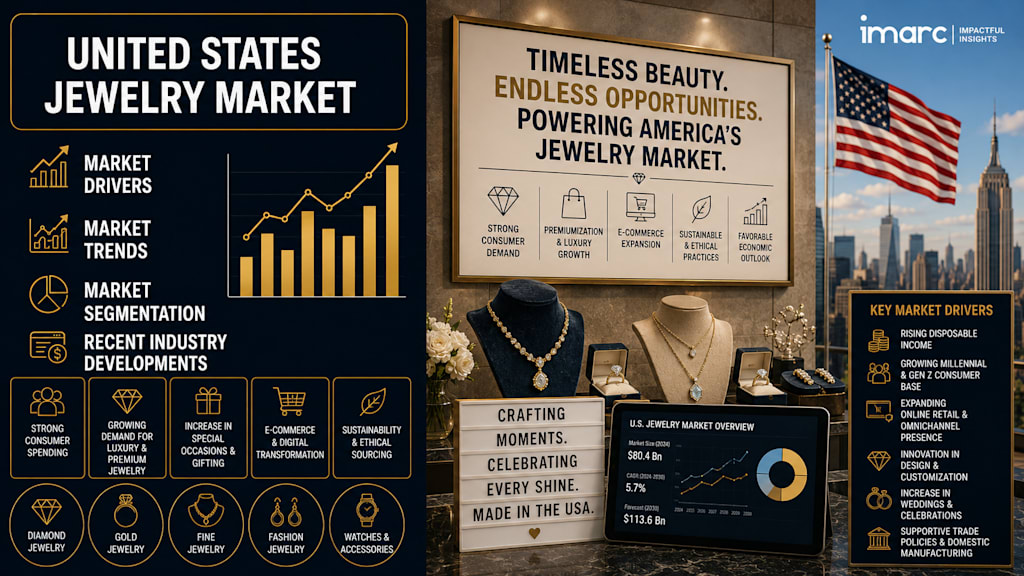
United States Jewelry Market Size, Growth, and Forecast (2026–2034)
Jewelry has long held a special place in human culture, serving as a symbol of personal style, celebration, tradition, and emotional connection. From engagement rings and luxury watches to fashion accessories and customized pieces, jewelry continues to play an important role in consumer lifestyles. As tastes evolve and technology reshapes shopping experiences, the jewelry industry is entering a new era of innovation and growth.
In 2026, consumers are looking beyond traditional jewelry purchases and seeking products that reflect individuality, craftsmanship, sustainability, and personal meaning. At the same time, digital technologies are transforming how people discover, customize, and purchase jewelry.
The United States jewelry market reached USD 78.9 Billion in 2025 and is projected to grow to USD 115.5 Billion by 2034, exhibiting a compound annual growth rate (CAGR) of 4.10% during 2026–2034. This growth reflects changing consumer preferences, rising disposable incomes, and continued innovation across the jewelry industry.
Request a Sample Report with Latest 2026 Data & Forecasts:
Key Trends Shaping the United States Jewelry Market
Several important trends are influencing market development:
• Growing demand for personalized jewelry
• Rising popularity of online jewelry shopping
• Increasing adoption of 3D printing technologies
• Expansion of augmented reality shopping experiences
• Greater focus on sustainable and ethical sourcing
These trends are helping brands attract new customers while enhancing overall shopping experiences.
Personalization Is Becoming a Major Trend
Modern consumers increasingly seek products that reflect their identities and personal stories.
Customized jewelry designs, engraved pieces, birthstone collections, and made-to-order products are gaining popularity across multiple age groups. Personalized jewelry allows buyers to create meaningful gifts and unique accessories that stand out from mass-produced alternatives.
Brands are responding by offering more customization options and digital design tools that allow customers to participate in the creative process.
This trend is expected to remain a major growth driver throughout the forecast period.
Technology Is Transforming Jewelry Design
Innovation is changing how jewelry is created and manufactured.
Three-dimensional (3D) printing technology allows designers to develop intricate patterns and complex structures with greater precision and efficiency. This technology enables faster prototyping while expanding creative possibilities for manufacturers and independent designers alike.
Advanced production techniques also help reduce material waste and improve customization capabilities.
As technology continues advancing, jewelry design is becoming increasingly innovative and accessible.
Online Shopping Is Expanding Market Reach
E-commerce has significantly transformed the jewelry retail landscape.
Consumers can now browse extensive collections, compare prices, read reviews, and make purchases from the comfort of their homes. Online platforms have made luxury and fashion jewelry more accessible to a broader audience.
Digital channels also allow smaller brands and independent designers to reach customers without relying solely on traditional retail locations.
As online shopping continues growing during 2026–2034, digital commerce will remain a critical component of industry expansion.
Sustainability Is Influencing Purchasing Decisions
Consumers are becoming more conscious of the environmental and social impact of their purchases.
Many buyers now seek transparency regarding sourcing practices, production methods, and ethical standards. Sustainable materials, responsibly sourced gemstones, and environmentally conscious manufacturing processes are becoming important differentiators within the market.
Jewelry companies are responding by strengthening sustainability initiatives and communicating their commitments more clearly.
This growing emphasis on responsible business practices is expected to influence industry strategies for years to come.
Luxury Demand Continues to Grow
Rising disposable incomes and changing consumer preferences are supporting demand for premium and fine jewelry.
Many consumers view high-quality jewelry as both a personal luxury and a long-term investment. Fine jewelry often combines craftsmanship, exclusivity, and lasting value, making it appealing to a wide range of buyers.
Luxury brands continue investing in product innovation, customer experiences, and digital engagement to attract modern consumers.
The premium segment is expected to remain an important contributor to overall market growth.
Investment Opportunities in the Industry
The evolving jewelry market presents attractive opportunities for investors and businesses.
Key areas attracting investment include:
• Personalized jewelry services
• Digital retail platforms
• Sustainable jewelry production
• 3D printing technologies
• Augmented reality shopping tools
Companies that successfully combine craftsmanship, innovation, and customer engagement are likely to benefit from long-term industry growth.
Strategic partnerships and technology adoption are also creating new opportunities across the jewelry ecosystem.
Challenges Facing the Market
Despite positive growth prospects, the industry faces several challenges.
Fluctuations in precious metal and gemstone prices can affect production costs and profitability. Intense competition requires brands to continuously innovate and differentiate their offerings.
Counterfeit products and supply chain transparency concerns also present ongoing challenges.
Additionally, changing consumer preferences require companies to remain flexible and responsive to emerging trends.
Addressing these challenges will be important for sustaining long-term success.
Future Outlook (2026–2034)
Looking ahead, the United States jewelry market is expected to continue growing as personalization, digital innovation, and sustainability become increasingly important.
Between 2026 and 2034, demand for customized designs, online shopping experiences, ethical sourcing, and technologically enhanced retail solutions is likely to increase. Brands that embrace innovation while maintaining quality and authenticity will be well positioned for success.
Future developments may include AI-powered jewelry recommendations, expanded virtual shopping experiences, advanced manufacturing technologies, and greater use of sustainable materials.
These innovations are expected to shape the future of jewelry retail and design.
Conclusion
The United States jewelry market is evolving as changing consumer preferences, technological advancements, and sustainability initiatives reshape the industry. Supported by rising demand for personalized products, digital shopping experiences, and premium jewelry, the market is expected to maintain steady growth through 2026–2034.
While challenges such as material costs and competitive pressures remain, continued innovation and investment are creating new opportunities across the sector. As consumers increasingly seek products that combine style, meaning, and responsible sourcing, the jewelry industry will continue adapting to meet these evolving expectations.
About the Creator
Jackson Watson
I'm a market research analyst at Imarc group company delivering data-driven insights, industry analysis, and customized research solutions. We support businesses with market sizing, competitive analysis, and strategic decision-making.
Enjoyed the story? Support the Creator.
Subscribe for free to receive all their stories in your feed.
Comments
There are no comments for this story
Be the first to respond and start the conversation.