
United States Human Papilloma Virus Testing Market to Cross US$ 1 Billion by 2033 Amid Rising Cervical Cancer Awareness
Advanced Screening Technologies, Self-Collection Kits, and Preventive Healthcare Programs Are Transforming HPV Testing Across the United States

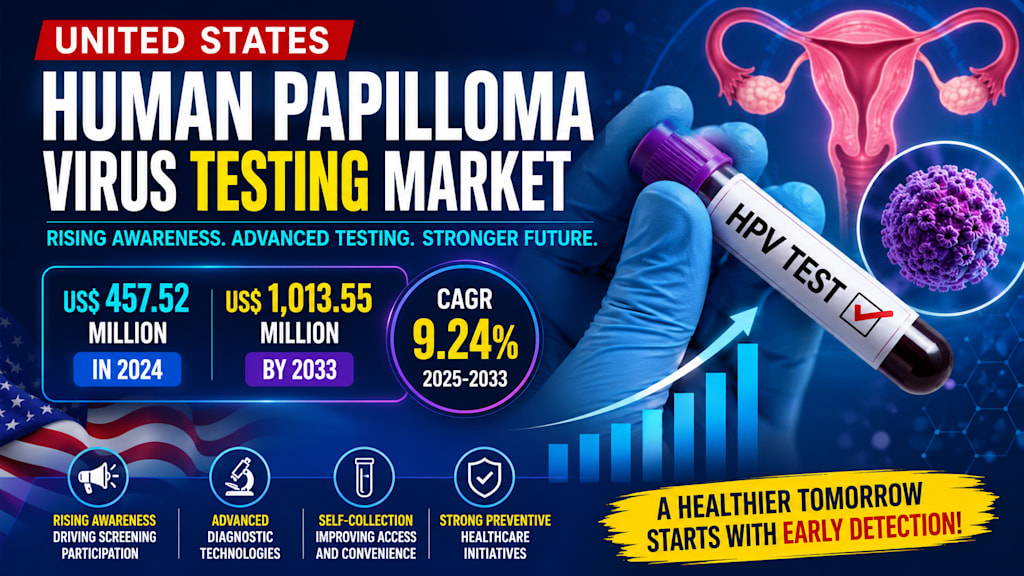
The United States Human Papilloma Virus (HPV) Testing Market is entering a transformative phase as healthcare providers, policymakers, and diagnostic companies intensify efforts to reduce cervical cancer rates through early screening and advanced testing technologies. According to Renub Research, the United States HPV Testing Market is projected to rise from US$ 457.52 million in 2024 to nearly US$ 1,013.55 million by 2033, expanding at a CAGR of 9.24% between 2025 and 2033.
The growth reflects a broader shift in the American healthcare system toward preventive diagnostics, molecular testing, and patient-centric screening solutions. With increasing awareness surrounding cervical cancer prevention, growing accessibility to advanced HPV diagnostics, and favorable screening recommendations from health organizations, the market is witnessing strong nationwide momentum.
Understanding HPV and Its Growing Healthcare Importance
Human Papilloma Virus (HPV) is among the most common sexually transmitted infections globally. While many HPV infections resolve naturally, high-risk strains can lead to cervical cancer and several other cancers affecting both men and women.
The growing prevalence of HPV-related health concerns has pushed healthcare systems across the United States to strengthen cervical cancer screening programs. Medical experts now increasingly recommend HPV testing as a primary screening method due to its higher sensitivity and improved detection capabilities compared to traditional Pap smears.
Organizations such as the American Cancer Society (ACS) and the U.S. Preventive Services Task Force (USPSTF) continue advocating regular HPV screening, particularly for women between 25 and 65 years old. These guidelines are helping normalize routine HPV testing across hospitals, clinics, laboratories, and diagnostic centers.
As awareness improves, more Americans are proactively participating in preventive healthcare initiatives, directly supporting market growth.
Why the U.S. HPV Testing Market Is Expanding Rapidly
Rising Awareness About Cervical Cancer Prevention
One of the strongest growth drivers in the U.S. HPV testing market is the growing public understanding of cervical cancer prevention and the benefits of early detection.
Government agencies, nonprofit organizations, healthcare institutions, and advocacy groups are conducting large-scale awareness campaigns encouraging routine screening. Educational programs highlighting the link between HPV infections and cervical cancer are motivating more individuals to seek timely testing.
These initiatives are particularly effective in urban regions with advanced healthcare infrastructure, though outreach efforts are also expanding into underserved rural communities.
The increased focus on preventive medicine is shifting healthcare priorities from treatment toward early detection, creating long-term opportunities for HPV diagnostic providers.
Technological Advancements Are Revolutionizing HPV Diagnostics
The HPV testing industry has evolved significantly over the past decade, largely driven by innovations in molecular diagnostics and laboratory automation.
Advanced technologies such as:
Polymerase Chain Reaction (PCR)
Next-Generation Sequencing (NGS)
AI-powered diagnostic systems
Automated molecular assays
are improving the accuracy, efficiency, and scalability of HPV testing.
These modern platforms can precisely identify high-risk HPV strains while reducing turnaround times and minimizing human error. Healthcare providers are increasingly adopting these advanced solutions because they support better patient outcomes and more reliable screening programs.
Major diagnostic companies continue investing heavily in research and development to improve testing sensitivity and expand clinical applications.
FDA approvals for advanced products, including Roche’s Cobas HPV Test and Abbott’s Alinity m HR HPV assay, are further strengthening market expansion.
Self-Collection Testing Is Changing Patient Participation
A major breakthrough in the HPV testing landscape is the introduction of self-collection screening methods.
Self-sampling allows patients to collect specimens themselves in healthcare settings, offering greater privacy, convenience, and comfort. This approach is particularly beneficial for individuals who avoid screening due to stigma, discomfort, or limited healthcare access.
In April 2025, Quest Diagnostics announced a major initiative to expand access to HPV screening by introducing self-collection options using Roche’s FDA-approved technology.
The initiative builds on the success of Quest’s earlier self-collection services for sexually transmitted infections and reflects growing confidence in patient-centered diagnostic solutions.
Healthcare experts believe self-collection testing could significantly improve screening participation rates among underserved populations, helping reduce cervical cancer disparities across the country.
Government Guidelines Are Accelerating Market Growth
Updated clinical guidelines from leading U.S. health organizations are playing a crucial role in increasing HPV testing adoption.
The American Cancer Society revised its recommendations to support primary HPV testing every five years for individuals aged 25 to 65. The organization emphasized the superior accuracy of HPV testing compared to conventional cytology methods.
Similarly, the U.S. Preventive Services Task Force proposed updated recommendations supporting HPV testing every five years for women aged 30 to 65.
Importantly, the USPSTF also acknowledged the effectiveness of self-collected samples, signaling a major step toward broader accessibility and screening flexibility.
These evolving recommendations are expected to encourage healthcare providers, insurers, and diagnostic laboratories to further integrate HPV testing into routine preventive care programs.
Healthcare Investments and Insurance Coverage Fuel Expansion
Growing healthcare expenditure across the United States is also contributing significantly to HPV testing market growth.
Public and private healthcare providers are investing in advanced diagnostic infrastructure, laboratory modernization, and workforce training to support expanding screening programs.
At the same time, insurance companies are increasingly covering HPV testing as a preventive healthcare service, helping reduce patient out-of-pocket costs and improving testing accessibility.
Government-backed initiatives targeting low-income and rural populations are also strengthening nationwide screening participation.
This combination of policy support, reimbursement improvements, and healthcare investment is creating a favorable environment for long-term market growth.
Regional Insights: Key States Driving the Market
California Leads Through Innovation and Awareness
California remains one of the largest HPV testing markets in the country due to its strong healthcare infrastructure, advanced laboratories, and proactive public health campaigns.
The state continues expanding screening programs among underserved populations while supporting innovation in molecular diagnostics and preventive healthcare technologies.
Texas Expands Access Through Public Health Partnerships
Texas is another major contributor to market growth, supported by its large population and expanding healthcare ecosystem.
Urban centers such as Houston, Dallas, and Austin demonstrate high testing adoption, while state-supported outreach programs are helping improve access in rural communities.
Mobile screening initiatives and partnerships between healthcare providers and public agencies are improving early detection efforts statewide.
New York Strengthens Screening Adoption
New York’s advanced healthcare network and strong public health infrastructure continue driving HPV testing utilization.
The state actively promotes cervical cancer prevention through awareness campaigns and insurance-supported screening initiatives, particularly in densely populated urban regions.
Research institutions and healthcare systems in New York are also helping accelerate diagnostic innovation.
Florida Continues Building Preventive Healthcare Programs
Florida is witnessing rising demand for HPV testing due to its large and diverse population base.
Public-private partnerships, nonprofit initiatives, and advanced diagnostic adoption are improving screening accessibility across the state.
Healthcare providers in Florida are increasingly integrating molecular diagnostic technologies to enhance testing accuracy and patient outcomes.
Challenges Still Affecting the HPV Testing Industry
Despite strong growth prospects, the U.S. HPV testing market still faces several challenges.
Healthcare Accessibility Gaps
Underserved populations in rural and low-income communities often experience limited access to screening services.
Factors such as:
Cultural stigma
Lack of awareness
Language barriers
Limited healthcare infrastructure
continue restricting screening participation in certain regions.
Addressing these disparities remains critical for achieving nationwide cervical cancer prevention goals.
High Costs of Advanced Testing Technologies
Modern molecular diagnostic platforms can be expensive to implement, particularly for smaller healthcare facilities and community clinics.
Specialized equipment, trained personnel, and regulatory compliance requirements increase operational costs, potentially limiting broader adoption.
Although insurance coverage is improving, affordability remains an important concern for uninsured or underinsured populations.
Balancing technological innovation with cost efficiency will be essential for sustaining long-term market expansion.
Competitive Landscape: Leading Companies Shaping the Market
Several global diagnostic companies are actively competing in the U.S. HPV testing industry by launching advanced assays, automation systems, and molecular screening platforms.
Key players include:
Abbott Laboratories
BioMerieux SA
Bio-Rad Laboratories, Inc.
Epigenomics AG
Siemens Healthineers AG
Hologic Inc
Qiagen NV
F. Hoffmann-La Roche Ltd
These companies are investing heavily in research, strategic collaborations, and product innovation to strengthen their market positions.
10 Recent Developments in the U.S. HPV Testing Market
1. Quest Diagnostics Expanded Self-Collection HPV Testing (2025)
Quest Diagnostics introduced self-collection HPV screening services across its nationwide patient service centers to improve accessibility and convenience.
2. Roche Strengthened FDA-Approved Cobas HPV Platform
Roche continued expanding adoption of its Cobas HPV test following FDA approval for self-collected specimen use.
3. Abbott Enhanced Molecular HPV Diagnostics
Abbott expanded the availability of its Alinity m HR HPV assay, improving automation and laboratory efficiency.
4. Hologic Advanced Women’s Health Diagnostics
Hologic invested in next-generation women’s health diagnostic solutions focused on early cervical cancer detection.
5. Qiagen Expanded PCR-Based HPV Testing Capabilities
Qiagen strengthened its molecular diagnostic portfolio with enhanced PCR-based HPV testing technologies.
6. Bio-Rad Improved Laboratory Automation
Bio-Rad Laboratories expanded automation solutions designed to streamline HPV diagnostic workflows.
7. Siemens Healthineers Increased Diagnostic Integration
Siemens Healthineers advanced integrated diagnostic systems supporting broader molecular testing applications.
8. Kaiser Permanente Expanded HPV Self-Sampling Pilots
Kaiser Permanente continued piloting self-sampling programs aimed at increasing participation among underserved communities.
9. CDC Awareness Campaigns Boosted Preventive Screening
The Centers for Disease Control and Prevention intensified educational initiatives promoting routine HPV screening.
10. National Cancer Institute Supported “Last Mile” Initiative
The NCI expanded efforts focused on improving cervical cancer screening accessibility nationwide.
Future Outlook
The future of the United States HPV Testing Market appears highly promising as preventive healthcare gains stronger national attention.
The integration of advanced molecular diagnostics, AI-powered platforms, and self-collection technologies is expected to reshape the screening landscape over the next decade.
Healthcare organizations are increasingly prioritizing accessibility, affordability, and early detection, all of which will strengthen HPV testing adoption across diverse demographic groups.
As awareness continues rising and diagnostic innovation accelerates, HPV testing is expected to become an even more essential component of preventive healthcare in the United States.
Final Thoughts
The United States HPV Testing Market is rapidly evolving into a cornerstone of modern preventive healthcare. Rising awareness about cervical cancer, improved government screening recommendations, advanced molecular technologies, and self-collection innovations are collectively driving significant market expansion.
Although accessibility and affordability challenges remain, ongoing investments from healthcare providers, diagnostic companies, and policymakers are helping bridge these gaps.
With the market expected to surpass US$ 1 billion by 2033, the coming years are likely to witness transformative changes that improve screening participation, strengthen early detection efforts, and ultimately save thousands of lives across the country.
About the Creator
Enjoyed the story? Support the Creator.
Subscribe for free to receive all their stories in your feed.
Comments
There are no comments for this story
Be the first to respond and start the conversation.