
United States High-Density Polyethylene (HDPE) Market Size & Forecast 2026–2034: Sustainability, Infrastructure Expansion, and Packaging Demand Fueling Growth
The U.S. HDPE Industry Is Set for Strong Growth as Recycling Innovation, Construction Projects, and Consumer Packaging Needs Continue to Expand

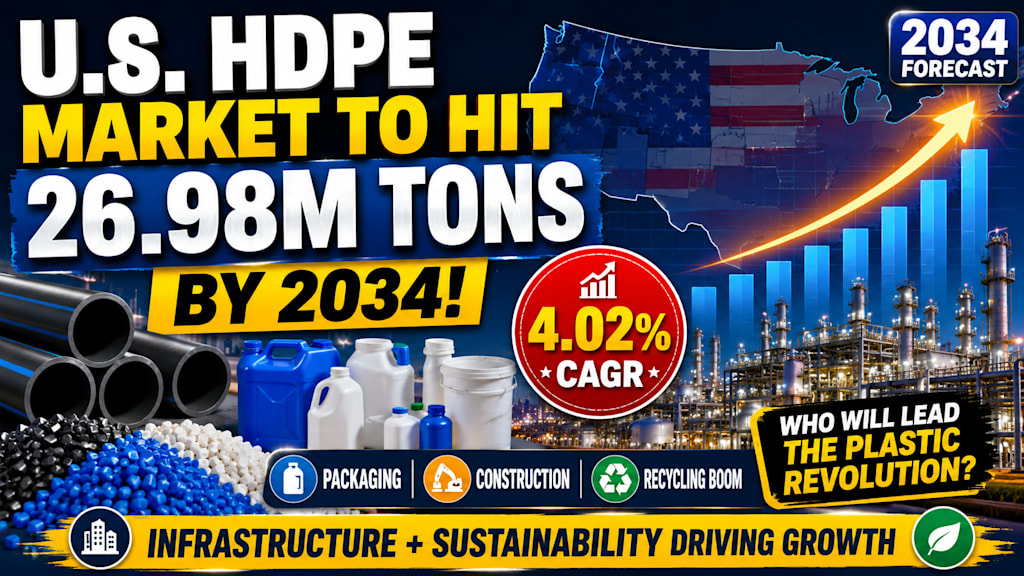
United States High-Density Polyethylene Market Poised for Significant Expansion Through 2034
The United States High-Density Polyethylene (HDPE) Market is entering a new phase of growth driven by rising demand across packaging, construction, infrastructure, automotive, and consumer goods industries. According to Renub Research, the United States HDPE Market is projected to increase from 18.92 Million Tons in 2025 to 26.98 Million Tons by 2034, expanding at a CAGR of 4.02% between 2026 and 2034.
HDPE has become one of the most widely used thermoplastics globally due to its exceptional strength-to-density ratio, durability, chemical resistance, moisture resistance, and recyclability. As industries seek lightweight yet durable materials that align with sustainability goals, HDPE continues to emerge as a preferred solution.
The combination of infrastructure modernization, growth in packaged consumer products, e-commerce expansion, and increasing adoption of recycled plastics is creating favorable conditions for long-term market growth throughout the United States.
Understanding High-Density Polyethylene (HDPE)
High-Density Polyethylene is a petroleum-derived thermoplastic polymer widely utilized in manufacturing applications ranging from packaging containers and bottles to industrial pipes and automotive components.
HDPE possesses several characteristics that distinguish it from other plastic materials:
High tensile strength
Excellent impact resistance
Superior chemical resistance
Water-resistant properties
Lightweight structure
Long service life
High recyclability
Because of these attributes, HDPE is extensively used in packaging, agriculture, construction, healthcare, transportation, and municipal infrastructure projects.
Its versatility enables manufacturers to produce products that are both cost-effective and environmentally sustainable, making HDPE one of the most valuable polymers in modern manufacturing.
Growing Packaging Industry Driving HDPE Consumption
Packaging remains the largest application segment for HDPE in the United States.
Consumers increasingly rely on packaged foods, beverages, personal care products, cleaning solutions, and pharmaceutical products. These products require packaging materials that can protect contents while remaining lightweight and economical.
HDPE has become the preferred material for:
Milk bottles
Detergent containers
Shampoo bottles
Food storage containers
Industrial drums
Caps and closures
The rapid growth of e-commerce and home delivery services has further accelerated demand for durable packaging solutions. Companies require packaging materials capable of withstanding transportation and handling while maintaining product safety.
Additionally, major consumer brands are committing to sustainable packaging targets. HDPE's ability to be recycled multiple times makes it attractive for organizations seeking to reduce their environmental footprint.
As consumer preferences shift toward eco-friendly packaging solutions, HDPE demand is expected to continue rising throughout the forecast period.
Infrastructure Development Creating New Opportunities
Infrastructure investment represents another major growth catalyst for the U.S. HDPE market.
Federal and state governments continue investing billions of dollars in modernizing aging infrastructure systems. Water supply networks, wastewater management facilities, gas distribution systems, and drainage projects increasingly rely on HDPE piping systems.
Compared with traditional materials such as steel, iron, and concrete, HDPE offers numerous advantages:
Corrosion resistance
Reduced maintenance costs
Longer operational lifespan
Lower installation expenses
Flexibility under changing environmental conditions
HDPE pipes have become particularly important for municipalities seeking durable solutions for water transportation and sewage management.
Geomembranes manufactured using HDPE are also gaining traction in environmental protection projects, including landfills, mining operations, and water conservation systems.
As infrastructure spending continues across the United States, HDPE consumption is expected to increase substantially.
Sustainability and Recycling Transforming Market Dynamics
Environmental sustainability has become one of the most influential trends shaping the HDPE industry.
Unlike many plastic materials, HDPE is highly recyclable and is accepted by most recycling programs throughout North America. This characteristic has made it a key material within the circular economy movement.
Several industries are increasingly adopting recycled HDPE (rHDPE) to meet sustainability targets and regulatory requirements.
Major benefits include:
Reduced landfill waste
Lower carbon emissions
Reduced dependence on virgin plastic production
Improved resource efficiency
Advanced recycling technologies are enabling manufacturers to produce high-quality recycled HDPE suitable for demanding applications.
As consumers, governments, and corporations place greater emphasis on sustainability, recycled HDPE is expected to become an increasingly important market segment.
Challenges Facing the U.S. HDPE Industry
Environmental Regulations and Plastic Waste Concerns
Despite its recyclability advantages, HDPE continues to face scrutiny associated with broader plastic waste concerns.
Government agencies across the United States are introducing stricter regulations aimed at reducing plastic pollution. Extended Producer Responsibility (EPR) programs and packaging mandates are encouraging manufacturers to invest in recycling infrastructure and sustainable alternatives.
While these regulations create opportunities for recycled HDPE, they also increase compliance costs for producers.
Public perception surrounding plastics remains a challenge, requiring industry participants to continue demonstrating the environmental benefits of recyclable HDPE products.
Volatility in Feedstock Prices
HDPE production relies heavily on petrochemical feedstocks derived from crude oil and natural gas.
Price fluctuations in global energy markets can significantly affect production costs and profit margins.
Unpredictable feedstock costs create challenges for manufacturers attempting to maintain stable pricing and long-term planning strategies.
As geopolitical developments and energy market dynamics continue evolving, feedstock volatility is expected to remain a significant concern for HDPE producers.
High-Density Naphtha Polyethylene Market in the United States
Although ethane derived from shale gas dominates U.S. polyethylene production, naphtha-based HDPE continues to play an important role in specialized applications.
Naphtha feedstocks help manufacturers achieve unique molecular characteristics and performance properties.
Applications include:
Specialty packaging
Industrial containers
Automotive components
Technical molding applications
Naphtha-based HDPE offers enhanced stiffness, improved processing characteristics, and excellent surface finishes, making it valuable for niche applications requiring superior performance.
Blow Molding Segment Remains a Key Growth Contributor
The blow molding segment represents one of the largest application categories within the U.S. HDPE market.
Blow-molded HDPE products include:
Beverage containers
Household chemical bottles
Industrial drums
Fuel containers
Personal care packaging
HDPE's durability and chemical resistance make it ideal for liquid packaging applications.
Growing demand for packaged consumer goods, healthcare products, and online retail deliveries continues supporting growth in this segment.
Manufacturers are also incorporating greater amounts of recycled content into blow-molded products, further enhancing sustainability credentials.
Injection Molding Applications Expanding Rapidly
Injection molding remains another important processing method for HDPE.
The process is widely used to manufacture:
Caps and closures
Crates
Pallets
Storage bins
Consumer goods
Automotive components
Injection-molded HDPE products are valued for their durability, dimensional stability, and recyclability.
The growing popularity of reusable packaging systems and logistics equipment is creating additional opportunities for injection molding manufacturers.
As industries prioritize lightweight and durable materials, injection-molded HDPE products are expected to experience continued growth.
Solution Process HDPE Market Supporting Specialized Applications
The solution process represents a premium HDPE production method used to manufacture highly engineered grades.
This process allows manufacturers to achieve:
Precise molecular weight control
Enhanced impact resistance
Improved stress crack resistance
Superior mechanical performance
Solution-process HDPE is commonly used in:
Pressure pipes
Industrial packaging
Geomembranes
Specialty films
Although production costs are generally higher than other manufacturing methods, the superior material performance makes solution-process HDPE attractive for demanding applications.
Regional Market Analysis
California
California remains one of the most significant HDPE consumption markets in the United States.
Strong demand originates from:
Food packaging
Consumer products
Construction activities
Waste management systems
California's aggressive sustainability policies are accelerating adoption of recycled HDPE materials across multiple industries.
Texas
Texas serves as both a major production and consumption hub for HDPE.
The state's extensive petrochemical infrastructure provides access to abundant feedstocks and large-scale manufacturing facilities.
Strong demand comes from:
Industrial packaging
Agriculture
Infrastructure development
Energy sector projects
Texas remains a critical center for HDPE production and exports.
New York
New York's HDPE market benefits from dense population centers and strong consumer demand.
Growing e-commerce activity, packaging requirements, and municipal infrastructure investments continue supporting market expansion.
The state's emphasis on recycling and sustainability also encourages broader use of recycled HDPE materials.
Washington
Washington's environmentally conscious policies make it an important market for sustainable HDPE solutions.
The state demonstrates strong demand for:
Recycled packaging materials
Water management systems
Construction applications
Environmental protection projects
Its focus on circular economy initiatives is expected to support continued HDPE market growth.
10 Recent Developments Among Leading HDPE Companies
1. Univation Technologies
In June 2024, Univation Technologies introduced the UNIGILITY™ Tubular High Pressure PE Process Technology, enabling production of LDPE resins and EVA copolymers with enhanced manufacturing flexibility.
2. NOVA Chemicals
In May 2025, NOVA Chemicals began construction of the SYNDIGO1 polyethylene film recycling facility in Indiana, expected to become one of the world's most advanced recycling plants.
3. Dow
Dow continues expanding circular plastics initiatives and advanced recycling partnerships to increase the availability of recycled polyethylene products across North America.
4. ExxonMobil
ExxonMobil has increased investments in advanced recycling technologies aimed at converting plastic waste into reusable feedstocks for new polymer production.
5. LyondellBasell
LyondellBasell continues strengthening its circular economy portfolio through mechanical and advanced recycling projects supporting sustainable polyethylene solutions.
6. INEOS
INEOS has expanded sustainability-focused polyethylene offerings designed to reduce carbon emissions and improve recyclability in packaging applications.
7. Braskem
Braskem continues investing in bio-based and renewable polymer technologies to support low-carbon plastic manufacturing.
8. Formosa Plastics Corporation
Formosa Plastics has expanded production efficiencies and sustainability programs focused on improving operational performance and environmental responsibility.
9. Mitsui Chemicals
Mitsui Chemicals is accelerating research into next-generation polyethylene materials emphasizing durability, recycling compatibility, and environmental performance.
10. PetroChina
PetroChina continues investing in advanced petrochemical technologies and production capabilities to support global polyethylene demand growth.
Competitive Landscape
The United States HDPE market remains highly competitive, with global and regional manufacturers competing through capacity expansion, technological innovation, recycling investments, and product differentiation.
Key companies operating in the market include:
Dynalab Corp.
The Dow Chemical Company
Exxon Mobil Corporation
LyondellBasell Industries N.V.
INEOS AG
PetroChina Company Ltd.
Braskem SA
Formosa Plastics Corporation
Daelim Co. Ltd.
Mitsui Chemicals Inc.
These organizations are increasingly focusing on sustainable manufacturing practices, recycled content integration, advanced polymer technologies, and supply chain optimization to maintain market leadership.
Final Thoughts
The United States High-Density Polyethylene (HDPE) Market is positioned for sustained growth through 2034, supported by expanding demand from packaging, infrastructure, construction, consumer goods, and industrial sectors. Rising investments in recycling technologies, circular economy initiatives, and sustainable packaging solutions are reshaping the industry while creating new opportunities for innovation.
Although challenges such as environmental regulations and feedstock price volatility remain, HDPE's unique combination of durability, affordability, versatility, and recyclability ensures its continued relevance across a wide range of applications. As the market grows from 18.92 Million Tons in 2025 to 26.98 Million Tons by 2034, HDPE will remain a foundational material supporting America's manufacturing, infrastructure, and sustainability ambitions for years to come.
About the Creator
Enjoyed the story? Support the Creator.
Subscribe for free to receive all their stories in your feed.
Comments
There are no comments for this story
Be the first to respond and start the conversation.