
United States Hearing Aids Market Size Growth, Industry Trends & Outlook 2034
United States Hearing Aids Market Size, Share & Opportunity Analysis 2026-2034

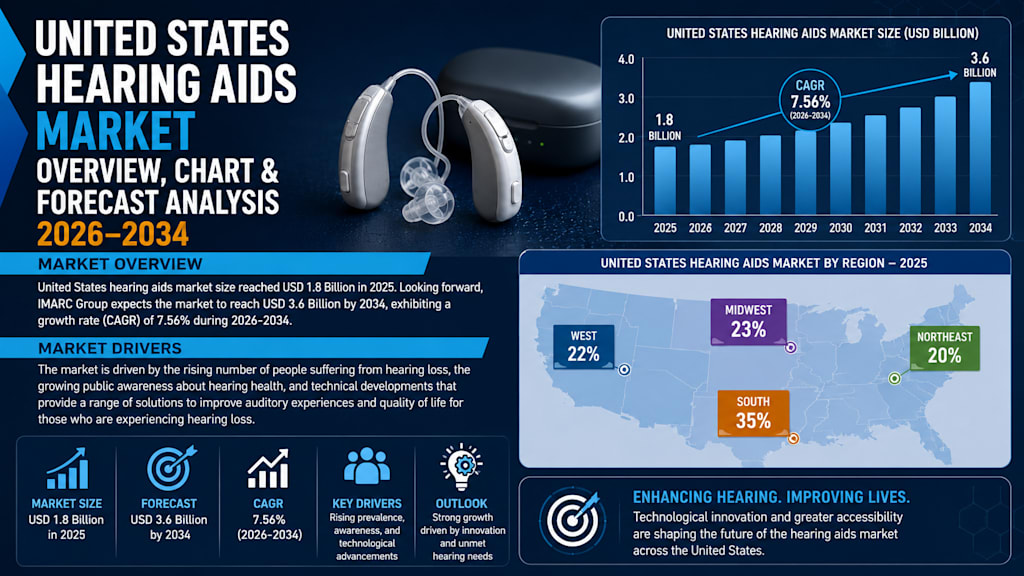
United States Hearing Aids Market Overview and Industry Growth Outlook
The United States hearing aids market is experiencing steady growth as hearing healthcare becomes a greater priority among consumers, healthcare providers, and policymakers. Hearing loss remains one of the most common health conditions affecting people of all ages, particularly older adults. As awareness of hearing health increases, more individuals are seeking solutions that can improve communication, social interaction, and overall quality of life.
According to industry estimates, the United States hearing aids market reached a value of USD 1.8 billion in 2025. The market is expected to reach USD 3.6 billion by 2034, expanding at a CAGR of 7.56% during 2026–2034. Growth is being supported by demographic changes, technological advancements, and increasing access to hearing care services.
Key Factors Driving Growth in the United States Hearing Aids Market
Several factors are contributing to the expansion of the hearing aids industry across the country. One of the most important drivers is the aging population. As life expectancy increases, a larger number of people are experiencing age-related hearing loss and seeking treatment options.
Public awareness campaigns and educational initiatives are also encouraging individuals to address hearing concerns earlier than in the past. Many consumers now recognize the connection between hearing health and overall well-being, leading to increased demand for hearing assessments and hearing assistance devices.
In addition, ongoing improvements in hearing aid design, comfort, and functionality have made these products more attractive to users who may have previously been reluctant to adopt them.
Rising Prevalence of Hearing Loss Supporting Demand for Advanced Hearing Solutions
Hearing loss affects millions of Americans and can result from aging, prolonged exposure to loud noise, medical conditions, or genetic factors. As the number of individuals experiencing hearing challenges continues to grow, demand for advanced hearing solutions is increasing across the healthcare sector.
Modern hearing aids are designed to address varying degrees of hearing impairment while providing a more personalized listening experience. Patients increasingly seek devices that can adapt to different environments, reduce background noise, and improve speech clarity.
The growing recognition of untreated hearing loss as a factor that may impact social engagement, workplace productivity, and mental well-being is further supporting market growth.
Digital Hearing Aid Technologies Transforming Patient Care and Hearing Healthcare Services
Digital technology has significantly improved the performance and usability of hearing aids. Contemporary devices offer features that allow users to experience clearer sound quality and greater control over listening settings.
Many hearing aids now utilize digital signal processing to identify and amplify important sounds while minimizing unwanted noise. This capability helps users communicate more effectively in complex listening environments such as restaurants, offices, and public spaces.
Healthcare providers also benefit from digital technologies that enable more precise device fitting and customization based on an individual's hearing profile.
Artificial Intelligence and Bluetooth Connectivity Reshaping the Hearing Aids Industry
Artificial intelligence and wireless connectivity are becoming increasingly important in hearing aid development. AI-powered features can automatically adjust device settings based on environmental conditions, helping users experience improved sound quality without frequent manual adjustments.
Bluetooth-enabled hearing aids allow users to connect directly with smartphones, televisions, computers, and other digital devices. This integration supports hands-free communication and provides a more seamless listening experience.
As consumers continue to adopt connected technologies in everyday life, demand for hearing aids that offer advanced connectivity and convenience is expected to increase.
Expanding Role of Audiology Clinics and Hearing Care Providers in the United States
Audiologists and hearing care professionals remain essential participants in the hearing healthcare ecosystem. These specialists help patients identify hearing issues, recommend appropriate treatment options, and provide ongoing support throughout the hearing aid adoption process.
The growing number of hearing care centers and audiology clinics across the United States is improving access to professional hearing services. Many providers are also utilizing telehealth tools and remote monitoring technologies to enhance patient engagement and follow-up care.
Their role in educating consumers and improving treatment outcomes continues to support industry growth.
Over-the-Counter (OTC) Hearing Aids Creating New Market Opportunities
The introduction of over-the-counter hearing aids has expanded access to hearing solutions for adults with perceived mild to moderate hearing loss. These products allow consumers to purchase hearing aids without obtaining a prescription or undergoing a medical examination.
The OTC segment has attracted attention from both established manufacturers and new market participants seeking to address unmet consumer demand. Increased accessibility and affordability may encourage more individuals to seek treatment earlier, potentially reducing the long-term impact of untreated hearing loss.
As awareness of OTC options grows, this segment is expected to contribute to broader market expansion.
Distribution Channel Trends in the United States Hearing Aids Market
Distribution channels for hearing aids continue to evolve in response to changing consumer preferences. Traditional channels such as audiology clinics, hospitals, and specialty hearing centers remain important due to the professional services they provide.
At the same time, online sales channels are becoming more prominent. Consumers increasingly research hearing solutions online and compare product features before making purchasing decisions.
Manufacturers and retailers are investing in digital platforms that improve customer education, product selection, and post-purchase support. These developments are creating a more flexible purchasing environment for consumers.
Challenges Affecting Hearing Aid Adoption and Market Expansion
Despite positive growth prospects, several challenges continue to influence market development. Cost remains a concern for some consumers, particularly when insurance coverage is limited or unavailable.
Social perceptions surrounding hearing loss and hearing aid use may also discourage some individuals from seeking treatment. In addition, adapting to a hearing aid can require time and ongoing support, which may affect user satisfaction if expectations are not properly managed.
Addressing affordability, education, and patient support will remain important priorities for industry stakeholders.
Investment Opportunities for Manufacturers, Distributors, and Healthcare Providers
The evolving hearing healthcare landscape presents opportunities for businesses across the value chain. Manufacturers are investing in research and development to create smaller, smarter, and more connected devices.
Distributors and retailers can benefit from expanding product portfolios and reaching new customer segments through digital channels. Healthcare providers have opportunities to offer specialized hearing services, patient education programs, and long-term hearing management solutions.
Organizations that focus on accessibility, innovation, and patient-centered care may be well positioned to benefit from future market growth.
Competitive Landscape and Innovation Trends in the Hearing Aids Industry
Competition within the hearing aids industry is centered on product innovation, technological advancement, and customer experience. Companies are focusing on features such as improved sound processing, rechargeable batteries, wireless connectivity, and personalized hearing solutions.
Research efforts continue to explore new approaches that enhance comfort, performance, and user satisfaction. Strategic partnerships between technology companies, healthcare providers, and hearing aid manufacturers are also contributing to innovation across the industry.
These developments are helping create a more dynamic and competitive market environment.
Future Outlook for the United States Hearing Aids Market Through 2034
The outlook for the United States hearing aids market remains positive through 2034. Growing awareness of hearing health, continued technological innovation, and improved access to hearing care services are expected to support long-term industry expansion.
As hearing solutions become more sophisticated, accessible, and user-friendly, adoption rates are likely to increase across diverse age groups. Market participants that prioritize innovation, patient needs, and effective service delivery are expected to play an important role in shaping the future of hearing healthcare in the United States.
About the Creator
Kim Soo hyun
My name is Kim Soo hyun, and I am a research analyst at IMARC Group, specializing in market trends and data analysis to provide insights and support strategic decision-making.
Enjoyed the story? Support the Creator.
Subscribe for free to receive all their stories in your feed.
Comments
There are no comments for this story
Be the first to respond and start the conversation.