
United States Healthcare IT Market Size Growth & Industry Trends Forecast to 2034
United States Healthcare IT Market Size Trends, Growth Demand & Forecast 2026-2034

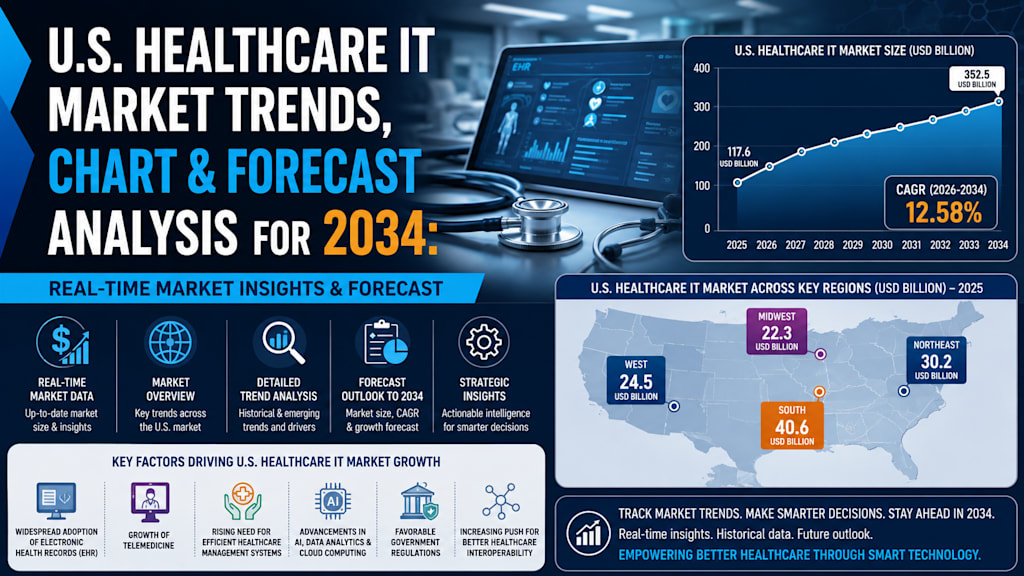
United States Healthcare IT Market Overview and Growth Outlook
Healthcare organizations across the United States are increasingly investing in digital technologies to improve patient care, streamline administrative processes, and support data-driven decision-making. From electronic health records and telehealth platforms to advanced analytics tools, healthcare IT has become a critical component of modern healthcare delivery.
According to industry estimates, the U.S. healthcare IT market was valued at USD 117.6 billion in 2025 and is projected to reach USD 352.5 billion by 2034. This growth reflects the healthcare sector’s ongoing transition toward connected systems, digital workflows, and technology-enabled patient engagement. As providers face growing demands for efficiency, interoperability, and regulatory compliance, healthcare IT solutions are becoming an essential part of operational strategy.
Request a Sample Report with Latest 2026 Data & Forecasts:
Key Drivers Accelerating Healthcare IT Adoption Across the United States 2026
Several factors are contributing to the increased adoption of healthcare IT solutions across the country. One of the most significant drivers is the widespread use of electronic health records (EHRs), which have improved the accessibility and organization of patient information. Digital records help healthcare professionals coordinate care more effectively while reducing paperwork and administrative burdens.
The growing emphasis on value-based care is also encouraging providers to invest in technology platforms that support patient outcomes and performance measurement. Healthcare organizations are increasingly relying on digital tools to monitor treatment effectiveness, manage population health initiatives, and improve care coordination.
In addition, rising healthcare expenditures and workforce shortages are prompting providers to explore technologies that can help optimize resources and improve productivity. As healthcare systems seek to deliver high-quality care while managing costs, technology investments continue to gain importance.
Digital Transformation in Healthcare: Why Hospitals Are Increasing Technology Investments
Hospitals and healthcare networks are modernizing their infrastructure to support more efficient and connected care delivery. Legacy systems are being replaced with integrated platforms that enable real-time data sharing, automated workflows, and improved communication between departments.
Cloud-based solutions have become particularly attractive due to their scalability and flexibility. Healthcare providers can securely store and access large volumes of clinical and operational data while reducing the costs associated with maintaining on-premise infrastructure.
Digital transformation initiatives are also helping organizations improve patient experiences. Online appointment scheduling, patient portals, mobile applications, and digital communication tools allow patients to engage more actively in their healthcare journeys. These capabilities contribute to greater convenience while helping providers strengthen patient relationships.
Artificial Intelligence and Healthcare Analytics Transforming Clinical Operations
Artificial intelligence and advanced analytics are playing an increasingly important role in healthcare operations. Healthcare organizations are using AI-powered tools to analyze large datasets, identify patterns, and generate insights that support clinical and administrative decision-making.
Predictive analytics can assist providers in identifying patients who may be at higher risk for certain conditions, allowing earlier intervention and more personalized care strategies. AI applications are also being used to support medical imaging analysis, clinical documentation, scheduling optimization, and resource planning.
Healthcare analytics platforms provide valuable visibility into operational performance, helping organizations monitor key metrics, identify inefficiencies, and improve care delivery processes. As data volumes continue to grow, analytics capabilities are becoming an important competitive advantage for healthcare providers.
Healthcare Cybersecurity Trends and the Growing Need for Data Protection
As healthcare organizations become more digitally connected, protecting sensitive patient information has become a major priority. The healthcare sector manages vast amounts of personal and medical data, making it an attractive target for cybercriminals.
Healthcare providers are investing in cybersecurity technologies to strengthen network security, detect threats, and maintain regulatory compliance. Security strategies increasingly include multi-factor authentication, encryption technologies, endpoint protection, and continuous monitoring systems.
Regulatory requirements related to patient privacy and data protection continue to influence technology investments. Organizations must ensure that digital systems meet strict security standards while maintaining accessibility for authorized users. As cyber threats evolve, cybersecurity is expected to remain a central focus within healthcare IT strategies.
Telehealth Platforms and Remote Patient Monitoring Expanding Digital Care Services
Telehealth has become an established component of healthcare delivery, providing patients with greater access to medical services regardless of location. Virtual consultations enable healthcare providers to connect with patients more efficiently while reducing travel and scheduling barriers.
Remote patient monitoring technologies are also gaining attention. Connected devices allow healthcare professionals to track patient health metrics outside traditional clinical settings. These tools support ongoing management of chronic conditions and help identify potential health concerns before they require emergency intervention.
The combination of telehealth and remote monitoring is creating new opportunities for healthcare providers to deliver continuous care while improving patient engagement. As digital health services become more integrated into routine care models, healthcare IT infrastructure will play an increasingly important role in supporting these capabilities.
Challenges Affecting Healthcare IT Implementation and Integration
Despite the benefits associated with healthcare technology, implementation can present several challenges. One of the most common issues is system integration. Many healthcare organizations operate multiple software platforms that may not communicate effectively with one another, creating data silos and workflow inefficiencies.
Cost considerations can also affect technology adoption, particularly for smaller healthcare providers with limited budgets. Initial implementation expenses, staff training requirements, and ongoing maintenance costs may influence investment decisions.
Another challenge involves change management. Successful technology adoption requires healthcare professionals to adapt to new workflows and processes. Organizations must provide adequate training and support to ensure that employees can effectively utilize new systems.
Addressing these challenges requires careful planning, collaboration, and long-term technology strategies that align with organizational goals.
Emerging Trends Shaping the Future of the U.S. Healthcare IT Market
Several emerging trends are influencing the direction of healthcare IT. Interoperability remains a major priority as healthcare stakeholders seek seamless data exchange across different systems and care settings. Improved interoperability can enhance care coordination, reduce duplication, and support more informed clinical decisions.
The adoption of cloud-based healthcare platforms continues to expand as organizations seek greater flexibility and scalability. Additionally, artificial intelligence applications are becoming more sophisticated, supporting a broader range of clinical and operational functions.
Digital health solutions focused on patient engagement are also gaining traction. Healthcare providers increasingly recognize the importance of empowering patients through accessible information, communication tools, and personalized care experiences.
These developments reflect the healthcare industry's broader commitment to improving efficiency, accessibility, and quality of care through technology.
Future Outlook for the United States Healthcare IT Market Through 2034
The outlook for healthcare IT in the United States remains positive as providers, payers, and healthcare organizations continue to invest in digital capabilities. Advances in artificial intelligence, cloud computing, interoperability, cybersecurity, and telehealth are expected to influence technology adoption across the healthcare ecosystem.
As healthcare delivery becomes increasingly data-driven, organizations will continue seeking solutions that improve operational performance, support clinical decision-making, and enhance patient experiences. Technology providers that address these evolving needs are likely to find significant opportunities within the healthcare sector over the coming decade.
The continued integration of digital tools into healthcare operations underscores the growing importance of healthcare IT as a foundation for modern, efficient, and patient-centered care.
About the Creator
Kim Soo hyun
My name is Kim Soo hyun, and I am a research analyst at IMARC Group, specializing in market trends and data analysis to provide insights and support strategic decision-making.
Enjoyed the story? Support the Creator.
Subscribe for free to receive all their stories in your feed.
Comments
There are no comments for this story
Be the first to respond and start the conversation.