
United States Hair Care Products Market Set to Reach US$ 38.27 Billion by 2033 as Clean Beauty, Premium Products, and Social Media Trends Reshape Consumer Preferences
Growing demand for natural formulations, personalized hair solutions, men's grooming products, and e-commerce innovation is driving sustained growth across the U.S. hair care industry.

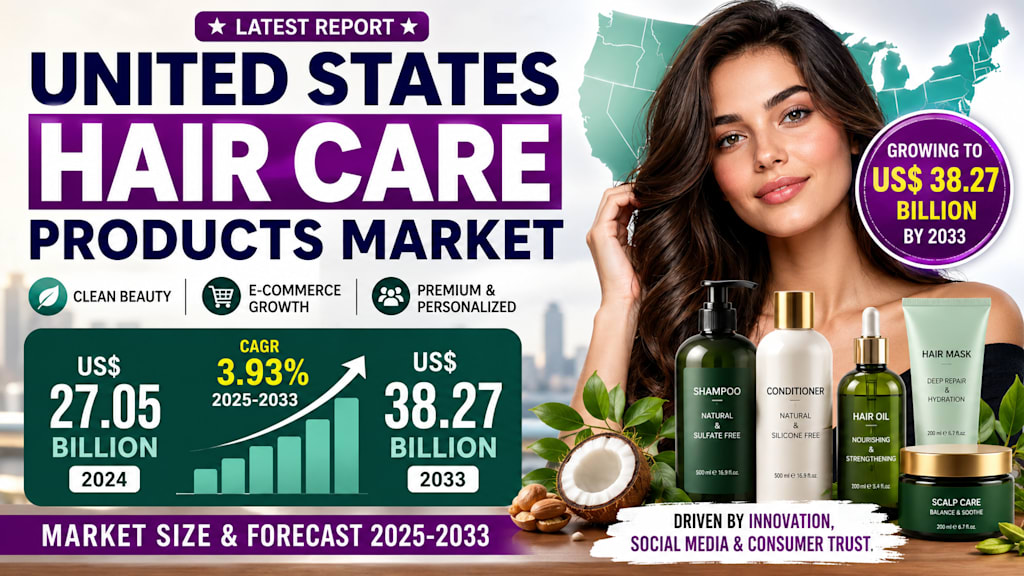
United States Hair Care Products Market Size & Forecast 2025–2033
Hair care has evolved far beyond basic shampoo and conditioner purchases. Modern consumers view hair care as an essential component of self-care, personal wellness, and individual expression. From premium hair oils and scalp treatments to customized formulations and sustainable products, the industry is undergoing a significant transformation.
According to Renub Research, the United States Hair Care Products Market was valued at US$ 27.05 Billion in 2024 and is projected to reach US$ 38.27 Billion by 2033, growing at a CAGR of 3.93% during 2025–2033. The market's expansion is being fueled by rising consumer awareness regarding personal grooming, increasing adoption of premium hair care products, and the growing influence of social media beauty trends.
As consumers become more informed and selective, brands are responding with innovative products designed for diverse hair types, scalp conditions, and lifestyle preferences. This shift is creating opportunities across every category, from shampoos and conditioners to specialized treatments and styling solutions.
Hair Care Has Become a Lifestyle Category
The modern hair care market is no longer driven solely by hygiene. Today's consumers seek products that improve hair health, repair damage, enhance appearance, and align with their values regarding sustainability and wellness.
Hair care products now encompass a broad range of solutions including shampoos, conditioners, hair oils, serums, masks, colorants, and styling products. These products address concerns such as dryness, frizz, hair fall, scalp sensitivity, color protection, and texture enhancement.
One of the most significant changes in recent years has been the growing consumer focus on preventive hair care. Rather than treating problems after they arise, consumers are increasingly investing in routines designed to maintain long-term hair health.
This behavioral shift has encouraged manufacturers to develop scientifically advanced formulations that combine performance with wellness-focused ingredients.
Clean Beauty Movement Accelerates Market Growth
The clean beauty trend continues to be one of the strongest growth drivers within the U.S. hair care sector.
Consumers are actively scrutinizing ingredient labels and seeking products free from sulfates, parabens, silicones, and other potentially harmful chemicals. The preference for naturally derived ingredients has increased demand for botanical extracts, essential oils, plant proteins, and organic formulations.
Millennials and Generation Z consumers are particularly influential in this movement. These groups prioritize environmental responsibility, ethical sourcing, cruelty-free testing practices, and recyclable packaging.
As a result, brands that embrace transparency and sustainability are gaining stronger consumer trust and loyalty.
In July 2024, Aeterna expanded its presence in the United States by introducing its natural, Made-in-Italy hair care collection, highlighting the increasing consumer preference for clean and naturally inspired products.
The growing popularity of eco-conscious beauty is expected to remain a defining force throughout the forecast period.
Men's Grooming Segment Continues to Expand
Another major contributor to market growth is the expanding men's grooming category.
Male consumers are becoming increasingly invested in personal appearance and hair maintenance. Products specifically designed for men, including shampoos, styling gels, scalp treatments, anti-hair loss solutions, and beard care products, are experiencing growing demand.
At the same time, gender-neutral hair care products are gaining traction. Consumers are increasingly choosing products based on performance and ingredients rather than gender-specific branding.
This trend allows manufacturers to appeal to broader audiences while simplifying product portfolios.
In June 2024, the launch of "W," a vitamin-enriched grooming product portfolio featuring body wash, deodorant, and body spray products, reflected the continued expansion of male-focused personal care offerings.
As social perceptions surrounding men's grooming continue to evolve, this segment is expected to generate substantial opportunities for industry participants.
Social Media is Redefining Consumer Purchasing Behavior
Platforms such as TikTok, Instagram, and YouTube have transformed the way consumers discover and evaluate hair care products.
Influencers, hairstylists, beauty experts, and content creators regularly introduce audiences to emerging brands, innovative formulations, and effective hair care routines. Viral product recommendations can rapidly drive consumer demand and significantly boost brand visibility.
Consumers now rely heavily on user-generated content, tutorials, reviews, and before-and-after demonstrations before making purchasing decisions.
Social media has also accelerated interest in niche categories including scalp care, hair growth treatments, curly hair products, and heat protection solutions.
The result is a highly dynamic marketplace where trends can emerge and spread faster than ever before.
Personalization is Creating New Revenue Opportunities
Customization has become a major differentiator within the hair care industry.
Consumers increasingly expect products tailored to their individual hair type, texture, scalp condition, and styling goals. In response, brands are leveraging artificial intelligence, online assessments, and subscription-based models to create personalized product recommendations.
These technologies enable companies to collect consumer data and provide customized experiences that improve satisfaction and encourage repeat purchases.
In June 2025, global music icon Shakira introduced her clinically supported hair care brand, Isima, designed to celebrate diverse hair textures and address specific consumer needs.
Personalization not only strengthens customer relationships but also increases brand loyalty in a highly competitive market environment.
Online Retail Continues to Transform Distribution
E-commerce has emerged as one of the most influential distribution channels in the U.S. hair care market.
Consumers appreciate the convenience of online shopping, access to extensive product selections, detailed customer reviews, and personalized recommendations. Major platforms such as Amazon, Sephora, Ulta Beauty, and direct-to-consumer brand websites have significantly expanded consumer access to hair care products.
Subscription services and automatic replenishment programs have further strengthened online sales growth.
Social commerce is also becoming increasingly important, allowing consumers to purchase products directly through social media platforms after discovering them through influencers and content creators.
Although concerns regarding counterfeit products and shipping costs remain, online retail is expected to maintain strong momentum throughout the forecast period.
Rising Demand for Hair Oils Supports Category Expansion
Hair oils have become one of the fastest-growing product categories in the U.S. market.
Consumers increasingly view oils as essential tools for maintaining scalp health, reducing frizz, improving hydration, and strengthening hair fibers. Ingredients such as argan oil, coconut oil, castor oil, jojoba oil, and rosemary oil are particularly popular.
Unlike traditional perceptions of hair oils as heavy products, modern formulations emphasize lightweight textures, quick absorption, and multi-functional benefits.
Social media tutorials and influencer endorsements have significantly contributed to the popularity of hair oil treatments among consumers with diverse hair types.
As interest in natural hair care solutions continues to grow, the hair oil segment is expected to remain a major contributor to overall market expansion.
Conditioners and Specialized Treatments Gain Popularity
The conditioner category continues to evolve beyond basic hydration.
Consumers increasingly seek products that address specific concerns such as color protection, volume enhancement, anti-frizz performance, repair, and scalp health. Leave-in conditioners, intensive masks, and treatment serums have become particularly popular among consumers looking for comprehensive hair care routines.
Specialized conditioners designed for textured hair, chemically treated hair, and aging hair are creating additional growth opportunities.
Manufacturers are also introducing clean-label formulations that appeal to health-conscious consumers seeking safer alternatives without compromising performance.
This trend is strengthening the position of conditioners as a critical component of modern hair care regimens.
Regional Markets Driving Industry Performance
California
California remains one of the most influential hair care markets in the United States. The state's diverse population, strong beauty culture, and sustainability-focused consumers create substantial demand for premium and environmentally responsible products.
The presence of beauty influencers, entertainment industry professionals, and innovative start-ups further strengthens California's leadership position.
New York
New York's multicultural population generates demand for a wide variety of hair care solutions catering to different textures, styles, and cultural preferences.
The state's fashion-forward environment encourages experimentation with new products and salon-quality treatments, making it a key market for premium brands.
Washington
Washington consumers strongly support natural, organic, and ethically sourced hair care products. Environmental awareness drives purchasing decisions, creating favorable conditions for clean beauty brands and sustainable product innovations.
Challenges Facing the Industry
Despite positive growth prospects, the U.S. hair care market faces several challenges.
The industry remains highly competitive, with multinational corporations, independent brands, and private-label manufacturers competing for shelf space and consumer attention.
As a result, companies must continually invest in innovation, marketing, and influencer partnerships to maintain market relevance.
Additionally, rising costs associated with raw materials, packaging, transportation, and labor continue to pressure profit margins. Sustainable ingredients and environmentally friendly packaging often carry higher production expenses, making pricing strategies increasingly complex.
Balancing affordability, quality, and sustainability remains a key challenge for manufacturers operating within the sector.
Top 10 Recent Company Developments
1. Unilever PLC
Expanded investments in sustainable beauty initiatives and enhanced its premium hair care portfolio with environmentally responsible packaging solutions.
2. Procter & Gamble Company
Strengthened digital consumer engagement through advanced personalization technologies across its hair care brands.
3. L'Oréal S.A.
Accelerated AI-powered beauty diagnostics and customized hair care recommendations for U.S. consumers.
4. Johnson & Johnson
Continued product innovation focusing on scalp health and dermatologist-backed hair care formulations.
5. Dabur India Ltd.
Expanded international distribution channels and increased visibility of its natural hair oil offerings in North America.
6. Natura & Co.
Advanced sustainability initiatives and reinforced commitments to ethical sourcing and environmentally friendly packaging.
7. Shiseido Company, Limited
Introduced new premium treatment products targeting hair repair and scalp rejuvenation.
8. Oriflame Holding AG
Enhanced direct-selling and digital commerce strategies to improve customer engagement and product accessibility.
9. Kao Corporation
Expanded research efforts focused on hair fiber science and advanced conditioning technologies.
10. Himalaya Global Holdings Ltd.
Increased emphasis on herbal and plant-based hair care products to meet rising consumer demand for natural solutions.
Competitive Landscape
The United States hair care products market remains highly competitive, featuring a mix of multinational corporations, premium beauty brands, direct-to-consumer companies, and emerging niche players.
Major companies continue investing in:
Product innovation
Sustainable packaging
Digital marketing
Artificial intelligence-powered personalization
E-commerce expansion
Influencer collaborations
Premium and clean beauty offerings
Leading players covered in the market include Unilever PLC, Procter & Gamble Company, L'Oréal S.A., Johnson & Johnson, Dabur India Ltd., Natura & Co., Shiseido Company, Limited, Oriflame Holding AG, Kao Corporation, and Himalaya Global Holdings Ltd.
Final Thoughts
The United States Hair Care Products Market is entering a new era characterized by personalization, sustainability, premiumization, and digital engagement. As consumers increasingly prioritize hair health alongside beauty, demand for innovative products that deliver measurable results continues to rise.
With the market projected to grow from US$ 27.05 Billion in 2024 to US$ 38.27 Billion by 2033, manufacturers that successfully combine science-backed performance, clean ingredients, and personalized experiences will be best positioned to capitalize on future opportunities.
From natural hair oils and specialized conditioners to AI-driven recommendations and social media-powered purchasing behavior, the U.S. hair care industry is poised for sustained and resilient growth throughout the forecast period.
About the Creator
Enjoyed the story? Support the Creator.
Subscribe for free to receive all their stories in your feed.
Comments
There are no comments for this story
Be the first to respond and start the conversation.