
United States Generic Drugs Market to Reach US$131.92 Billion by 2034 as Affordable Healthcare Drives Demand
Rising healthcare costs, patent expirations of branded medicines, and supportive government policies are accelerating the adoption of generic drugs across the United States.

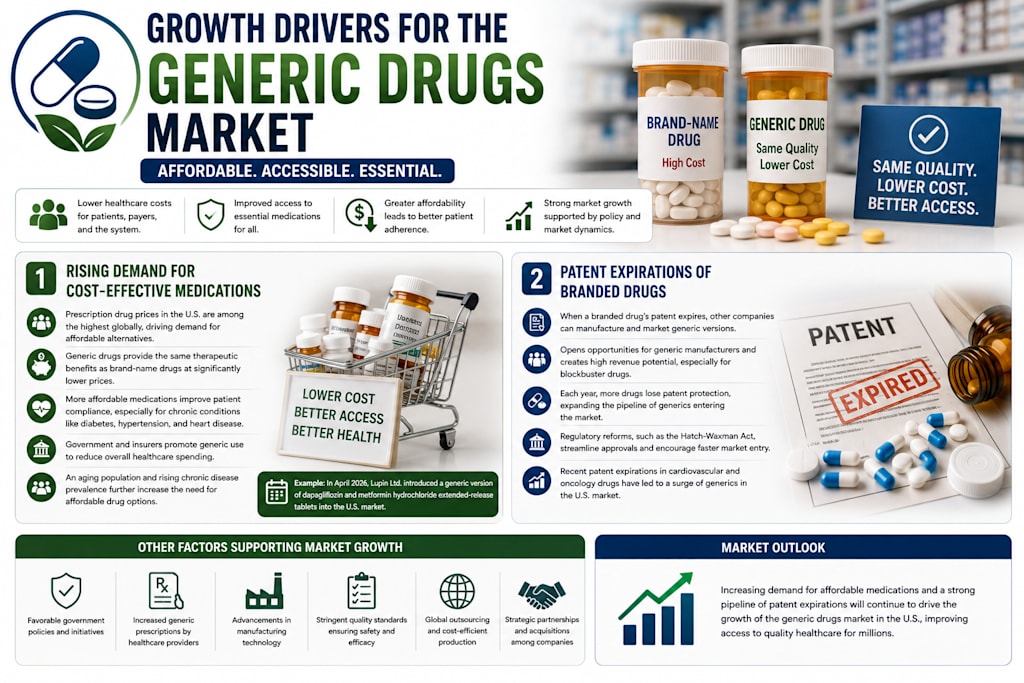
Generic Medicines Are Reshaping America's Healthcare System
The rising cost of healthcare has become one of the biggest concerns for patients, insurers, healthcare providers, and policymakers across the United States. As prescription drug prices continue to climb, generic medicines have emerged as one of the most effective solutions for improving access to affordable treatment while reducing overall healthcare spending.
Generic drugs provide the same active ingredients, dosage, safety profile, effectiveness, and therapeutic benefits as branded medicines but are typically available at significantly lower prices. Once the patent protection of a branded medicine expires, multiple pharmaceutical manufacturers can produce generic alternatives, increasing competition and lowering treatment costs for millions of patients.
According to the latest market outlook, the United States Generic Drugs Market is projected to grow from US$95.87 billion in 2025 to US$131.92 billion by 2034, expanding at a compound annual growth rate (CAGR) of 3.61% during 2026–2034. Growing demand for affordable medications, patent expirations, and favorable government policies continue to support the long-term expansion of the market.
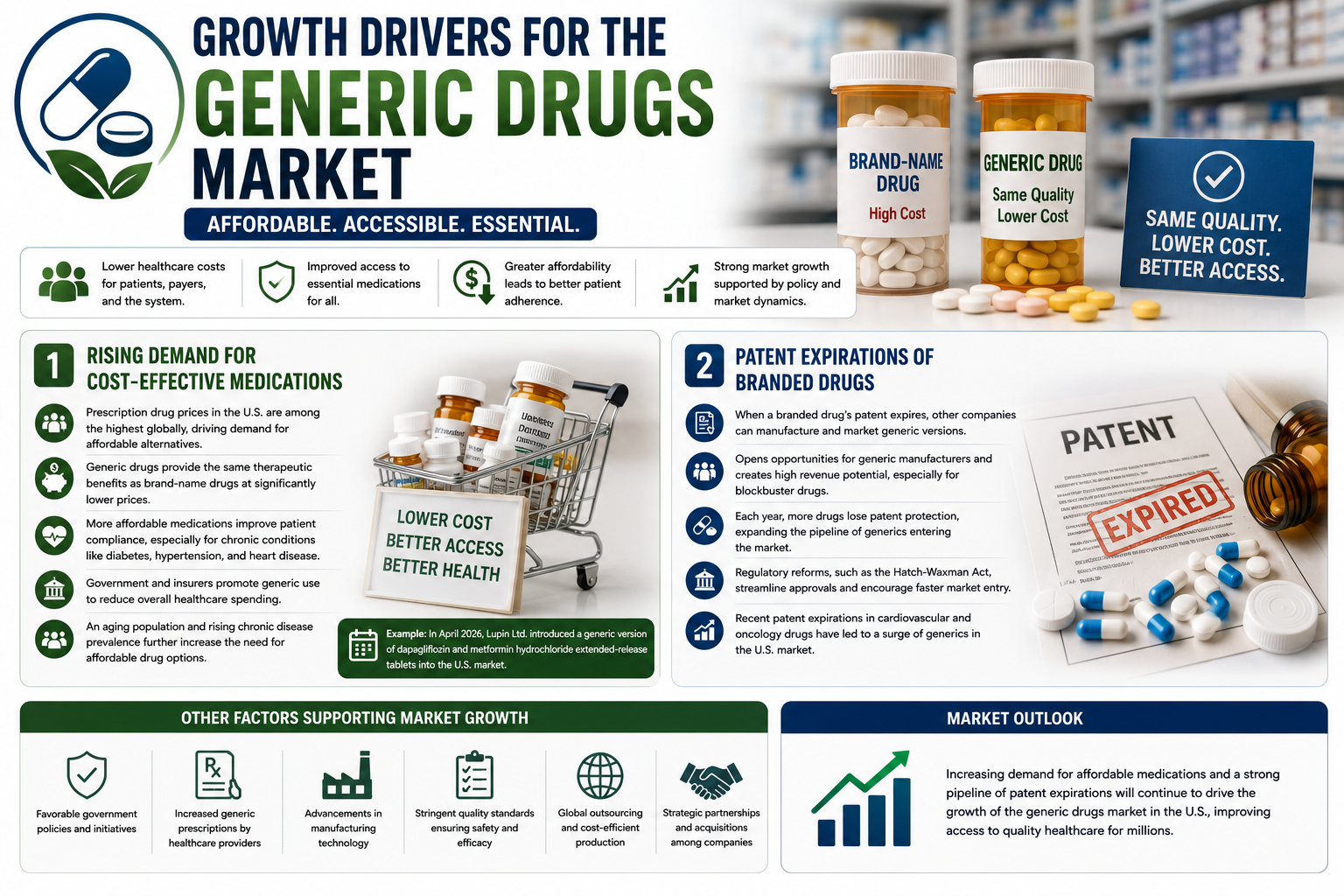
Understanding Generic Drugs
Generic medicines are pharmaceutical products that contain the same active ingredients as branded drugs while delivering equivalent safety, quality, strength, and clinical effectiveness.
Before receiving regulatory approval, manufacturers must demonstrate bioequivalence to ensure that generic medicines perform in the same manner as their branded counterparts.
Because generic manufacturers do not bear the substantial research and development costs associated with discovering new medicines, they are able to offer treatments at considerably lower prices.
This affordability has made generic drugs a cornerstone of modern healthcare systems worldwide.
Affordable Healthcare Is Driving Market Growth
The increasing need for cost-effective healthcare solutions remains the strongest driver behind the expansion of the generic drugs market.
Prescription medications in the United States remain among the most expensive globally, encouraging patients, physicians, insurers, and healthcare providers to seek lower-cost alternatives whenever appropriate.
Generic medicines enable patients to receive effective treatment without the financial burden associated with branded pharmaceuticals.
The affordability of these medicines is especially important for individuals managing chronic conditions that require lifelong therapy.
As healthcare costs continue rising, demand for generic alternatives is expected to remain strong.
Patent Expirations Continue Creating Opportunities
Patent expiration represents one of the most significant growth catalysts for the generic pharmaceutical industry.
Once exclusive patent protection expires, multiple pharmaceutical companies can manufacture equivalent generic versions of previously branded medicines.
Each new patent expiration increases competition while expanding treatment options for healthcare providers and patients.
Several blockbuster cardiovascular, oncology, and chronic disease medications have recently lost patent protection, creating substantial opportunities for generic drug manufacturers.
The continuing pipeline of expiring pharmaceutical patents is expected to support market expansion throughout the forecast period.
Government Policies Support Generic Adoption
Federal and state governments continue encouraging the use of generic medicines as part of broader efforts to control healthcare spending.
Public healthcare programs, including Medicare and Medicaid, increasingly promote generic substitution whenever clinically appropriate.
Regulatory agencies have also introduced measures that streamline approval processes for high-quality generic medicines while maintaining rigorous safety and quality standards.
Educational campaigns designed to improve public confidence in generic medications have further strengthened adoption across healthcare systems.
Government support remains one of the industry's most important long-term growth drivers.
Growing Burden of Chronic Diseases
The increasing prevalence of chronic illnesses has significantly expanded demand for affordable prescription medications.
Conditions including diabetes, cardiovascular disease, hypertension, asthma, chronic obstructive pulmonary disease (COPD), epilepsy, and mental health disorders often require long-term or lifelong medication.
Generic medicines enable patients to maintain treatment while reducing financial pressure on both households and healthcare systems.
An aging population further strengthens demand, as older adults typically require multiple prescription medications for chronic disease management.
Branded Generics Continue to Grow
Branded generics have become an important segment of the pharmaceutical market.
Unlike traditional unbranded generics, these medicines are marketed under company brand names while containing the same active pharmaceutical ingredients.
Many patients associate branded generics with greater familiarity and trust, encouraging stronger brand loyalty despite similar formulations.
Pharmaceutical companies also benefit by differentiating their products within highly competitive markets while maintaining attractive pricing compared with original branded medicines.
Cardiovascular Medicines Represent a Major Segment
Heart disease remains one of the leading causes of illness and mortality in the United States, making cardiovascular medicines one of the largest therapeutic categories for generic drugs.
Generic beta blockers, ACE inhibitors, anticoagulants, statins, and blood pressure medications provide effective treatment while significantly reducing prescription costs.
As cardiovascular disease prevalence continues increasing with population aging, demand for affordable heart medications is expected to remain strong.
Ongoing patent expirations further expand opportunities within this important therapeutic area.
Allergy and Asthma Medicines Continue Expanding
Respiratory diseases represent another rapidly growing market for generic pharmaceuticals.
Generic antihistamines, corticosteroids, bronchodilators, and inhalation therapies provide cost-effective treatment for millions of Americans managing allergies and asthma.
Increasing environmental pollution, changing climate conditions, and growing awareness of respiratory health continue driving prescription volumes.
Affordable medications improve treatment adherence, allowing patients to manage chronic respiratory conditions more effectively.
Oral Generic Drugs Dominate the Market
Oral medicines—including tablets, capsules, and liquid formulations—remain the largest drug delivery segment within the generic pharmaceutical industry.
These products are widely prescribed for treating cardiovascular disease, diabetes, infections, neurological disorders, pain management, and many other conditions.
Patients generally prefer oral medications because they are convenient, non-invasive, and easy to administer.
The widespread use of oral therapies ensures continued investment from pharmaceutical manufacturers developing new generic formulations.
Retail Pharmacies Strengthen Market Access
Retail pharmacies continue serving as the primary distribution channel for generic medicines throughout the United States.
National pharmacy chains, independent pharmacies, and supermarket pharmacies provide convenient access to affordable medications while educating patients about generic alternatives.
Pharmacists play an important role by explaining therapeutic equivalence, improving patient confidence, and encouraging cost-saving substitutions.
Many retail pharmacies also offer loyalty programs, home delivery, and online prescription management that further improve patient convenience.
Pricing Pressure Remains a Challenge
Despite strong demand, generic drug manufacturers face considerable pricing pressure.
Because multiple companies often manufacture identical products, competition frequently drives prices downward.
Large healthcare providers, pharmacy benefit managers, hospitals, and purchasing organizations negotiate aggressively to secure lower prices.
While these price reductions benefit patients, they also compress profit margins for manufacturers.
In some cases, limited profitability discourages production, increasing the risk of medicine shortages.
Regulatory Compliance Requires Continuous Investment
Strict regulatory oversight represents another major challenge.
Manufacturers must consistently meet rigorous quality standards to demonstrate safety, effectiveness, manufacturing consistency, and regulatory compliance.
Production facilities undergo regular inspections, and any quality concerns can result in production delays or supply disruptions.
Maintaining high manufacturing standards requires continuous investment in quality assurance, regulatory compliance, and modern production technologies.
Regional Markets Continue Supporting Growth
California remains one of the largest generic drug markets due to its extensive healthcare infrastructure, large population, and government initiatives supporting affordable medicines.
Texas continues experiencing strong growth driven by healthcare expansion, Medicaid programs, and increasing demand for cost-effective treatments.
New York maintains a highly competitive pharmaceutical environment supported by public healthcare initiatives promoting generic substitution.
Florida's large senior population creates substantial demand for affordable long-term medications used to manage chronic diseases.
Together, these states play a major role in shaping the national generic pharmaceutical market.
The Future of Generic Pharmaceuticals
The future of the U.S. generic drugs market remains highly promising.
Continued patent expirations, healthcare reforms, pharmaceutical innovation, and growing patient awareness will further expand access to affordable medicines.
Advances in manufacturing technologies, supply chain optimization, biosimilars, and digital healthcare are expected to strengthen the industry's competitiveness while improving patient outcomes.
As healthcare systems continue emphasizing value-based care, generic medicines will remain essential for balancing affordability with high-quality treatment.
Final Thoughts
Generic medicines have become one of the most effective tools for reducing healthcare costs while improving access to life-saving treatments across the United States.
The projected growth from US$95.87 billion in 2025 to US$131.92 billion by 2034, supported by a 3.61% CAGR, reflects the increasing importance of affordable pharmaceutical solutions in modern healthcare.
Although pricing pressures, regulatory requirements, and manufacturing challenges remain significant, continued government support, expanding chronic disease treatment, and ongoing patent expirations position the U.S. generic drugs market for steady long-term growth. As demand for accessible healthcare continues increasing, generic medicines will remain a vital pillar of the nation's pharmaceutical industry.
About the Creator
Enjoyed the story? Support the Creator.
Subscribe for free to receive all their stories in your feed.
Comments
There are no comments for this story
Be the first to respond and start the conversation.