
United States Furniture Market Size to Hit USD 256.9 Billion by 2034 | Growth at 3.07% CAGR
The United States furniture market size was valued at USD 195.7 Billion in 2025 and is projected to reach USD 256.9 Billion by 2034, growing at a compound annual growth rate of 3.07% from 2026-2034.

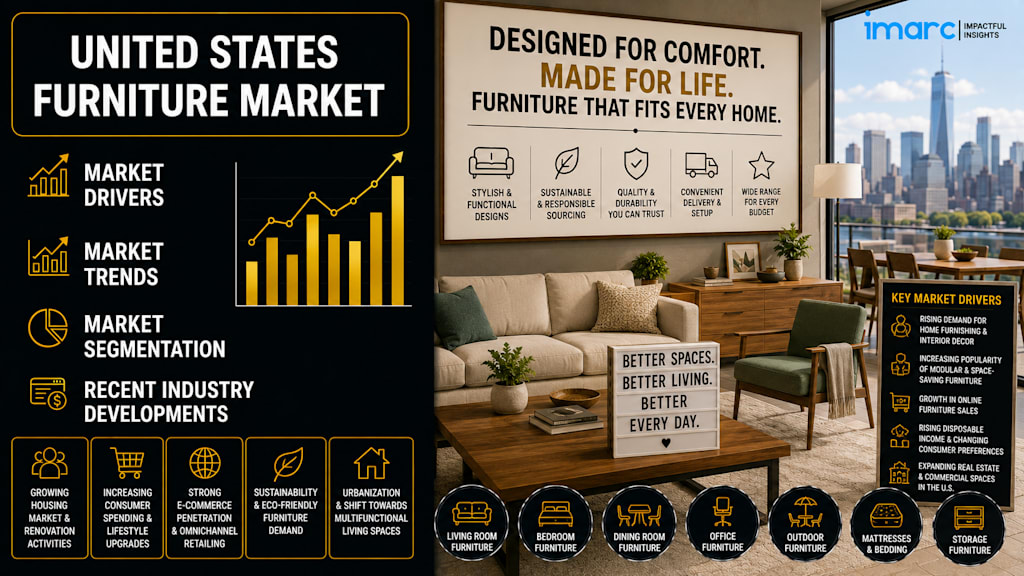
United States Furniture Market Size, Growth, and Forecast (2026–2034)
Furniture has become much more than a practical household necessity. Modern consumers increasingly view furniture as an important part of personal style, comfort, and functionality. Whether for homes, offices, or commercial spaces, furniture plays a significant role in shaping environments and improving daily experiences. In 2026, changing lifestyle patterns and design preferences continue influencing the way Americans purchase and use furniture products.
The United States furniture market was valued at USD 195.7 Billion in 2025 and is projected to reach USD 256.9 Billion by 2034, expanding at a compound annual growth rate (CAGR) of 3.07% during 2026–2034. This growth reflects increasing consumer spending and rising interest in modern, functional, and personalized living spaces.
The furniture market includes a broad range of products such as residential furniture, office furniture, outdoor furniture, storage solutions, and multifunctional designs intended to support different consumer needs.
Request a Sample Report with Latest 2026 Data & Forecasts:
Key Trends Shaping the United States Furniture Market
Several important trends are influencing market development:
• Growing demand for multifunctional and space-saving furniture
• Rising popularity of smart and connected home products
• Increasing consumer interest in sustainable and eco-friendly materials
• Expansion of online furniture shopping and digital experiences
• Growing demand for personalized and customizable furniture options
These trends demonstrate how consumers increasingly prioritize flexibility, convenience, and aesthetics.
Major Growth Drivers in the United States Furniture Industry
Several factors continue supporting the expansion of the market.
One of the primary growth drivers is the changing nature of residential and work environments. As remote and hybrid work models become more common, consumers are investing in comfortable home offices and flexible living arrangements.
Another important factor is the rising focus on home improvement and interior design. Many consumers increasingly view homes as personal spaces that reflect lifestyle preferences and design choices.
The growth of urban living is also influencing demand for furniture solutions that maximize available space and functionality.
Digital retail expansion continues contributing significantly to growth as online platforms provide greater product accessibility and convenience.
Additionally, consumers increasingly prioritize products that combine comfort, quality, and modern design.
Role of Technology in Furniture Development
Technology continues reshaping the furniture industry in multiple ways.
Artificial intelligence is helping retailers deliver personalized shopping experiences and product recommendations.
Virtual reality and augmented reality tools allow customers to visualize products before making purchasing decisions.
Advanced manufacturing technologies are improving production efficiency and product customization.
Smart furniture products integrated with technology features are also gaining attention.
These innovations continue improving both customer experiences and operational performance.
Investment Opportunities in the United States Furniture Market
The growth of the market creates multiple opportunities for investors and businesses.
Companies are investing in smart furniture technologies, sustainable materials, and digital retail capabilities to strengthen market competitiveness.
There is also increasing interest in premium furniture categories and home office solutions.
Investments in e-commerce platforms and logistics systems continue supporting growth.
Collaborations between technology companies and furniture manufacturers are also encouraging innovation.
With continued expansion expected through 2034, the market presents attractive long-term opportunities.
Challenges Impacting the United States Furniture Industry
Despite positive growth prospects, several challenges remain.
One challenge is fluctuating raw material costs, which can affect production expenses and pricing strategies.
Another issue is changing consumer preferences, which may require continuous product innovation.
Supply chain disruptions can also influence product availability and delivery schedules.
Additionally, increasing competition across online and traditional retail channels continues shaping market dynamics.
Future Outlook (2026–2034)
Looking ahead, the United States furniture market is expected to continue its steady expansion.
Between 2026 and 2034, demand for innovative, sustainable, and personalized furniture solutions is likely to increase. Consumers are expected to continue prioritizing comfort, convenience, and modern design experiences.
Future developments may focus on smart furniture integration, sustainable manufacturing practices, and improved digital shopping technologies.
The ongoing evolution of residential spaces and changing lifestyle patterns are also expected to support market growth.
Overall, the market appears positioned for sustained development driven by technology, lifestyle transformation, and evolving consumer preferences.
Conclusion
The United States furniture market continues evolving as changing lifestyles, technological advancements, and design preferences reshape consumer behavior. Supported by increasing home investments and digital retail growth, the market is expected to experience continued development during 2026–2034.
Although challenges such as supply chain disruptions and changing trends remain, ongoing innovation and investment are likely to support long-term growth. As consumers increasingly seek products that combine style, functionality, and comfort, furniture will continue playing an important role in everyday living environments.
About the Creator
Jackson Watson
I'm a market research analyst at Imarc group company delivering data-driven insights, industry analysis, and customized research solutions. We support businesses with market sizing, competitive analysis, and strategic decision-making.
Enjoyed the story? Support the Creator.
Subscribe for free to receive all their stories in your feed.
Comments
There are no comments for this story
Be the first to respond and start the conversation.