
United States Functional Food Market Set to Reach US$ 189.92 Billion by 2034 as Wellness Becomes a Daily Priority
Preventive health trends, protein-rich snacking, probiotic demand, and clean-label innovation are reshaping America’s food industry

The way Americans think about food is changing rapidly. Meals are no longer judged only by taste, price, or convenience. Today’s consumers increasingly expect foods to deliver measurable health benefits—whether that means better digestion, stronger immunity, improved heart health, more energy, or support for active lifestyles.
This shift has created one of the most exciting categories in the food industry: functional foods.
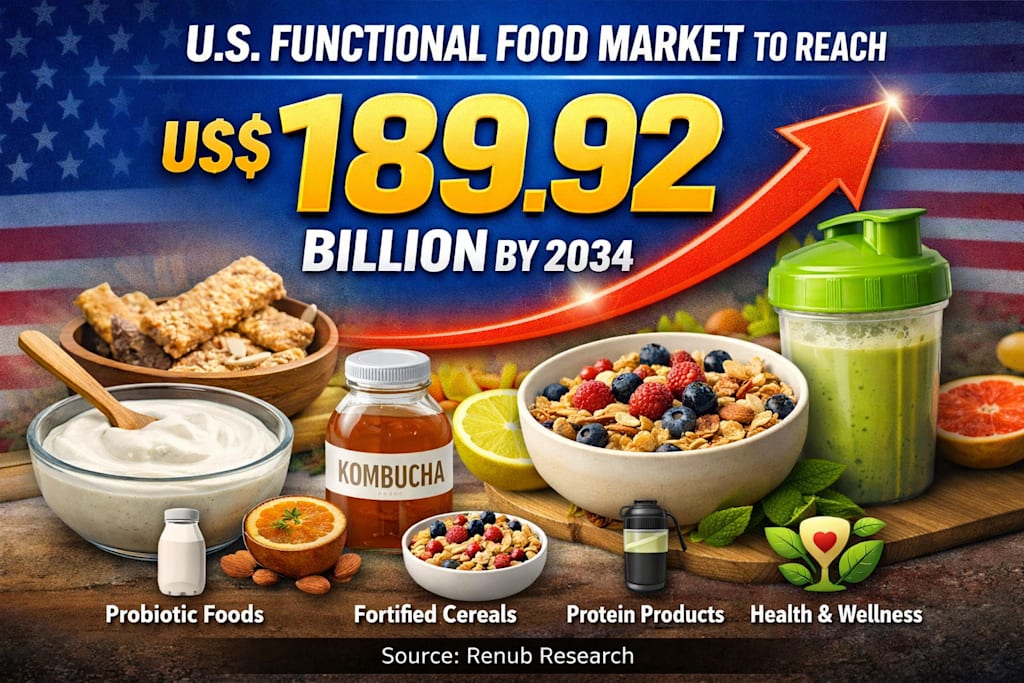
According to , the United States Functional Food Market is projected to grow from US$ 110.34 billion in 2025 to US$ 189.92 billion by 2034, expanding at a CAGR of 6.22% from 2026 to 2034.
The growth reflects a powerful long-term movement: consumers want food that helps them live better.
What Are Functional Foods?
Functional foods are products that provide benefits beyond basic nutrition. They may contain added vitamins, minerals, probiotics, proteins, antioxidants, fiber, omega-3 fatty acids, or plant-based compounds designed to support specific health goals.
Examples include:
Probiotic yogurt
Fortified breakfast cereals
Protein bars
Omega-3 eggs
Kombucha
Fiber-rich snacks
Plant-based functional beverages
Sports recovery drinks
Baby foods with DHA and probiotics
Instead of relying only on pills or supplements, many consumers now prefer to gain health benefits through everyday eating habits.
That preference is driving explosive market growth.
Why the U.S. Functional Food Market Is Expanding
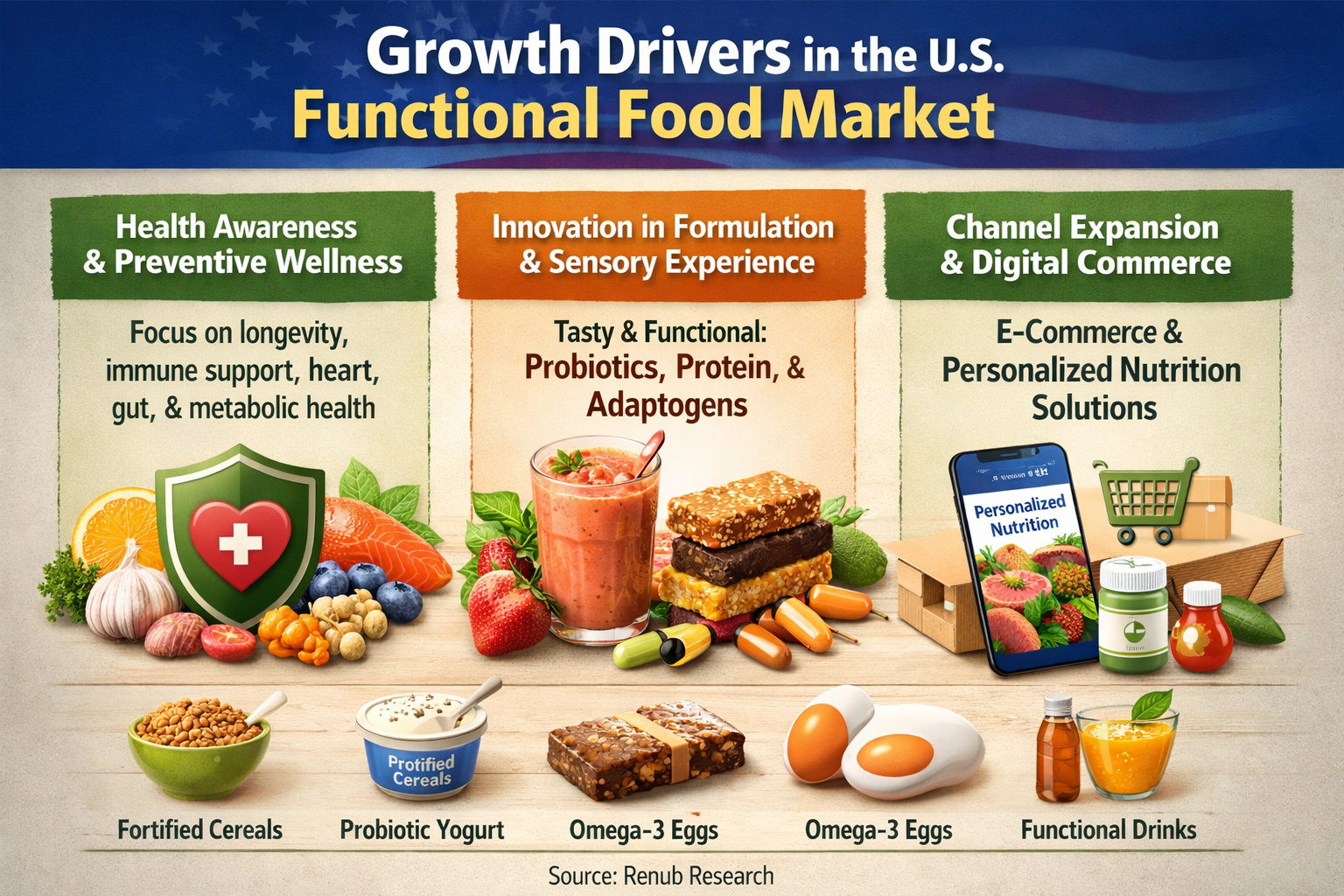
1. Preventive Health Is Becoming Mainstream
Americans are paying more attention to long-term wellness than ever before. Rising healthcare costs, lifestyle diseases, and increased health awareness have encouraged people to focus on prevention rather than treatment.
Consumers are actively searching for foods that support:
Gut health
Heart health
Weight management
Immune strength
Brain performance
Energy balance
This trend has made functional foods an easy daily solution. Instead of making dramatic lifestyle changes, consumers can choose smarter versions of products they already eat.
A bowl of fortified cereal, a probiotic yogurt, or a protein snack bar fits naturally into existing routines.
2. Busy Lifestyles Demand Convenient Nutrition
Modern life moves fast. Many consumers want healthier choices without spending extra time cooking or researching nutrition plans.
Functional foods meet this demand through grab-and-go convenience.
Popular formats include:
Ready-to-drink wellness beverages
Protein snacks
Functional breakfast bowls
Smoothies
Single-serve immunity drinks
Meal-replacement bars
For working professionals, students, parents, and fitness-focused consumers, convenience remains one of the strongest growth drivers.
3. Clean Label and Natural Ingredients Matter More
Consumers increasingly read ingredient labels carefully. Artificial additives, excess sugar, and hard-to-pronounce ingredients often create hesitation.
Today’s buyers prefer:
Natural flavors
Organic ingredients
Plant-based proteins
Low sugar formulas
Transparent sourcing
Sustainable packaging
As a result, brands that combine functionality with clean-label trust are winning market share.
4. Product Innovation Is Accelerating
Earlier generations of health foods often suffered from poor taste or limited variety. That is changing quickly.
Modern food technology allows companies to create products that are both enjoyable and beneficial.
Examples include:
Crispy protein snacks
Great-tasting probiotic beverages
Fiber-enhanced baked goods
Functional chocolate products
Adaptogen energy drinks
Shelf-stable wellness shots
Innovation is helping functional foods move from niche shelves into mainstream grocery carts.
Major Growth Segments in the U.S. Market
Breakfast Cereals
Breakfast cereals have evolved from simple vitamin fortification into targeted nutrition platforms.
Today’s cereals may include:
Probiotics
Whole grains
Fiber blends
Protein boosts
Omega-3 ingredients
Reduced sugar formulas
Busy households continue to value cereal as a fast and practical breakfast option.
Probiotic Foods
Digestive wellness has become one of the biggest themes in nutrition.
Consumers increasingly understand the importance of gut health, leading to rising demand for:
Yogurts
Fermented drinks
Probiotic shots
Functional snacks
Supplement-enhanced foods
Many shoppers now associate probiotics with digestion, immunity, and overall wellness.
Sports Nutrition
Sports nutrition is no longer limited to bodybuilders or professional athletes.
Mainstream consumers now buy:
Protein powders
Recovery drinks
Hydration mixes
Performance bars
Collagen products
Low-sugar energy foods
As fitness culture expands, this segment continues to perform strongly.
Baby Functional Foods
Parents increasingly seek advanced nutrition products for babies and toddlers.
Popular products include:
DHA-enriched purees
Iron-fortified cereals
Probiotic toddler snacks
Prebiotic formulas
Trust, safety, and scientific credibility are especially important in this category.
The Power of Online Sales
E-commerce has changed how consumers discover and purchase health-focused products.
Online platforms help brands explain ingredients, science, usage benefits, and customer reviews more effectively than traditional shelves.
Digital channels also support:
Subscription wellness products
Personalized recommendations
Nationwide access for niche brands
Influencer-led launches
Direct consumer relationships
Many emerging brands now launch online first before entering retail stores.
Leading States Driving Demand
California
California remains one of the strongest markets for functional foods due to its wellness culture, startup ecosystem, premium retail networks, and demand for organic, plant-based products.
Consumers in cities like Los Angeles and San Francisco often lead national trends.
New York
New York’s fast-paced urban lifestyle supports demand for grab-and-go wellness foods, premium beverages, and innovative retail concepts.
Its dense foodservice ecosystem also helps trends spread quickly.
Texas
Texas continues to grow as population expansion, rising incomes, and health-conscious families support broader food category growth.
Challenges Facing the Market
Despite strong momentum, the industry still faces obstacles.
Regulatory Complexity
Health claims on packaging must be carefully worded. Companies must avoid making medical promises without sufficient evidence.
This creates pressure for research-backed marketing.
Ingredient Costs
Many specialty ingredients such as probiotics, omega-3 concentrates, and botanical extracts can be expensive or volatile in supply.
Consumer Skepticism
Some buyers question whether certain claims are truly effective. Brands must earn trust through transparency and product performance.
Key Companies Competing in the Market
Major players shaping the U.S. functional food landscape include:
Abbott Laboratories
General Mills Inc.
Nestlé S.A.
Danone S.A.
Kellogg Company
Cargill Incorporated
These companies continue investing in healthier products, reformulation, acquisitions, and innovation.
What Happens Next?
The next stage of growth may include:
AI-personalized nutrition products
Functional foods for mental wellness
Better-for-you snacks replacing junk food
Smart beverages for energy and sleep
Senior nutrition foods
More affordable healthy convenience meals
Sustainable ingredient sourcing
Functional foods are expected to become a normal part of everyday eating rather than a premium niche category.
Final Thoughts
The United States Functional Food Market reflects a major cultural shift. Consumers no longer want food that simply fills them up—they want products that actively improve life.
With the market expected to rise from US$ 110.34 billion in 2025 to US$ 189.92 billion by 2034, the opportunity is enormous
About the Creator
Enjoyed the story? Support the Creator.
Subscribe for free to receive all their stories in your feed.
Comments
There are no comments for this story
Be the first to respond and start the conversation.