
United States Fintech Market Size, Share | Forecast 2034
The United States fintech market size reached USD 60.4 Billion in 2025. Looking forward, IMARC Group expects the market to reach USD 193.2 Billion by 2034, exhibiting a growth rate (CAGR) of 13.80% during 2026-2034.

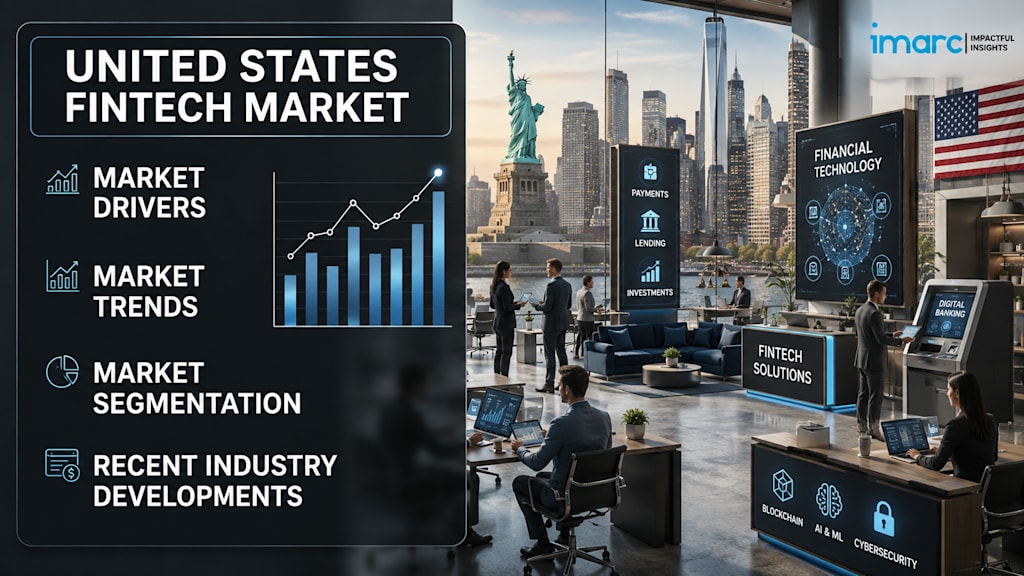
United States Fintech Market Size, Growth, and Forecast (2026–2034)
The financial services industry is undergoing one of the most significant transformations in modern history. Digital technologies are changing how consumers save, invest, borrow, insure, and transfer money. What once required visits to physical branches can now be completed through smartphones, digital platforms, and automated systems within minutes.
In 2026, financial technology, commonly known as fintech, continues to redefine the relationship between consumers and financial institutions. Fintech companies are introducing innovative solutions that improve accessibility, convenience, speed, and transparency across various financial services.
The United States fintech market reached USD 60.4 Billion in 2025 and is projected to grow to USD 193.2 Billion by 2034, exhibiting a compound annual growth rate (CAGR) of 13.80% during 2026–2034. This remarkable growth reflects increasing demand for digital financial services, technological innovation, and changing consumer expectations.
Request a Sample Report with Latest 2026 Data & Forecasts:
Key Trends Shaping the United States Fintech Market
Several major trends are influencing market growth:
• Expansion of digital payment solutions
• Growing adoption of artificial intelligence in finance
• Rise of decentralized finance (DeFi)
• Increasing demand for personalized financial services
• Growth of digital lending and wealth management platforms
These developments are helping create a more connected and efficient financial ecosystem.
Digital Payments Continue to Expand
One of the most visible fintech innovations is the widespread adoption of digital payments.
Consumers increasingly use mobile wallets, contactless payment methods, peer-to-peer transfer services, and digital checkout solutions for everyday transactions. Businesses are also embracing digital payment technologies to improve customer experiences and operational efficiency.
The convenience and speed of digital payments have made them an essential part of modern commerce.
As cashless transactions continue gaining popularity throughout 2026–2034, payment innovation is expected to remain a key driver of fintech growth.
Artificial Intelligence Is Reshaping Finance
Artificial intelligence (AI) is becoming a powerful tool across financial services.
Financial institutions and fintech companies use AI to analyze large amounts of data, detect fraud, automate customer service, and improve decision-making processes. AI-powered chatbots and virtual assistants are helping customers access financial information quickly and efficiently.
Advanced algorithms can also provide personalized financial recommendations based on spending habits, investment goals, and risk preferences.
As AI technology continues evolving, its influence on financial services is expected to increase significantly.
Personalized Financial Experiences Are Becoming Standard
Modern consumers increasingly expect services tailored to their individual needs.
Fintech platforms use data analytics to deliver customized experiences, helping users manage budgets, optimize savings, and make informed financial decisions. Personalized recommendations can improve customer engagement while creating more relevant financial products and services.
This customer-centric approach is helping fintech companies differentiate themselves in a highly competitive marketplace.
Personalization is expected to remain a major focus area throughout the forecast period.
Decentralized Finance Is Gaining Attention
Decentralized finance, often referred to as DeFi, represents one of the most innovative developments within the fintech ecosystem.
DeFi platforms utilize blockchain technology to facilitate financial transactions without relying on traditional intermediaries. These systems aim to improve accessibility, transparency, and efficiency across various financial services.
Although the sector continues evolving, interest in decentralized financial models is encouraging innovation and attracting attention from investors, developers, and consumers alike.
As technology matures, DeFi may play an increasingly important role in the future financial landscape.
Digital Lending Is Improving Accessibility
Fintech companies are transforming the lending process through digital platforms and automated decision-making systems.
Traditional loan applications can involve lengthy approval processes and extensive paperwork. Digital lending platforms help streamline these procedures, making financing more accessible and efficient.
Advanced data analytics allow lenders to evaluate applications more quickly while improving risk assessment capabilities.
The continued growth of digital lending is helping expand access to credit across consumer and business segments.
Wealth Management Is Becoming More Accessible
Technology is making investment services available to a broader audience.
Digital wealth management platforms provide tools that help users build portfolios, monitor investments, and access financial guidance. Automated investment solutions have simplified wealth management while reducing barriers to entry.
Many consumers now have access to sophisticated financial tools that were previously available primarily to high-net-worth individuals.
This democratization of financial services is contributing to broader participation in investment markets.
Investment Opportunities in the Fintech Sector
The rapidly expanding fintech industry presents attractive opportunities for investors and entrepreneurs.
Key areas attracting investment include:
• Digital payments
• Artificial intelligence applications
• Wealth management platforms
• Embedded finance solutions
• Financial cybersecurity technologies
Companies that successfully combine innovation, security, and customer convenience are likely to benefit from long-term market growth.
Strategic partnerships between fintech firms and traditional financial institutions are also creating new opportunities across the ecosystem.
Challenges Facing the Industry
Despite strong growth prospects, the fintech sector faces several challenges.
Cybersecurity remains a critical concern as financial transactions become increasingly digital. Regulatory compliance requirements continue evolving, requiring companies to adapt to changing standards and policies.
Competition is also intensifying as new entrants and established institutions compete for market share.
Additionally, maintaining consumer trust and ensuring data privacy remain essential priorities for industry participants.
Addressing these challenges will be vital for sustaining future growth.
Future Outlook (2026–2034)
Looking ahead, the United States fintech market is expected to continue expanding as digital transformation reshapes financial services.
Between 2026 and 2034, demand for innovative payment systems, AI-powered financial tools, decentralized finance solutions, and personalized digital experiences is likely to increase. Financial institutions and fintech companies will continue investing in technologies that improve accessibility, efficiency, and customer satisfaction.
Future developments may include advanced AI-driven financial advisors, expanded embedded finance ecosystems, enhanced blockchain applications, and increasingly seamless digital financial experiences.
These innovations are expected to redefine how individuals and businesses interact with financial services.
Conclusion
The United States fintech market is experiencing rapid growth as technological innovation transforms traditional financial systems. Supported by increasing demand for digital payments, personalized financial services, artificial intelligence applications, and emerging financial technologies, the sector is positioned for significant expansion through 2026–2034.
While challenges related to cybersecurity, regulation, and competition remain, continued innovation and investment are creating substantial opportunities across the industry. As financial services become increasingly digital, fintech will continue playing a central role in shaping the future of finance in the United States.
About the Creator
Jackson Watson
I'm a market research analyst at Imarc group company delivering data-driven insights, industry analysis, and customized research solutions. We support businesses with market sizing, competitive analysis, and strategic decision-making.
Enjoyed the story? Support the Creator.
Subscribe for free to receive all their stories in your feed.
Comments
There are no comments for this story
Be the first to respond and start the conversation.