
United States Facial Skincare Market Set to Reach US$ 48.83 Billion by 2034 as Wellness Trends and Clean Beauty Reshape Consumer Habits
From anti-aging serums to dermatologist-backed formulas, America’s skincare obsession is driving one of the beauty industry’s fastest-growing categories.

The beauty industry in the United States is evolving rapidly, and facial skincare has emerged as one of its strongest and most resilient categories. Once limited to basic cleansers and moisturizers, the facial skincare market now includes high-performance serums, masks, sunscreens, anti-aging solutions, brightening creams, acne treatments, and personalized regimens tailored to specific skin concerns.
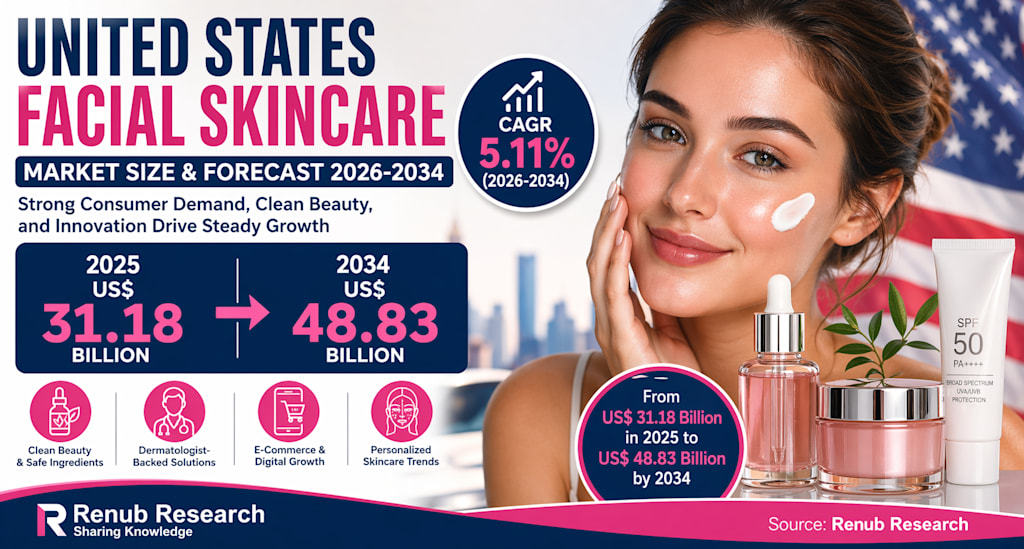
According to recent market insights, the United States Facial Skincare Market is projected to grow from US$ 31.18 Billion in 2025 to US$ 48.83 Billion by 2034, expanding at a CAGR of 5.11% from 2026 to 2034. This steady rise reflects increasing consumer awareness of skin health, growing interest in preventive care, clean beauty preferences, and the digital transformation of product discovery and sales.
As consumers increasingly prioritize wellness and self-care, facial skincare is no longer viewed as a luxury—it has become a daily necessity.

Facial Skincare Becomes a Lifestyle Category
In today’s America, skincare routines are often seen as part of a healthy lifestyle rather than just cosmetic maintenance. Consumers across age groups are adopting routines that include cleansing, hydration, sun protection, exfoliation, and treatment-based products.
What was once a simple face wash and lotion routine has expanded into multi-step rituals inspired by dermatologists, beauty experts, and social media creators. Products featuring ingredients such as retinol, vitamin C, hyaluronic acid, niacinamide, ceramides, and peptides are now mainstream.
The rise of skincare culture has made consumers more ingredient-aware and results-focused than ever before.
Preventive Skincare Is Driving Younger Consumers
One of the biggest shifts in the market is the growing focus on prevention instead of correction. Younger consumers, especially Millennials and Gen Z, are investing early in skincare to maintain long-term skin health and delay visible signs of aging.
Rather than waiting for wrinkles, pigmentation, or dryness to appear later in life, younger shoppers are using sunscreen daily, barrier-repair moisturizers, retinoids, and antioxidant serums as preventive tools.
This shift is significant because it brings consumers into the category earlier, increasing lifetime spending potential for brands while creating long-term customer loyalty.
Clean Beauty and Ingredient Transparency Gain Momentum
Modern skincare buyers are asking more questions: What ingredients are used? Is the formula cruelty-free? Is it sustainable? Is it safe for sensitive skin?
This has accelerated demand for clean beauty products free from parabens, sulfates, phthalates, and artificial fragrances. Consumers are also gravitating toward vegan formulas, recyclable packaging, and ethical sourcing.
Brands that provide ingredient transparency and scientific backing are winning trust in an increasingly crowded market. Consumers now want both efficacy and ethics in the same product.
Clean beauty is no longer a niche segment—it is becoming a core expectation.
Dermatologist-Backed Brands Continue to Rise
Trust is a major currency in skincare. Many consumers are skeptical of exaggerated beauty claims and viral marketing trends, leading to strong demand for dermatologist-developed and clinically tested brands.
Products that target acne, sensitivity, hyperpigmentation, rosacea, or aging concerns are increasingly chosen based on expert recommendations rather than celebrity endorsements alone.
This has opened opportunities for science-driven brands that combine visible results with gentle formulations. Consumers are especially attracted to labels that emphasize safety testing, fragrance-free formulas, and evidence-based ingredients.
Social Media and E-Commerce Reshape the Industry
Digital platforms are now among the most powerful forces in the U.S. facial skincare market. TikTok, Instagram, YouTube, and beauty communities heavily influence purchasing decisions.
A viral cleanser, serum, or sunscreen can sell out overnight after a strong recommendation from influencers or skincare professionals. Educational content explaining ingredients and routines has also made consumers more informed.
Meanwhile, e-commerce has made skincare more accessible than ever. Buyers can compare products, read reviews, take skin quizzes, receive subscriptions, and purchase directly from brands or marketplaces.
The convenience of online shopping, combined with digital discovery, continues to fuel market expansion.
Serums and Masks Among Fastest Growing Segments
Premium skincare categories such as facial serums and masks are seeing strong momentum.
Serums are popular because they deliver concentrated active ingredients for targeted concerns such as hydration, acne, dullness, wrinkles, or barrier repair. Consumers often layer multiple serums depending on their needs.
Masks—whether sheet masks, clay masks, overnight masks, or hydrating gels—have become associated with self-care rituals and at-home spa experiences.
As personalization rises, brands are offering customized serum blends and treatment kits tailored to individual skin conditions.
Anti-Aging and Brightening Products Stay in Demand
Despite changing beauty narratives, anti-aging remains one of the most powerful drivers of skincare sales. Consumers continue seeking products that improve firmness, reduce wrinkles, support collagen, and restore radiance.
At the same time, traditional “whitening” terminology is being replaced by more inclusive language such as brightening, tone correction, and glow enhancement.
Products containing vitamin C, peptides, alpha arbutin, glycolic acid, retinoids, and niacinamide remain highly popular among shoppers looking to improve texture and evenness.
Women Lead the Market, But Men’s Skincare Is Growing
Women continue to dominate the facial skincare category, driven by established beauty routines, premium spending habits, and broad product adoption across age groups.
However, men’s skincare is expanding steadily as grooming norms evolve. More male consumers are purchasing cleansers, moisturizers, acne treatments, sunscreens, and anti-aging products.
This shift creates additional growth opportunities as brands design simpler routines, gender-neutral packaging, and performance-focused marketing for male buyers.
Regional Trends: California, New York, Washington, Arizona
Different U.S. states are shaping demand in unique ways:
- California leads in clean beauty, wellness-driven products, eco-friendly packaging, and sun protection.
- New York favors premium, luxury, and pollution-defense skincare in urban environments.
- Washington shows strong interest in hydration, soothing formulas, and sustainability.
- Arizona drives demand for SPF, repair creams, and moisture-focused products due to dry desert climates.
These regional differences help brands localize products and marketing strategies.
Challenges Facing the Industry
Despite strong growth, the market faces several hurdles.
Saturation and Competition
Thousands of brands compete across mass-market, premium, indie, and celebrity-led categories. Standing out has become difficult, and customer acquisition costs are rising.
Consumer Skepticism
Shoppers are more cautious about misleading labels, unrealistic promises, and overhyped ingredients. Brands must prove efficacy through data and transparency.
Economic Pressure
Inflation and changing household budgets may push some consumers toward affordable alternatives or fewer product purchases.
Still, the category remains highly resilient because skincare is often viewed as affordable self-care.
Final Thoughts
The United States facial skincare market is no longer just about appearance—it now sits at the crossroads of wellness, science, confidence, and daily routine.
Consumers want products that are effective, safe, ethical, and personalized. They are investing earlier, spending smarter, and demanding more transparency than ever before.
With the market expected to reach US$ 48.83 Billion by 2034, facial skincare is positioned to remain one of the most dynamic and profitable segments in the beauty industry.
About the Creator
Enjoyed the story? Support the Creator.
Subscribe for free to receive all their stories in your feed.
Comments
There are no comments for this story
Be the first to respond and start the conversation.