
United States Extended Warranty Market Size, Share, Trends | Forecast 2034
The United States extended warranty market size was valued at USD 53.01 Billion in 2025 and is projected to reach USD 117.02 Billion by 2034, growing at a compound annual growth rate of 9.20% from 2026-2034.

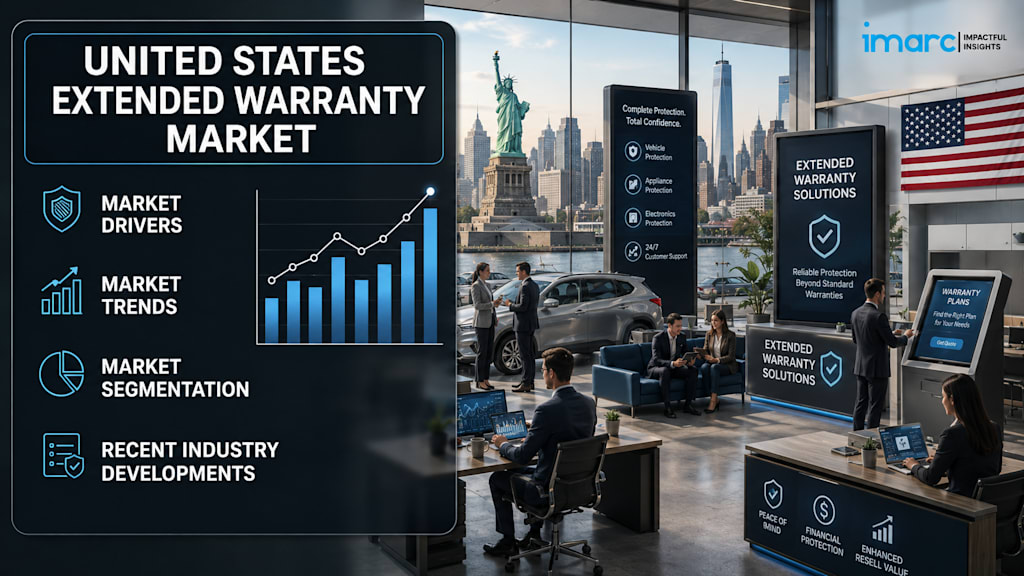
United States Extended Warranty Market Size, Growth, and Forecast (2026–2034)
Consumers today rely on a growing number of products and technologies in their daily lives. From smartphones and laptops to home appliances and automobiles, modern products are becoming increasingly sophisticated and expensive. As a result, many buyers are seeking additional protection against unexpected repair costs and product failures. This growing need for peace of mind has fueled interest in extended warranty programs across various industries.
In 2026, extended warranties have become an important component of the consumer protection landscape. Businesses are offering a wide range of service contracts and protection plans designed to help customers manage repair expenses while extending the value of their purchases.
The United States extended warranty market was valued at USD 53.01 Billion in 2025 and is projected to reach USD 117.02 Billion by 2034, growing at a compound annual growth rate (CAGR) of 9.20% during 2026–2034. This strong growth reflects increasing consumer awareness, rising product complexity, and the growing importance of service-based business models.
Request a Sample Report with Latest 2026 Data & Forecasts:
Key Trends Shaping the United States Extended Warranty Market
Several important trends are influencing market development:
• Growing ownership of connected and smart devices
• Increasing product complexity and repair costs
• Expansion of digital warranty management platforms
• Rising consumer demand for convenience and protection
• Greater adoption of subscription-based service models
These trends are helping reshape how warranty services are designed and delivered.
Technology Is Increasing Product Complexity
Today's products are more advanced than ever before.
Smart appliances, connected vehicles, wearable devices, and sophisticated consumer electronics incorporate technologies that require specialized maintenance and repair expertise. While these innovations provide valuable features and functionality, they can also increase repair costs when problems occur.
As consumers invest in higher-value products with advanced features, many choose extended warranties as a way to protect their purchases.
This trend is expected to remain a major growth driver throughout 2026–2034.
Digital Platforms Are Improving Customer Experiences
Technology is also transforming how warranty services are managed.
Digital platforms now allow consumers to register products, file claims, schedule repairs, and track service requests online. These tools improve convenience while reducing administrative complexity for both providers and customers.
Mobile applications and automated customer support systems are helping create faster and more efficient service experiences.
As digital transformation continues, warranty providers are expected to invest further in customer-focused technology solutions.
Consumers Value Financial Predictability
Unexpected repair expenses can create financial challenges for households and businesses.
Extended warranty plans help provide greater cost certainty by covering eligible repairs and services under predefined terms. This predictability can be especially attractive for consumers purchasing expensive electronics, appliances, and vehicles.
Many buyers view extended protection plans as a way to reduce financial risk and avoid large out-of-pocket repair costs.
As economic planning remains important for consumers, demand for protection products is likely to continue growing.
Subscription Models Are Gaining Popularity
The broader shift toward subscription-based services is influencing the warranty industry.
Rather than purchasing one-time protection plans, some consumers now prefer ongoing service programs that provide continuous coverage, maintenance support, and product assistance.
Subscription-based warranty offerings can create more flexible customer experiences while generating recurring revenue streams for providers.
This trend reflects changing consumer preferences for service-oriented solutions rather than traditional ownership-focused models.
Connected Devices Create New Opportunities
The growing adoption of connected technologies is creating additional opportunities for warranty providers.
Smart devices can generate performance data that helps identify potential issues before major failures occur. Predictive maintenance capabilities may allow providers to offer more proactive support and reduce service disruptions.
These innovations have the potential to improve customer satisfaction while enhancing operational efficiency.
As connected products become more common, data-driven warranty services are expected to play an increasingly important role.
Investment Opportunities in the Market
The expanding extended warranty sector presents attractive opportunities for investors and businesses.
Key areas attracting investment include:
• Digital warranty management platforms
• Connected device protection services
• Automotive protection plans
• Consumer electronics coverage solutions
• Subscription-based service models
Companies that focus on convenience, transparency, and customer experience are likely to benefit from future growth opportunities.
Technology integration and service innovation are also creating new possibilities throughout the industry.
Challenges Facing the Industry
Despite strong growth prospects, several challenges remain.
Consumer awareness and understanding of warranty coverage can vary significantly. Providers must clearly communicate terms, exclusions, and benefits to maintain trust and satisfaction.
Competition within the market is increasing as more companies introduce protection products and service offerings. Regulatory compliance and claims management also require ongoing attention.
Additionally, evolving product technologies require providers to continuously update service capabilities and support networks.
Successfully addressing these challenges will be important for sustaining long-term growth.
Future Outlook (2026–2034)
Looking ahead, the United States extended warranty market is expected to continue expanding as consumers seek greater protection for increasingly valuable and technologically advanced products.
Between 2026 and 2034, demand for digital warranty solutions, subscription-based service models, connected device protection, and customer-centric support services is likely to increase. Providers will continue investing in technology and innovation to improve efficiency and customer satisfaction.
Future developments may include AI-powered claims processing, predictive maintenance services, enhanced mobile support platforms, and deeper integration with connected product ecosystems.
These innovations are expected to reshape the future of product protection and service management.
Conclusion
The United States extended warranty market is evolving rapidly as technology, consumer expectations, and service-based business models transform the industry. Supported by rising product complexity, digital innovation, and growing demand for financial protection, the market is positioned for substantial growth through 2026–2034.
While challenges such as competition, consumer education, and regulatory requirements remain, continued investment and technological advancement are creating new opportunities across the sector. As consumers increasingly prioritize convenience and protection, extended warranty solutions are expected to become an even more important part of the modern ownership experience.
About the Creator
Jackson Watson
I'm a market research analyst at Imarc group company delivering data-driven insights, industry analysis, and customized research solutions. We support businesses with market sizing, competitive analysis, and strategic decision-making.
Enjoyed the story? Support the Creator.
Subscribe for free to receive all their stories in your feed.
Comments
There are no comments for this story
Be the first to respond and start the conversation.