
United States Energy Drink Market Outlook 2026–2034: How Functional Beverages Are Powering a New Generation of Consumers
Rising demand for healthier energy solutions, innovative flavor launches, and growing interest in natural caffeine sources are fueling rapid growth in the U.S. energy drink market.

The beverage industry in the United States continues to evolve as consumers seek products that align with increasingly active, fast-paced lifestyles. Among the fastest-growing segments in the industry, energy drinks have become a mainstream choice for individuals looking to enhance alertness, improve focus, boost physical performance, and maintain productivity throughout the day.
What began as a niche category aimed primarily at athletes and young adults has transformed into a multibillion-dollar market that appeals to a broad range of consumers, including students, professionals, fitness enthusiasts, commuters, gamers, and health-conscious individuals.
Today's energy drink market is no longer defined solely by high caffeine content. Consumers are increasingly demanding beverages that incorporate natural ingredients, functional benefits, reduced sugar content, and cleaner formulations. In response, manufacturers are introducing innovative products featuring natural caffeine sources, vitamins, nootropics, herbal extracts, and unique flavor combinations.
According to Renub Research, the United States Energy Drink Market is expected to grow from US$ 22.36 billion in 2025 to US$ 44.66 billion by 2034, registering a compound annual growth rate (CAGR) of 7.99% from 2026 to 2034. Growing demand for functional beverages, increasing preference for natural caffeine sources, expanding product innovation, and changing consumer lifestyles are among the major factors driving market growth.
As consumers continue prioritizing convenience, performance, and wellness, the energy drink category is expected to remain one of the most dynamic segments within the U.S. beverage industry.

Understanding the Modern Energy Drink Industry
Energy drinks are beverages specifically formulated to improve alertness, stamina, concentration, and physical performance.
Most energy drinks contain ingredients such as caffeine, B vitamins, amino acids, herbal extracts, guarana, ginseng, taurine, and other functional compounds designed to support mental and physical energy.
Over the years, the category has diversified significantly beyond traditional carbonated energy beverages. Today's market includes coffee-based energy drinks, plant-based energy formulations, natural caffeine products, sugar-free alternatives, and ready-to-drink functional beverages.
Consumers increasingly view energy drinks as lifestyle products that support productivity, fitness goals, gaming performance, athletic activities, and everyday energy management.
The growing emphasis on health and wellness has encouraged manufacturers to develop products that combine energy enhancement with broader functional benefits such as cognitive support, hydration, and nutritional supplementation.
As innovation continues accelerating, energy drinks are becoming increasingly sophisticated and personalized to meet evolving consumer needs.
Rising Demand for Functional Beverages Is Driving Growth
One of the strongest drivers behind the U.S. energy drink market is the growing popularity of functional beverages.
Consumers today are looking for products that provide more than simple refreshment. They increasingly seek beverages that deliver measurable benefits related to performance, focus, endurance, recovery, and overall wellness.
Energy drinks fit naturally within this trend because they offer a convenient solution for individuals managing demanding schedules and active lifestyles.
Professionals often consume energy drinks to improve workplace productivity, students use them to support academic performance, and athletes rely on them for training and competition preparation.
Manufacturers are responding by incorporating ingredients such as vitamins, electrolytes, nootropics, antioxidants, and adaptogens into product formulations.
As functional beverage consumption continues growing across multiple demographic groups, energy drinks are expected to benefit significantly from this broader market shift.
Natural Caffeine Is Reshaping Consumer Preferences
One of the most important trends influencing the market is the increasing preference for natural caffeine sources.
Consumers are becoming more aware of ingredient quality and are actively seeking products perceived as healthier and more transparent.
Natural caffeine derived from coffee beans, tea leaves, guarana, and other botanical sources is gaining popularity compared to synthetic alternatives.
Manufacturers are leveraging this trend by developing formulations that emphasize clean labels and naturally sourced ingredients.
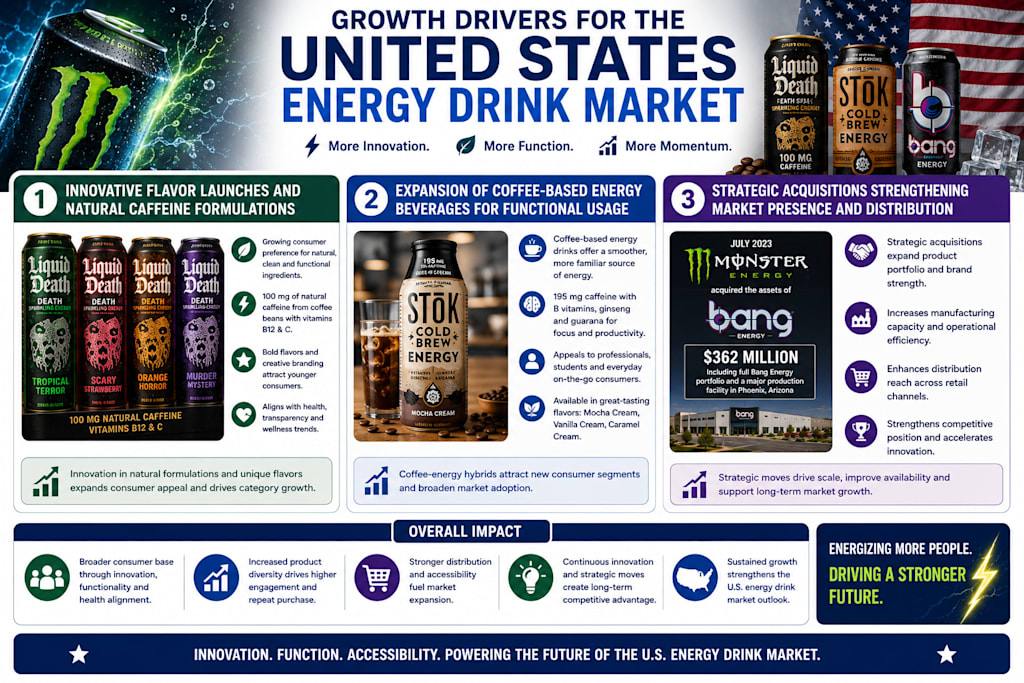
In July 2025, Liquid Death launched its Death Sparkling Energy Drink line featuring flavors such as Tropical Terror, Scary Strawberry, Orange Horror, and Murder Mystery. The beverages contain 100 milligrams of natural caffeine sourced from coffee beans along with vitamins B12 and C.
This movement toward natural ingredients aligns closely with broader consumer interest in wellness, transparency, and healthier beverage choices.
As ingredient-conscious consumers continue influencing purchasing decisions, demand for naturally caffeinated energy drinks is expected to grow substantially.
Coffee-Based Energy Drinks Are Expanding the Market
Coffee-based energy beverages have emerged as one of the fastest-growing segments within the energy drink industry.
Many consumers appreciate the familiar flavor profile of coffee while also seeking enhanced functionality and convenience.
These products combine traditional coffee experiences with ingredients commonly associated with energy drinks, creating hybrid beverages that appeal to a wider audience.
In October 2024, STōK Cold Brew Coffee introduced STōK Cold Brew Energy, combining cold brew coffee with 195 milligrams of caffeine, B vitamins, ginseng, and guarana. Available in flavors such as Mocha Cream, Vanilla Cream, and Caramel Cream, the product targets consumers seeking sustained energy and focus.
Coffee-energy hybrids appeal particularly to professionals and students who want smoother, less carbonated alternatives to traditional energy drinks.
As consumer demand for multifunctional beverages continues increasing, coffee-based energy products are expected to remain a significant growth driver.
Product Innovation Continues Accelerating
Innovation remains at the heart of the energy drink industry's success.
Manufacturers continuously introduce new flavors, ingredients, packaging formats, and nutritional profiles to capture consumer attention and maintain competitive differentiation.
Unique flavor combinations, limited-edition releases, and category crossovers have become increasingly common.
Brands are also experimenting with ingredients designed to support mental performance, stress management, hydration, and recovery.
Consumers increasingly value novelty and personalization, encouraging companies to launch products that cater to specific lifestyles and preferences.
In October 2025, Grupo Jumex and AriZona Beverages expanded their partnership through the launch of Jumex Energy, featuring fruit nectar-inspired energy drinks available in Mango and Strawberry varieties. The beverages deliver 150 milligrams of caffeine alongside vitamins, taurine, guarana, and ginseng.
Continuous innovation is expected to remain a critical factor supporting long-term market expansion.
Strategic Acquisitions Are Strengthening Industry Competition
Industry consolidation is playing an important role in shaping the competitive landscape.
Large beverage companies are acquiring established energy drink brands to strengthen market positions, expand distribution capabilities, and accelerate growth.
These acquisitions provide access to new customer segments, manufacturing facilities, and intellectual property.
In July 2023, Monster Beverage Corporation announced the acquisition of the assets of Vital Pharmaceuticals, including the Bang Energy brand and its production facility in Phoenix, Arizona, for approximately US$362 million.
The acquisition significantly strengthened Monster's portfolio while enhancing operational efficiency and manufacturing capacity.
As competition intensifies, strategic mergers and acquisitions are expected to remain an important mechanism for growth and market expansion.
Sugar-Free and Low-Calorie Products Are Gaining Popularity
Health-conscious consumers are increasingly influencing product development within the energy drink market.
Many consumers now seek beverages that provide energy without excessive sugar, calories, or artificial ingredients.
Manufacturers are responding by introducing sugar-free, low-calorie, and naturally sweetened alternatives.
These products appeal to fitness enthusiasts, weight-conscious individuals, and consumers pursuing healthier lifestyles.
In July 2025, O'Neill Vintners & Distillers launched Catalyst, an energy drink formulated with plant-based caffeine, no sugar, only ten calories, and no artificial additives. The product also includes nootropics and B vitamins to support focus and cognitive performance.
As awareness regarding nutrition continues increasing, healthier energy drink options are expected to gain market share.
Convenience and On-the-Go Consumption Are Fueling Demand
Busy lifestyles remain one of the most powerful drivers of energy drink consumption.
Many consumers require convenient solutions that fit seamlessly into demanding daily schedules.
Energy drinks are particularly attractive because they provide immediate functionality in portable formats.
Students, commuters, shift workers, delivery drivers, healthcare professionals, and office employees frequently rely on energy beverages to support long working hours and busy routines.
Ready-to-drink packaging and widespread retail availability further enhance convenience.
The continued growth of mobile lifestyles and on-the-go consumption habits is expected to support strong market demand throughout the forecast period.
Convenience Stores Continue Dominating Distribution
Convenience stores remain one of the most important distribution channels for energy drinks in the United States.
Many purchases are impulsive and occur while consumers are traveling, commuting, or refueling vehicles.
Gas stations, convenience stores, and small-format retailers provide immediate accessibility and strong product visibility.
Manufacturers frequently collaborate with retailers on promotions, product placement strategies, and exclusive launches designed to maximize sales.
The widespread presence of convenience stores throughout urban, suburban, and rural areas ensures broad consumer access.
As impulse purchasing continues driving category performance, convenience stores are expected to maintain their dominant role within the market.
Health Concerns Continue Challenging the Industry
Despite strong growth prospects, the energy drink market faces ongoing challenges related to health perceptions.
Many consumers remain concerned about excessive caffeine intake, high sugar levels, artificial additives, and potential side effects.
Public health organizations frequently emphasize the importance of responsible consumption, particularly among younger consumers.
Concerns regarding sleep disruption, anxiety, elevated heart rates, and other health issues can influence purchasing behavior.
Manufacturers must continue improving formulations while educating consumers about appropriate usage.
The industry's ability to address these concerns through innovation and transparency will play a critical role in sustaining long-term growth.
Market Saturation Is Intensifying Competition
Another significant challenge involves increasing competition within the functional beverage sector.
New entrants, coffee-based alternatives, sports drinks, wellness beverages, and hydration products are competing for consumer attention.
As more brands enter the market, securing shelf space and maintaining brand visibility becomes increasingly difficult.
Marketing costs continue rising as companies invest heavily in digital campaigns, sponsorships, influencer partnerships, and experiential promotions.
Smaller brands often face particular challenges when competing against industry leaders with extensive distribution networks and financial resources.
Differentiation through innovation, ingredient quality, and branding will remain essential for long-term success.
Regional Market Insights
California remains one of the most influential energy drink markets in the country due to its large population, wellness-focused culture, and strong demand for natural and functional beverages. Fitness enthusiasts, technology professionals, and active consumers continue driving category growth throughout the state.
Texas benefits from a large and diverse consumer base, extensive convenience store networks, and strong demand among students, athletes, and working professionals. Long commuting distances and active lifestyles contribute significantly to consumption levels.
New York's fast-paced environment supports strong demand among professionals, students, and shift workers seeking beverages that improve focus and stamina. The popularity of premium and coffee-based energy products continues increasing throughout the state.
Florida's tourism-driven economy, warm climate, and outdoor lifestyle create favorable conditions for energy drink consumption. Consumers increasingly favor tropical flavors, low-calorie formulations, and performance-oriented products.
Competitive Landscape
The U.S. energy drink market remains highly competitive, with major companies continually investing in innovation, marketing, and distribution expansion.
Leading market participants include Red Bull, Monster Beverage Corporation, PepsiCo, National Beverage Corp, Suntory Holdings Limited, The Coca-Cola Company, Campbell Soup Co., and Amway Corporation.
These organizations continue developing new product lines, expanding retail partnerships, and strengthening consumer engagement strategies to maintain competitive advantages.
Innovation in natural ingredients, functional benefits, and premium positioning is expected to remain central to competitive success throughout the forecast period.
Final Thoughts
The United States energy drink market is evolving far beyond its traditional roots. Today's consumers are seeking beverages that not only provide energy but also support productivity, wellness, cognitive performance, and active lifestyles. This shift is encouraging manufacturers to develop cleaner formulations, innovative flavors, and multifunctional products that appeal to a broader audience.
Natural caffeine sources, coffee-based energy drinks, sugar-free alternatives, and functional ingredients are redefining the category and attracting both loyal consumers and new adopters.
With the market projected to grow from US$ 22.36 billion in 2025 to US$ 44.66 billion by 2034, the future of the U.S. energy drink industry appears exceptionally strong. As innovation, convenience, and health-conscious consumption continue shaping purchasing behavior, energy drinks are expected to remain one of the most dynamic and influential segments within the beverage industry.
About the Creator
Enjoyed the story? Support the Creator.
Subscribe for free to receive all their stories in your feed.
Comments
There are no comments for this story
Be the first to respond and start the conversation.