
United States E-Cigarette and Vape Market Set for Explosive Growth, Projected to Reach US$ 85.85 Billion by 2034
Smoke-Free Alternatives, Tech Innovation, and Expanding Retail Access Reshape America’s Nicotine Market


The United States e-cigarette and vape market is entering a dramatic growth phase, fueled by changing consumer habits, continuous device innovation, and a growing preference for smoke-free alternatives. According to Renub Research, the market is forecast to surge from US$ 11.26 Billion in 2025 to US$ 85.85 Billion by 2034, expanding at an impressive CAGR of 25.32% from 2026 to 2034.
This remarkable expansion reflects more than rising product sales—it signals a broader shift in how adult consumers approach nicotine consumption, convenience, and lifestyle choices. As traditional cigarette usage declines in many demographics, vaping products are increasingly positioned as a modern substitute.
Understanding the E-Cigarette Revolution
E-cigarettes and vapes are battery-powered devices that heat liquid solutions containing nicotine, flavorings, and additives into an inhalable aerosol. Unlike traditional cigarettes, these products do not burn tobacco, which is why many consumers see them as a cleaner or less harmful alternative.
From sleek disposable devices to refillable pod systems and customizable advanced mods, the market now offers products for every level of user experience. Adult smokers looking to reduce or replace conventional cigarettes are among the biggest adopters.
The growing popularity of these products is also tied to convenience. No ash, no smoke smell, and portable device formats make vaping attractive in modern urban lifestyles.
Download Sample Report
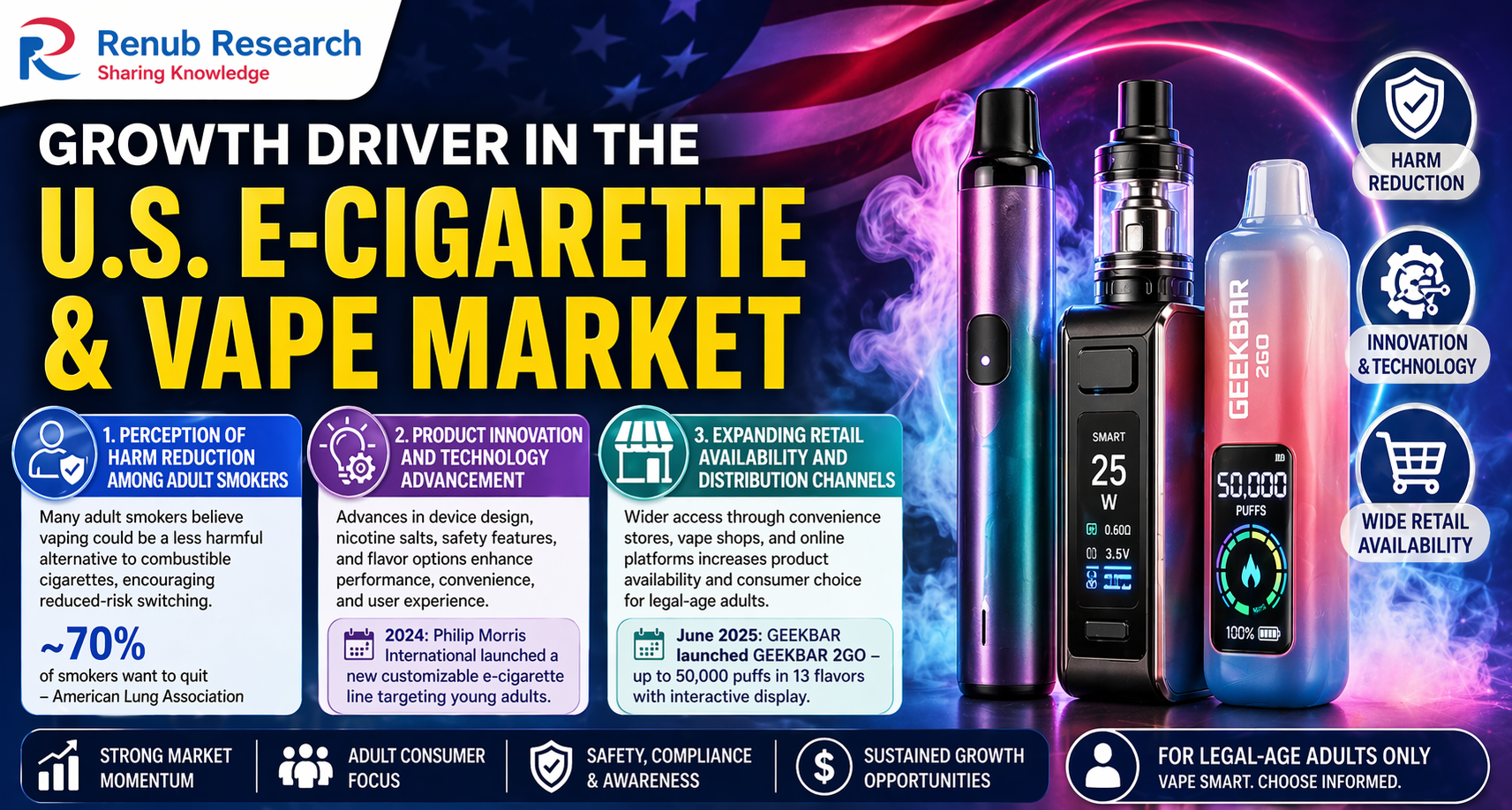
Why the U.S. Vape Market Is Growing So Fast
1. Adult Smokers Seeking Alternatives
One of the strongest drivers behind market growth is the belief among many adult smokers that vaping may be a better alternative to combustible cigarettes.
Users are attracted to features such as:
Smoke-free nicotine delivery
Reduced lingering odor
Adjustable nicotine strength
Compact and travel-friendly devices
Variety of flavors and formats
Millions of smokers continue searching for alternatives, and e-cigarettes have become one of the most visible options in that journey.
2. Technology Is Making Devices Better
Innovation has transformed vaping devices into sophisticated consumer electronics.
Modern products now include:
Longer battery life
Leak-resistant cartridges
Consistent vapor production
Temperature control features
Smart displays
Rechargeable convenience systems
Some newer products even personalize nicotine delivery and puff intensity based on user preferences.
As technology improves, many adult users see vaping products less as tobacco substitutes and more as lifestyle gadgets.
3. Easy Availability Across the Country
Another major reason for growth is accessibility.
Consumers can now purchase vaping products through:
Convenience stores
Gas stations
Specialty vape shops
Online retailers
Subscription refill services
This wide retail footprint has made vaping easier to access than ever before for adult buyers.
Specialty stores also play a role by educating customers about product usage, maintenance, and upgrades.
Disposable Vapes Leading the Charge
Disposable vapes remain one of the most popular product categories in the United States.
Why consumers love them:
Ready to use instantly
No charging required
No refilling needed
Affordable upfront cost
Portable and lightweight
For casual or first-time users, disposables offer a simple entry point.
Retailers also prefer disposables because they move quickly and generate repeat purchases.
However, environmental concerns surrounding battery waste and plastic disposal may shape future regulations in this category.
Rechargeable Devices Building Long-Term Loyalty
While disposables dominate impulse purchases, rechargeable systems are winning over repeat users.
These devices attract consumers seeking:
Better long-term value
Stronger battery performance
Refillable pod flexibility
More consistent experience
Less waste compared to disposables
Many experienced users eventually move toward rechargeable systems once they become familiar with vaping.
This category is expected to remain an important growth segment over the next decade.
Open-System Devices for Advanced Users
Open-system products allow users to manually refill liquids and customize performance.
Popular features include:
Adjustable airflow
Coil replacement options
Flavor experimentation
Nicotine strength control
Larger vapor production
Though this segment serves a smaller audience, it remains important for hobbyist and experienced consumers.
Convenience Stores Are Winning the Distribution Battle
Among all retail channels, convenience stores have become one of the most powerful growth engines.
Why?
Massive national footprint
Extended operating hours
Quick impulse buying behavior
Visibility near checkout counters
Strong demand for disposable products
For many customers, the neighborhood convenience store is now the easiest place to buy vaping products.
Top State Markets to Watch
California
California remains one of the most influential yet regulated vape markets in America. Demand exists, but policy decisions around flavors and retail sales continue shaping availability.
New York
Urban consumers favor compact devices ideal for commuters and professionals. Strict regulations influence pricing and assortment.
Washington
Consumers in Washington increasingly favor environmentally responsible rechargeable systems over disposable products.
Arizona
Rapid population growth and youthful cities like Phoenix and Tucson make Arizona a rising regional market.
Major Challenges Facing the Industry
Despite explosive growth forecasts, the industry faces serious hurdles.
Regulatory Uncertainty
Federal and state authorities continue tightening rules related to:
Youth access prevention
Flavor restrictions
Packaging requirements
Product approvals
Taxation policies
Advertising limitations
For manufacturers, constantly changing regulations create uncertainty and higher compliance costs.
Public Health Debate
Health organizations continue warning that vaping is not risk-free. Concerns around nicotine addiction, respiratory impact, and youth misuse remain central to the debate.
As public opinion shifts, companies must focus on transparency, responsible marketing, and adult-targeted strategies.
Major Companies Competing in the U.S. Market
The U.S. market includes powerful global and domestic players such as:
Reynolds American Inc.
JUUL Labs, Inc.
Altria Group, Inc.
Philip Morris International Philip Morris International
British American Tobacco British American Tobacco
Imperial Brands Imperial Brands
Japan Tobacco Inc. Japan Tobacco Inc.
Competition is expected to intensify as innovation and regulation reshape the market landscape.
What Happens Next?
The next decade may determine whether vaping becomes a permanent mainstream nicotine category or a tightly regulated niche market.
Several forces will decide the future:
Consumer demand for smoke-free products
Government regulation
Product innovation
Environmental sustainability
Public health research
Retail strategy evolution
Regardless of direction, the growth forecast suggests vaping will remain one of the fastest-changing consumer markets in the United States.
Final Thoughts
The United States e-cigarette and vape market is no longer a niche category—it is a rapidly expanding multi-billion-dollar industry driven by adult consumer demand, advanced technology, and retail convenience.
With Renub Research projecting the market to hit US$ 85.85 Billion by 2034, the sector stands at the intersection of innovation, controversy, and massive business opportunity.
About the Creator
Enjoyed the story? Support the Creator.
Subscribe for free to receive all their stories in your feed.
Comments
There are no comments for this story
Be the first to respond and start the conversation.