
United States Dry Fruits Market Flourishes as Healthy Snacking and Plant-Based Diets Reshape Consumer Preferences
Rising health awareness, increasing demand for nutrient-rich foods, and the growing popularity of vegan lifestyles are driving strong growth across the U.S. dry fruits industry.

The United States food industry is undergoing a major transformation as consumers increasingly prioritize nutrition, wellness, and clean-label eating habits. Among the categories benefiting most from this shift is the dry fruits market, which has evolved far beyond its traditional role as a simple snack segment. Today, dry fruits are widely recognized as nutrient-dense foods that support healthy lifestyles, plant-based diets, and functional nutrition trends.
From almonds and walnuts to pistachios, raisins, cashews, dates, and dried apricots, dry fruits have become essential ingredients in modern American diets. They are consumed not only as convenient snacks but also as key components in cereals, bakery products, energy bars, dairy alternatives, salads, desserts, and protein-rich meal plans.
As consumers seek healthier alternatives to processed snacks and sugar-heavy foods, the demand for dry fruits continues to grow steadily across the United States.
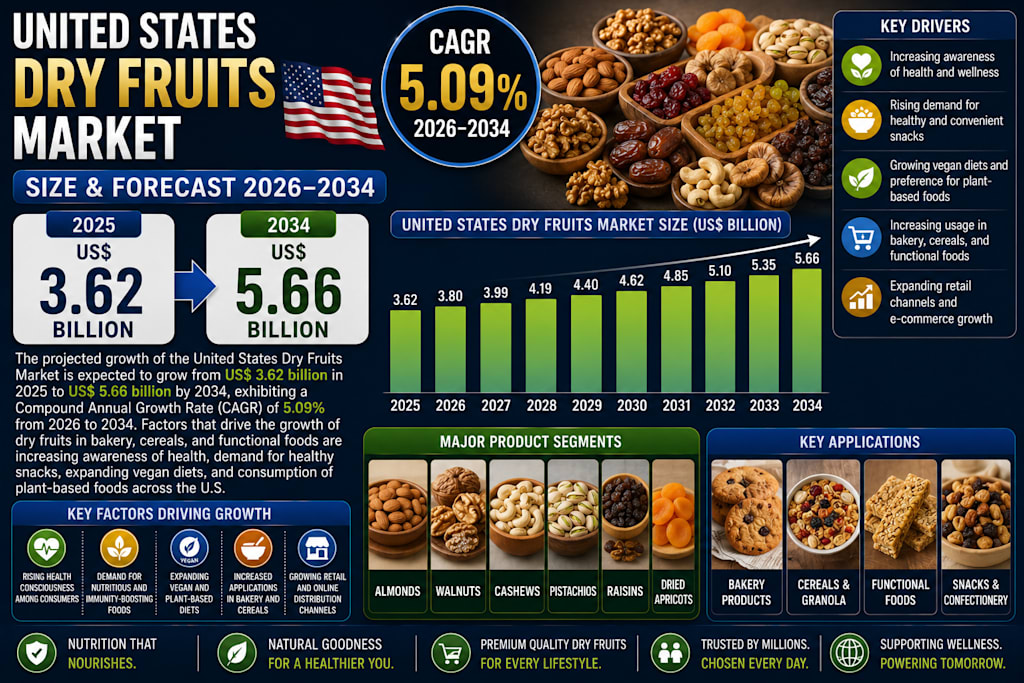
According to Renub Research, the United States Dry Fruits Market is expected to grow from US$3.62 billion in 2025 to US$5.66 billion by 2034, registering a compound annual growth rate (CAGR) of 5.09% between 2026 and 2034. Rising health awareness, increasing adoption of plant-based diets, and strong demand for functional foods are expected to support sustained market expansion.
Dry Fruits Have Become a Core Part of Modern Nutrition
Dry fruits are fruits that have most of their water removed either through natural drying methods or advanced dehydration technologies.
Popular varieties include almonds, cashews, walnuts, pistachios, raisins, dates, figs, apricots, pecans, hazelnuts, and cranberries.
These products are rich in vitamins, minerals, dietary fiber, healthy fats, antioxidants, and plant-based proteins, making them highly attractive to health-conscious consumers.
One of the major advantages of dry fruits is their long shelf life and ease of storage. Unlike many fresh fruits, dry fruits can be transported and stored conveniently while retaining much of their nutritional value.
This combination of convenience and nutrition has helped dry fruits become increasingly popular across multiple consumer demographics in the United States.
Health Awareness Continues to Drive Demand
The growing focus on health and wellness remains one of the strongest drivers of the U.S. dry fruits market.
Consumers are becoming increasingly aware of the relationship between diet and chronic health conditions such as obesity, diabetes, cardiovascular disease, and digestive disorders.
As a result, many Americans are replacing highly processed snacks with healthier alternatives that provide sustained energy and nutritional benefits.
Dry fruits align perfectly with this trend because they are perceived as natural, minimally processed, and nutrient-rich foods.
Products such as almonds, walnuts, and pistachios are frequently associated with heart health, weight management, digestive wellness, and improved energy levels.
The demand for nutritious grab-and-go snacks has become especially important among busy professionals, students, athletes, and fitness-conscious consumers.
Functional Nutrition Is Reshaping Consumer Preferences
Modern consumers increasingly expect foods to provide benefits beyond basic nutrition.
This shift toward functional nutrition has significantly strengthened the dry fruits industry.
Dry fruits are commonly promoted for their antioxidant properties, healthy fats, fiber content, and plant-based protein levels.
Many consumers intentionally incorporate dry fruits into diets designed to support cardiovascular health, digestive function, muscle recovery, and cognitive wellness.
As functional foods continue gaining popularity, dry fruits are benefiting from strong positioning within wellness-oriented eating habits.
Manufacturers are increasingly highlighting nutritional benefits in marketing campaigns, packaging, and product formulations to attract health-focused buyers.
Plant-Based and Vegan Diets Support Market Expansion
The rapid rise of vegan, vegetarian, and flexitarian diets across the United States is creating significant opportunities for the dry fruits market.
Dry fruits serve as valuable plant-based sources of protein, healthy fats, vitamins, and minerals, making them important components of meat-free and dairy-free diets.
Products such as almond milk, cashew cheese, walnut-based spreads, and pistachio desserts have become increasingly common in supermarkets and specialty food stores.
Dry fruits are also widely used in vegan baking, smoothies, snack bars, granola, and plant-based meal preparation.
The expansion of plant-based lifestyles continues broadening the consumer base for dry fruit products well beyond traditional snack consumption.
As interest in sustainable and health-oriented diets increases, dry fruits are expected to remain highly relevant within the plant-based food movement.
Convenience Snacking Continues to Gain Popularity
Convenience remains a major factor shaping consumer purchasing behavior.
Americans increasingly seek foods that are portable, easy to consume, and suitable for busy lifestyles.
Dry fruits provide an ideal solution because they require no preparation, refrigeration, or cooking.
Single-serve packs, trail mixes, resealable packaging, and portion-controlled products have further enhanced convenience for consumers.
These products are particularly popular among office workers, travelers, students, and fitness enthusiasts seeking healthy snack options throughout the day.
As demand for convenient and nutritious snacking continues growing, dry fruits are expected to maintain strong momentum.
Product Innovation Is Transforming the Market
Innovation has become a central strategy for companies competing within the dry fruits industry.
Manufacturers continue introducing new flavors, packaging formats, and value-added products designed to differentiate themselves in an increasingly competitive market.
Organic, non-GMO, roasted, flavored, chocolate-coated, and fortified dry fruit products are gaining popularity among consumers seeking variety and premium experiences.
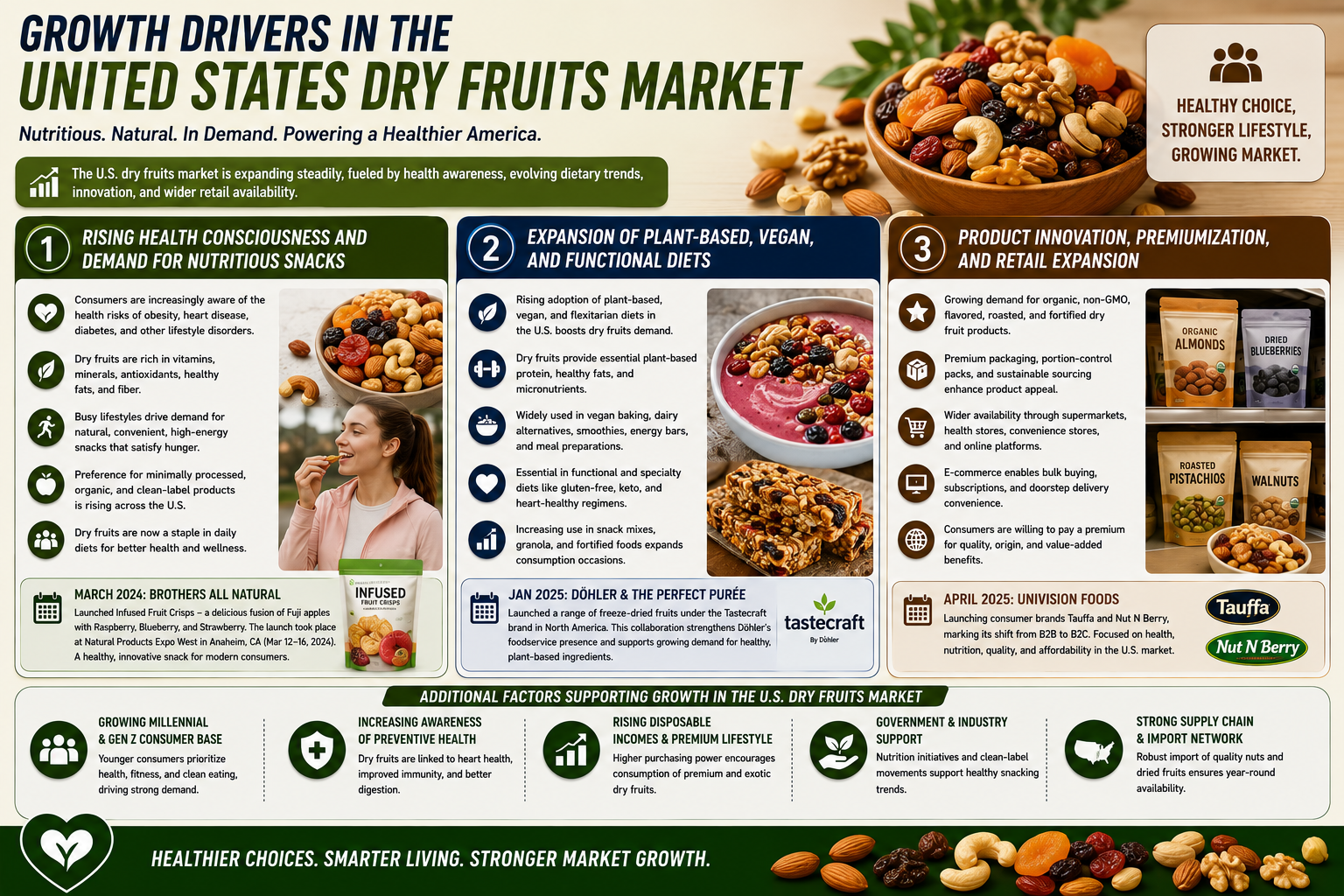
In March 2024, Brothers All Natural announced the launch of Infused Fruit Crisps featuring combinations such as apple, raspberry, blueberry, and strawberry. The products were introduced during the Natural Products Expo West event in Anaheim, California.
Such innovations reflect the industry's focus on expanding beyond traditional product offerings.
Premiumization Is Strengthening Consumer Interest
Premiumization continues influencing the U.S. dry fruits market significantly.
Consumers increasingly associate premium dry fruits with superior quality, healthier ingredients, and enhanced nutritional value.
Companies are investing heavily in premium packaging, sustainable sourcing practices, organic certifications, and gourmet flavor combinations to strengthen brand appeal.
Products marketed as artisanal, ethically sourced, or high-quality often command higher prices while attracting affluent and health-conscious consumers.
This premium positioning is helping dry fruits transition from basic pantry staples into lifestyle-oriented food products.
E-Commerce Expands Product Accessibility
Online retail has become an increasingly important sales channel for dry fruits.
E-commerce platforms allow consumers to access a wider variety of products, brands, and specialty offerings than traditional retail outlets alone.
Bulk purchasing options, subscription models, and direct-to-consumer strategies are becoming more common throughout the industry.
Digital platforms also enable smaller and specialty brands to reach national audiences more effectively.
The convenience of home delivery, combined with increasing online grocery adoption, continues supporting market growth.
As digital shopping behaviors evolve, e-commerce is expected to remain a critical distribution channel for dry fruit manufacturers.
Retail Expansion Improves Market Reach
Traditional retail channels continue playing a major role in market development.
Supermarkets, hypermarkets, warehouse clubs, specialty health stores, and convenience retailers have expanded dry fruit offerings substantially over the past decade.
Consumers now encounter dry fruits not only in snack aisles but also in bakery sections, breakfast categories, dairy alternatives, and functional food displays.
Retailers increasingly position dry fruits as premium wellness products rather than simple commodity snacks.
This enhanced visibility is helping strengthen consumer awareness and encourage repeat purchases.
Almonds Continue to Dominate the Market
Among all dry fruit categories, almonds maintain a dominant position within the United States market.
Strong domestic production, particularly in California, provides a major competitive advantage.
Almonds are widely consumed as snacks and extensively used in almond milk, bakery products, cereals, protein bars, and plant-based foods.
Consumers value almonds for their high protein content, healthy fats, fiber, and vitamin E.
The growing popularity of lactose-free and vegan diets has further increased demand for almond-based products.
Ongoing innovation in flavored, roasted, and organic almond offerings continues expanding consumer appeal.
Walnuts Benefit from Wellness Trends
Walnuts have gained strong popularity due to their association with brain health and cardiovascular wellness.
Rich in omega-3 fatty acids and antioxidants, walnuts are increasingly incorporated into breakfast cereals, salads, baked goods, and plant-based recipes.
Consumers frequently perceive walnuts as functional foods capable of supporting overall wellness.
Their growing use in clean-label and premium food products continues strengthening market demand.
Cashews Expand Beyond Traditional Snacking
The U.S. cashew market is experiencing rapid growth due to increasing demand for creamy plant-based products.
Cashews are widely used in vegan cheeses, dairy-free sauces, desserts, and snack foods.
Their mild flavor and versatile texture make them highly attractive within plant-based food innovation.
The popularity of ethnic cuisines and premium snacking trends has also contributed to increased cashew consumption.
Although the United States relies heavily on imports for cashew supply, demand remains consistently strong.
Hazelnuts Gain Popularity in Premium Foods
Hazelnuts continue gaining recognition due to their strong association with premium confectionery products and gourmet desserts.
They are commonly used in chocolates, spreads, bakery products, and specialty beverages.
Consumers appreciate hazelnuts for their rich flavor and perceived luxury appeal.
As demand for indulgent premium foods grows, hazelnuts are expected to maintain steady market expansion.
California Remains the Industry's Powerhouse
California plays a dominant role within the United States dry fruits market.
The state is one of the world's largest producers of almonds, pistachios, walnuts, and raisins, providing strong supply chain advantages.
California's health-conscious consumer base, advanced agricultural infrastructure, and innovation-driven food culture further strengthen its leadership position.
Dry fruits are widely incorporated into vegan diets, organic products, bakery items, dairy alternatives, and ready-to-eat snacks throughout the state.
Export-oriented production also contributes significantly to broader national market growth.
New York Benefits from Diverse Consumer Demand
New York's dense population and multicultural food preferences support strong dry fruit consumption.
Consumers frequently incorporate dry fruits into breakfast foods, baked goods, salads, and convenience snacks.
The state's extensive foodservice sector—including cafes, bakeries, and restaurants—also contributes significantly to demand.
Although New York is not a major production center, strong import infrastructure and premium retail networks help sustain market growth.
Washington and Arizona Show Strong Growth Potential
Washington's health-focused population continues driving demand for nutrient-rich snacks and sustainable food products.
Consumers increasingly choose dry fruits for heart health, energy support, and overall wellness.
Arizona is also emerging as a promising market due to population growth, active lifestyles, and increasing health awareness.
Trail mixes and portable snack products are particularly popular among outdoor enthusiasts and retirees within the state.
Price Volatility Remains a Major Challenge
Despite strong market prospects, price volatility remains a significant concern for the dry fruits industry.
Agricultural production is highly vulnerable to droughts, heatwaves, irregular rainfall, and climate-related disruptions.
Many dry fruit products also rely heavily on imports, exposing the market to trade fluctuations and supply chain instability.
These factors can increase production costs and affect retail pricing, potentially influencing consumer purchasing decisions.
Managing supply chain resilience remains a key priority for manufacturers and distributors.
Allergy Concerns Continue to Affect Consumer Behavior
Tree nut allergies present another important challenge within the market.
A significant portion of the U.S. population experiences allergic reactions to certain nuts, limiting consumption among affected individuals.
Manufacturers must therefore maintain strict labeling standards and contamination controls to ensure consumer safety.
Additionally, some consumers express concerns regarding calorie density and overconsumption of dry fruits.
Educating consumers about portion control and balanced nutrition remains important for sustaining positive market perception.
Final Thoughts
The United States dry fruits market is evolving rapidly as consumers increasingly prioritize wellness, convenience, and plant-based nutrition.
Driven by rising health awareness, functional food demand, vegan lifestyles, and continuous product innovation, dry fruits have become essential components of modern American diets.
With the market projected to grow from US$3.62 billion in 2025 to US$5.66 billion by 2034, substantial opportunities exist for producers, retailers, food manufacturers, and investors.
While challenges related to price volatility, allergies, and supply chain dependence remain significant, strong consumer demand and ongoing innovation continue supporting long-term market growth.
As Americans continue embracing healthier and more sustainable eating habits, dry fruits are expected to remain one of the most resilient and dynamic categories within the U.S. food industry.
About the Creator
Enjoyed the story? Support the Creator.
Subscribe for free to receive all their stories in your feed.
Comments
There are no comments for this story
Be the first to respond and start the conversation.