
United States Cosmetics Market Size, Share, Trends | Forecast 2034
The United States cosmetics market size was valued at USD 20.9 Billion in 2025. Looking forward, IMARC Group estimates the market to reach USD 27.2 Billion by 2034, exhibiting a CAGR of 2.90% from 2026-2034.

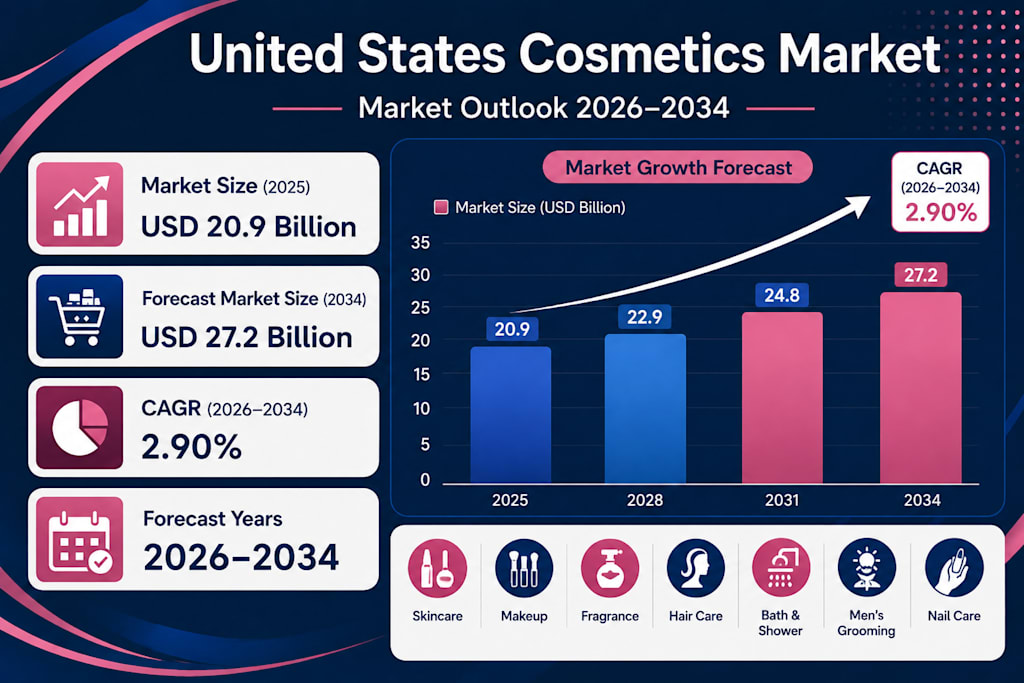
United States Cosmetics Market Size, Growth, and Forecast (2026–2034)
The cosmetics industry has become one of the most dynamic segments of the global consumer market. Once centered primarily on makeup and beauty enhancement, today's cosmetics sector increasingly overlaps with wellness, self-expression, skincare, sustainability, and technology. Consumers are more informed than ever, researching ingredients, comparing products online, and seeking brands that align with their values.
In 2026, the United States continues to be one of the world's largest and most influential cosmetics markets. Beauty brands are adapting to evolving consumer expectations by focusing on product innovation, sustainability initiatives, and personalized experiences. As digital technologies reshape shopping habits and product development, the cosmetics industry is entering a new phase of transformation.
The United States cosmetics market was valued at USD 20.9 Billion in 2025 and is projected to reach USD 27.2 Billion by 2034, exhibiting a compound annual growth rate (CAGR) of 2.90% during 2026–2034. This growth reflects continued consumer interest in beauty products, changing purchasing behaviors, and ongoing industry innovation.
Request a Sample Report with Latest 2026 Data & Forecasts:
Key Trends Shaping the United States Cosmetics Market
Several important trends are influencing market growth:
• Growing demand for sustainable and eco-friendly cosmetics
• Rising popularity of personalized beauty solutions
• Expansion of online beauty retail and digital shopping experiences
• Increasing influence of social media and beauty content creators
• Greater consumer focus on transparency and ingredient awareness
These trends are reshaping how products are developed, marketed, and sold.
Sustainability Is Influencing Consumer Choices
Environmental awareness has become a major factor in the cosmetics industry.
Consumers increasingly prefer brands that demonstrate commitments to sustainability through responsible sourcing, recyclable packaging, and environmentally conscious production methods. Many shoppers actively seek products that minimize environmental impact while maintaining quality and effectiveness.
Cruelty-free and vegan cosmetics have also gained popularity as consumers place greater emphasis on ethical considerations.
As sustainability becomes a long-term priority, companies are investing in greener packaging solutions, cleaner formulations, and more transparent supply chains.
Personalized Beauty Is Driving Innovation
Technology is helping brands create more personalized beauty experiences.
Advanced analytics, artificial intelligence, and digital diagnostic tools allow companies to recommend products based on individual preferences and needs. Some beauty brands now offer customized formulations tailored to specific skin concerns, tones, and lifestyles.
Personalization not only enhances customer satisfaction but also strengthens brand loyalty by creating more relevant experiences.
As technology continues advancing, personalized beauty solutions are expected to become increasingly sophisticated throughout the forecast period.
Social Media Continues to Shape Beauty Trends
Few industries have been influenced by social media as much as cosmetics.
Platforms featuring beauty tutorials, product reviews, and influencer content have transformed how consumers discover and evaluate products. Beauty creators often play a significant role in shaping purchasing decisions and introducing emerging trends.
Social media also enables direct interaction between brands and consumers, helping companies gather feedback and build stronger communities.
As digital engagement continues growing during 2026–2034, social platforms are expected to remain central to beauty marketing strategies.
E-Commerce Is Redefining the Shopping Experience
Online shopping has changed how consumers purchase cosmetics.
E-commerce platforms provide convenience, access to extensive product selections, and the ability to compare options before making purchases. Consumers can research ingredients, read reviews, and watch demonstrations without visiting physical stores.
Virtual try-on technologies and augmented reality tools are further enhancing the digital shopping experience.
The continued growth of online retail is expected to support market expansion while encouraging brands to invest in innovative digital solutions.
Ingredient Transparency Is Becoming Essential
Today's consumers want to know what is inside the products they use.
Ingredient transparency has become increasingly important as shoppers seek products that align with their personal preferences and values. Many consumers actively research formulations and prefer brands that clearly communicate product ingredients and benefits.
This trend has encouraged companies to simplify ingredient lists, improve labeling practices, and invest in consumer education initiatives.
Transparency is likely to remain a critical competitive advantage for cosmetics brands in the years ahead.
Investment Opportunities in the Industry
The evolving cosmetics market presents numerous opportunities for businesses and investors.
Key areas attracting investment include:
• Sustainable beauty products
• Personalized skincare and cosmetics solutions
• Digital beauty platforms
• Augmented reality shopping technologies
• Clean and transparent beauty formulations
Companies that successfully combine innovation, sustainability, and customer engagement are well positioned to benefit from future growth opportunities.
Strategic partnerships and technology-driven solutions are also creating new possibilities across the beauty ecosystem.
Challenges Facing the Market
Despite positive growth prospects, the industry faces several challenges.
Consumer preferences can change rapidly, requiring brands to remain flexible and innovative. Competition is intense, with both established companies and emerging brands competing for attention.
Supply chain disruptions, packaging costs, and evolving regulatory requirements may also affect operations.
Additionally, maintaining authenticity and consumer trust remains essential in an increasingly crowded marketplace.
Addressing these challenges will be important for sustaining long-term success.
Future Outlook (2026–2034)
Looking ahead, the United States cosmetics market is expected to continue evolving as consumer expectations, technology, and sustainability priorities reshape the industry.
Between 2026 and 2034, demand for personalized products, eco-friendly formulations, digital beauty experiences, and transparent brand practices is likely to increase. Companies will continue investing in innovation to create products and experiences that resonate with modern consumers.
Future developments may include AI-powered beauty consultations, advanced virtual shopping experiences, biotechnology-based ingredients, and enhanced sustainability initiatives.
These innovations are expected to shape the next generation of cosmetic products and consumer experiences.
Conclusion
The United States cosmetics market is undergoing significant transformation as sustainability, personalization, and digital innovation redefine the beauty landscape. Supported by changing consumer preferences, expanding online retail channels, and growing interest in ethical products, the industry is positioned for continued growth through 2026–2034.
While challenges such as intense competition and shifting consumer expectations remain, ongoing investment and technological advancement are creating new opportunities across the sector. As beauty becomes increasingly connected to lifestyle, wellness, and self-expression, the cosmetics industry will continue evolving to meet the needs of modern consumers.
About the Creator
Jackson Watson
I'm a market research analyst at Imarc group company delivering data-driven insights, industry analysis, and customized research solutions. We support businesses with market sizing, competitive analysis, and strategic decision-making.
Enjoyed the story? Support the Creator.
Subscribe for free to receive all their stories in your feed.
Comments
There are no comments for this story
Be the first to respond and start the conversation.