
United States Cookies Market Set to Reach US$ 15.7 Billion by 2033 as Premium, Health-Focused, and Innovative Products Drive Growth
Changing Consumer Preferences, Functional Ingredients, E-Commerce Expansion, and Premium Indulgence Trends Continue to Reshape America's Cookie Industry

United States Cookies Market Outlook
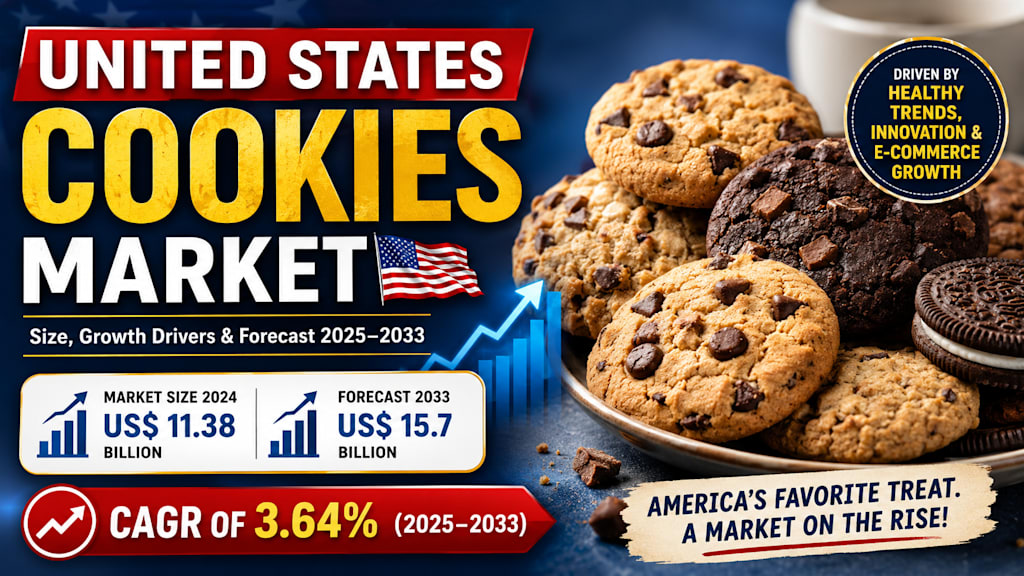
The United States cookies market continues to demonstrate remarkable resilience despite changing consumer preferences, inflationary pressures, and increasing competition within the broader snack food category. According to Renub Research, the United States Cookies Market is projected to grow from US$ 11.38 billion in 2024 to US$ 15.7 billion by 2033, expanding at a CAGR of 3.64% during 2025–2033.
Cookies remain one of America's most beloved snack categories, appealing to consumers across all age groups. Whether enjoyed as a convenient breakfast substitute, an afternoon snack, a dessert companion, or a comfort food indulgence, cookies have secured a permanent place in American households.
The industry is evolving rapidly as consumers seek healthier ingredients, premium experiences, sustainable packaging, and personalized flavor options. At the same time, established brands and emerging bakery companies are competing fiercely through product innovation, digital marketing, and direct-to-consumer sales strategies.
As lifestyles become busier and snacking occasions increase, the cookie market is expected to maintain steady growth throughout the forecast period.
Why Cookies Remain a Staple in American Households
Cookies occupy a unique position within the U.S. food landscape. Unlike many packaged snacks that face changing consumer loyalty, cookies enjoy a strong emotional connection with consumers.
Classic varieties such as chocolate chip, oatmeal raisin, peanut butter, butter cookies, and sandwich cookies continue to generate substantial sales. These traditional favorites provide familiarity and comfort while newer products attract younger consumers looking for novel experiences.
The category benefits from broad accessibility across supermarkets, convenience stores, online platforms, specialty retailers, bakeries, and subscription snack services.
Additionally, cookies have successfully adapted to modern dietary requirements. Manufacturers now offer products that cater to:
Gluten-free consumers
Vegan consumers
Keto followers
High-protein snack seekers
Organic food buyers
Low-sugar lifestyles
Clean-label shoppers
This adaptability has enabled the category to remain relevant despite shifting dietary trends.
Health-Conscious Innovation Is Transforming Product Development
One of the most influential developments shaping the U.S. cookies market is the growing demand for healthier snack alternatives.
Consumers increasingly scrutinize ingredient labels and seek products made with natural, recognizable ingredients. As a result, cookie manufacturers are reformulating traditional recipes while maintaining the taste and texture consumers expect.
Popular ingredient innovations include:
Whole grains
Oat flour
Almond flour
Coconut flour
Plant-based fats
Natural sweeteners
Organic cocoa
Functional proteins
Collagen-infused ingredients
Fiber-rich formulations
Many brands are also reducing artificial preservatives, synthetic colors, and high-fructose corn syrup.
The challenge lies in balancing health benefits with indulgence. Consumers still expect cookies to deliver satisfaction and flavor. Companies that successfully combine nutrition and indulgence are gaining market share and building stronger customer loyalty.
Urban Lifestyles Are Increasing Demand for Convenient Snacks
Modern lifestyles continue to create new consumption occasions for cookies.
Across major metropolitan regions, busy professionals, students, and remote workers increasingly seek convenient foods that require minimal preparation. Cookies offer portability, affordability, and versatility, making them attractive for on-the-go consumption.
In many urban centers, cookies are increasingly consumed during:
Morning commutes
Mid-morning breaks
Afternoon energy boosts
Evening relaxation periods
Remote work snack occasions
Manufacturers have responded by introducing breakfast-positioned cookie products containing whole grains, protein, and reduced sugar content.
The growth of flexible work arrangements has also altered traditional eating schedules, creating more opportunities for snacking throughout the day. This shift is helping expand cookie consumption beyond conventional dessert occasions.
Plant-Based Ingredients Create New Growth Opportunities
Sustainability and environmental awareness are significantly influencing consumer purchasing decisions.
As consumers become more conscious of food production practices, cookie manufacturers are investing in plant-based ingredients and sustainable sourcing initiatives.
Plant-based reformulation efforts focus on replacing conventional ingredients such as butter and shortening with alternatives that provide comparable texture and flavor.
Benefits of plant-based cookie innovations include:
Reduced environmental impact
Appeal to vegan consumers
Alignment with sustainability goals
Expanded customer base
Enhanced brand image
Younger consumers, particularly Millennials and Generation Z, are driving this transition. These demographics often prioritize ethical sourcing and environmental responsibility when selecting packaged food products.
Companies that successfully communicate sustainability commitments alongside product quality are strengthening their competitive position in the marketplace.
Portion-Controlled Indulgence Gains Popularity
Consumer attitudes toward indulgence are changing.
Rather than completely avoiding treats, many consumers now prefer mindful consumption and portion-controlled products. This trend has encouraged cookie manufacturers to introduce smaller serving formats and premium mini-cookie offerings.
Portion-controlled products allow consumers to:
Manage calorie intake
Reduce guilt associated with indulgence
Enjoy premium treats more frequently
Control spending on snack foods
Single-serve packaging formats are especially popular among office workers, travelers, students, and health-conscious consumers.
Premium packaging and limited-edition collections further enhance consumer engagement, transforming cookies into giftable products and collectible experiences rather than simple snack items.
E-Commerce Is Expanding Market Reach
Digital commerce has become a powerful growth engine for the U.S. cookies industry.
While supermarkets remain the dominant sales channel, online platforms continue to gain momentum due to convenience and broader product selection.
Consumers increasingly purchase cookies through:
Online grocery platforms
Brand websites
Subscription snack services
Marketplace platforms
Food delivery applications
E-commerce provides manufacturers with several advantages, including direct customer engagement, improved consumer data collection, and reduced dependence on traditional retail distribution.
Smaller brands and artisanal bakeries particularly benefit from digital channels, enabling them to reach nationwide audiences without extensive physical retail infrastructure.
The continued expansion of online grocery shopping is expected to support long-term growth across the cookie sector.
Challenges Facing the United States Cookies Market
Rising Demand for Healthier Products
Health-conscious consumers are forcing manufacturers to rethink traditional cookie formulations.
Although healthier ingredients create new opportunities, reformulation often introduces challenges involving flavor, texture, shelf stability, and production costs.
Consumers may reject healthier alternatives if taste expectations are not met. Consequently, brands must invest heavily in research and development to create products that satisfy both nutritional and sensory requirements.
Balancing health benefits and indulgence remains one of the industry's most significant challenges.
Increasing Ingredient Costs
Cookie manufacturers continue to face substantial cost pressures.
Key ingredients such as:
Wheat
Sugar
Butter
Cocoa
Vegetable oils
Packaging materials
have experienced notable price volatility.
Inflation, climate-related disruptions, labor shortages, and global supply chain uncertainties continue to affect production economics.
Many manufacturers face difficult decisions regarding pricing strategies. Passing increased costs to consumers can reduce demand, while absorbing costs may negatively impact profitability.
Maintaining product quality while managing cost inflation remains a critical priority across the industry.
State-Level Market Analysis
California Cookies Market
California represents one of the most influential cookie markets in the United States.
The state's large population and strong emphasis on wellness have created substantial demand for organic, vegan, gluten-free, and clean-label products.
Cities such as Los Angeles, San Francisco, and San Diego serve as innovation hubs where premium and artisanal cookie brands frequently launch new concepts.
California consumers are particularly receptive to:
Sustainable packaging
Organic ingredients
Plant-based formulations
International flavors
Small-batch bakery products
This environment encourages experimentation and supports rapid adoption of emerging food trends.
Texas Cookies Market
Texas continues to be a major contributor to national cookie sales.
The state's large population, diverse demographics, and extensive retail network create significant opportunities for both national and regional brands.
Traditional cookie varieties remain highly popular, while locally inspired flavors such as pecan-based and Southern-style cookies continue gaining traction.
Urban centers including Dallas, Houston, Austin, and San Antonio are witnessing increased demand for premium and healthier cookie options.
The state's strong support for local businesses also benefits independent bakeries and regional cookie manufacturers.
New York Cookies Market
New York's cookie market reflects the state's diverse culture and fast-paced lifestyle.
Consumers actively seek innovative flavors, gourmet products, and visually appealing offerings suitable for social media sharing.
The market is characterized by strong demand for:
Artisanal cookies
Filled cookies
Gourmet sandwich cookies
Vegan products
Gluten-free alternatives
International flavor profiles
New York City's vibrant food culture and high population density make it an ideal environment for direct-to-consumer brands, bakery concepts, and product experimentation.
Market Segmentation Analysis
By Ingredient
Chocolate
Chocolate Chip
Oatmeal
Butter
Cream
Ginger
Coconut
Honey
Others
Chocolate chip cookies continue to dominate the market due to widespread consumer preference and strong brand recognition.
By Product
Drop Cookies
Bar Cookies
Molded Cookies
No-Bake Cookies
Ice Box Cookies
Rolled Cookies
Sandwich Cookies
Others
Sandwich cookies maintain strong demand, supported by iconic brands and continuous flavor innovation.
By Packaging
Rigid Packaging
Flexible Packaging
Others
Flexible packaging remains popular due to affordability, convenience, and sustainability advantages.
By Sales Channel
Online Channels
Offline Channels
Although offline retail remains dominant, online sales are growing rapidly as consumers embrace digital grocery shopping and subscription-based snack purchases.
10 Recent Developments by Leading Companies
1. Mondelez International
In April 2025, Tate's Bake Shop, owned by Mondelez International, entered a new category with the launch of Soft Baked Cookies, expanding beyond its signature crispy cookie portfolio.
2. Mondelez International
During 2025, the company expanded Oreo offerings with breakfast-oriented innovations designed to target morning snack occasions.
3. Hershey and Mondelez International
In July 2025, the companies collaborated to launch the Oreo Reese's Cookie and Reese's Oreo Cup, combining two iconic brands into cross-category products.
4. Pillsbury
In May 2025, Pillsbury introduced BIG COOKIES refrigerated dough products capable of producing bakery-style cookies more than three times larger than standard versions.
5. Ferrero North America
The company accelerated plant-based ingredient initiatives and sustainable sourcing programs within its cookie and snack portfolio during 2025.
6. Campbell Soup Company
Pepperidge Farm launched limited-edition Holiday Cookie Jar Collections in 2025, emphasizing portion-controlled indulgence and premium gifting opportunities.
7. Grupo Bimbo
The company expanded premium packaged baked snack offerings across North America, strengthening cookie distribution capabilities.
8. General Mills
General Mills continued investing in better-for-you snack innovations, including products featuring reduced sugar and cleaner ingredient profiles.
9. PepsiCo
The company increased focus on convenient snacking solutions, supporting broader growth across packaged sweet snack categories.
10. Hostess Brands
Hostess expanded retail partnerships and distribution channels to improve market penetration across convenience and grocery segments.
Competitive Landscape
The United States cookies market remains highly competitive, featuring multinational corporations, regional bakeries, specialty manufacturers, and direct-to-consumer startups.
Major companies operating in the market include:
Mondelez International Inc.
Ferrero Group
Campbell Soup Company
Girl Scouts of the USA
McKee Foods Corporation
Grupo Bimbo
General Mills Inc.
PepsiCo Inc.
Meiji Holdings Co. Ltd.
Hostess Brands LLC
Competition increasingly revolves around innovation, health positioning, sustainability initiatives, digital engagement, and premium product differentiation.
Final Thoughts
The United States cookies market is entering a new era where tradition and innovation coexist. While beloved classics such as chocolate chip and sandwich cookies continue to dominate shelves, consumer expectations are evolving rapidly.
Health-conscious ingredients, plant-based formulations, premium experiences, sustainable packaging, and digital commerce are transforming the competitive landscape. Manufacturers that successfully balance indulgence with wellness, convenience with quality, and affordability with innovation will be best positioned for long-term success.
With the market forecast to rise from US$ 11.38 billion in 2024 to US$ 15.7 billion by 2033, the industry remains well-positioned for sustainable growth. As brands continue to adapt to changing lifestyles and dietary preferences, cookies will remain one of America's most enduring and profitable snack categories for years to come.
About the Creator
Enjoyed the story? Support the Creator.
Subscribe for free to receive all their stories in your feed.
Comments
There are no comments for this story
Be the first to respond and start the conversation.