
United States Contact Lenses Market Poised for Steady Growth as Vision Disorders Rise and Advanced Lens Technologies Gain Popularity
Increasing screen time, growing prevalence of vision-related conditions, and continuous innovations in lens materials are driving expansion across the U.S. contact lenses industry.

Introduction: The Growing Importance of Modern Vision Correction
Vision health has become an increasingly important aspect of daily life in the digital age. With millions of Americans spending long hours in front of computers, smartphones, tablets, and other digital devices, eye strain and vision-related issues are becoming more common than ever before.
As a result, demand for effective, convenient, and comfortable vision correction solutions continues to grow. While eyeglasses remain a popular option, contact lenses have emerged as a preferred choice for many consumers who seek greater flexibility, improved aesthetics, and an unrestricted field of vision.
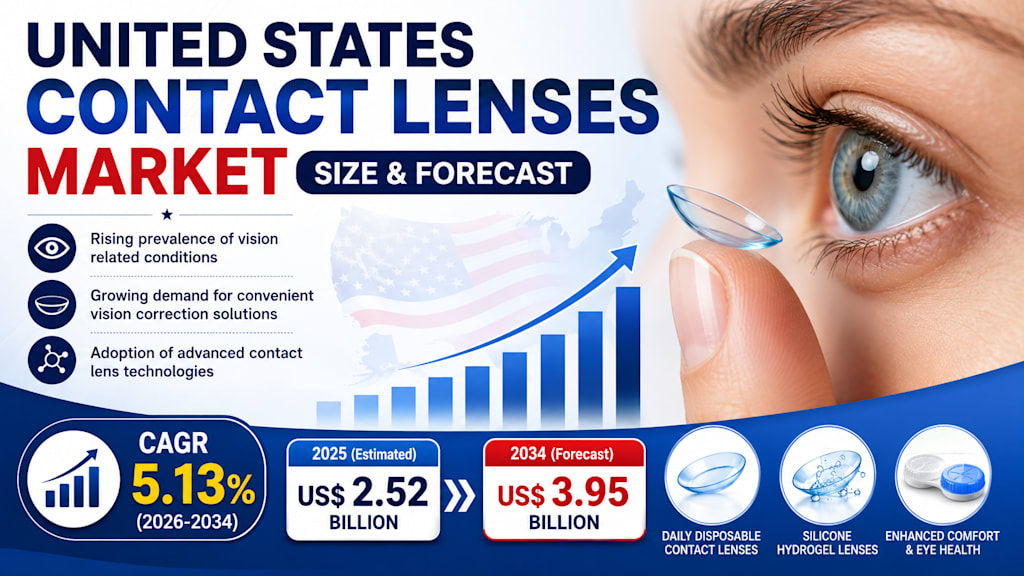
According to Renub Research, the United States Contact Lenses Market is projected to grow from US$ 2.52 billion in 2025 to US$ 3.95 billion by 2034, expanding at a compound annual growth rate (CAGR) of 5.13% between 2026 and 2034. The market's growth is supported by rising vision disorders, increasing adoption of advanced lens technologies, and growing demand for lifestyle-oriented vision correction solutions.
As technology continues to improve lens performance and comfort, contact lenses are becoming an increasingly important component of eye care across the United States.
Understanding Contact Lenses and Their Growing Appeal
Contact lenses are thin, curved optical devices designed to sit directly on the surface of the eye to correct vision disorders such as nearsightedness, farsightedness, astigmatism, and presbyopia.
Unlike eyeglasses, contact lenses move naturally with the eye and provide a wider field of vision. Modern contact lenses are typically manufactured using advanced materials such as silicone hydrogel, which allows oxygen to pass through the lens and reach the eye, improving comfort and eye health.
Available in daily disposable, reusable, extended-wear, and cosmetic varieties, contact lenses offer flexibility for different lifestyles and vision needs.
Their combination of convenience, functionality, and aesthetic appeal has made them a preferred vision correction option for millions of Americans.
Rising Vision Disorders Continue to Fuel Demand
One of the primary drivers of the United States contact lenses market is the increasing prevalence of vision disorders.
Conditions such as myopia, hyperopia, astigmatism, and presbyopia are becoming more common due to factors including aging populations, lifestyle changes, and prolonged use of digital devices. As Americans spend more time using computers, smartphones, and tablets, eye strain and vision deterioration are becoming increasingly widespread.
The report notes that approximately 4.2 million Americans aged 40 years and older were living with vision impairment as of 2012, and that number is expected to more than double by 2050.
The aging U.S. population also contributes significantly to market growth, as older adults are more susceptible to vision-related conditions requiring corrective solutions.
As vision health challenges continue increasing, demand for contact lenses is expected to remain strong.
Advanced Lens Technologies Are Transforming User Experiences
Technological innovation remains one of the most influential factors driving the contact lenses market.
Manufacturers continue developing advanced materials and designs that improve comfort, safety, and visual performance. Silicone hydrogel lenses, for example, offer superior oxygen permeability compared to earlier lens materials, helping reduce dryness and irritation while supporting longer wear times.
In addition to material improvements, specialized lenses are expanding treatment possibilities for patients with complex vision conditions.
Multifocal lenses help address age-related vision changes, while toric lenses provide effective correction for astigmatism.
The report highlights Alcon's February 2026 launch of TOTAL30 Multifocal for Astigmatism, featuring Water Gradient Technology designed to enhance comfort and visual performance for patients experiencing both astigmatism and presbyopia.
As research and development continue advancing, future contact lenses are expected to deliver even greater comfort and customization.
Lifestyle Preferences Are Driving Adoption
Consumer lifestyle preferences play a major role in the popularity of contact lenses.
Many individuals prefer contact lenses because they provide a natural appearance and do not alter facial aesthetics like eyeglasses. This is particularly important among younger consumers, professionals, and individuals who value appearance and personal style.
Athletes and active individuals also favor contact lenses because they offer unrestricted peripheral vision and do not interfere with physical activities.
Social media influences and increased focus on personal image have further strengthened interest in contact lenses, particularly among younger demographics.
The growing demand for convenient, discreet, and aesthetically appealing vision correction solutions continues supporting market growth.
Cosmetic Contact Lenses Are Becoming Increasingly Popular
The cosmetic contact lenses segment is experiencing strong growth across the United States.
These lenses allow users to change or enhance their eye color while also providing vision correction if needed. Available in a wide range of colors, patterns, and designs, cosmetic contact lenses have become popular among consumers seeking to express personal style and experiment with different looks.
Young adults and fashion-conscious consumers represent key customer groups within this segment.
Improved lens materials and manufacturing technologies have enhanced comfort and safety, making cosmetic lenses more attractive to mainstream consumers.
As beauty and personal care trends continue evolving, cosmetic contact lenses are expected to remain an important growth segment.
Daily Disposable Lenses Continue to Gain Market Share
Daily disposable contact lenses are becoming increasingly popular due to their convenience and hygiene benefits.
These lenses are worn once and discarded at the end of the day, eliminating the need for cleaning solutions and storage cases. Many consumers appreciate the simplicity and reduced maintenance associated with daily disposable products.
Healthcare professionals often recommend daily disposable lenses because they reduce the risk of contamination and eye infections associated with improper lens care.
The growing focus on eye health and convenience is encouraging more consumers to switch from reusable lenses to daily disposable alternatives.
As awareness of hygiene and safety continues increasing, this segment is expected to experience sustained growth.
Hybrid Contact Lenses Offer Advanced Vision Solutions
Hybrid contact lenses represent a specialized segment experiencing growing demand.
These lenses combine a rigid gas-permeable center with a soft outer ring, providing both excellent visual clarity and improved comfort. Hybrid lenses are particularly useful for individuals with complex vision conditions such as keratoconus, irregular corneas, and severe astigmatism.
Many patients find hybrid lenses more comfortable than traditional rigid lenses while still benefiting from superior optical performance.
Increasing awareness among eye care professionals and patients is supporting wider adoption of these advanced lens solutions.
As more consumers seek customized vision correction options, demand for hybrid lenses is expected to increase steadily.
Spherical Contact Lenses Remain the Largest Segment
Spherical contact lenses continue to dominate the market due to their widespread use in correcting common vision conditions such as nearsightedness and farsightedness.
These lenses are designed with a uniform shape and are suitable for individuals who do not require astigmatism correction. Their affordability, effectiveness, and broad availability contribute to their popularity.
Spherical lenses are available in daily, weekly, and monthly replacement schedules, providing flexibility for consumers with different preferences.
The increasing prevalence of myopia, particularly among younger populations, continues supporting demand within this segment.
As vision correction needs expand, spherical lenses are expected to remain a foundational category within the contact lenses market.
Retail Pharmacies Continue to Lead Distribution
Retail pharmacies play a critical role in the distribution of contact lenses across the United States.
Consumers value pharmacies because they provide trusted brands, prescription verification services, professional guidance, and convenient access to eye care products. Large pharmacy chains maintain extensive retail networks, making contact lenses widely available throughout the country.
Many pharmacies also offer promotional pricing, insurance support, and loyalty programs that encourage repeat purchases.
As awareness of eye health continues growing, retail pharmacies are expected to remain one of the most important sales channels for contact lenses.
Hospital Pharmacies Support Specialized Patient Needs
Hospital pharmacies represent another important distribution channel, particularly for patients requiring specialized contact lenses.
These facilities often work directly with ophthalmologists and eye care specialists to provide therapeutic lenses, post-surgical lenses, and custom vision correction solutions.
Patients recovering from eye surgeries or managing complex ocular conditions frequently rely on hospital-based vision care services.
As healthcare facilities continue adopting advanced ophthalmic technologies, the role of hospital pharmacies within the contact lenses market is expected to expand further.
Regional Markets Continue to Grow
California
California remains one of the largest contact lens markets in the United States due to its large population, strong healthcare infrastructure, and high consumer awareness regarding vision care.
Growing screen usage, increasing prevalence of vision disorders, and strong demand for cosmetic contact lenses continue supporting market growth throughout the state.
Texas
Texas continues experiencing rapid growth due to its large population, expanding healthcare network, and rising awareness of eye health.
Professionals, students, and athletes increasingly choose contact lenses because of their comfort and convenience. The growing popularity of cosmetic lenses also contributes to market expansion within the state.
New Jersey
New Jersey's market benefits from advanced healthcare facilities, strong retail infrastructure, and increasing awareness of vision correction solutions.
The state's urban population and growing digital device usage contribute to rising demand for contact lenses.
Washington
Washington continues seeing increased demand for contact lenses due to population growth, expanding healthcare services, and growing awareness of eye care.
The state's technology-driven workforce contributes to increased screen exposure and associated vision challenges, supporting demand for vision correction products.
Challenges Continue to Affect Market Growth
Despite strong growth prospects, the market faces several challenges.
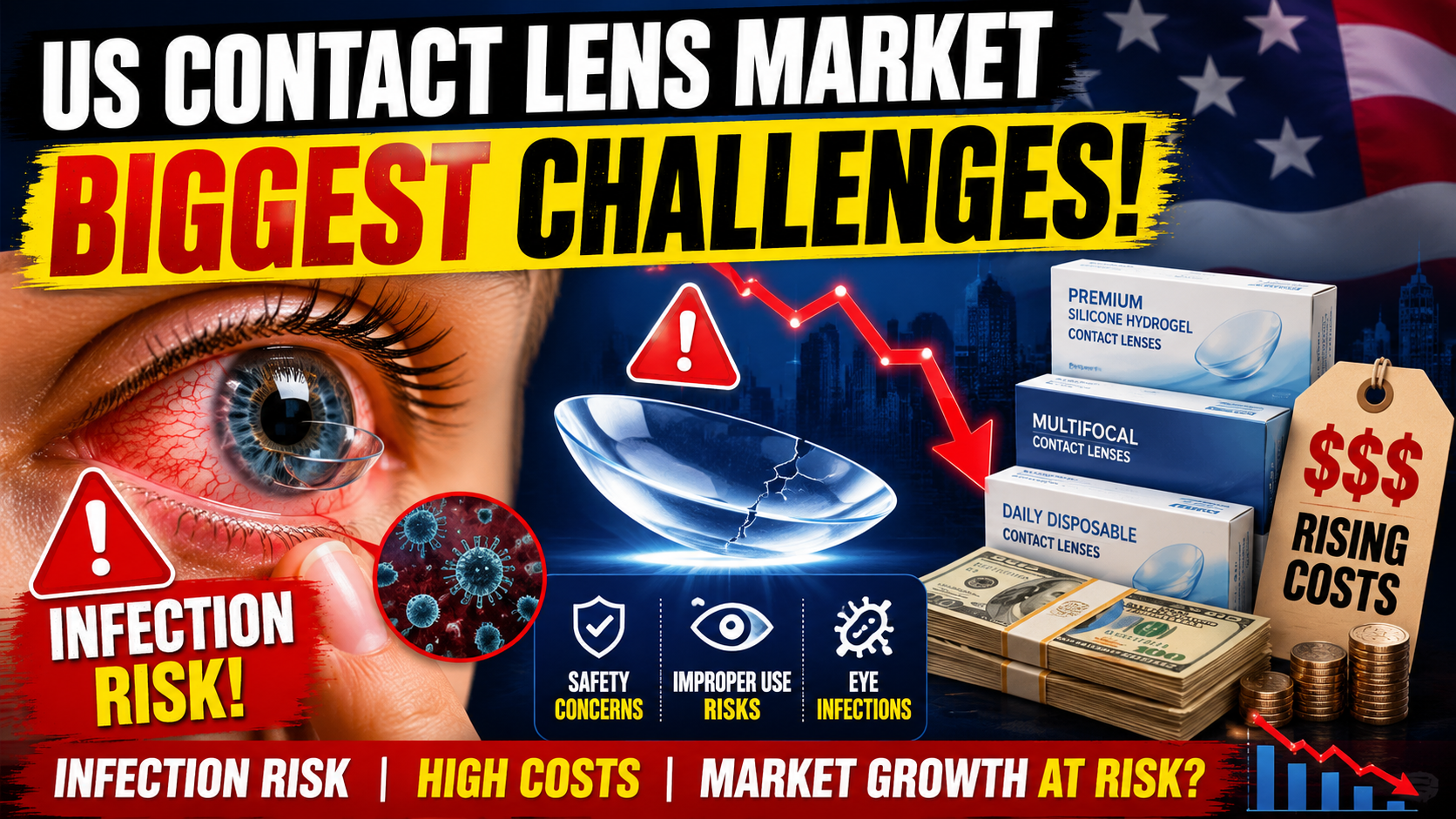
One of the most significant concerns is the risk of eye infections and complications associated with improper contact lens use. Poor hygiene practices, extended wear beyond recommended schedules, and inadequate lens care can increase the likelihood of infections and discomfort.
Manufacturers and healthcare professionals continue emphasizing education and safety to minimize these risks.
Another challenge is the relatively high cost of premium and specialized lenses. Silicone hydrogel lenses, multifocal lenses, and daily disposables often carry higher prices than traditional lenses or eyeglasses.
Additional costs related to replacements, maintenance products, and eye examinations may discourage some consumers from adopting premium options.
Addressing affordability concerns will remain important for future market growth.
Leading Companies Driving Innovation
The United States contact lenses market includes several major manufacturers focused on advancing lens technologies and improving patient experiences.
Key companies highlighted in the report include Bausch & Lomb Incorporated, Alcon, Carl Zeiss Meditec AG, The Cooper Companies, Hoya Corporation, EssilorLuxottica, Menicon Co. Ltd., and SynergEyes Inc. These organizations continue investing in advanced materials, specialty lens designs, and innovative vision correction solutions.
Their ongoing research and product development efforts are helping shape the future of vision care.
Final Thoughts
The United States contact lenses market is entering a period of steady and sustained growth driven by rising vision disorders, increasing digital device usage, and continued innovation in lens technology.
With the market projected to expand from US$ 2.52 billion in 2025 to US$ 3.95 billion by 2034, contact lenses are expected to remain a critical component of modern vision care. Advances in silicone hydrogel materials, multifocal designs, daily disposable products, and specialty lenses are improving comfort, safety, and visual performance for millions of users.
While challenges related to cost and eye safety remain, the long-term outlook for the industry remains highly positive. As consumers continue seeking convenient, effective, and aesthetically appealing vision correction solutions, contact lenses will play an increasingly important role in supporting eye health and quality of life across the United States.
About the Creator
Enjoyed the story? Support the Creator.
Subscribe for free to receive all their stories in your feed.
Comments
There are no comments for this story
Be the first to respond and start the conversation.