
United States Clove Cigarettes Market Set to Reach US$ 58.12 Billion by 2034 Amid Rising Demand for Specialty Tobacco Products
A Niche Tobacco Category Finds New Momentum Through Premium Positioning, Cultural Appeal, and Adult Consumer Loyalty

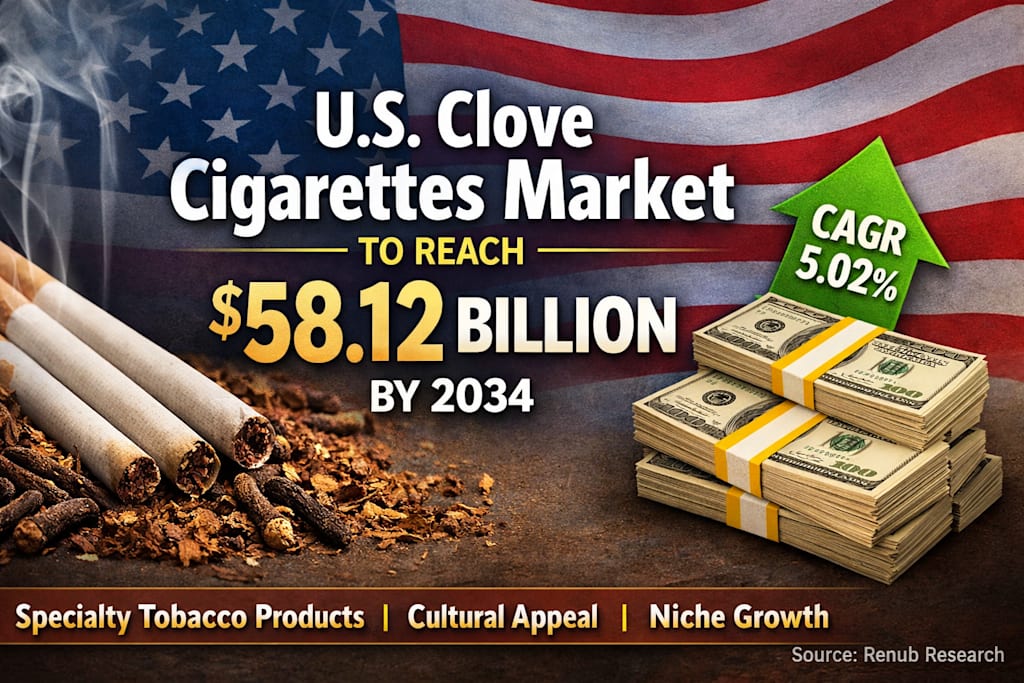
The United States tobacco market has changed dramatically over the last two decades. Traditional cigarette volumes have faced pressure from regulation, health awareness, taxation, and shifting consumer preferences. Yet within this changing landscape, some specialty categories continue to carve out space for themselves. One of the most interesting among them is the clove cigarettes segment.
According to Renub Research, the United States Clove Cigarettes Market is projected to grow from US$ 37.4 Billion in 2025 to US$ 58.12 Billion by 2034, expanding at a CAGR of 5.02% during 2026–2034. This growth reflects steady demand from adult consumers seeking premium, flavored, and culturally distinctive tobacco experiences.
While clove cigarettes remain a niche category compared with mainstream tobacco products, their resilience demonstrates how consumer demand for differentiated experiences continues to shape modern markets.
What Are Clove Cigarettes?
Clove cigarettes, often called kreteks, originated in Indonesia and are traditionally made using a blend of tobacco, cloves, and flavoring ingredients. The mixture creates a smoking experience unlike conventional cigarettes.
The burning cloves release eugenol, a natural compound that produces a mild numbing sensation in the throat while also contributing to the product’s signature aroma and spicy sweetness. Because of this, clove cigarettes are often perceived as smoother, slower-burning, and more aromatic than standard cigarettes.
For many adult consumers, the appeal lies not only in flavor but in the product’s cultural identity and premium image.

Why the U.S. Market Is Growing
Although clove cigarettes are not mainstream in America, several trends are helping this segment expand.
1. Demand for Specialty Tobacco Products
Modern consumers increasingly look for personalized experiences across food, beverages, fashion, and even tobacco. This trend has created opportunities for products that feel different from standard options.
Clove cigarettes attract adults who want a more distinctive sensory experience. Their spicy aroma, smoother draw, and premium positioning make them stand out in a crowded market. Specialty tobacco stores and curated online retailers have also made it easier for consumers to discover niche products.
2. Premium and Exotic Branding
Unlike mass-market tobacco brands, clove cigarettes often carry an exotic identity tied to Indonesian heritage. Imported products especially benefit from perceptions of craftsmanship, authenticity, and rarity.
In urban U.S. markets, many consumers are willing to pay more for products that feel unique or culturally rich. This premium image helps brands maintain stronger pricing and customer loyalty.
3. Lifestyle and Subculture Influence
Historically, clove cigarettes have held popularity in artistic, nightlife, and alternative communities. Their distinctive aroma and image have helped them gain recognition among consumers who value self-expression and individuality.
This connection to lifestyle identity continues to support demand in metropolitan areas where boutique products often perform well.
The Role of Regulation
The U.S. tobacco industry is one of the most regulated markets in the world, and clove cigarettes are no exception.
Following restrictions on flavored cigarettes, many clove products returned to shelves under the clove cigar category. This regulatory classification allowed continued market access while requiring product modifications and compliance with cigar-related rules.
However, future policy changes remain a major uncertainty. Any tighter restrictions on flavored cigars could directly affect sales, product availability, and brand growth.
For manufacturers, this means long-term success depends on adaptability, packaging compliance, distribution discipline, and responsible age-restricted marketing.
Hand-Rolled vs Machine-Made Kreteks
Hand-Rolled Kreteks
Handcrafted clove cigarettes appeal to consumers who appreciate artisanal quality and traditional production methods. These products are often viewed as premium offerings with richer flavor complexity and authentic heritage value.
Available mostly through specialty tobacconists, hand-rolled kreteks represent a smaller but loyal segment of the market.
Machine-Made Kreteks
Machine-made kreteks dominate market volume because they offer consistent quality, reliable supply, predictable pricing, and broader retail presence.
These products are commonly found in convenience stores, gas stations, and online tobacco retailers, making them more accessible to everyday adult consumers.
Consumer Demographics
Male Consumers
Many male consumers are drawn to clove cigarettes for their bold flavor, slow burn, and stronger sensory impact. Those who already enjoy cigars or full-bodied tobacco products may find kreteks especially appealing.
Female Consumers
Female adult consumers often appreciate clove cigarettes for their aromatic smoke, smoother draw, and distinctive taste profile. Premium packaging and smaller pack formats can also increase appeal in this segment.
Together, these demographics help diversify the category and support steady niche demand.
Top Regional Markets in the United States
California
California remains one of the most influential markets for clove cigarettes due to its multicultural population, strong specialty retail scene, and openness to global consumer products.
Cities like Los Angeles, San Diego, and San Francisco offer ideal environments for premium imported tobacco categories.
New York
New York’s dense urban population, tourism economy, and strong boutique retail culture make it another key market. Artistic and internationally connected communities help sustain demand for exotic tobacco alternatives.
Washington
Seattle and surrounding areas have long supported alternative consumer cultures and artisanal products. This regional mindset aligns naturally with premium clove cigarette offerings.
Arizona
Arizona is emerging as a growth state thanks to younger adult populations, expanding metro areas like Phoenix and Tucson, and rising interest in lifestyle-oriented tobacco products.
Challenges Ahead
Despite optimistic forecasts, the industry still faces significant barriers.
1. Limited Mainstream Penetration
Most adult smokers continue to prefer traditional cigarettes, cigars, or newer nicotine alternatives. Clove cigarettes remain a specialty taste that may not appeal to all users.
2. Regulatory Pressure
Flavor restrictions, advertising rules, and taxation continue to create uncertainty for the segment.
3. Supply Dependence
Many clove products rely on imports, which can expose brands to logistical disruptions, currency shifts, and pricing pressures.
4. Competition from Alternatives
Vapes, nicotine pouches, cigars, and premium tobacco innovations all compete for the same adult consumer wallet.
Key Companies in the Market
Several established global tobacco and kretek producers are active in this space, including:
Philip Morris Products S.A.
PT Gudang Garam Tbk
PT Djarum
Nojorono Tobacco Indonesia
JT International SA
Bentoel Group
Wismilak Group
Kretek International, Inc.
Their strategies often focus on brand heritage, product innovation, packaging upgrades, and premium positioning.
What the Future Looks Like
The future of the U.S. clove cigarettes market will likely be shaped by a balance between regulation and consumer demand.
If flavored tobacco rules remain stable, the category may continue its steady expansion through specialty retail, digital commerce, and premium urban markets. Growth will likely remain strongest among adult consumers seeking sensory variety, heritage brands, and non-mainstream experiences.
At the same time, brands that succeed will need to emphasize compliance, quality, and differentiated value rather than mass-market ambitions.
Final Thoughts
The United States Clove Cigarettes Market proves that even in mature and highly regulated industries, niche categories can still thrive when they offer something unique.
With projections rising from US$ 37.4 Billion in 2025 to US$ 58.12 Billion by 2034, the segment reflects enduring demand for products rooted in identity, flavor, and experience.
About the Creator
Enjoyed the story? Support the Creator.
Subscribe for free to receive all their stories in your feed.
Comments
There are no comments for this story
Be the first to respond and start the conversation.