
United States Circuit Breaker Market: Trends and Forecast 2026
The United States circuit breaker market size reached USD 2.6 Billion in 2025. Looking forward, IMARC Group expects the market to reach USD 4.0 Billion by 2034, exhibiting a growth rate (CAGR) of 4.80% during 2026-2034.

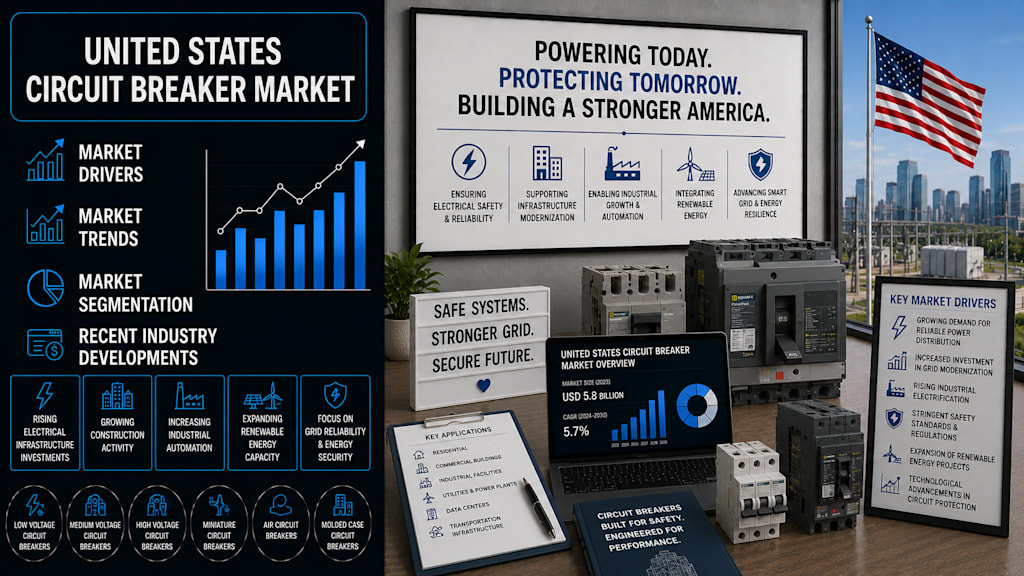
United States Circuit Breaker Market Size, Growth, and Forecast (2026–2034)
Reliable electricity is essential for modern life. From homes and businesses to manufacturing facilities and data centers, electrical systems power nearly every aspect of the economy. Behind the scenes, circuit breakers play a crucial role in maintaining electrical safety by protecting systems from overloads, short circuits, and other faults that could cause damage or disruptions.
In 2026, the importance of electrical protection technologies continues to grow as the United States invests in infrastructure modernization, renewable energy projects, electric vehicle charging networks, and smart grid technologies. As power systems become more complex and interconnected, demand for advanced circuit protection solutions is increasing.
The United States circuit breaker market reached USD 2.6 Billion in 2025 and is projected to grow to USD 4.0 Billion by 2034, exhibiting a compound annual growth rate (CAGR) of 4.80% during 2026–2034. This growth reflects the increasing need for reliable electrical infrastructure across residential, commercial, industrial, and utility sectors.
Request a Sample Report with Latest 2026 Data & Forecasts:
Key Trends Shaping the United States Circuit Breaker Market
Several major trends are influencing market development:
• Modernization of aging electrical infrastructure
• Expansion of renewable energy installations
• Growth of electric vehicle charging networks
• Increasing adoption of smart grid technologies
• Rising industrial automation investments
These trends are creating new opportunities for innovation and market expansion.
Infrastructure Upgrades Are Driving Demand
Much of the United States electrical infrastructure was built decades ago and now requires modernization.
Utilities, government agencies, and private organizations are investing in upgrades designed to improve reliability, efficiency, and resilience. These projects often require advanced circuit protection equipment capable of supporting modern electrical demands.
New residential developments, commercial buildings, and industrial facilities also contribute to increased demand for electrical safety solutions.
As infrastructure investments continue throughout 2026–2034, circuit breakers will remain essential components of modernization efforts.
Renewable Energy Is Reshaping Power Systems
The transition toward cleaner energy sources is transforming how electricity is generated and distributed.
Solar farms, wind energy projects, and energy storage systems require specialized electrical protection technologies to ensure safe and efficient operations. Circuit breakers help manage variable power flows while protecting equipment from electrical faults.
As renewable energy adoption expands, utilities and energy developers are investing in advanced electrical infrastructure capable of supporting more decentralized power generation.
This shift is expected to remain a major growth driver during the forecast period.
Electric Vehicle Infrastructure Creates New Opportunities
Electric vehicle adoption is increasing rapidly across the United States.
To support this transition, significant investments are being made in charging infrastructure. Public charging stations, commercial charging networks, and residential charging systems all require reliable electrical protection mechanisms.
Circuit breakers help ensure the safe operation of charging equipment while protecting users and infrastructure from electrical hazards.
As EV adoption accelerates throughout 2026–2034, demand for electrical safety solutions is expected to rise alongside charging network expansion.
Smart Grids Are Enhancing Energy Management
Smart grid technologies are becoming increasingly important in modern power systems.
Unlike traditional grids, smart grids use digital communication technologies to monitor, manage, and optimize electricity distribution. These systems improve efficiency, reliability, and responsiveness.
Advanced circuit breakers equipped with monitoring and communication capabilities play an important role in supporting smart grid operations. They provide real-time data that helps utilities identify faults, manage loads, and improve service reliability.
The continued development of smart grid infrastructure is creating new opportunities for innovation within the circuit breaker industry.
Industrial Automation Supports Market Growth
Manufacturing facilities are becoming more automated and technologically advanced.
Automated production systems, robotics, and industrial control equipment require dependable electrical protection to ensure uninterrupted operations. Circuit breakers help protect sensitive equipment while minimizing downtime caused by electrical faults.
As manufacturers continue investing in automation technologies, demand for advanced electrical safety solutions is expected to increase.
Industrial modernization initiatives will likely remain an important source of market growth throughout the forecast period.
Investment Opportunities in the Industry
The expanding electrical infrastructure sector presents attractive opportunities for investors and businesses.
Key investment areas include:
• Smart circuit breaker technologies
• Renewable energy infrastructure
• Electric vehicle charging systems
• Industrial automation solutions
• Smart grid modernization projects
Companies that focus on innovation, energy efficiency, and digital integration are well positioned to benefit from evolving market requirements.
Research and development activities are also helping create more intelligent and reliable electrical protection systems.
Challenges Facing the Market
Despite positive growth prospects, the industry faces several challenges.
The cost of installing and upgrading electrical infrastructure can be significant, particularly in large-scale projects. Retrofitting older facilities with modern technologies may also present technical and financial obstacles.
Supply chain disruptions can affect component availability and project timelines. Additionally, manufacturers and operators must comply with strict safety standards and regulatory requirements.
Addressing these challenges will be important for ensuring continued market development.
Future Outlook (2026–2034)
Looking ahead, the United States circuit breaker market is expected to continue growing as electrical systems become more sophisticated and interconnected.
Between 2026 and 2034, investments in renewable energy, smart grids, electric vehicle infrastructure, and industrial automation are likely to drive increasing demand for advanced circuit protection technologies. Organizations will continue seeking solutions that improve safety, reliability, and operational efficiency.
Future developments may include intelligent circuit breakers with enhanced monitoring capabilities, predictive maintenance features, and deeper integration with digital energy management platforms.
These innovations are expected to support the next generation of electrical infrastructure.
Conclusion
The United States circuit breaker market is evolving as infrastructure modernization, renewable energy expansion, smart grid development, and industrial automation reshape the country's electrical landscape. Circuit breakers remain essential for ensuring safety, reliability, and operational continuity across a wide range of applications.
While challenges such as installation costs, infrastructure complexity, and regulatory requirements persist, continued technological innovation and supportive investment trends are creating strong growth opportunities. As the nation's energy systems continue advancing throughout 2026–2034, circuit breakers will remain a critical component of modern electrical infrastructure.
About the Creator
Jackson Watson
I'm a market research analyst at Imarc group company delivering data-driven insights, industry analysis, and customized research solutions. We support businesses with market sizing, competitive analysis, and strategic decision-making.
Enjoyed the story? Support the Creator.
Subscribe for free to receive all their stories in your feed.
Comments
There are no comments for this story
Be the first to respond and start the conversation.