
United States Cell and Gene Therapy Third-Party Logistics Market Set to Reach US$ 5.88 Billion by 2033 as Advanced Therapies Transform Healthcare Delivery
Specialized Cold Chain Infrastructure, Expanding Therapy Pipelines, and Growing Biopharmaceutical Partnerships Drive Market Expansion Across the United States

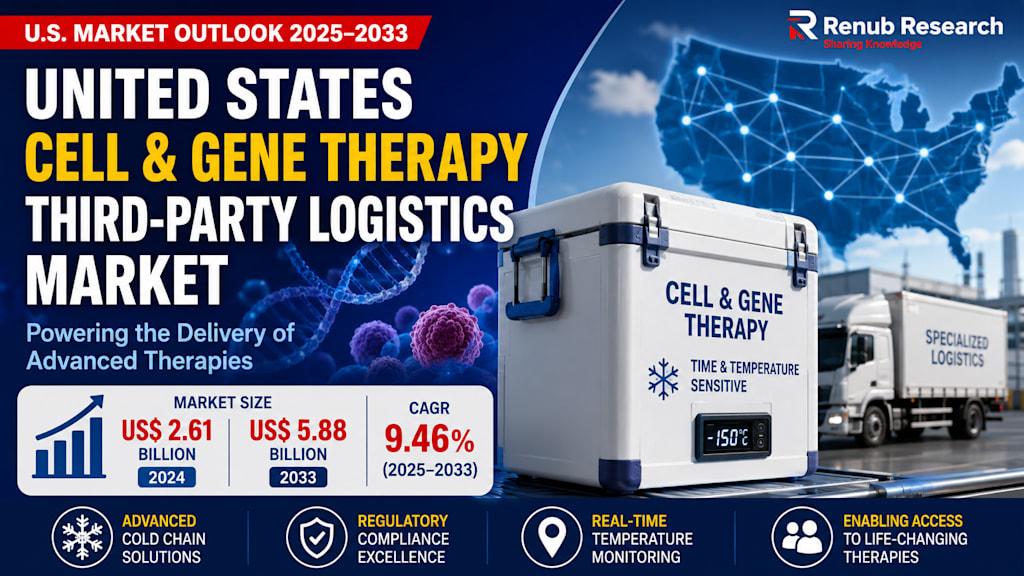
United States Cell and Gene Therapy Third-Party Logistics Market Outlook
The United States Cell and Gene Therapy Third-Party Logistics (3PL) Market is entering a transformative phase as advanced therapies become a cornerstone of modern healthcare. According to Renub Research, the market is projected to increase from US$ 2.61 billion in 2024 to US$ 5.88 billion by 2033, growing at a CAGR of 9.46% during 2025–2033.
The rapid commercialization of cell and gene therapies has introduced new challenges and opportunities within healthcare logistics. Unlike traditional pharmaceuticals, these therapies are highly sensitive, often patient-specific, and require specialized handling throughout the supply chain. From manufacturing facilities to treatment centers, maintaining product integrity is essential for successful patient outcomes.
As a result, third-party logistics providers have emerged as critical partners for biotechnology and pharmaceutical companies. Their ability to deliver temperature-controlled transportation, real-time monitoring, chain-of-custody management, and regulatory compliance services is becoming increasingly important as more therapies enter the market.
The convergence of biotechnology innovation, personalized medicine, and advanced logistics infrastructure is creating a robust growth environment for specialized logistics providers across the United States.
The Growing Importance of Cell and Gene Therapy Logistics
Cell and gene therapies are fundamentally different from conventional medicines. Many products involve living cells or genetically modified materials that require ultra-cold storage conditions and highly controlled transportation environments.
Unlike standard pharmaceutical products that may remain stable for months, some cell therapies have extremely limited shelf lives. Any disruption during transport can compromise product efficacy and potentially impact patient treatment outcomes.
This unique nature of advanced therapies has elevated logistics from a support function to a strategic component of therapy delivery. Third-party logistics companies now play a direct role in ensuring treatment success by preserving product integrity throughout the supply chain.
As more therapies receive regulatory approvals and move into commercial distribution, demand for specialized logistics solutions is expected to accelerate significantly.
Expanding Cell and Gene Therapy Pipeline Driving Market Growth
One of the strongest growth drivers in the U.S. market is the rapidly expanding pipeline of cell and gene therapies.
Biopharmaceutical companies are investing billions of dollars into research and development programs targeting cancer, rare diseases, neurological disorders, cardiovascular conditions, and inherited genetic disorders. Hundreds of clinical trials are currently underway across the country, with many candidates progressing toward commercialization.
Every new therapy entering the market creates demand for highly specialized logistics support. These therapies require customized transportation solutions, secure handling protocols, and advanced monitoring systems that traditional logistics providers may not be equipped to offer.
As therapy developers scale production and expand patient access, third-party logistics providers are increasingly investing in dedicated infrastructure and specialized capabilities to meet evolving industry requirements.
Cold Chain Innovation Becoming a Competitive Necessity
Cold chain management has become the backbone of the cell and gene therapy logistics ecosystem.
Many advanced therapies require temperatures ranging from refrigerated conditions to cryogenic environments below -150°C. Maintaining these temperatures consistently throughout transportation and storage is essential for preserving product viability.
To meet these requirements, logistics providers are investing heavily in:
Cryogenic storage facilities
Liquid nitrogen transportation systems
Temperature-controlled packaging solutions
Smart sensors and monitoring devices
Real-time shipment visibility platforms
Predictive risk management systems
These investments not only ensure therapy integrity but also help providers comply with strict regulatory requirements and build trust among therapy developers and healthcare institutions.
As personalized medicine expands, cold chain logistics will remain one of the most critical components of market growth.
Digital Transformation Reshaping Logistics Operations
Technology is playing an increasingly important role in modern cell and gene therapy logistics.
Third-party logistics providers are adopting advanced digital solutions to enhance transparency, efficiency, and compliance across the supply chain.
Key technologies gaining traction include:
Internet of Things (IoT)
IoT-enabled sensors continuously monitor temperature, humidity, location, and shipment conditions during transit. This real-time visibility helps prevent disruptions and ensures product quality.
Artificial Intelligence (AI)
AI-powered analytics support demand forecasting, route optimization, and risk management. These tools help providers improve operational efficiency while minimizing costly shipment delays.
Blockchain Technology
Blockchain systems are being explored to strengthen chain-of-custody tracking and improve transparency across complex supply networks.
Cloud-Based Logistics Platforms
Cloud solutions facilitate communication among manufacturers, logistics providers, treatment centers, and regulatory authorities, creating a more connected ecosystem.
Together, these technologies are helping logistics companies deliver greater reliability while supporting the unique needs of advanced therapy manufacturers.
Regulatory Compliance Driving Demand for Specialized Providers
The regulatory environment surrounding cell and gene therapies is becoming increasingly stringent.
Authorities require strict adherence to:
Good Distribution Practices (GDP)
Chain-of-identity protocols
Chain-of-custody requirements
Product traceability standards
Temperature monitoring regulations
Documentation and reporting requirements
Failure to comply with these regulations can lead to product loss, financial penalties, and patient safety risks.
As compliance expectations continue to rise, therapy developers are increasingly outsourcing logistics operations to specialized providers with proven expertise in regulated healthcare supply chains.
This trend is expected to remain a major catalyst for market growth through 2033.
Challenges Limiting Market Expansion
High Cost of Specialized Logistics
One of the most significant challenges facing the industry is the high cost associated with advanced logistics services.
Building and maintaining cryogenic storage facilities, implementing real-time monitoring technologies, and employing specialized personnel require substantial investments.
These costs often translate into higher shipping expenses, particularly for smaller biotechnology firms and early-stage clinical programs.
Balancing service quality with cost efficiency remains a critical challenge for market participants.
Workforce Expertise Gap
The industry also faces a shortage of skilled professionals capable of managing cell and gene therapy logistics operations.
Personnel must understand:
Advanced cold chain systems
Regulatory requirements
Quality assurance procedures
Emergency response protocols
Specialized packaging technologies
As therapy volumes continue to increase, workforce development and training initiatives will become increasingly important.
Regional Analysis: Key Growth States
California
California remains the leading market for cell and gene therapy logistics in the United States.
The state's biotechnology ecosystem, anchored by innovation hubs such as San Francisco, San Diego, and Los Angeles, generates substantial demand for specialized logistics services. The concentration of therapy developers, research institutions, and clinical trial centers positions California as a major growth engine for the industry.
Texas
Texas is rapidly emerging as a strategic logistics hub.
Houston and Dallas host world-class healthcare institutions and expanding biotechnology clusters. Combined with strong transportation infrastructure, Texas offers an attractive environment for logistics providers investing in advanced therapy distribution capabilities.
New York
New York's strong healthcare ecosystem and research community continue to support robust demand for specialized logistics solutions.
The state's growing role in clinical research and therapy commercialization is driving investments in cold chain infrastructure and digital supply chain technologies.
Florida
Florida is becoming increasingly important due to its expanding healthcare sector, large patient population, and strategic geographic location.
The state's proximity to Latin American markets also enhances its role as a potential gateway for international distribution activities.
Competitive Landscape
The U.S. cell and gene therapy third-party logistics market is characterized by strategic partnerships, technology investments, and network expansion initiatives.
Leading providers are focused on strengthening cold chain capabilities, enhancing digital visibility, and expanding geographic reach to support growing therapy commercialization efforts.
Major companies operating in the market include:
Cencora Corporation
Cardinal Health
McKesson Corporation
EVERSANA
Knipper Health
Arvato SE
DHL
Kuehne+Nagel
These organizations continue to invest heavily in specialized infrastructure and service offerings to address the unique requirements of advanced therapies.
10 Recent Developments from Leading Companies
1. Cencora Corporation
Cencora has expanded its cell and gene therapy service platform through enhanced cold chain capabilities and integrated commercialization support for advanced therapy manufacturers.
2. Cardinal Health
Cardinal Health continues investing in specialty logistics solutions designed to support temperature-sensitive biologics and personalized therapies across the United States.
3. McKesson Corporation
McKesson has strengthened its biopharma logistics network through advanced distribution technologies and expanded support for specialty pharmaceutical products.
4. EVERSANA
EVERSANA has broadened its integrated commercialization and logistics services to assist biotechnology companies bringing cell and gene therapies to market.
5. Knipper Health
Knipper Health has expanded patient access and specialty distribution services, supporting increasingly complex advanced therapy supply chains.
6. Arvato SE
Arvato has enhanced its healthcare logistics infrastructure, focusing on end-to-end visibility and temperature-controlled transportation solutions.
7. DHL
DHL Supply Chain continues investing in life sciences logistics facilities and advanced cold chain technologies to meet growing demand from therapy developers.
8. Kuehne+Nagel
Kuehne+Nagel has strengthened its pharmaceutical logistics network through expanded cold storage capabilities and digital shipment monitoring solutions.
9. DHL Life Sciences Division
The company has accelerated investments in cryogenic logistics systems supporting the transport of highly sensitive cell and gene therapy products.
10. Cencora and Biopharma Partnerships
Cencora has continued establishing strategic collaborations with therapy developers aimed at streamlining commercialization and distribution pathways for advanced therapies.
Future Market Outlook
The future of the United States Cell and Gene Therapy Third-Party Logistics Market appears exceptionally promising. As precision medicine becomes more mainstream, logistics providers will play an increasingly central role in therapy delivery.
Growing therapy approvals, expanding patient populations, and increasing investment in biotechnology innovation will continue to create strong demand for specialized logistics services.
At the same time, advances in digital technologies, automation, and cold chain infrastructure will help providers improve efficiency and reliability while supporting regulatory compliance.
Companies capable of delivering integrated, technology-driven, and patient-centric logistics solutions will be best positioned to capitalize on the opportunities emerging within this rapidly evolving market.
Final Thoughts
The United States Cell and Gene Therapy Third-Party Logistics Market is evolving into one of the most strategically important segments within the healthcare supply chain. With the market expected to grow from US$ 2.61 billion in 2024 to US$ 5.88 billion by 2033, specialized logistics providers are becoming indispensable partners in the delivery of life-changing therapies.
As cell and gene therapies move from niche treatments to mainstream medical solutions, the need for secure, compliant, and technologically advanced logistics networks will continue to grow. Organizations that invest in cold chain excellence, workforce expertise, and digital innovation will be well-positioned to shape the next generation of healthcare logistics in the United States.
About the Creator
Enjoyed the story? Support the Creator.
Subscribe for free to receive all their stories in your feed.
Comments
There are no comments for this story
Be the first to respond and start the conversation.