
United States Cardiovascular Devices Market Outlook 2026–2034: How Innovation and Rising Heart Disease Cases Are Driving Healthcare Transformation
Growing prevalence of cardiovascular diseases, rapid technological advancements, and increasing demand for minimally invasive treatments are fueling significant growth in the United States cardiovascular devices market.


Cardiovascular diseases remain one of the most significant healthcare challenges in the United States, affecting millions of people every year and placing enormous pressure on healthcare systems. As heart disease continues to be a leading cause of death nationwide, the demand for advanced diagnostic, monitoring, and treatment technologies has never been greater.
The growing burden of conditions such as coronary artery disease, heart failure, arrhythmias, hypertension, and other cardiovascular disorders is driving substantial investments in innovative medical devices. These technologies are helping healthcare providers diagnose diseases earlier, monitor patients more effectively, and perform treatments with greater precision and safety.
At the same time, advances in minimally invasive procedures, wearable health technologies, artificial intelligence, and remote patient monitoring are transforming the way cardiovascular care is delivered. Patients now have access to treatments that offer shorter recovery times, fewer complications, and improved quality of life.
According to Renub Research, the United States Cardiovascular Devices Market is expected to grow from US$ 18.79 Billion in 2025 to US$ 32.62 Billion by 2034, registering a Compound Annual Growth Rate (CAGR) of 6.32% between 2026 and 2034. Rising prevalence of cardiovascular diseases, increasing healthcare expenditure, an aging population, and continuous innovation in medical technology are among the primary factors driving market growth.
As cardiovascular care continues evolving, medical devices are expected to play an increasingly important role in improving patient outcomes and reducing the long-term burden of heart disease.
Understanding Cardiovascular Devices
Cardiovascular devices are specialized medical instruments designed to diagnose, monitor, and treat diseases affecting the heart and blood vessels.
These devices include pacemakers, stents, defibrillators, catheters, heart valves, cardiac monitors, and imaging systems.
Some cardiovascular devices are implanted permanently to provide long-term treatment, while others are used temporarily during diagnostic procedures or surgical interventions.
These technologies help healthcare professionals manage a wide range of cardiovascular conditions, including coronary artery disease, heart failure, arrhythmias, and vascular disorders.
Advancements in device design and functionality have significantly improved treatment effectiveness, patient safety, and overall quality of care.
Today, cardiovascular devices represent one of the most important segments within the broader medical technology industry.
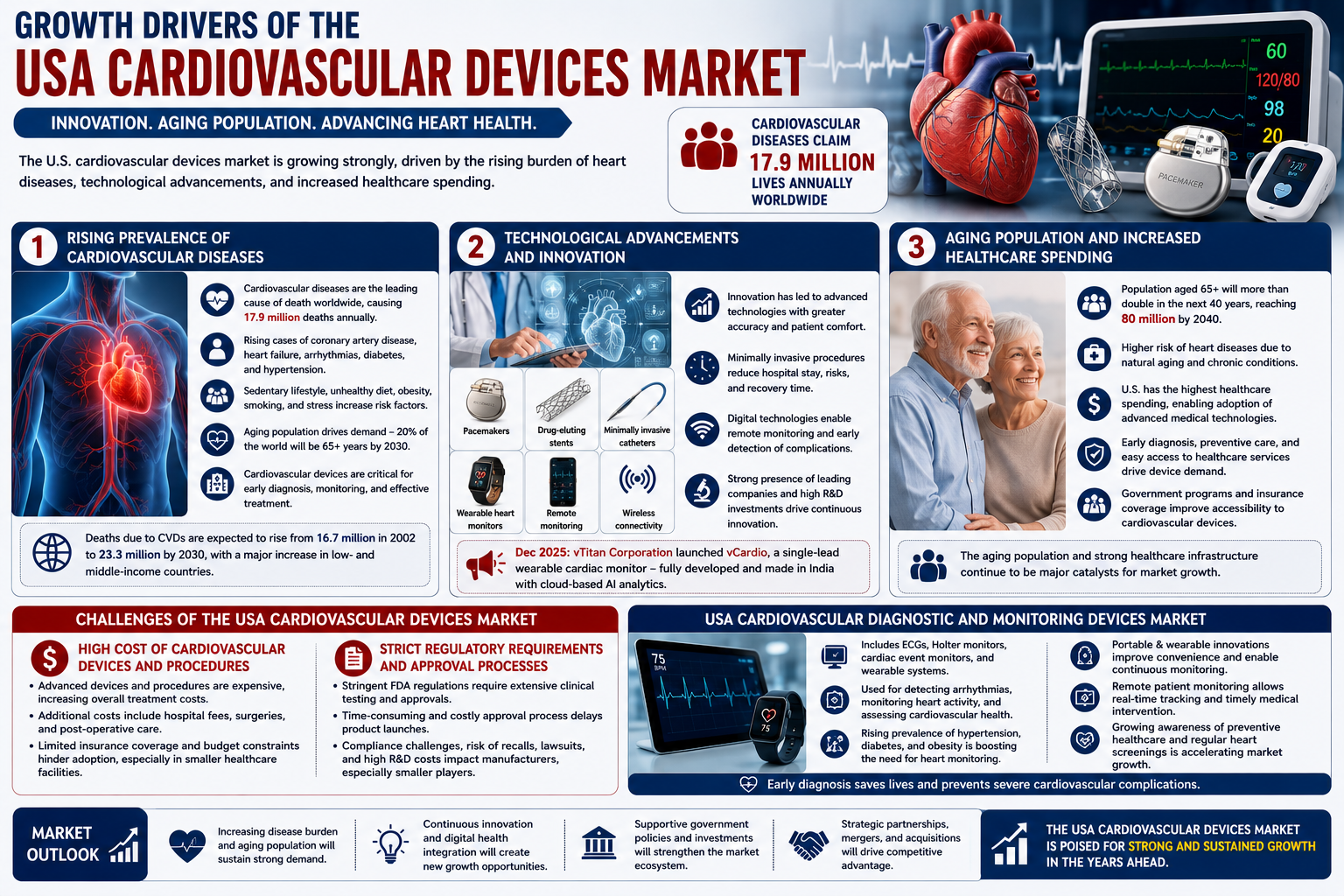
Rising Cardiovascular Disease Burden Is Driving Market Expansion
One of the most important factors fueling market growth is the increasing prevalence of cardiovascular diseases throughout the United States.
Heart disease remains the leading cause of death globally, accounting for approximately 17.9 million deaths annually. Sedentary lifestyles, poor dietary habits, obesity, smoking, chronic stress, diabetes, and hypertension continue contributing to the growing burden of cardiovascular illness.
As more patients are diagnosed with heart-related conditions, healthcare providers require advanced tools to support early diagnosis and effective treatment.
Cardiovascular devices enable physicians to detect abnormalities, monitor disease progression, and perform life-saving interventions.
Hospitals and healthcare systems are increasingly investing in modern cardiovascular technologies to improve patient outcomes and reduce healthcare costs.
As cardiovascular disease rates continue rising, demand for advanced medical devices is expected to remain strong.
Technological Innovation Is Transforming Cardiac Care
Technology continues to revolutionize cardiovascular medicine.
Modern devices are becoming smaller, smarter, and more effective than previous generations.
Innovations such as implantable pacemakers, wearable heart monitors, drug-eluting stents, catheter-based therapies, and minimally invasive surgical tools have significantly improved patient outcomes.
Digital health technologies are creating additional opportunities through remote monitoring, wireless data transmission, and AI-powered diagnostics.
These advancements allow healthcare professionals to monitor patients continuously and intervene earlier when complications arise.
In December 2025, vTitan Corporation introduced vCardio, a single-lead wearable cardiac monitor that combines hardware technology with cloud-based artificial intelligence analytics to improve cardiac monitoring capabilities.
As technology continues evolving, cardiovascular devices are becoming increasingly accurate, efficient, and patient-friendly.
Aging Population Is Supporting Long-Term Demand
Demographic changes represent another major growth driver for the cardiovascular devices market.
The risk of cardiovascular disease increases substantially with age.
According to demographic projections, the number of Americans aged 65 and older is expected to exceed 80 million by 2040, while the population aged 85 and above is projected to nearly quadruple compared with levels recorded in 2000.
Older adults are more susceptible to conditions such as coronary artery disease, heart failure, atrial fibrillation, and other cardiovascular disorders.
As the elderly population continues expanding, demand for cardiovascular diagnostic, monitoring, and therapeutic devices is expected to rise significantly.
The aging demographic trend is creating sustained long-term growth opportunities for medical device manufacturers and healthcare providers alike.
Increased Healthcare Spending Is Improving Access
The United States remains one of the world's largest healthcare markets, characterized by substantial healthcare expenditure and advanced medical infrastructure.
Strong investment in hospitals, specialized cardiac centers, and healthcare technology supports widespread adoption of cardiovascular devices.
Government healthcare programs, private insurance coverage, and preventive health initiatives are improving patient access to advanced treatments.
Greater emphasis on preventive healthcare and routine cardiovascular screening is also contributing to earlier diagnosis and intervention.
As healthcare spending continues increasing, providers are expected to invest further in innovative cardiovascular technologies that improve efficiency and patient outcomes.
Diagnostic and Monitoring Devices Are Seeing Rapid Growth
Cardiovascular diagnostic and monitoring devices represent one of the fastest-growing segments within the market.
These products include electrocardiograms (ECG), Holter monitors, cardiac event monitors, wearable monitoring systems, and remote patient monitoring solutions.
Healthcare providers increasingly rely on these devices to detect abnormal heart rhythms, evaluate cardiac performance, and monitor patient health over extended periods.
Wearable technologies have become particularly popular because they allow continuous monitoring outside traditional healthcare settings.
Patients benefit from greater convenience while physicians gain access to real-time health data.
The increasing importance of preventive healthcare and early disease detection continues supporting strong growth within this segment.
Cardiac Arrhythmia Devices Continue Expanding
The market for cardiac arrhythmia devices is growing steadily due to increasing diagnoses of conditions such as atrial fibrillation and bradycardia.
These disorders can significantly increase the risk of stroke, heart failure, and other serious complications if left untreated.
Devices including pacemakers, implantable cardioverter defibrillators (ICDs), and cardiac resynchronization therapy systems help regulate heart rhythms and improve cardiac function.
Advances in battery life, device miniaturization, and implantation techniques have improved both safety and effectiveness.
Minimally invasive procedures have further increased patient acceptance and reduced recovery times.
As arrhythmia prevalence continues rising, demand for advanced rhythm management technologies is expected to remain strong.
Heart Failure Devices Are Becoming Increasingly Important
Heart failure remains one of the most serious cardiovascular conditions affecting Americans today.
This condition occurs when the heart cannot pump blood efficiently, resulting in fatigue, shortness of breath, and reduced quality of life.
Heart failure devices such as ventricular assist devices (VADs), cardiac resynchronization therapy systems, and advanced heart pumps provide critical support for patients with severe disease.
Technological advancements have led to smaller, safer, and more effective devices that improve patient outcomes and survival rates.
Growing awareness regarding advanced treatment options and better access to specialized cardiac care are also contributing to market growth.
As heart failure prevalence continues increasing, demand for supportive cardiovascular technologies is expected to rise significantly.
Hospitals and Clinics Remain the Largest End Users
Hospitals and clinics continue representing the largest end-user segment within the cardiovascular devices market.
These facilities perform a wide range of diagnostic, surgical, and interventional procedures involving cardiovascular technologies.
Advanced hospitals are equipped with specialized cardiac catheterization laboratories, operating rooms, and highly trained medical professionals capable of performing complex interventions.
Growing patient admissions for cardiovascular conditions and increasing demand for minimally invasive treatments continue supporting device adoption.
Healthcare providers are also investing in innovative technologies that improve treatment efficiency and patient outcomes.
The strength of the United States healthcare infrastructure remains a major contributor to market expansion.
Diagnostic Centers Are Playing a Growing Role
Diagnostic centers are becoming increasingly important in cardiovascular disease management.
These facilities provide cost-effective services such as ECG testing, cardiac imaging, stress testing, and outpatient monitoring.
Growing awareness regarding preventive healthcare has encouraged more patients to undergo routine cardiovascular evaluations.
Diagnostic centers help reduce pressure on hospitals while improving access to early detection services.
Advancements in diagnostic technologies have further improved accuracy and efficiency.
As preventive healthcare becomes a higher priority, demand for cardiovascular diagnostic equipment is expected to continue rising.
High Costs Remain a Significant Challenge
Despite strong growth prospects, the cardiovascular devices market faces several important challenges.
One of the most significant concerns is the high cost associated with advanced cardiovascular technologies.
Devices such as implantable defibrillators, pacemakers, and heart pumps often require substantial financial investment.
In addition to device costs, patients frequently face expenses related to surgery, hospitalization, rehabilitation, and ongoing follow-up care.
Healthcare providers and insurers must also manage budget pressures while maintaining access to advanced treatments.
These financial considerations can affect adoption rates, particularly within smaller healthcare facilities.
Balancing innovation with affordability remains a key challenge for industry stakeholders.
Regulatory Requirements Can Slow Innovation
The cardiovascular devices industry operates under strict regulatory oversight designed to ensure patient safety and product effectiveness.
Manufacturers must complete extensive clinical testing and regulatory review before new devices can reach the market.
While these requirements protect patients, they also increase development costs and extend product launch timelines.
Any device-related safety concerns can result in recalls, legal actions, and reputational damage.
Smaller companies may face particular challenges navigating complex regulatory environments.
Although regulatory oversight remains essential, it can sometimes slow innovation and market entry for emerging technologies.
Regional Market Insights
California
California remains one of the largest cardiovascular device markets in the United States. The state benefits from advanced healthcare infrastructure, major medical research institutions, and a strong presence of medical technology companies. In June 2024, AliveCor launched the Kardia 12L ECG System, utilizing AI-powered technology to identify multiple cardiac conditions while simplifying diagnostic processes.
New York
New York's large population, extensive healthcare network, and leading academic medical centers make it a major market for cardiovascular technologies. In March 2025, Abbott received CE Mark approval for its Volt Pulsed Field Ablation System designed to treat cardiac arrhythmias using advanced pulsed field technology.
Washington
Washington continues investing heavily in healthcare innovation and digital health technologies. In November 2024, Johnson & Johnson MedTech received FDA approval for the VARIPULSE Pulsed Field Ablation System, expanding treatment options for atrial fibrillation patients.
Massachusetts
Massachusetts benefits from world-renowned hospitals, biotechnology companies, and medical research institutions. In January 2024, Boston Scientific received FDA approval for its FARAPULSE Pulsed Field Ablation System, representing a major advancement in cardiac ablation technology.
Competitive Landscape
The United States cardiovascular devices market remains highly competitive, with leading companies investing heavily in innovation, product development, and strategic partnerships.
Major industry participants include Abbott Laboratories, Boston Scientific Corporation, Edwards Lifesciences, Cardinal Health Inc., Medtronic PLC, GE Healthcare, Johnson & Johnson Services Inc., and Siemens Healthcare GmbH.
These organizations continue focusing on minimally invasive technologies, digital health integration, artificial intelligence applications, and advanced monitoring solutions to strengthen their competitive positions.
Research and development investments remain critical as companies seek to improve patient outcomes and address evolving healthcare needs.
Final Thoughts
The United States cardiovascular devices market is entering a period of sustained growth driven by rising cardiovascular disease prevalence, demographic changes, technological innovation, and expanding healthcare access. As heart disease continues affecting millions of Americans, demand for advanced diagnostic, monitoring, and treatment technologies is expected to remain strong.
Innovations such as wearable monitors, AI-powered diagnostics, minimally invasive therapies, and advanced implantable devices are transforming cardiovascular care and improving patient outcomes. While challenges related to cost and regulatory complexity persist, the overall outlook for the industry remains highly positive.
With the market projected to grow from US$ 18.79 Billion in 2025 to US$ 32.62 Billion by 2034, cardiovascular devices will continue playing a critical role in addressing one of the nation's most significant healthcare challenges. Companies that successfully combine innovation, affordability, and clinical effectiveness will be best positioned to capture future growth opportunities in this rapidly evolving market.
About the Creator
Enjoyed the story? Support the Creator.
Subscribe for free to receive all their stories in your feed.
Comments
There are no comments for this story
Be the first to respond and start the conversation.